

Trusted Spray Foam Insulation for Palo Alto Homeowners
If you’re wondering how much Spray Foam Insulation costs in Palo Alto, expect $2.80 to $7.50 per board foot installed, with most whole-attic jobs running $4,200 to $12,000 depending on whether you choose open-cell or closed-cell foam. Most projects we complete in Old Palo Alto, Professorville, or the Greenmeadow neighborhood take one to two days, and we can usually start within a week of your written estimate. Call (650) 352-3577 and a live person will pick up, 24/7.
We’ve sealed and insulated more than 9,000 homes since 2016, and we’ve learned that spray foam fails when it’s blown over an unsealed envelope. That’s why every Spray Foam Insulation - Palo Alto job we do begins with air sealing of top plates, can lights, and penetrations, documented with before-and-after blower-door numbers so you can see the actual performance change. The 365-Day Done Right Promise applies to every job, and you get a written price before anyone lifts a tool. No exceptions.
What Our Spray Foam Insulation Service Includes
Open-Cell Spray Foam
Open-cell spray foam is a half-pound density foam that expands to roughly 100 times its liquid volume, creating a soft, flexible insulation layer that fills irregular cavities completely. In Palo Alto’s mild coastal climate, open-cell works well in attic floors and wall cavities where you need both insulation and some air-sealing benefit without the cost premium of closed-cell. We use open-cell from Demilec and Icynene on jobs where the structure can accommodate the expansion and where moisture management is already handled through proper ventilation. Every open-cell installation includes complete air sealing of the cavity perimeter first, then the foam application, then a blower-door test to verify the assembly is performing as designed.
Closed-Cell Spray Foam
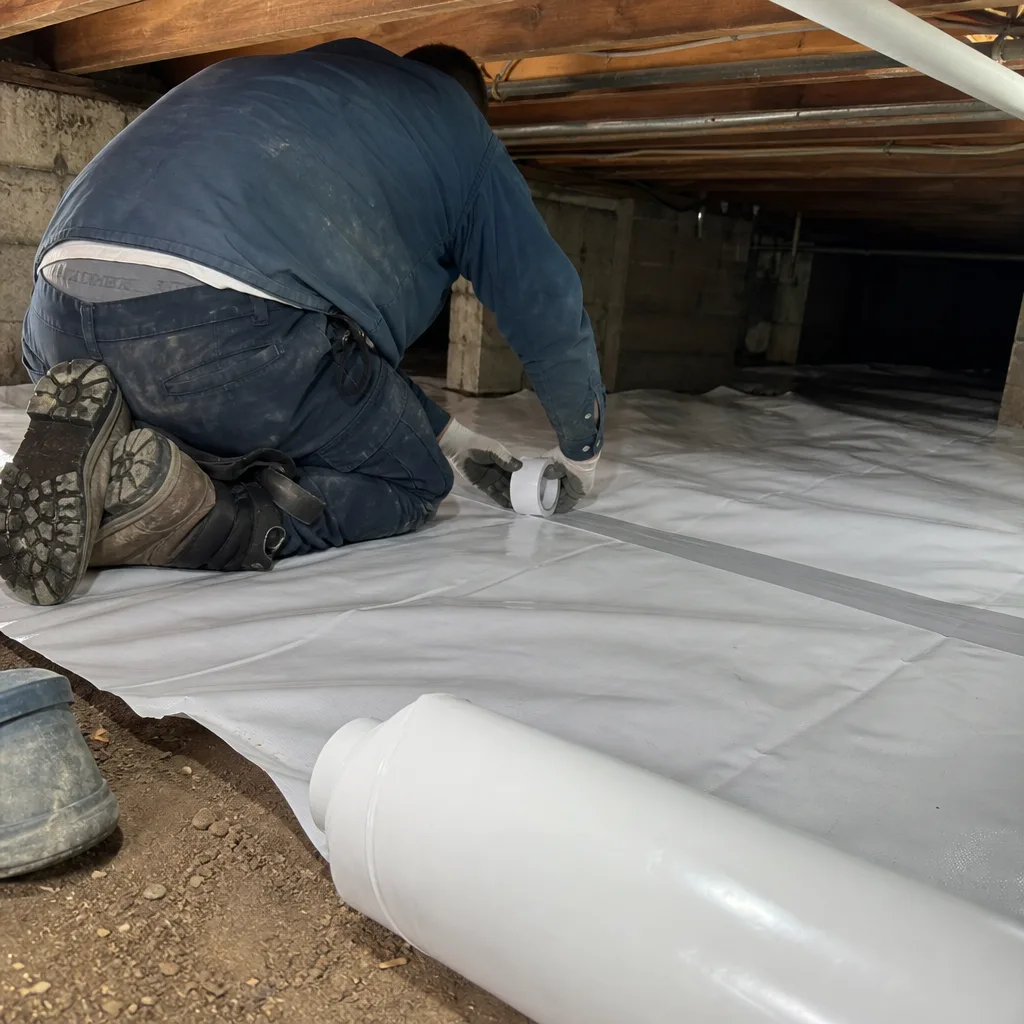
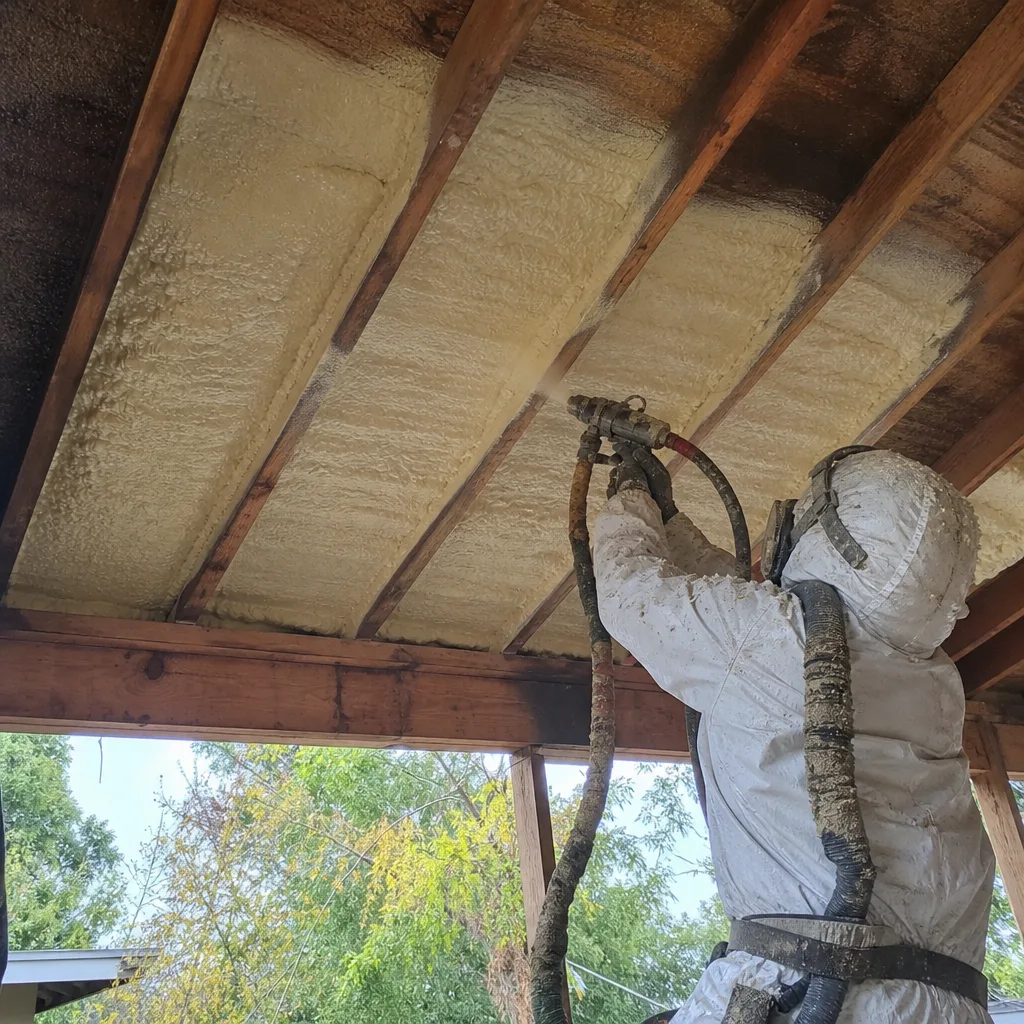
Closed-cell spray foam is a two-pound density foam that cures rigid and provides both insulation and structural reinforcement, with a higher R-value per inch than any other residential insulation material. In Palo Alto, we specify closed-cell for garage ceiling applications, rim joists in crawl spaces, and any location where moisture resistance or compressive strength matters, such as below-grade walls or roof decks with limited cavity depth. We source closed-cell products from Johns Manville and Demilec, and we never apply it over an unsealed surface. The Haven Standard requires that we document the substrate condition with photos, seal all penetrations, then apply foam in lifts that cure properly without voids or off-ratio material.
Rim Joist Spray Foam
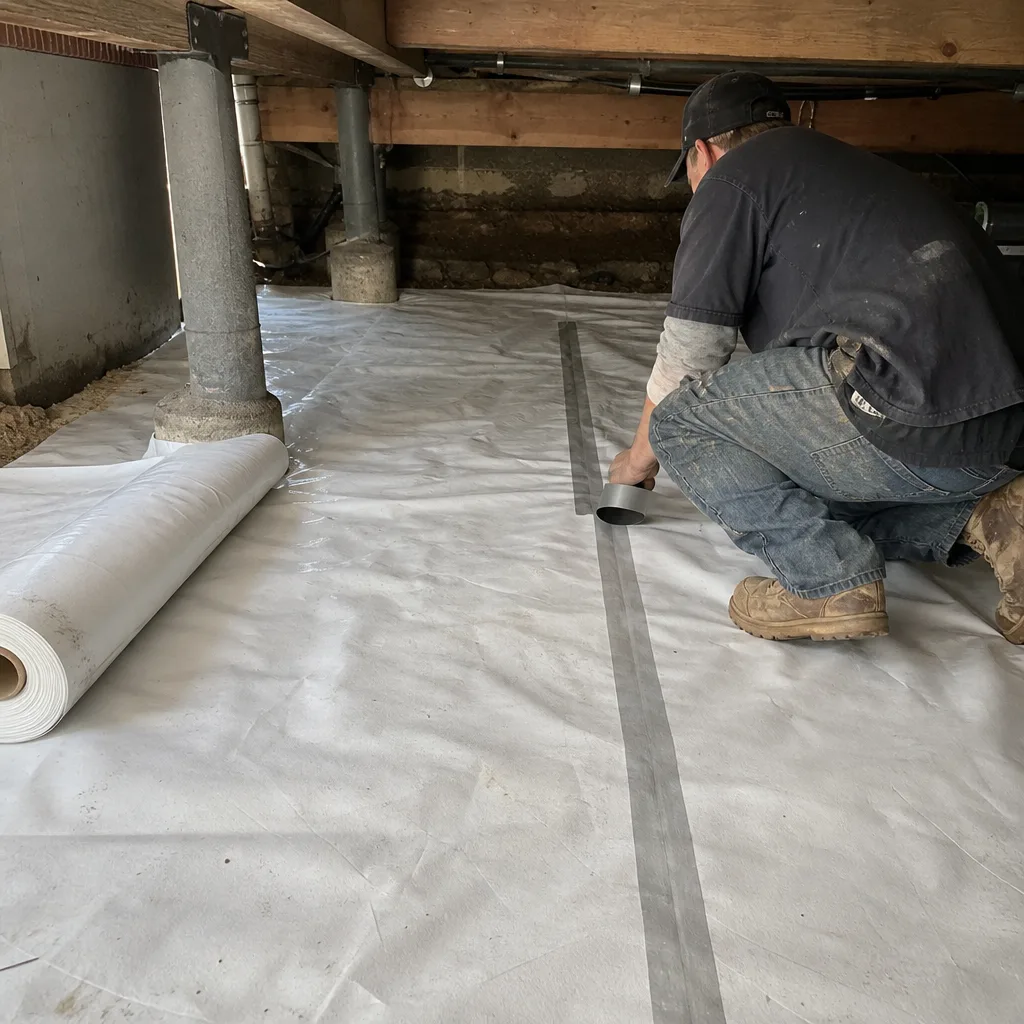
The rim joist is the perimeter band where your foundation meets your first floor, and in Palo Alto homes built between 1950 and 1990, it’s often completely uninsulated or stuffed with degraded fiberglass that does nothing to stop air leakage. Rim joist spray foam, typically closed-cell, seals this thermal bypass and prevents the moisture problems that plague crawl spaces in our area’s clay-heavy soils. We remove any existing material, clean the wood surface, apply a vapor-appropriate foam thickness based on your specific foundation type, and include the rim joist assembly in our blower-door testing so you see the actual air leakage reduction. This is one of the highest-impact, lowest-cost spray foam applications we do in Palo Alto.
Garage Ceiling Spray Foam
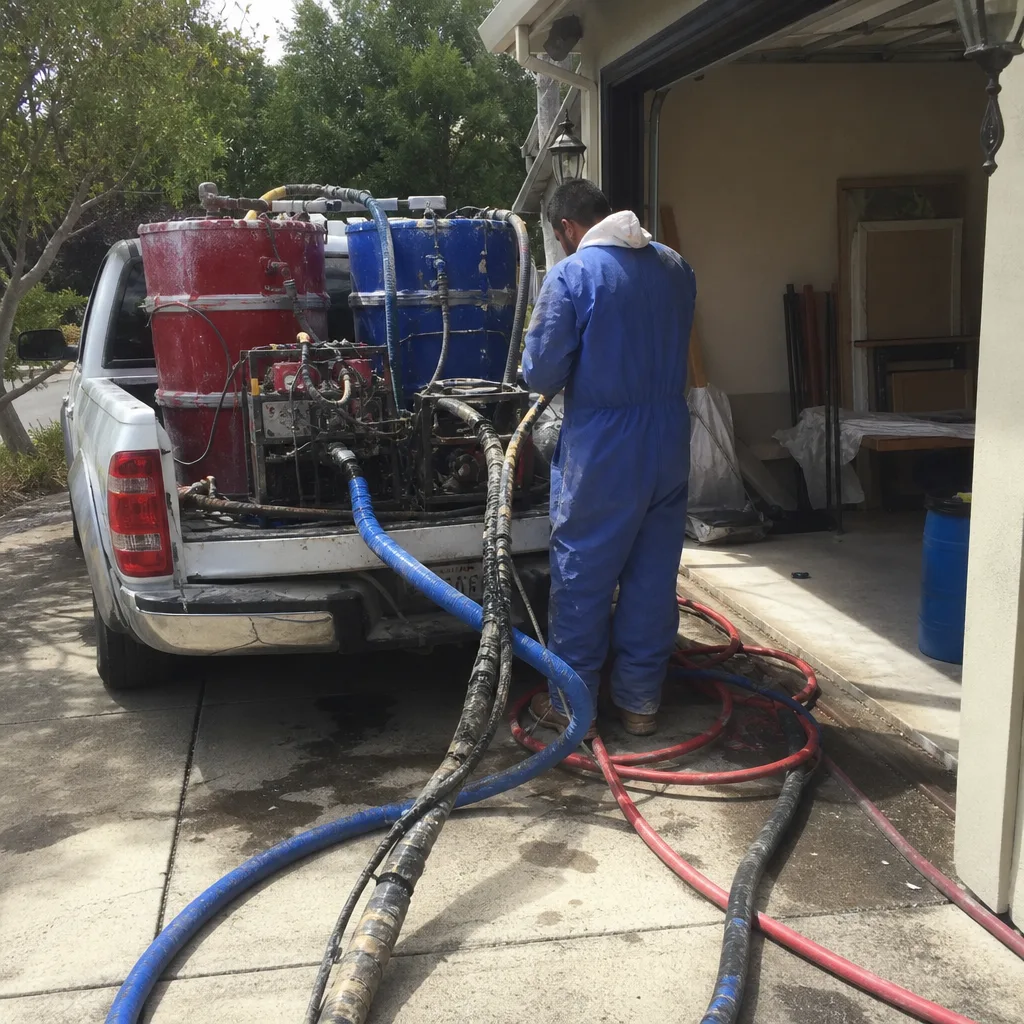
Garage ceiling spray foam addresses the thermal boundary between a conditioned room above and an unconditioned garage below, a detail that California’s Title 24 energy code treats with increasing scrutiny. In Menlo Park Spray Foam Insulation and nearby Palo Alto, where many homes have bonus rooms or bedrooms over garages, this assembly is often a major comfort complaint and code compliance issue. We air seal the garage ceiling plane first, including all electrical and plumbing penetrations, then apply either open-cell or closed-cell foam depending on fire separation requirements and the specific assembly configuration. You get photos of the sealed but unfoamed ceiling, photos of the completed foam application, and blower-door numbers that isolate the garage-to-house leakage path.
Spray Foam Roof Deck
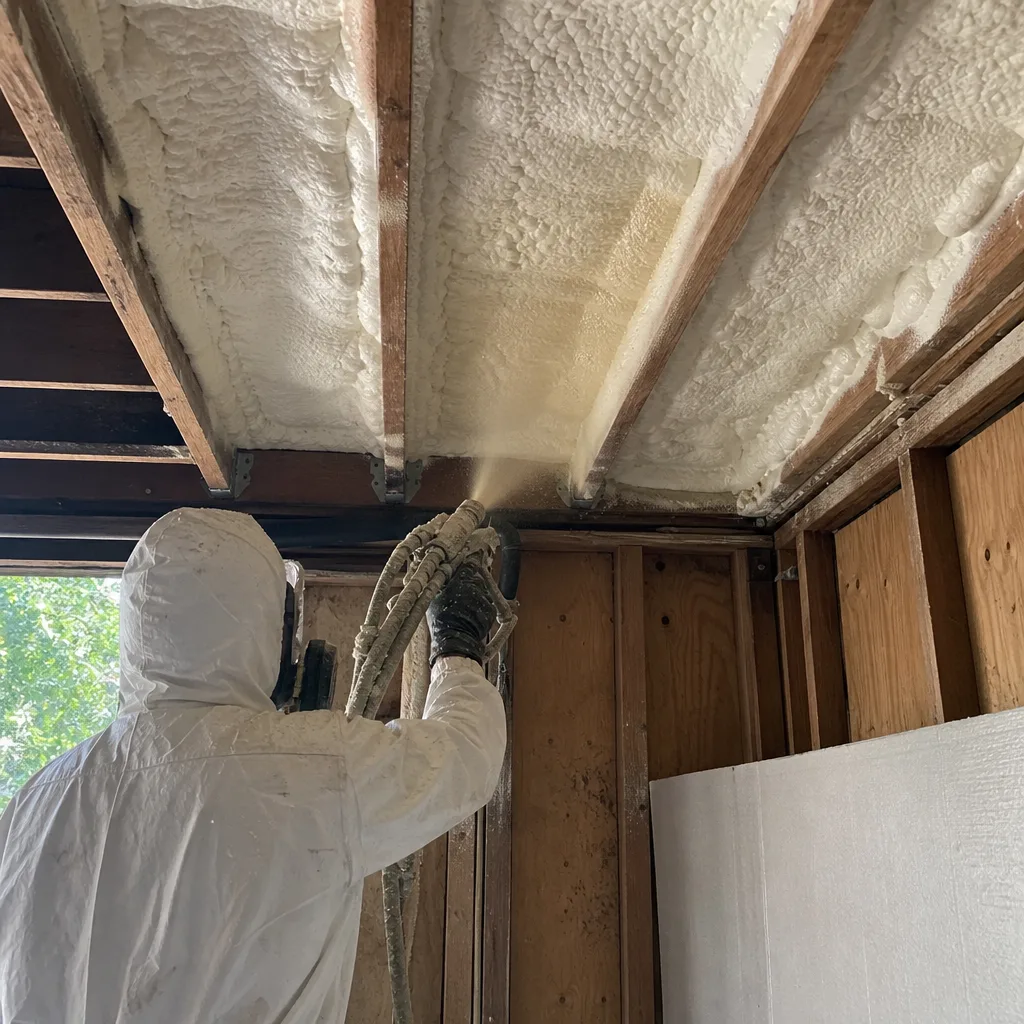
Spray foam applied directly to the underside of the roof deck converts your attic from a vented to an unvented assembly, bringing the thermal boundary to the roof line and creating conditioned attic space for HVAC equipment or storage. In Palo Alto’s older neighborhoods like Professorville and the Professorville Historic District, and for Spray Foam Insulation - Stanford area homes with similar historic structures, original roof structures weren’t designed for modern insulation depths, so spray foam on the roof deck often solves problems that blown-in attic floor insulation cannot. We verify roof deck condition and moisture history before recommending this approach, because foam on a compromised deck traps problems rather than solving them. When appropriate, we apply closed-cell foam to the deck, seal all ridge and eave transitions, and provide documentation that your assembly meets California Title 24 requirements for unvented attics.
What happens when you call
- 1
A real person answersNo phone trees - you reach a local pro.
- 2
You get an upfront price rangeHonest numbers before anyone is dispatched.
- 3
A background-checked tech heads outLicensed & insured, dispatched right away.
- 4
You approve before work beginsNothing starts until you say go.
Brands We Service for Spray Foam Insulation
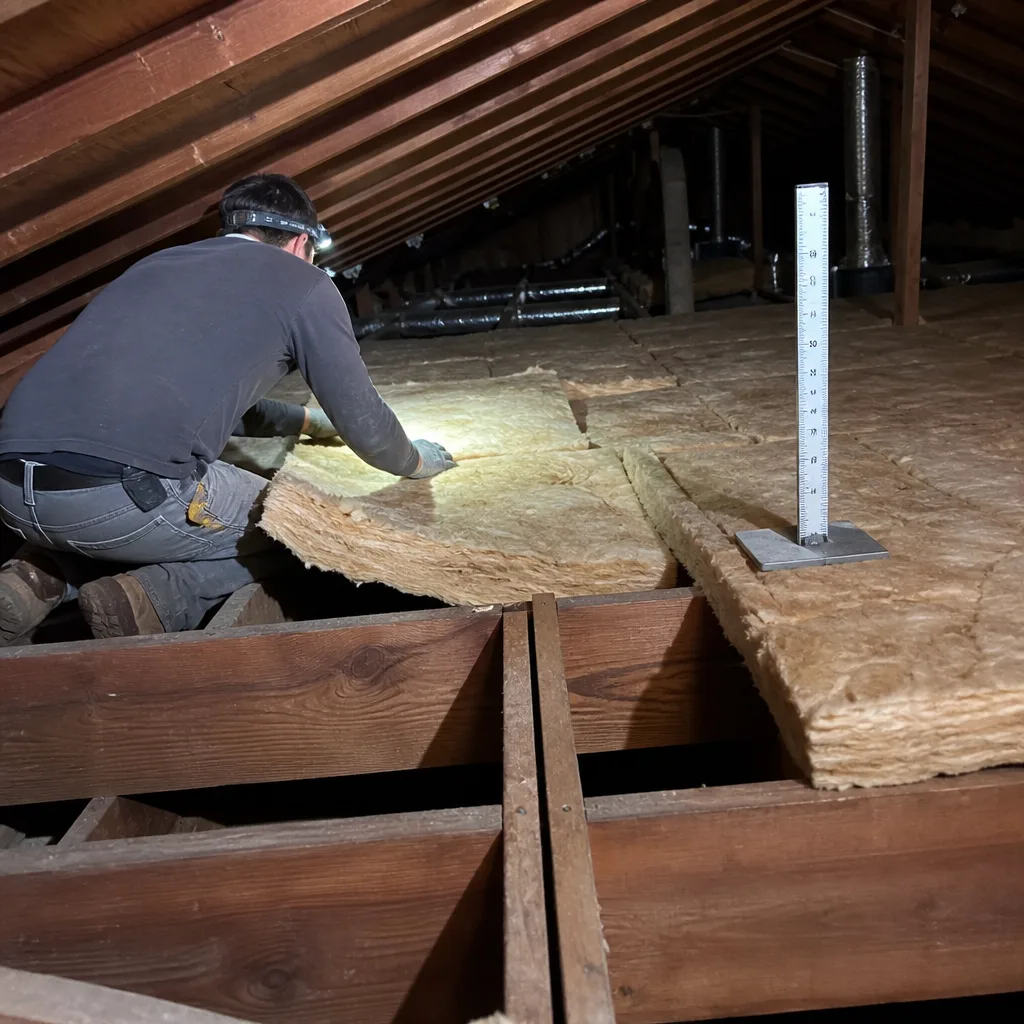
We work with spray foam systems from Demilec, Johns Manville, Owens Corning, and other manufacturers whose products we’ve tested and documented in real Palo Alto installations. Demilec’s Heatlok HFO Pro is a closed-cell system we use regularly for rim joist and roof deck work; we’ve applied it in more than 200 local homes and have documented its performance in our blower-door records. Johns Manville’s Corbond III is another closed-cell product we specify when the job calls for specific fire performance characteristics or when the architect or energy consultant has named it in the specifications.
For open-cell applications, we use Owens Corning’s Foamular NGX series and other products that meet our standards for consistent expansion, low shrinkage, and stable long-term performance. We don’t carry proprietary product lines or accept manufacturer exclusivity arrangements, because that would prevent us from specifying the right material for your specific assembly. Whether you have a preferred brand from a previous energy audit or you’re starting from scratch, we’ll match the product to the application and show you the data that supports the choice.
Signs You Need Spray Foam Insulation Right Now
- Rooms over the garage are consistently 10 to 15 degrees colder or hotter than the rest of the house. This temperature split indicates a failed or missing thermal boundary at the garage ceiling, and in Palo Alto’s climate, it means you’re paying to condition air that’s escaping through an unsealed assembly. Spray foam at this location, properly air sealed first, eliminates the bypass and brings the room into the conditioned envelope.
- Your energy bills spike during Palo Alto’s brief but sharp winter cold snaps or summer heat waves. When a home’s envelope leaks, the HVAC system runs overtime during temperature extremes. If your Pacific Gas & Electric bill doubles in January or September while your neighbors’ stays flat, the building envelope is the likely culprit. Our blower-door test will quantify the leakage and identify whether spray foam is the right solution.
- You can see daylight through rim joist cavities from your crawl space. Daylight means outdoor air is moving freely through the structure, carrying moisture and pollutants with it. In Palo Alto’s older ranch-style homes, this is one of the most common findings during our initial inspection, and rim joist spray foam is typically the most cost-effective fix.
- Existing fiberglass insulation in your attic is blackened, compressed, or falling away from the framing. Blackened fiberglass is a telltale sign of air movement through the material, which means the insulation is filtering dust rather than stopping heat flow. Compressed or displaced batts have lost their rated R-value. Spray foam, applied after proper air sealing, adheres to the substrate and doesn’t suffer from these failure modes.
- Your home was built between 1960 and 1990 and has never had a blower-door test. Homes from this era in Palo Alto were built before modern air-sealing requirements and often have continuous thermal bypasses at top plates, electrical penetrations, and framing intersections. A blower-door test from Envelope Insulation Co. will reveal whether spray foam is appropriate and where it will deliver the most performance per dollar.
Our Spray Foam Insulation Process - Step by Step
- 1
Written estimate with scope, price, and warranty before any work starts. We inspect your home’s envelope, identify the assemblies that need spray foam, and deliver a written document that specifies the product, the thickness, the R-value target, and the total cost. This is Haven Standard Clause 1. No work begins until you’ve reviewed and approved this document.
- 2
Air sealing of all penetrations, top plates, and transitions before foam application. We use blower-door-directed air sealing to find and seal every leak path in the assembly that will receive foam. In Palo Alto homes, this often means sealing around recessed can lights, plumbing vent stacks, and electrical penetrations at the attic floor or roof deck. You get photos of this work.
- 3
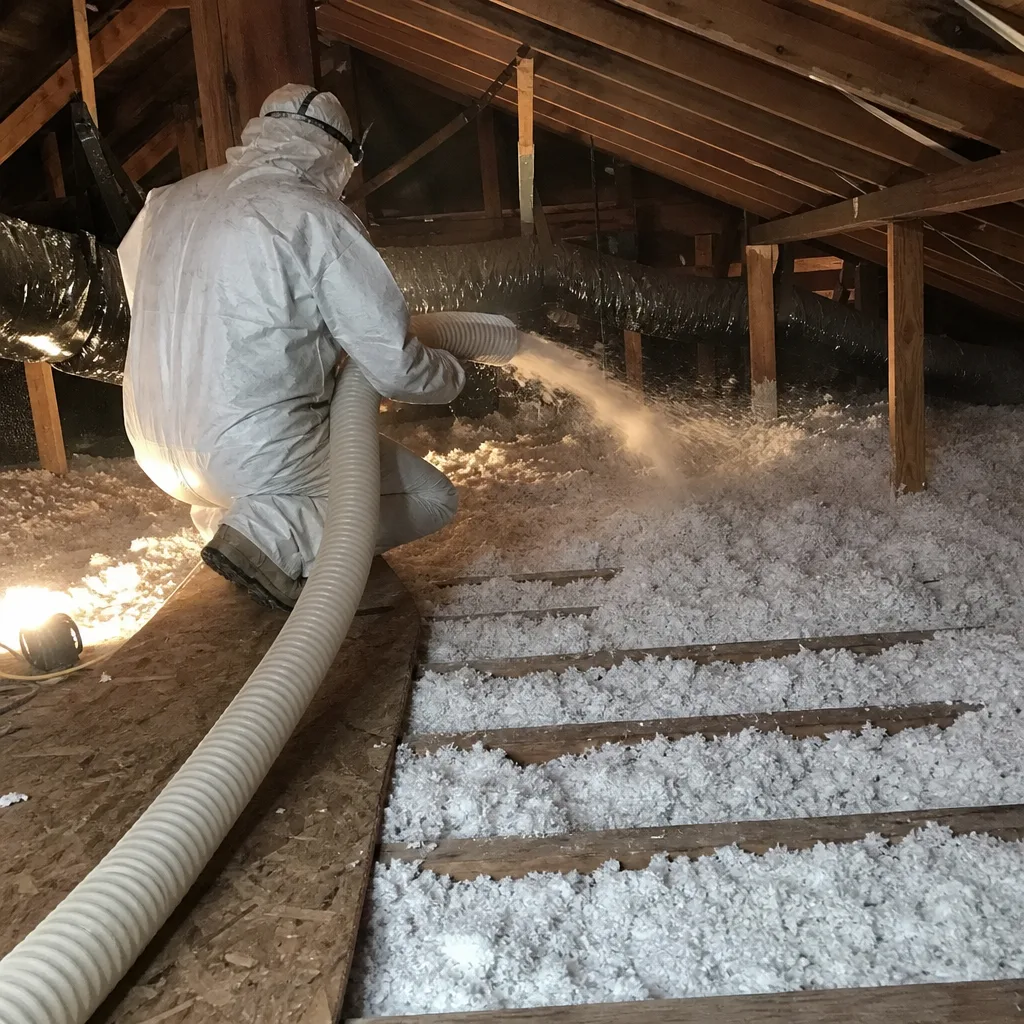
Pre-application blower-door test to establish baseline leakage. We run a blower-door test, a pressurization reading that shows, in one number, how much air your building envelope is losing. This number, measured in CFM50 (cubic feet per minute at 50 Pascals of pressure), becomes the benchmark against which we measure our work.
- 4
Spray foam application in controlled lifts with continuous monitoring of substrate temperature, ambient conditions, and mix ratio. Our technicians apply foam in passes that allow proper curing, monitor the A and B side pressures in real time, and verify adhesion and expansion visually and with thickness probes. We document substrate temperature because Palo Alto’s marine layer can affect cure times during morning applications.
- 5
Post-application blower-door test, photo documentation, and written performance record. After the foam cures, we run a second blower-door test and deliver the before-and-after numbers in writing. You also receive a Documented Photo Record of the completed work and the 365-Day Done Right Promise in writing. This is what leaving looks like.
How Much Does Spray Foam Insulation Cost in Palo Alto?
A typical open-cell spray foam job in a Palo Alto attic runs $4,200 to $7,800 for a 1,500-square-foot attic floor at R-38 equivalent thickness. Closed-cell spray foam for a two-car garage ceiling typically costs $2,800 to $4,500. Rim joist spray foam in a standard crawl space runs $1,800 to $3,200. Roof deck applications, which require closed-cell foam and careful moisture verification, range from $6,500 to $12,000 depending on roof pitch, accessibility, and square footage.
Several factors move these numbers. Cavity depth and accessibility matter: a 12:12 pitch roof deck in a Palo Alto hills home takes longer to foam safely than a flat attic floor in Old Palo Alto. The condition of the existing substrate affects preparation time; we occasionally find water-damaged decking or rodent-compromised insulation that must be addressed before foam goes in. And the specific product selection, open-cell versus closed-cell, can shift the per-board-foot price by 40 percent or more.
To avoid overpaying, get a written scope that specifies the product by brand and density, the installed thickness, the target R-value, and the total board footage. Vague quotes that list only a square-foot price without thickness are impossible to compare. Our written estimates include all of this, plus the blower-door testing, air sealing, and documentation. Bring us a competing quote and we’ll read it with you, line by line. Free Second Opinion, Haven Standard Clause 4.
Spray Foam Insulation Near Palo Alto - Our Service Area
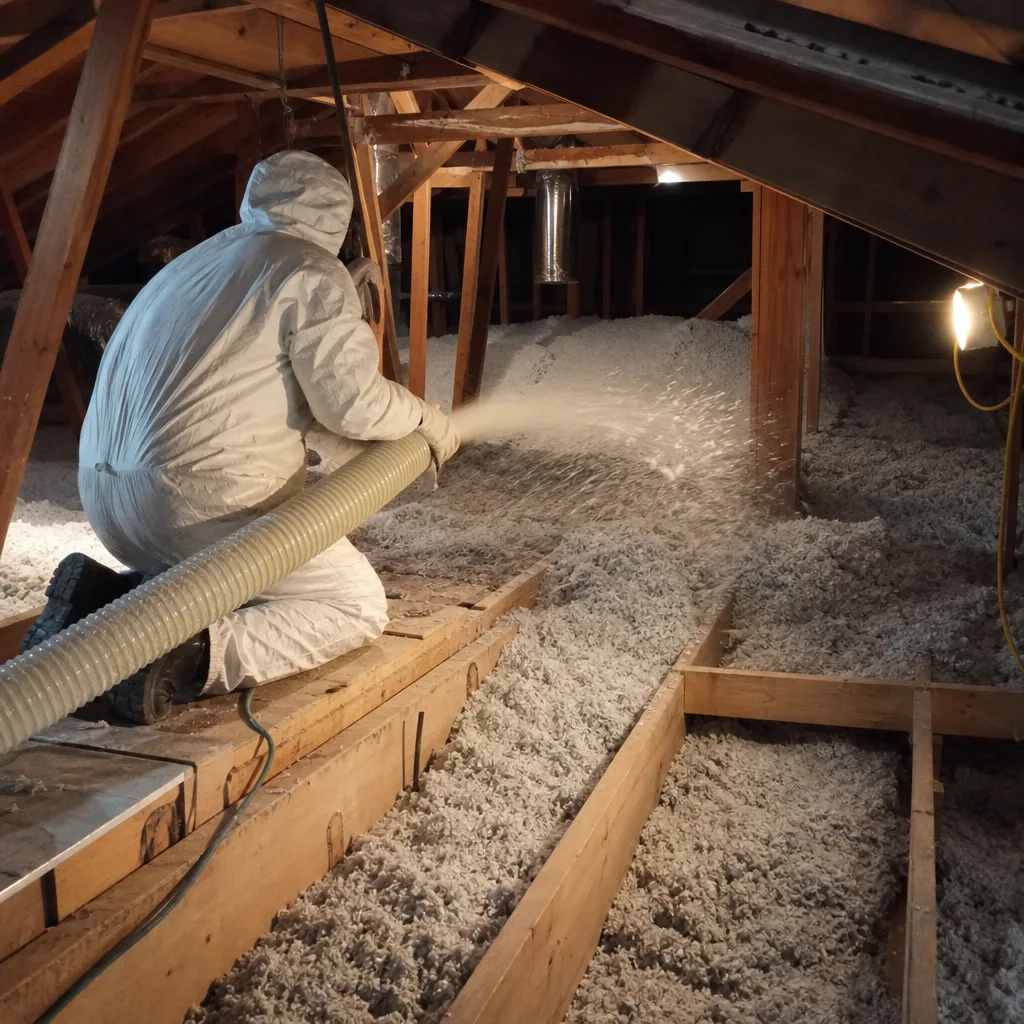
We complete spray foam insulation projects throughout Palo Alto and the surrounding communities, with typical drive times of 15 to 25 minutes to Los Altos Hills, Stanford, Los Altos, Mountain View, East Palo Alto, Portola Valley, Atherton, Menlo Park, North Fair Oaks, Sunnyvale, and Woodside. Response time for estimates is usually next-day in Palo Alto proper and within 48 hours for outlying areas. Our crews are familiar with the specific building stock of each community, from the Eichler slabs of Palo Alto’s Southgate neighborhood to the hillside crawl spaces of Portola Valley, and we adjust our air-sealing and foam specifications accordingly.
Serving Palo Alto, CA - Our Local Coverage Area
We’re based in the Palo Alto area and know this community well. Use the map below to see our service coverage - if you’re nearby, we can almost certainly help.
Frequently Asked Questions - Spray Foam Insulation in Palo Alto
Spray foam insulation is a two-component chemical mixture that expands on contact to create a continuous insulation and air barrier in walls, attics, rim joists, and roof decks. It comes in two densities: open-cell, which is soft and vapor-permeable, and closed-cell, which is rigid and vapor-resistant. Unlike batt or blown-in insulation, spray foam adheres to substrates and seals gaps as it insulates, which is why we always pair it with blower-door verification to confirm the air-sealing result.
Most residential spray foam jobs in Palo Alto take one to two days: one day for air sealing and preparation, and one day for foam application and curing. Larger roof deck projects or jobs requiring multiple attic and crawl space areas may extend to three days. We schedule start dates within a week of approved estimates for most of the year, though demand peaks in September and October before winter. Call (650) 352-3577 to check current availability.
Open-cell attic spray foam typically runs $4,200 to $7,800, closed-cell garage ceiling work runs $2,800 to $4,500, and roof deck applications range from $6,500 to $12,000 depending on assembly complexity. These are installed prices that include air sealing, blower-door testing, and documentation. The exact price for your home depends on cavity depth, accessibility, substrate condition, and product selection. Call (650) 352-3577 for a written estimate with specific numbers for your project.
Yes, we install spray foam from Demilec, Johns Manville, Owens Corning, and other major manufacturers, and we don’t require you to use a proprietary product. Our technicians are trained on multiple systems so we can specify the right foam for your specific assembly rather than selling whatever we have in stock. If your energy consultant or architect has specified a particular product, we’ll install it to their specification and document the work.
We answer calls 24/7 and can respond to urgent situations where insulation failure has created safety or habitability issues, such as frozen pipes in an under-insulated garage ceiling or HVAC failure in a home with severe envelope leakage. Same-day service is sometimes available for these cases. For non-urgent projects, we typically schedule estimates within 24 to 48 hours. Call (650) 352-3577 and a live person will assess your situation.
Every spray foam job is backed by our 365-Day Done Right Promise: if it’s not done right, we make it right. This is in addition to any manufacturer warranty on the foam product itself. You receive both warranties in writing before work starts, along with the written scope and written price. Haven Standard Clause 3 requires that every promise be documented, and we don’t consider a job complete until you have these documents in hand.
Remove stored items from the work area, provide clear attic or crawl space access, and ensure pets and occupants are out of the house during application and for the recommended re-occupancy time, typically 24 hours. We’ll specify any additional preparation, such as covering sensitive electronics or protecting finished surfaces, in your written scope. Our crew handles protection of the work area and cleanup; you don’t need to prep the substrate or move insulation materials.
Schedule Your Spray Foam Insulation Service in Palo Alto Today
Call (650) 352-3577 and a live person will answer, 24/7. We’ll schedule a free estimate at your Palo Alto home, deliver a written price before any work starts, and back every job with the 365-Day Done Right Promise. No voicemail loops, no callback windows measured in business days. Just a documented process and numbers you can verify.
Written by Wes Okafor, Owner at Envelope Insulation Co., serving Palo Alto since 2016.