

Fast, Reliable Spray Foam Insulation Across Stanford
Spray foam insulation in Stanford, CA typically costs $2.80-$5.40 per board foot for closed-cell applications and $1.20-$2.40 for open-cell, with most residential jobs running $3,800-$8,500 depending on the area being treated. We’re usually on-site in Stanford within 24-48 hours of your call, and we carry the full line of closed-cell and open-cell products needed for the shallow attic profiles and university-coordinated projects common here, including Stanford Attic Insulation services. Call (650) 352-3577 for a written price before any work starts.
Stanford’s housing stock isn’t like neighboring Palo Alto or Menlo Park. Most faculty lease homes sit on university-owned land, and many connect to Stanford’s Central Energy Facility district heating and cooling loops. That means spray foam work here requires coordination with Stanford Utilities and Facilities Management, not just a standard county permit. Our crews have completed dozens of projects under Stanford’s R&DE lease structure, and we know the approval path before we arrive.
Why Topside Attic Insulation Palo Alto Is Stanford’s Preferred Spray Foam Insulation Company
We’ve sealed and insulated homes along Cabrillo Avenue, near the Stanford Shopping Center corridor, and in the faculty housing pockets off Sand Hill Road. Our Spray Foam Insulation in Stanford work is documented with before-and-after blower-door numbers on every applicable job, so homeowners see the actual performance change rather than taking our word for it.
Reviews from Stanford customers consistently mention our willingness to navigate the university’s internal approval process. One recent client noted that two other contractors had declined to bid their faculty lease home because of the Stanford Real Estate coordination requirement. We handled the documentation, submitted the scope to Facilities Management, and completed the job on schedule.
Response time to Stanford averages same-day or next-day for assessments, with most spray foam installations scheduled within a week once university approvals are in hand. We dispatch from our San Francisco Bay Area office, and crews serving Stanford carry the full material inventory, so we’re not waiting on deliveries.
Local knowledge matters here. We know which homes connect to district heating loops, where the shallow rooflines limit insulation depth, and how Stanford’s radiation-fog microclimate drives moisture into poorly sealed attics. That context changes what we recommend and how we install it.
Our Spray Foam Insulation Services in Stanford
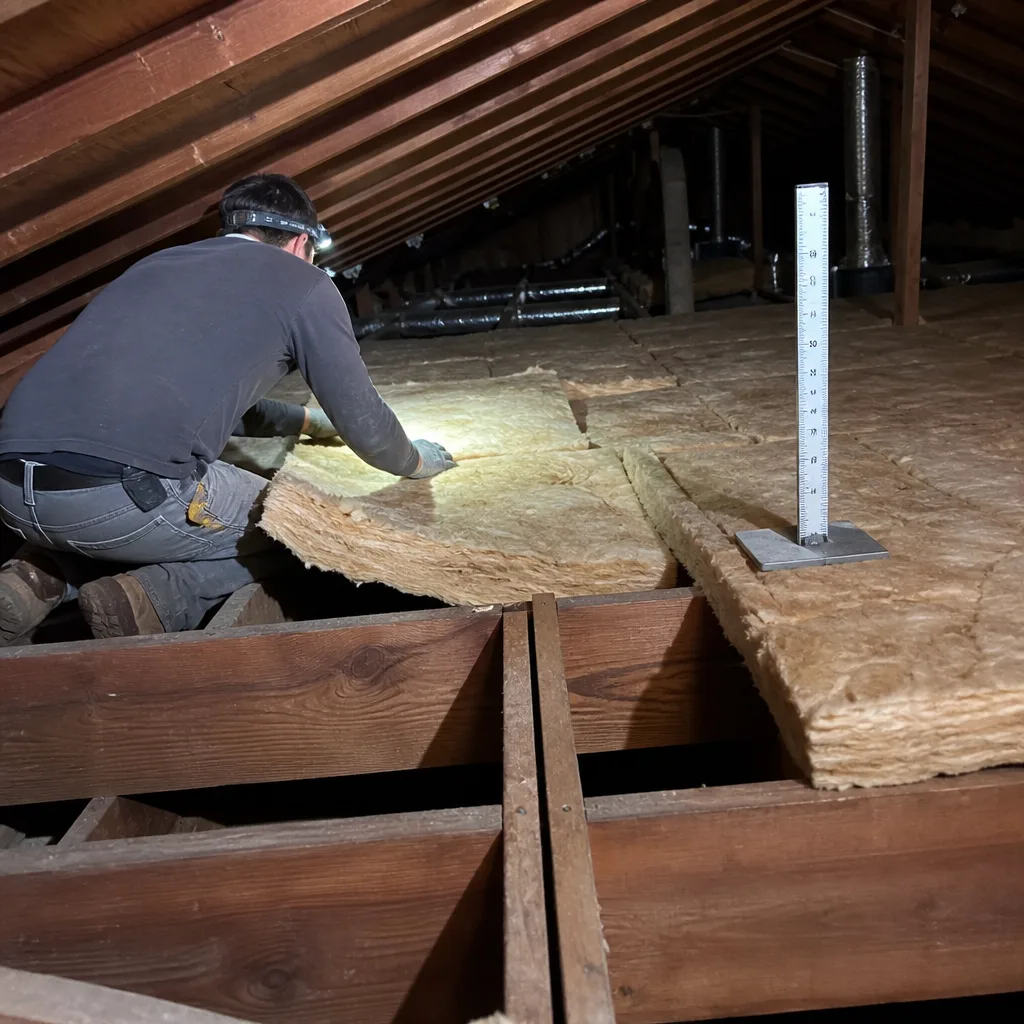
Closed-Cell Spray Foam
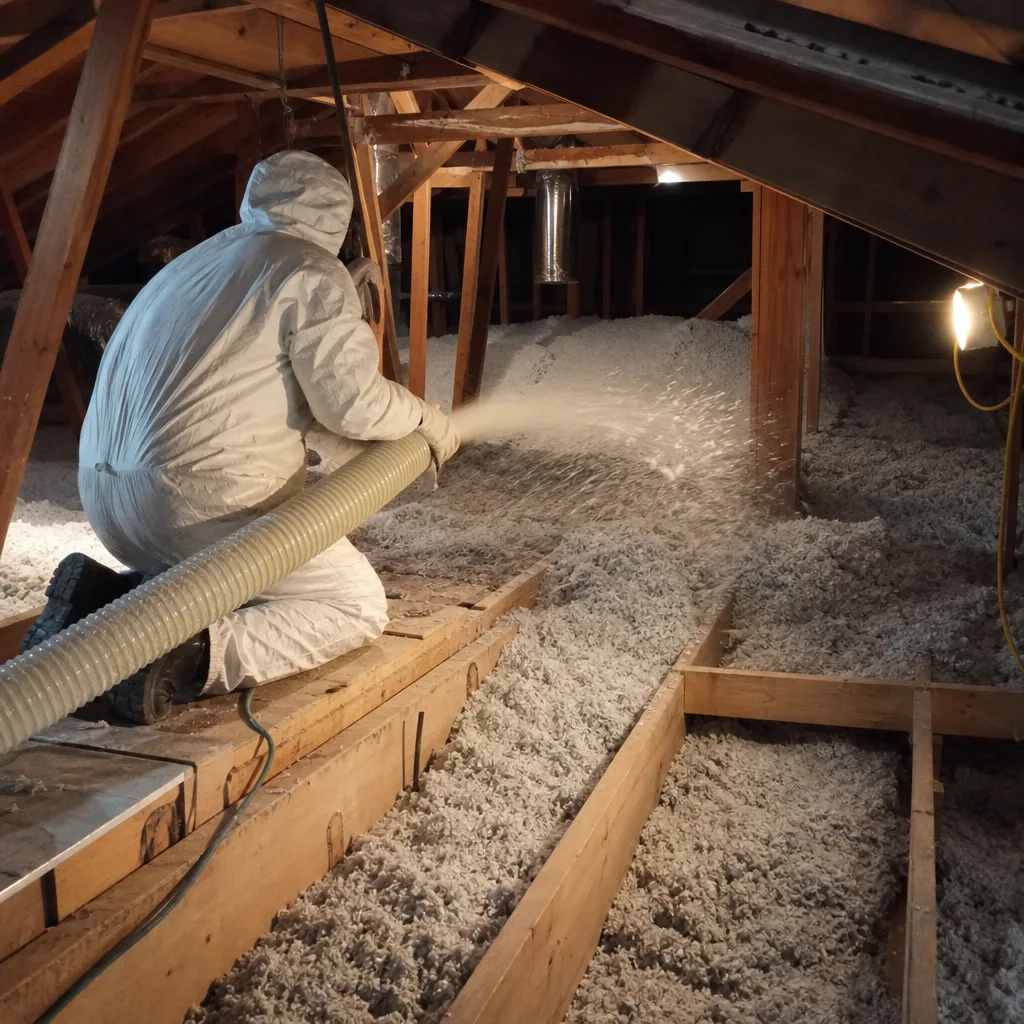
Closed-cell spray foam - a rigid, high-density insulation that also acts as an air barrier and vapor retarder - is our most common recommendation for Stanford’s mid-century faculty homes. The R-value per inch runs about 6.5, which matters when you’re working with the shallow attic profiles under low-pitched rooflines near campus. We source closed-cell products from Owens Corning and Demilec, and we coordinate with Stanford Utilities on any home connected to the district energy system to prevent pressure imbalances after the envelope is tightened.
We recently completed a closed-cell spray foam insulation job on a 1950s faculty lease home on Cabrillo Avenue in Stanford, where the shallow attic profile under the low-pitched roof required careful application to avoid blocking soffit vents. The homeowner had complained of cold drafts and moisture on winter mornings, so we used Icynene closed-cell foam to air-seal the attic floor and rim joists, coordinating with Stanford Utilities because the home was connected to the campus district heating loop. After the upgrade, the home maintained consistent temperatures and the musty odor disappeared.
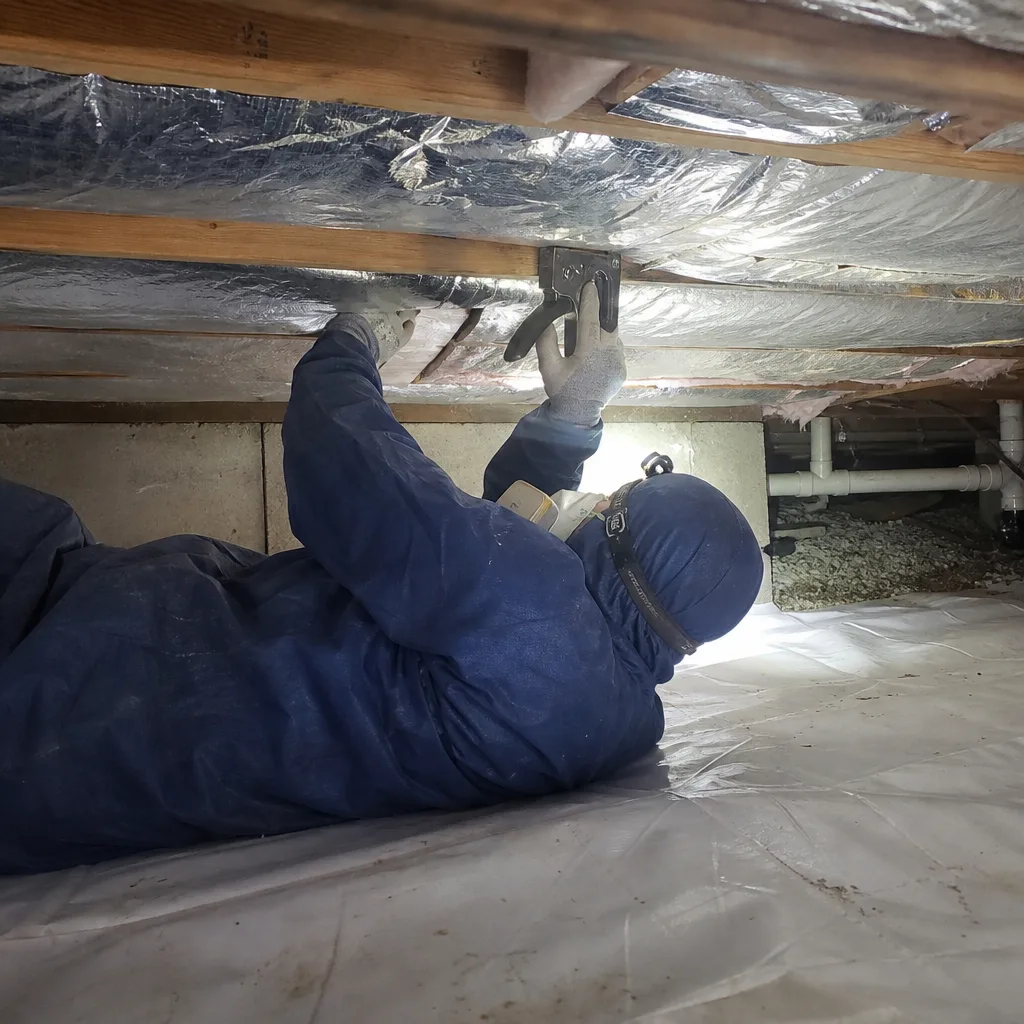
Open-Cell Spray Foam
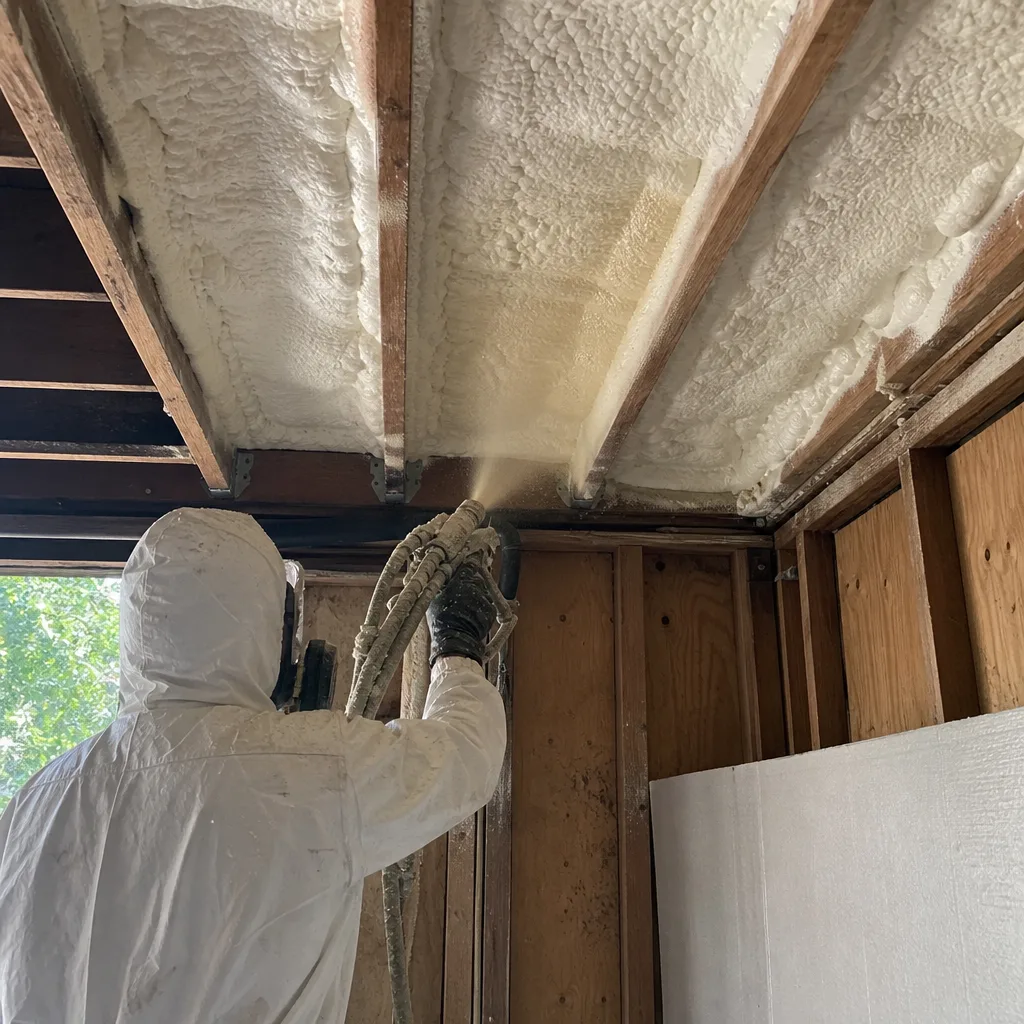
Open-cell spray foam - a softer, lower-density product that expands to fill cavities and provides excellent sound dampening - works well in Stanford’s garage ceilings and interior wall applications where vapor permeability is acceptable. At roughly R-3.6 per inch, it requires more depth than closed-cell for equivalent thermal performance, but it’s often the right choice for roof decks where moisture needs to dry to the interior. We use Johns Manville open-cell formulations for these applications, and we size the yield carefully to avoid overfilling the constrained framing bays common in 1960s construction.
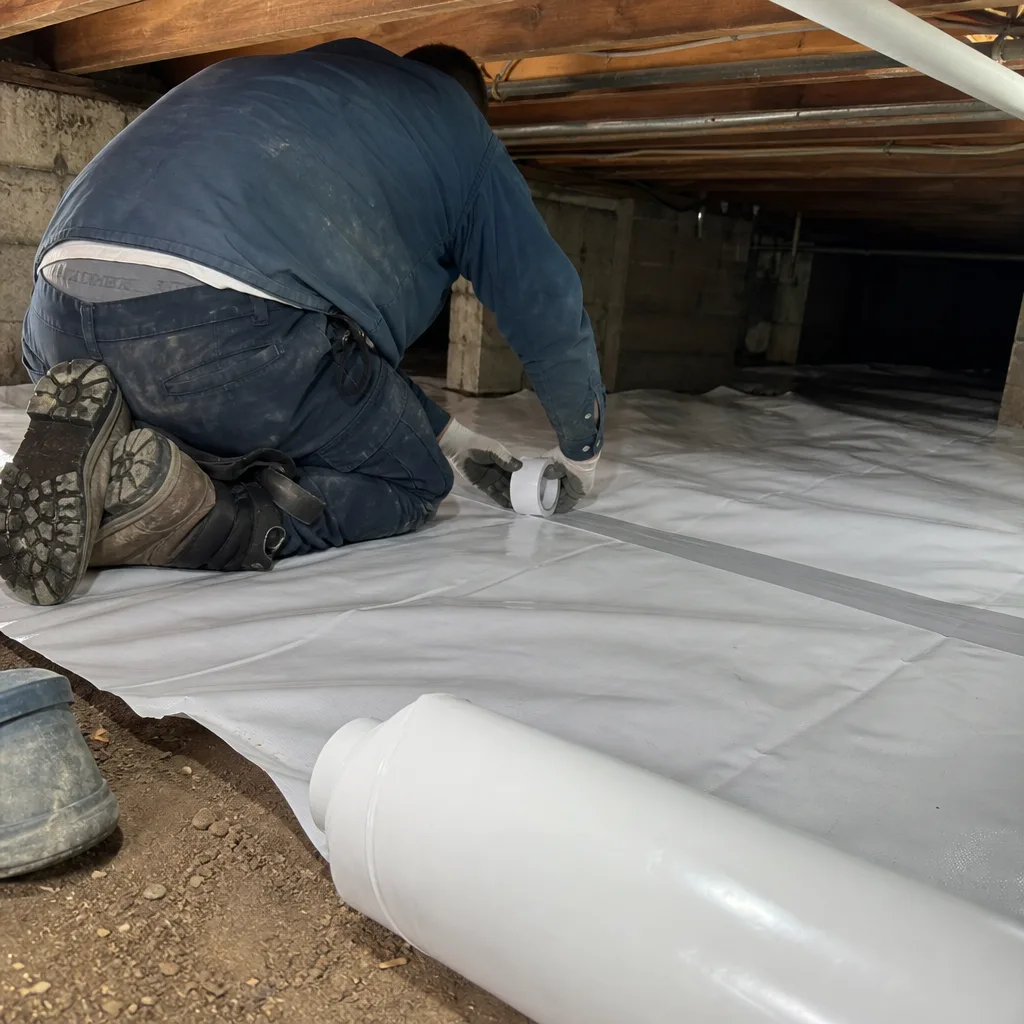
Rim Joist Spray Foam
Rim joists - the perimeter band where the foundation meets the first floor - are the leakiest part of most Stanford faculty homes, and they’re almost never sealed in original construction. Stanford’s cool, damp winter mornings with radiation fog make this a critical detail: unsealed rim joists pull moist air into the floor cavity, where it condenses on cold surfaces and breeds mold. We treat rim joists with closed-cell foam in a single pass, typically 2-3 inches, which satisfies both the air-sealing requirement and the thermal bridge. This is standard on every crawl space or basement job we do in Stanford, not an upsell.
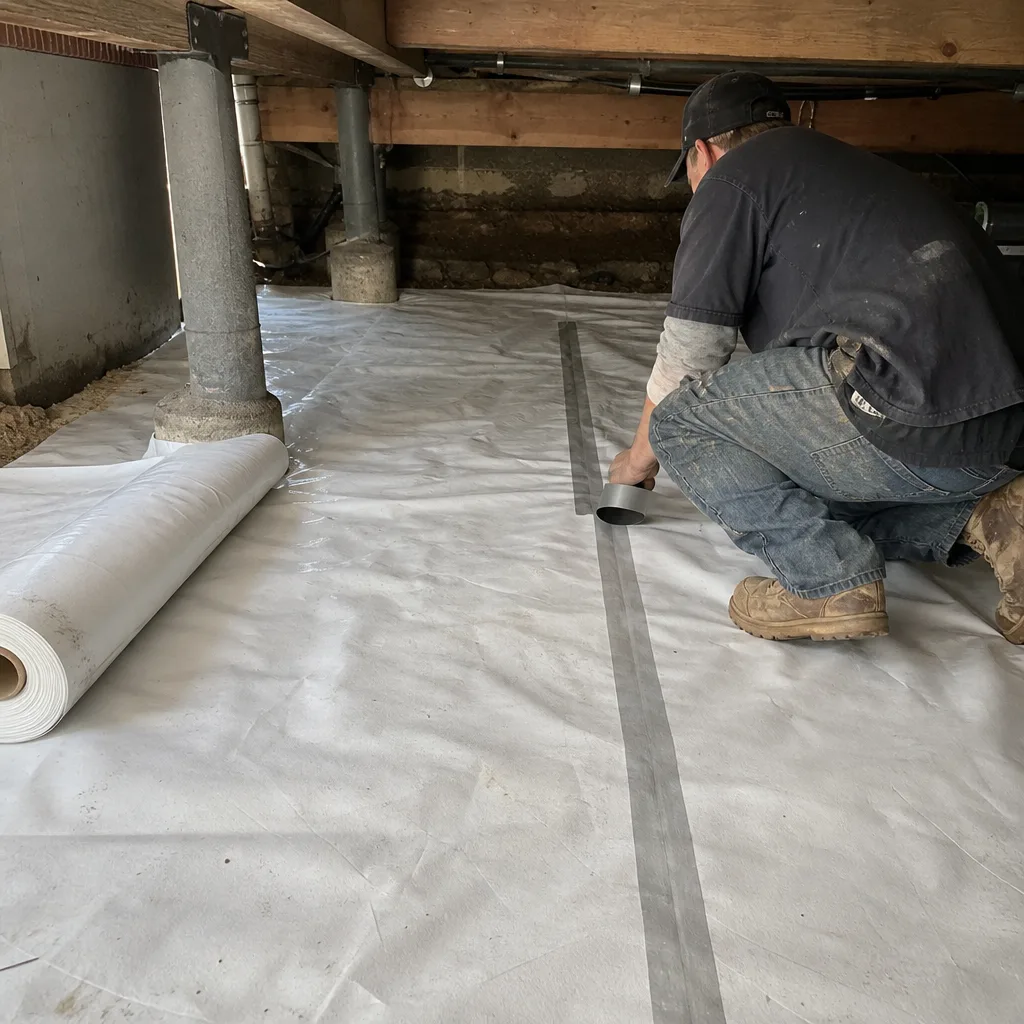
Garage Ceiling Spray Foam
Garage ceiling insulation in Stanford’s faculty housing often separates conditioned space from an unconditioned garage below, and the fire-separation requirement adds complexity. We use intumescent-coated closed-cell foam or approved thermal barriers where code demands, and we detail the penetration sealing around plumbing and electrical with the same precision we apply to the living space above. Many of these garage ceilings are accessible only through small hatches, so we plan material staging and hose routing before we arrive.
Spray Foam Roof Deck
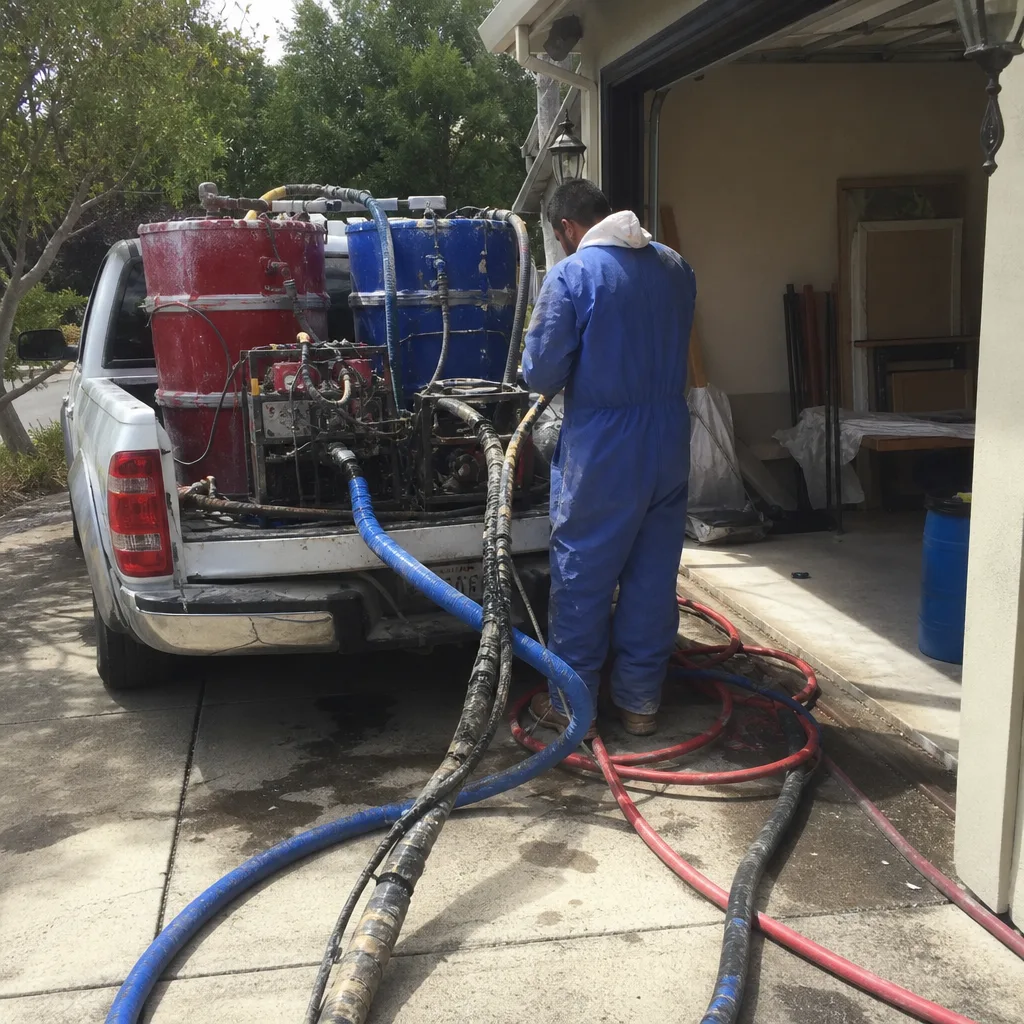
Spray foam applied directly to the roof deck - the structural sheathing beneath your roofing material - creates an unvented, conditioned attic that eliminates the ventilation conflicts common in Stanford’s shallow-pitch roofs. This approach is particularly valuable for homes where soffit vents are already compromised or where the roof geometry makes traditional venting impossible. We specify open-cell foam for most roof deck applications in Stanford, with vapor-permeable assemblies that allow seasonal moisture migration. Every roof deck job includes coordination with Stanford Facilities Management when the structure is university-owned.
What happens when you call
- 1
A real person answersNo phone trees - you reach a local pro.
- 2
You get an upfront price rangeHonest numbers before anyone is dispatched.
- 3
A background-checked tech heads outLicensed & insured, dispatched right away.
- 4
You approve before work beginsNothing starts until you say go.
Trusted Brands We Service in Stanford
We stock and install materials from Owens Corning, Johns Manville, and Knauf, with additional formulations from Icynene and Demilec for specialized applications. For Stanford customers, this means no proprietary lock-in - we specify the product that matches your assembly, your budget, and Stanford’s performance requirements, not the one that maximizes our margin. Our Bay Area warehouse carries closed-cell and open-cell sets in standard densities, so most Stanford jobs don’t wait on material delivery. When a project calls for a specific brand to match existing foam or to satisfy a Stanford Facilities Management specification, we source and coordinate without extending the schedule, including our Stanford Reflectix service.
Common Spray Foam Insulation Problems We See in Stanford Homes
- Spray foam applied without coordinating with Stanford Utilities on connected buildings. Homes tied to the campus district heating and cooling loops depend on balanced pressure and controlled delivery temperatures. Tightening the envelope without notifying Utilities can create condensation issues in the centralized HVAC delivery, and we’ve been called in to remediate exactly that failure.
- Standard blown-in or foam retrofits installed in historic sandstone-and-red-tile campus structures without Stanford’s preservation approval. These buildings have preservation constraints that limit retrofit approaches, and irreversible damage to original fabric has occurred when contractors ignored the review process. We submit scopes to Stanford’s heritage office before touching these structures.
- Ignoring the shallow attic profiles common under low-pitched rooflines, which blocks ventilation and traps moisture. In the 1940s-1970s faculty homes near the main campus, roof pitches often run 3:12 or 4:12 with minimal heel height. Foam that expands beyond the planned depth can occlude soffit vents or compress against roof sheathing, creating the exact moisture problems insulation is supposed to solve.
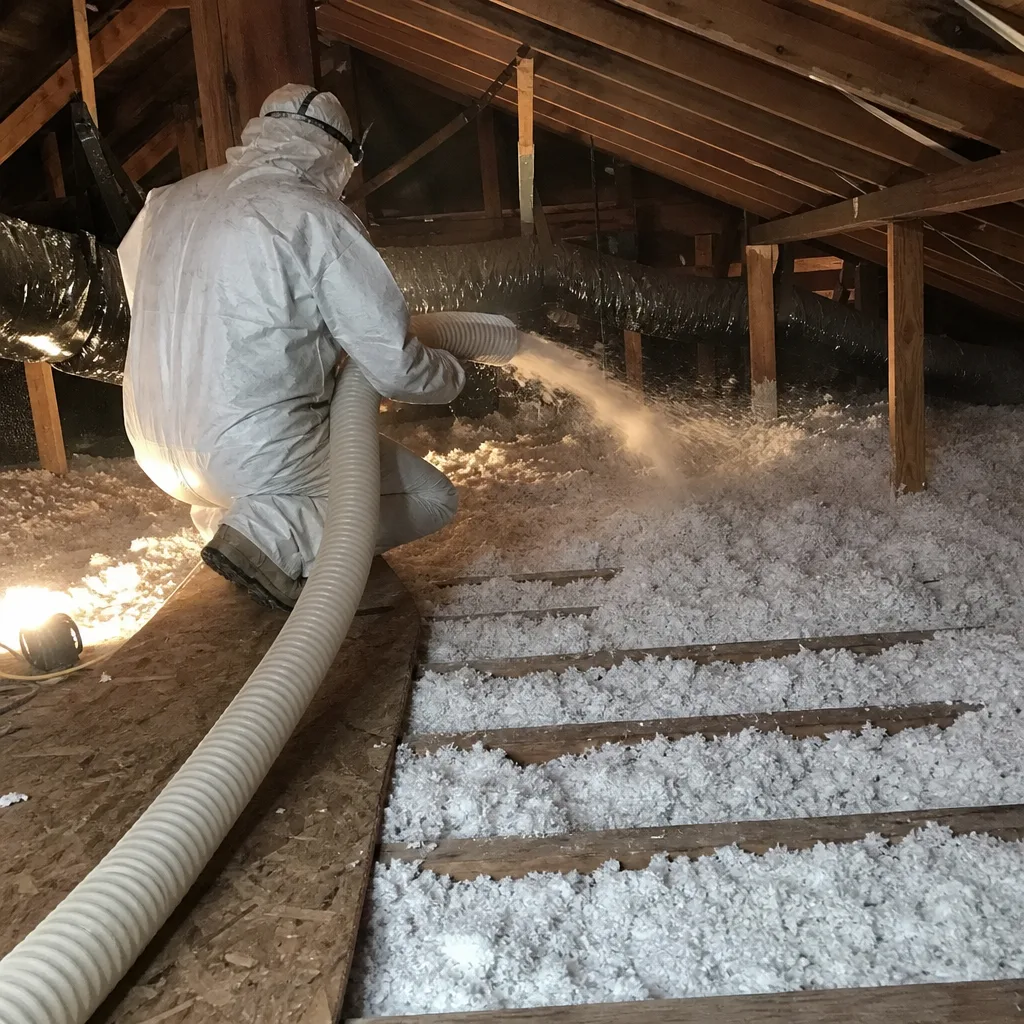
- Skipping air sealing before spraying foam. Our Spray Foam Insulation team never applies foam over an unsealed surface - top plates, can lights, plumbing penetrations, and electrical chases are sealed first. In Stanford’s fog-driven climate, this sequence isn’t optional; it’s the difference between performance and failure.
Pricing for Spray Foam Insulation in Stanford, CA
| Service | Typical Range in Stanford |
|---|---|
| Open-cell spray foam (per board foot) | $1.20 - $2.40 |
| Closed-cell spray foam (per board foot) | $2.80 - $5.40 |
| Rim joist sealing (typical crawl space) | $1,800 - $3,200 |
| Garage ceiling (2-car, with thermal barrier) | $2,400 - $4,600 |
| Roof deck spray foam (conditioned attic) | $4,200 - $8,500 |
| Whole-attic closed-cell (shallow profile faculty home) | $3,800 - $7,200 |
These ranges reflect Stanford’s market specifically, including the coordination time with Stanford Facilities Management and Utilities that some projects require. Final price depends on accessible square footage, existing insulation removal needs, and whether thermal barriers or ignition barriers are required by code. We provide a written price before any work starts - Haven Standard Clause 1 - and we offer a Free Second Opinion on any competing written estimate. Call (650) 352-3577 for your specific scope.
We Also Serve Cities Near Stanford
Our crews work throughout the mid-Peninsula, including Stanford and the surrounding communities of Palo Alto, Menlo Park, Atherton, and Los Altos. Each city has distinct housing stock and local requirements; our approach adapts to the specific conditions we find, whether it’s Atherton’s estate properties, Los Altos’s hillside construction, or the university-coordinated projects that define Stanford.
Serving Stanford, CA - Our Local Coverage Area
We’re based in the Stanford area and know this community well. Use the map below to see our service coverage - if you’re nearby, we can almost certainly help.
FAQs - Spray Foam Insulation in Stanford
Yes, but the upgrade must be approved by Stanford’s Real Estate office and, for homes connected to district energy, coordinated with Stanford Utilities. We handle this documentation as part of our standard process, and we’ve completed dozens of faculty lease home upgrades under R&DE agreements. Call (650) 352-3577 to review your lease terms and determine the approval path.
Buildings connected to Stanford’s Central Energy Facility depend on balanced pressure and controlled temperature delivery; tightening the envelope without coordinating with Utilities can create condensation and pressure imbalances in the centralized HVAC system. We notify Stanford Utilities before beginning any spray foam work on connected structures, and we provide post-installation blower-door readings to document that the envelope change hasn’t compromised system performance. Call (650) 352-3577 to confirm whether your home is on the district loop.
Closed-cell spray foam at 2-3 inches depth is typically the best fit for these shallow profiles, delivering R-13 to R-19 in the available space while also acting as an air barrier and vapor retarder. We plan the application carefully to avoid blocking soffit vents or compressing against roof sheathing, which is critical in the low-pitch roofs common along Cabrillo Avenue and near the main campus. Call (650) 352-3577 for a site-specific recommendation.
Yes. Historic sandstone-and-red-tile structures on the core campus require Stanford preservation approval before any retrofit work, and standard spray foam approaches may be prohibited or modified to protect original fabric. We submit scopes to Stanford’s heritage office and work within the constraints they set, using alternative detailing where necessary. Call (650) 352-3577 to discuss your specific building.
Stanford’s microclimate produces cool, damp winter mornings with regular radiation fog that drives moisture infiltration through any gap in the building envelope; without thorough air sealing first, spray foam alone won’t stop this moisture transport, and you risk condensation, mold, and degraded thermal performance. We seal top plates, can lights, penetrations, and rim joists before applying any foam, and we verify the result with blower-door testing. Call (650) 352-3577 to schedule an assessment.
Written by Wes Okafor, Owner at Topside Attic Insulation Palo Alto, serving Stanford and the Bay Area since 2016.