

How Much Does Spray Foam Insulation Cost in Palo Alto?
Spray foam insulation in Palo Alto typically costs between $1.50 and $4.50 per board foot installed, depending on foam type, application area, and access conditions. A full attic air-seal-and-spray-foam job on a 1,500 sq ft Palo Alto home generally runs $3,800 to $9,500, with crawl space encapsulation projects landing in a narrower band of $2,400 to $5,800. Because Bay Area labor rates and local permit conditions push costs above national averages, treat any quote below $1.50/board foot with caution – it usually means corners are being cut on surface prep or air sealing.
Spray Foam Insulation Cost Breakdown (2026)
Below are the line-item ranges we see in the Palo Alto market. These numbers reflect 2026 Bay Area material and labor costs – not national averages pulled from a data aggregator. Every figure assumes proper surface prep and air sealing before foam is applied, because that’s the order the work has to happen in.
| Application / Scope | Typical Palo Alto Range (2026) | Notes |
|---|---|---|
| Open-cell spray foam – attic roof deck | $1.50 – $2.25 / board foot | 3.5″ minimum for climate zone 3 performance |
| Closed-cell spray foam – attic roof deck | $2.75 – $4.50 / board foot | 2″ meets code minimum; 3″ recommended for radiant gain in Palo Alto summers |
| Closed-cell spray foam – crawl space walls/rim joist | $2.50 – $4.00 / board foot | Tight access in older Squares and Midtown homes adds 10-20% |
| Open-cell spray foam – interior wall cavities (gut remodel) | $1.25 – $2.00 / board foot | Requires open walls; common in University South and Old Palo Alto remodels |
| Air sealing only (top plates, can lights, penetrations) | $550 – $1,400 | Prerequisite before any insulation; priced separately so you can see what you’re paying for |
| Full attic air seal + open-cell spray foam (1,200-1,800 sq ft attic) | $3,800 – $7,200 | Blower-door test included; before/after numbers documented |
| Full attic air seal + closed-cell spray foam (1,200-1,800 sq ft attic) | $5,500 – $9,500 | Closed-cell adds structural rigidity – useful on older sheathing |
| Crawl space encapsulation + spray foam rim joist | $2,400 – $5,800 | Combined scope; vapor barrier + foam in one visit where access allows |
| Garage ceiling / bonus room above garage | $1,800 – $4,200 | Common request in Barron Park and Duveneck/St. Francis neighborhoods |
| Permit fee (City of Palo Alto building permit, if required) | $200 – $600 | Required when spray foam is applied to roof sheathing in conditioned attic conversions |
What Pushes the Price Up or Down
Open-cell foam costs less per board foot because it uses water as a blowing agent and stays soft after curing. Closed-cell foam is denser, has a higher R-value per inch (roughly R-6.5 vs. R-3.7 for open-cell), and acts as a vapor retarder – which matters in Palo Alto crawl spaces where ground moisture migrates upward during the wet season from November through March.
Labor in Santa Clara County runs 25-35% above the national median. A crew that would charge $1.20/board foot in Fresno will run $1.65-$2.00/board foot in Palo Alto simply because their own operating costs are higher. That’s not a markup – it’s the local cost structure, and any bid dramatically below that range deserves a direct question about what’s being omitted.
Access is the other major variable. In Old Palo Alto and College Terrace, we regularly work in attics with 18-inch clearance and unconventional framing from 1920s and 1930s construction. That kind of access can add two to four hours to a job that would otherwise take six. A written scope, provided before any work starts, is the only way to know what you’re actually agreeing to.
Under Haven Standard Clause 1, you receive a flat written price before anyone lifts a tool. The scope describes the square footage being treated, the foam type and thickness, and whether a blower-door test is included – so there’s no ambiguity after the crew leaves.
What Affects Spray Foam Insulation Pricing in Palo Alto
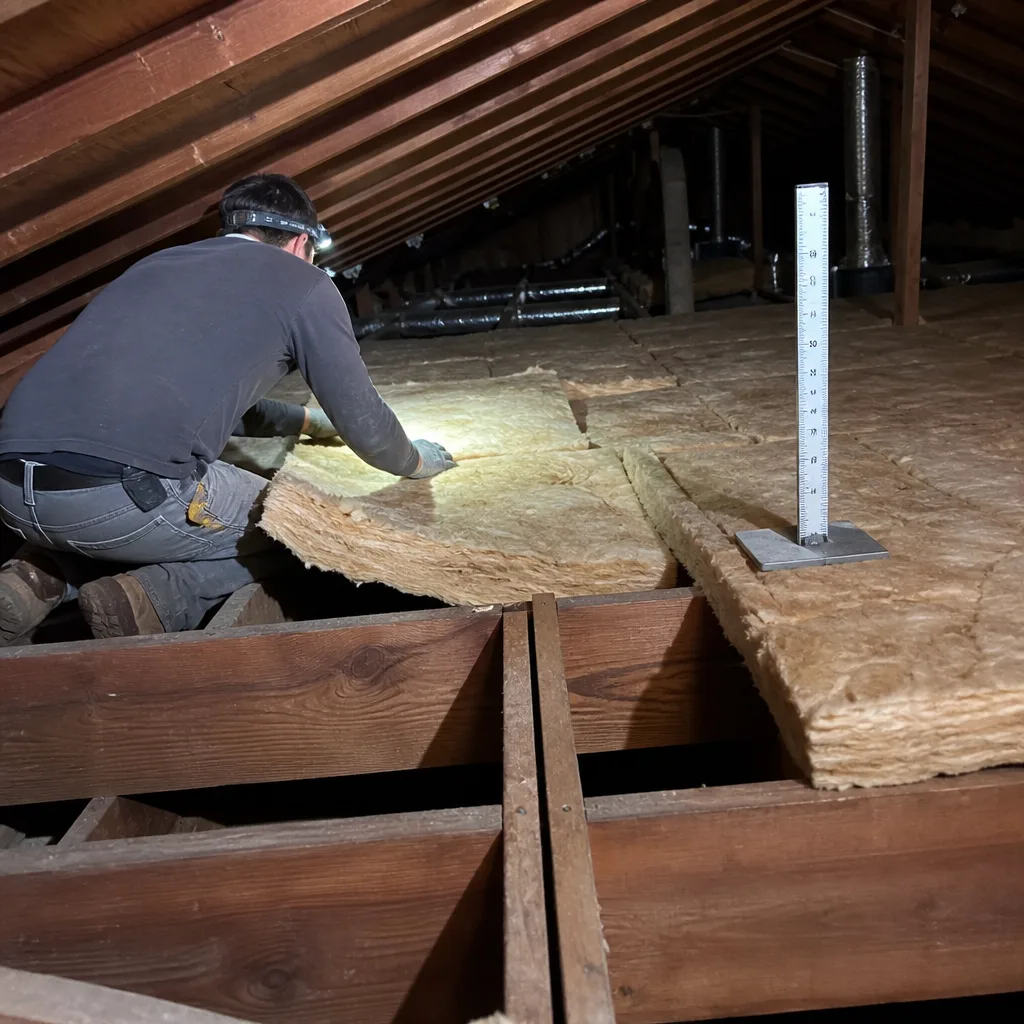
- Foam type – open-cell vs. closed-cell: Closed-cell foam costs roughly 60-80% more per board foot than open-cell. In Palo Alto’s climate zone 3, closed-cell is often the right call on roof decks and rim joists where vapor control matters; open-cell is frequently adequate for interior wall cavities and cathedral ceilings in new construction where drying potential is higher.
- Application area and access difficulty: Attics in Midtown Palo Alto and Barron Park were often framed with low-slope sections and HVAC equipment dropped in decades after original construction. Repositioning equipment, working around ductwork, or navigating a 14-inch crawl space adds measurable labor time. We name those conditions in the written scope so you can see what complexity is being priced.
- Thickness required to meet California Title 24 and local code: California’s energy code requires minimum R-values that translate to specific foam thicknesses – typically 2 inches of closed-cell or 5.5 inches of open-cell for roof deck applications in zone 3. Some Palo Alto remodels, particularly in the R-1 zoning corridors near Addison Avenue, also trigger City of Palo Alto building department review when the attic is being converted to conditioned space, which adds permit cost.
- Substrate condition and air sealing prerequisites: Spray foam applied over an unsealed attic floor is a waste of money. Air leaks at top plates, can light penetrations, and plumbing chases let conditioned air bypass the insulation layer entirely. At Envelope Insulation Co., air sealing is completed before foam goes on – every time. If a competing quote doesn’t include air sealing as a line item, ask why it isn’t there.
- Old insulation removal: Homes in Palo Alto built before 1980, particularly in the Professorville and Crescent Park neighborhoods, sometimes have degraded fiberglass batts or settled blown-in that needs to come out before foam can be applied correctly. Removal runs $0.50-$1.20 per square foot and should appear as a separate line item in any written estimate.
- Blower-door testing and documentation: A blower-door test – a pressurization measurement that tells you, in a single number (CFM50), how much air your building envelope is losing – is included on applicable jobs at Envelope Insulation Co. If a contractor isn’t measuring before and after, you have no way to verify the air-sealing work did anything. In Palo Alto, where homeowners are buying performance, not just R-value, that documentation matters.
Open-Cell vs. Closed-Cell: Which One Does Palo Alto Actually Need?
This is the question that determines the single largest line item on your quote, so it’s worth a direct answer.
Open-cell foam (roughly R-3.7/inch) is lighter, more vapor-permeable, and costs less. It’s a reasonable choice for interior wall cavities in a gut remodel, cathedral ceilings in new construction, and anywhere that drying-to-the-interior is part of the moisture management plan. In Palo Alto’s mild, low-humidity climate, open-cell performs well in many attic applications – particularly in homes that have already had their air sealing done properly.
Closed-cell foam (roughly R-6.5/inch) is denser, adds structural rigidity to roof sheathing, and functions as a Class II vapor retarder. For crawl spaces under homes in the flat sections of Palo Alto near Matadero Creek and Adobe Creek, where ground moisture is a genuine seasonal issue, closed-cell at the rim joist and crawl space walls is the more defensible choice. It’s also the right answer when you need maximum R-value in a constrained space – like a 2×4 rafter bay where there’s only 3.5 inches to work with.
The honest answer is that the right foam type depends on the assembly, not on which one costs more. We use materials from Icynene and Demilec for spray foam applications, and we’ll tell you in writing which type is being used and why before any foam is mixed.
Palo Alto Permit Requirements for Spray Foam Insulation
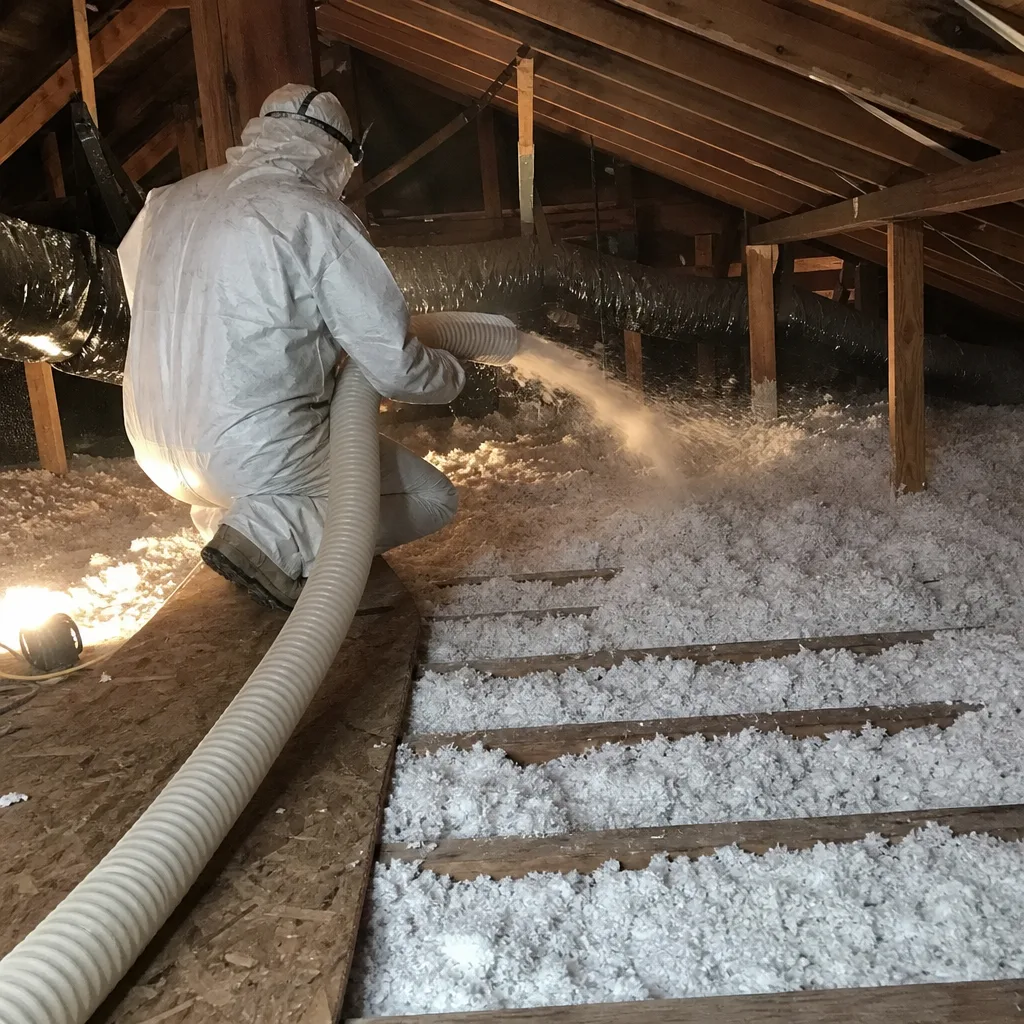
This section is worth reading before you accept any quote, because permit requirements in Palo Alto are specific and a contractor who skips them creates a liability you’ll carry at resale.
The City of Palo Alto Building and Planning Department requires a building permit when spray foam insulation is applied to the underside of roof sheathing in a way that converts an unconditioned attic to conditioned space. This is common in full spray-foam attic jobs and most full-perimeter crawl space encapsulations that alter the thermal boundary of the home. Permit fees in Palo Alto typically run $200-$600 for this scope, and the inspection involves confirming the foam meets the minimum thickness required by California Title 24 energy standards for climate zone 3.
Spot applications – rim joist sealing, small air-sealing work, or touch-up foam in a wall cavity – generally fall below the permit threshold. But if a contractor is spraying your full attic roof deck and doesn’t mention a permit, ask directly. A written scope from Envelope Insulation Co. will name the permit requirement if it applies to your job.
How to Save on Spray Foam Insulation in Palo Alto
There are legitimate ways to reduce the cost of a spray foam project in Palo Alto without cutting the parts that actually affect performance. There are also false economies worth naming.
Combine Scopes in One Visit
Mobilization – getting a crew and equipment to your home – is a fixed cost that gets spread across the job. If you’re already having the attic done, adding rim joist sealing or a partial crawl space treatment in the same visit costs meaningfully less than scheduling it separately. When you request a written estimate, ask specifically about combined-scope pricing. We structure scopes so you can see the line-item math.
Check for PG&E and TECH Clean Energy Rebates
PG&E customers in Palo Alto may qualify for rebates through the California TECH Clean Energy program or through PG&E’s Energy Upgrade California incentives. In 2026, rebates for qualifying air sealing and insulation work can offset $200-$800 of project cost depending on documented energy savings – which is exactly why the before-and-after blower-door numbers we provide matter. A measurable ACH50 reduction (air changes per hour at 50 pascals) is the kind of documentation those rebate programs ask for. We’ll tell you which documentation applies to your project during the estimate.
Do the Air Sealing Separately if Budget is the Constraint
Air sealing alone – sealing top plates, can lights, plumbing penetrations, and the attic hatch – often delivers 40-60% of the energy performance gain at 15-25% of the cost of a full spray foam job. If the full project is out of reach this year, a targeted air-sealing pass documented with before-and-after blower-door readings is a defensible first step. We won’t tell you to add foam over an unsealed envelope, but we will help you sequence the work in a way that makes budget sense.
Get a Second Opinion on Any Written Estimate
Envelope Insulation Co. offers a free second opinion on any written estimate you’ve received. Bring us a competing quote and we’ll go through it line by line – foam type, thickness spec, air sealing scope, and what the permit situation looks like. This isn’t a sales tactic; it’s how we think customers should make a $4,000-$9,000 decision.
To schedule a free estimate or a second-opinion review, call (650) 352-3577. A live person answers – no voicemail loops, no callback window measured in business days.
Don’t Skip the Air Sealing to Lower the Bid
This is the false economy worth naming plainly. Some contractors will quote a spray foam job without air sealing because it makes the number smaller and the job faster. The problem is that spray foam applied over unsealed penetrations doesn’t stop air movement – it just covers it. In homes in the Squares neighborhood or near the Caltrain corridor where pressure differences drive real stack-effect infiltration, that’s a job that didn’t work. The right sequence is air sealing first, then foam. At Envelope Insulation Co., those steps happen in that order on every job, and the written scope makes it explicit so you know what you’re actually getting.
What the Job Looks Like From Estimate to Completion
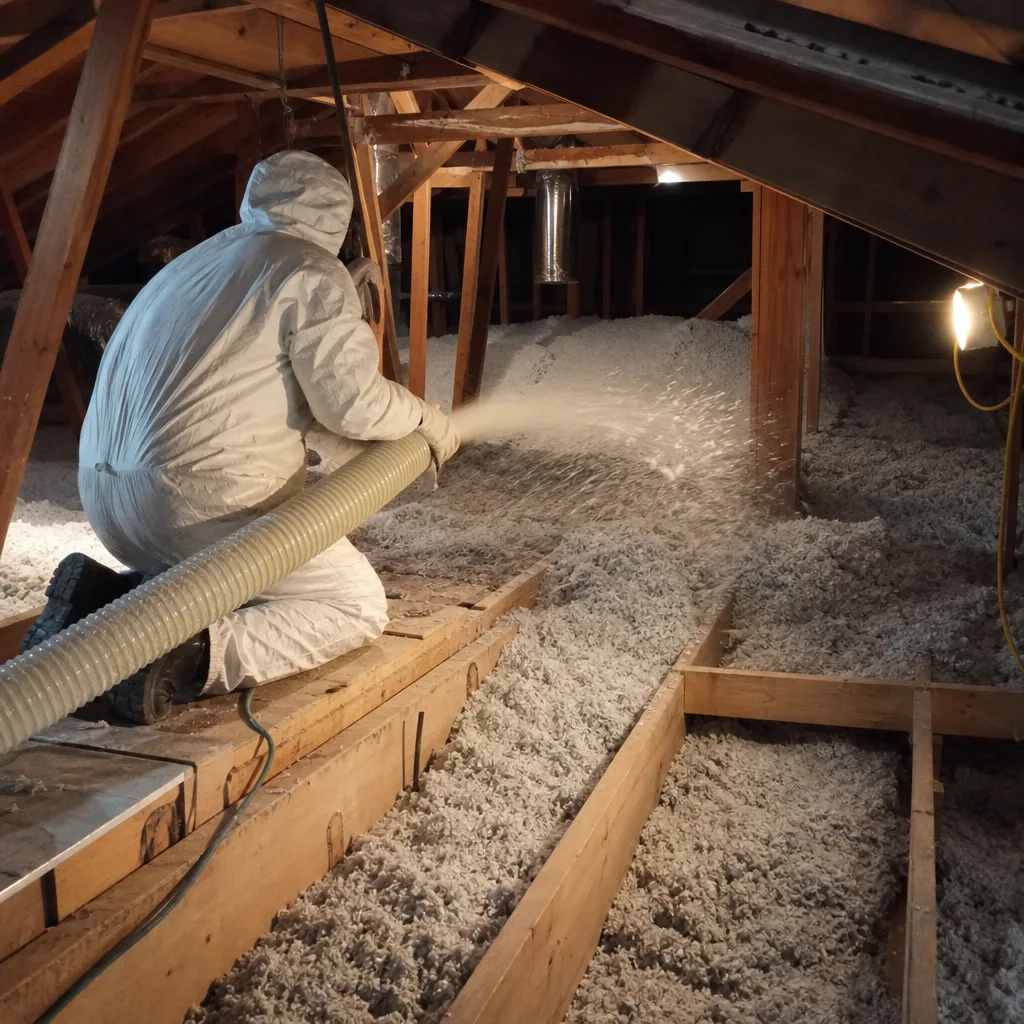
This is a question we get often enough that it’s worth answering directly, because the process differs from what a lot of Palo Alto homeowners have experienced with other contractors.
Before any work starts, you receive a written price. That means a flat dollar figure, a written scope describing exactly what areas are being treated and with what materials, and a written warranty. Nothing starts until you’ve signed off on that document. That’s Haven Standard Clause 1, and it applies without exception.
On the day of the job, you’ll get a text when the technician is on the way, along with their name. The crew arrives in uniform; everyone has passed a background check. Air sealing of top plates, can light penetrations, and any plumbing or electrical chases happens first. Once that work is complete and verified, the foam is applied. On applicable jobs, a blower-door test – a pressurization reading that tells you, in one number, how much air your building envelope was losing before and after – is conducted and documented.
When the crew leaves, you have a documented photo record of the work and, on air-sealing jobs, a before-and-after blower-door result. You can see, in numbers, what changed. Nine years of doing this across more than 9,000 homes has produced one consistent observation: homeowners who receive documented results ask better questions on the next project and make better decisions about their building envelope over time.
The 365-Day Done Right Promise applies to every completed job. If something isn’t right within the first year, we make it right – in writing, not as a verbal reassurance.
For more detail on the full service and how it’s structured in Palo Alto, see our Spray Foam Insulation in Palo Alto page.
FAQs: Spray Foam Insulation Cost in Palo Alto
How much does spray foam insulation cost per square foot in Palo Alto?
In the Palo Alto market in 2026, spray foam insulation runs $1.50 to $4.50 per board foot installed – with open-cell at the lower end and closed-cell at the upper end. Per square foot of attic floor area (a different measurement), expect to pay $3.50 to $9.00 per square foot for a full attic roof-deck application, including air sealing. National averages you’ll find on aggregator sites run lower because they don’t account for Bay Area labor costs. Call (650) 352-3577 for a written estimate with Palo Alto-specific pricing.
Is spray foam insulation worth it in Palo Alto’s climate?
Yes – for the right application. Palo Alto sits in California climate zone 3, with warm, dry summers and mild, wet winters. The bigger energy driver is air leakage (conditioned air escaping through gaps in the building envelope) rather than conductive heat loss through solid walls. Spray foam addresses both: it insulates and air-seals in one application. Homes in Palo Alto that we’ve tested before and after a spray foam attic job have shown blower-door reductions of 30-55% in ACH50 – meaning the building envelope is losing 30-55% less conditioned air than it was before the work. That’s a measurable result, not a marketing claim.
How much does it cost to insulate a 1,500 sq ft attic with spray foam in Palo Alto?
A 1,500 sq ft attic in Palo Alto – a common footprint in Midtown, Barron Park, and College Terrace – runs $4,200 to $8,500 for a full air-seal and open-cell spray foam treatment, or $6,500 to $9,500 for closed-cell. The range reflects attic access conditions, existing HVAC placement, and whether old insulation needs to be removed first. A written estimate will break these out as separate line items so you can see exactly what’s driving the total. Call (650) 352-3577 to schedule a free estimate.
Can I get a rebate on spray foam insulation in Palo Alto?
Palo Alto homeowners served by PG&E may qualify for rebates through the California TECH Clean Energy program or Energy Upgrade California. In 2026, qualifying air-sealing and insulation projects can receive rebates in the range of $200 to $800, depending on documented energy performance improvement. The key word is “documented” – which is why the before-and-after blower-door numbers we provide on applicable jobs matter beyond just your own peace of mind. We’ll identify which rebate programs apply to your project during the estimate process.
How long does spray foam insulation last, and does it need to be replaced?
Spray foam – both open-cell and closed-cell – has a service life of 80 years or more when installed correctly and not disturbed by water intrusion or pest damage. It doesn’t settle over time the way blown-in cellulose or fiberglass can. In Palo Alto homes near Adobe Creek or the seasonal drainage corridors in Barron Park, the more relevant durability question is whether moisture is entering the assembly – which is why a crawl space inspection is part of any encapsulation estimate. A job documented with photos and blower-door readings gives you a baseline to compare against if you ever suspect something has changed.
What’s the difference between spray foam and blown-in insulation for an attic in Palo Alto?
Blown-in insulation (cellulose or fiberglass) adds R-value by filling the attic floor cavity, but it doesn’t air-seal – it’s a porous material that conditioned air moves through freely. Spray foam applied to the roof deck converts the attic to a conditioned, unvented space, which eliminates the attic as a thermal buffer zone and moves the thermal boundary to the roofline. For Palo Alto homes with HVAC equipment or ductwork in the attic – which is common in homes built in the 1960s through 1990s – spray foam on the roof deck means that equipment is now inside the conditioned envelope, which can meaningfully reduce duct loss. Blown-in on the attic floor is less expensive and appropriate when there’s no equipment in the attic and the air sealing work on the attic floor has been done first.
Key Takeaways
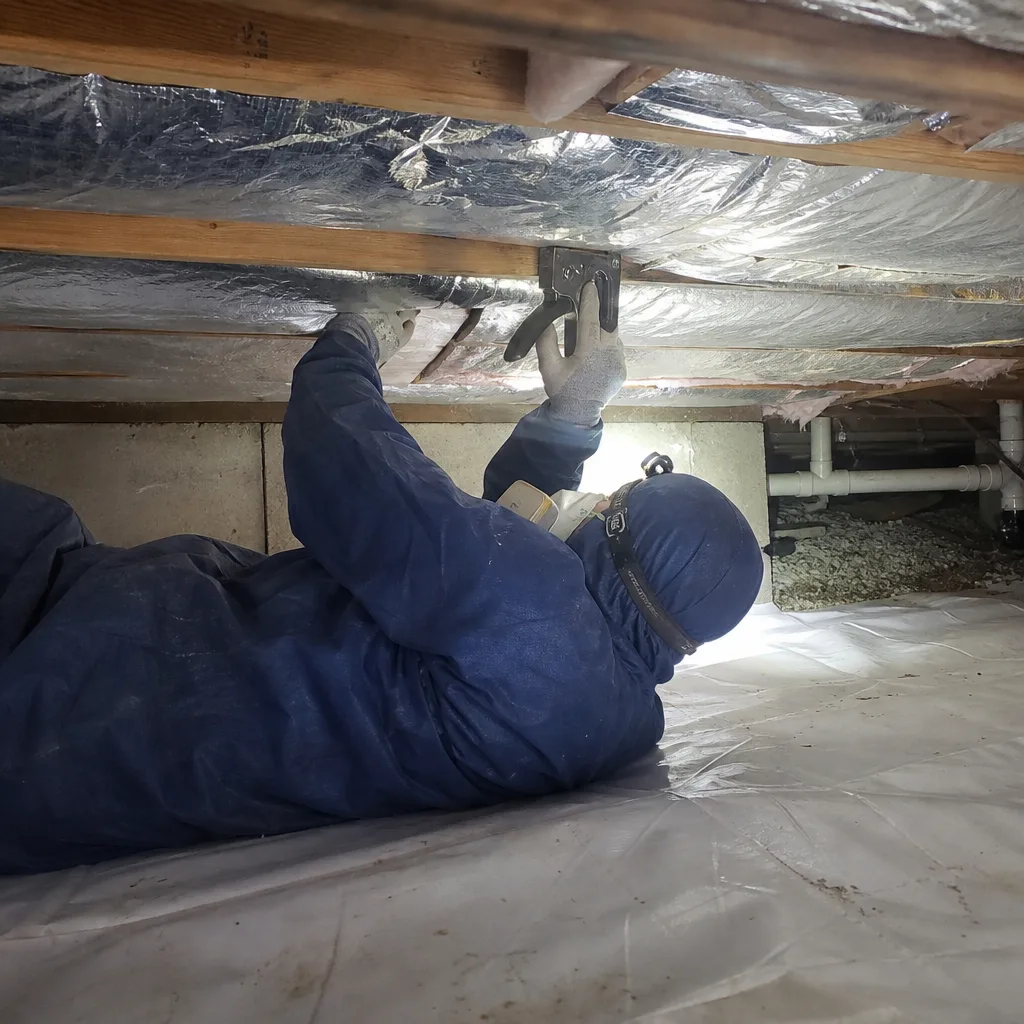
- Spray foam in Palo Alto runs $1.50-$4.50 per board foot installed, with full attic projects landing between $3,800 and $9,500 in the 2026 market.
- Closed-cell foam costs more than open-cell but provides higher R-value per inch and vapor control – the right choice depends on the assembly, not on which costs more.
- Air sealing must come before insulation. Any quote that doesn’t include air sealing as a line item deserves a direct question about why.
- City of Palo Alto building permits are required for some spray foam applications – specifically conditioned attic conversions. A written scope will name the permit requirement if it applies.
- PG&E rebates through TECH Clean Energy can offset $200-$800 of project cost for qualifying work – but require documented energy performance results to claim.
- Before-and-after blower-door testing is the only way to verify that air sealing work did what it was supposed to do. Ask for those numbers, in writing, from any contractor you hire.
- Envelope Insulation Co. has completed more than 9,000 homes with a written price before any work started and a documented record when the crew left, operating under The Haven Standard since 2016.
Ready to Get a Written Price for Your Palo Alto Home?
Wes Okafor and the team at Envelope Insulation Co. – operating as Topside Attic Insulation Palo Alto – provide free estimates for our Spray Foam Insulation services throughout Palo Alto, including Old Palo Alto, Midtown, Barron Park, College Terrace, Crescent Park, and the Squares. Every estimate is a written price, not a ballpark, and every applicable job closes with before-and-after blower-door numbers and a documented photo record.
If you have a competing quote and want a second opinion, bring it. We’ll go through it line by line at no charge. That offer is part of how we think decisions like this should be made.
To schedule a free written estimate, call (650) 352-3577. A live person answers – no voicemail loops, no callback window. Or start by reading more about how we approach this work on our home page.
Written by Wes Okafor, Owner at Envelope Insulation Co. (Topside Attic Insulation Palo Alto), serving Palo Alto since 2016.
Pricing reflects the Palo Alto market as of 2026. Topside Attic Insulation Palo Alto offers free estimates – call (650) 352-3577.
What Our Customers Say
"Crawl space encapsulation done properly. Photographs of the vapour barrier at every seam, and the damp smell in the hallway is gone."
- Ainsley P."The winter gas bill dropped by about a third. They had estimated a quarter, so they under-promised."
- Genevieve R."They photographed rodent damage in the old insulation that we had no idea about, and priced the exclusion work separately so we could decide."
- Harriet N.