
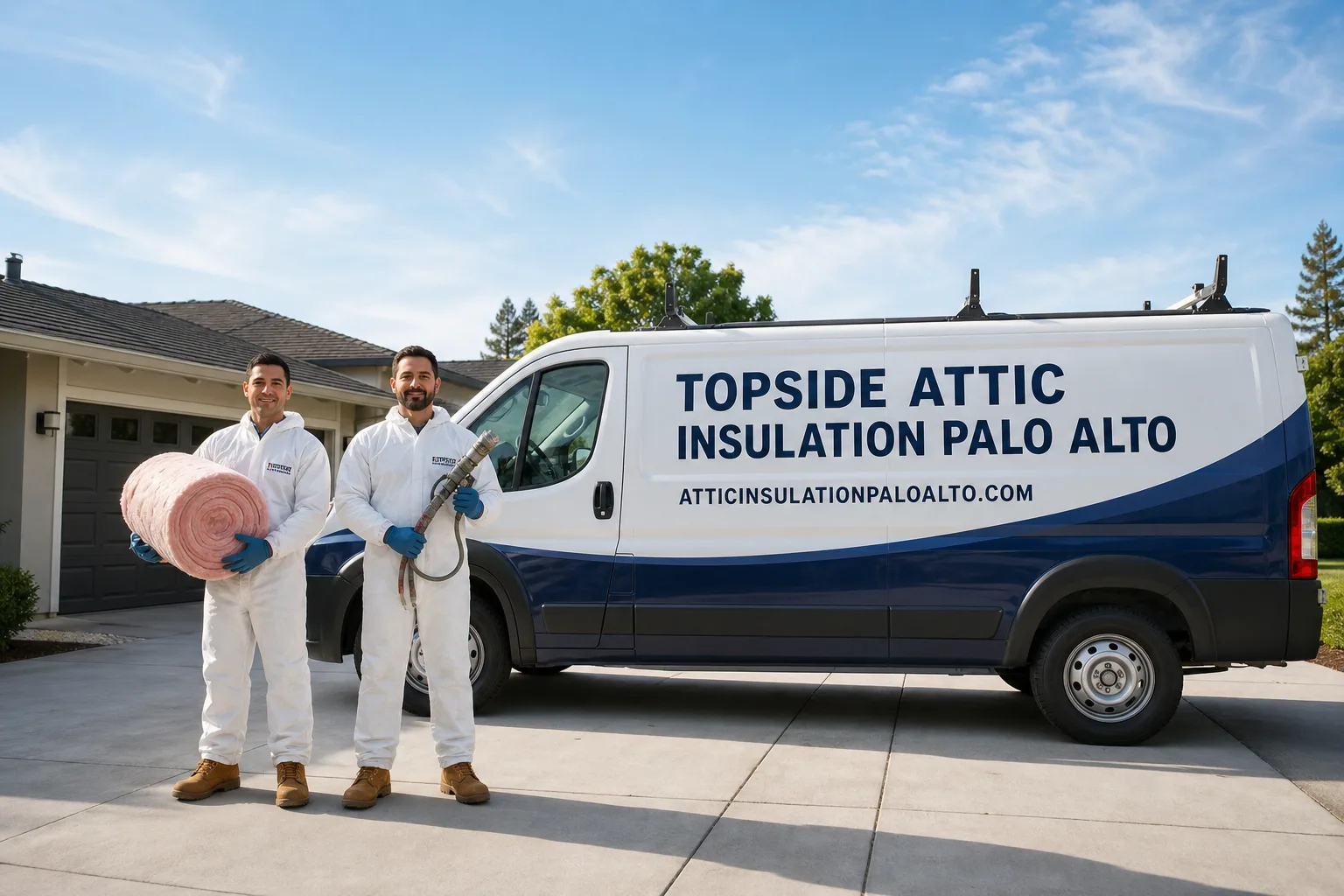
Trusted Blown-In Insulation for Palo Alto Homeowners
Blown-In Insulation - Palo Alto typically costs $2.80 to $5.50 per square foot installed, with most attic jobs running $3,200 to $7,800 depending on depth, material, and whether air sealing is needed first. Most homes in Old Palo Alto, Professorville, and the Greenmeadow neighborhood were built between 1950 and 1980 with original fiberglass batts that have settled to R-19 or below, well under the current California Title 24 requirement of R-38 for attics in Climate Zone 4. We’re Topside Attic Insulation Palo Alto, independently owned and operated under The Haven Standard since 2016, and we’ve sealed and insulated over 9,000 homes with a written price before any work starts and a documented record when the crew leaves. Our technicians are background-checked and uniformed, and a live person answers calls 24/7 at (650) 352-3577.
What Our Blown-In Insulation Service Includes
Blown-In Cellulose
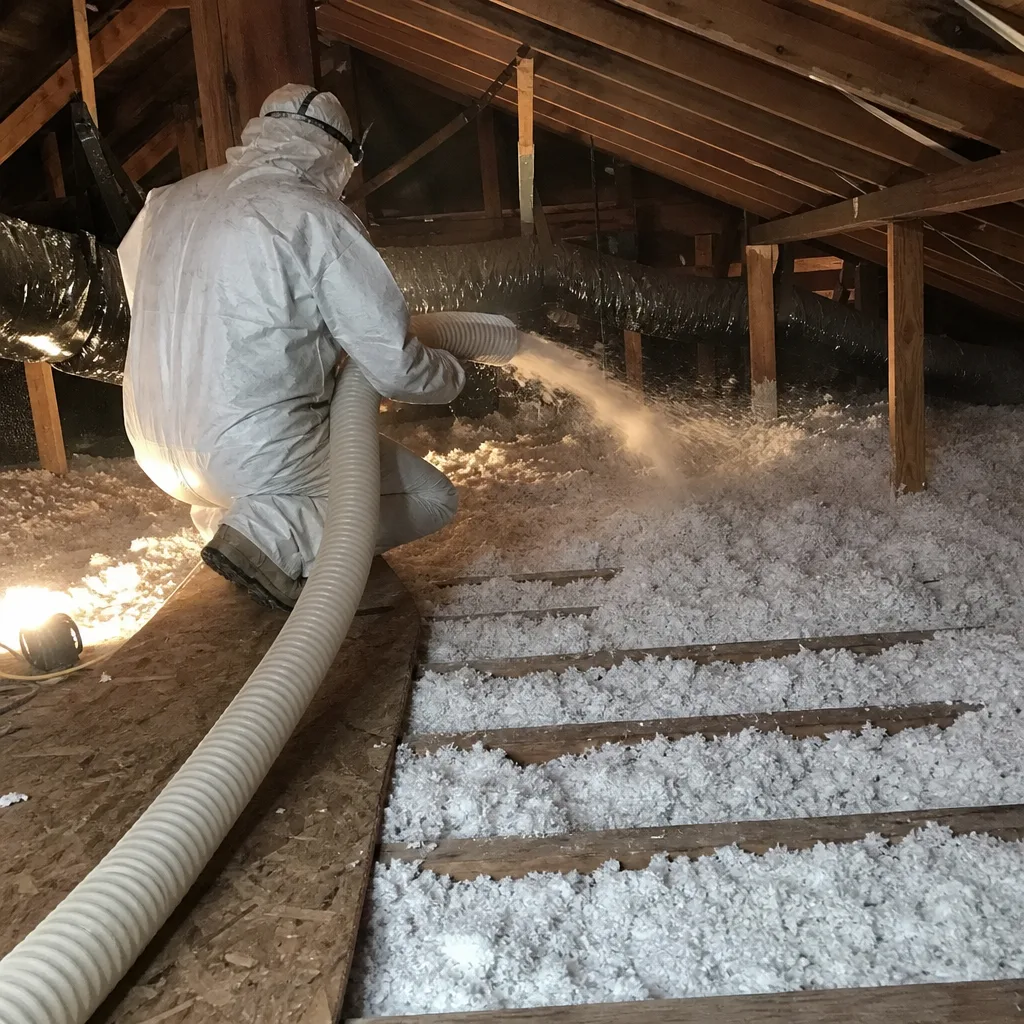
Blown-in cellulose is ground paper fiber treated with borate fire retardant, blown to a specified depth through a hose into open attic floors or dense-packed into closed cavities. In Palo Alto, we specify it most often for homes in the Ventura neighborhood and south of Oregon Expressway where attics have moderate access and homeowners want a recycled-content material with strong sound dampening. We source cellulose from GreenFiber and Owens Corning, and we never blow it over an unsealed attic floor. Our crews seal top plates, can lights, and plumbing penetrations first, then blow to a settled depth that achieves R-38 or higher, typically 10 to 12 inches. Every job gets a Documented Photo Record showing pre-condition, sealed points, and finished depth.
Blown-In Fiberglass
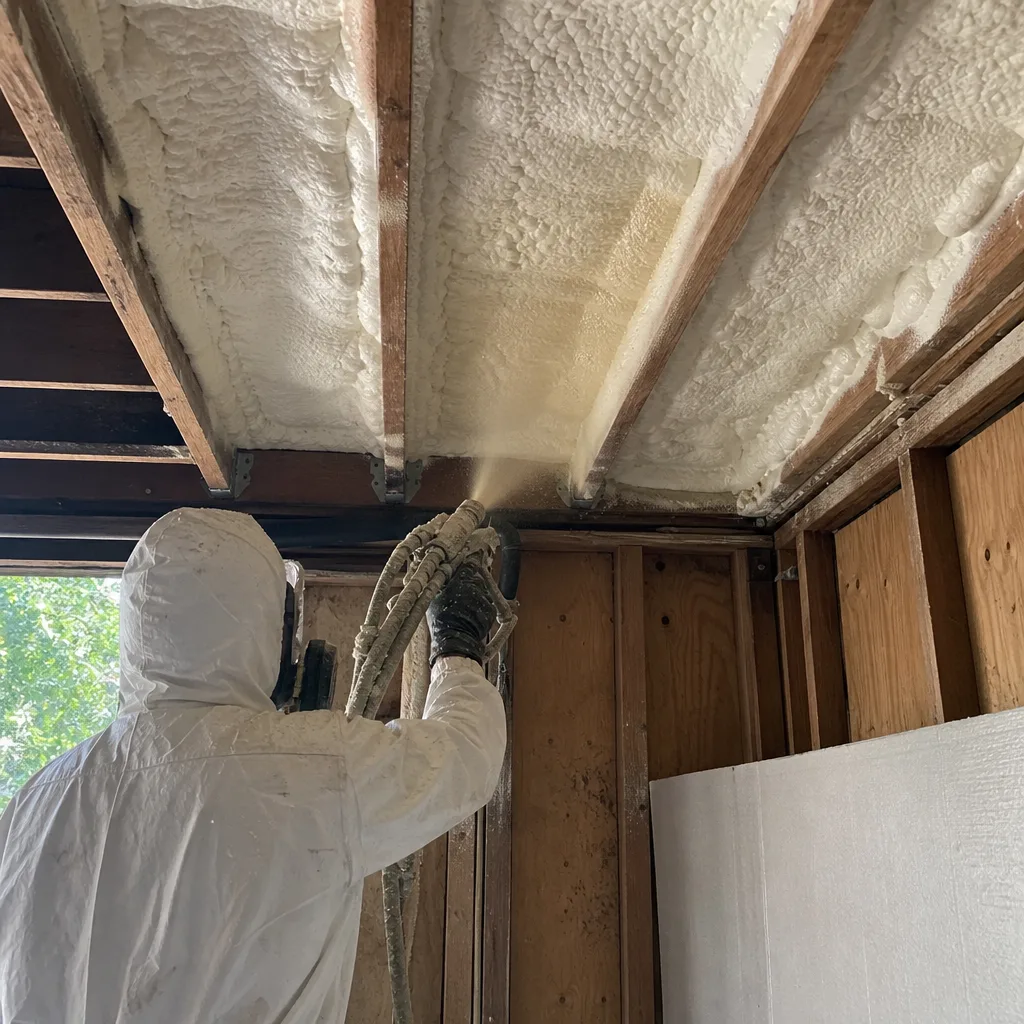
Blown-in fiberglass is spun glass fibers, lighter and less prone to settling than cellulose, with higher R-value per inch. We recommend it for Palo Alto homes with limited attic framing depth, such as the Eichler and similar mid-century moderns in the Barron Park and Fairmeadow areas where rooflines are flat or low-pitched and every inch counts. We stock Johns Manville and Owens Corning fiberglass, and we calculate blown density carefully. Too loose and it loses R-value; too dense and you waste material. Our crews use a depth marker system and spot-check with a probe. The 365-Day Done Right Promise applies to every installation.
Dense-Pack Wall Insulation
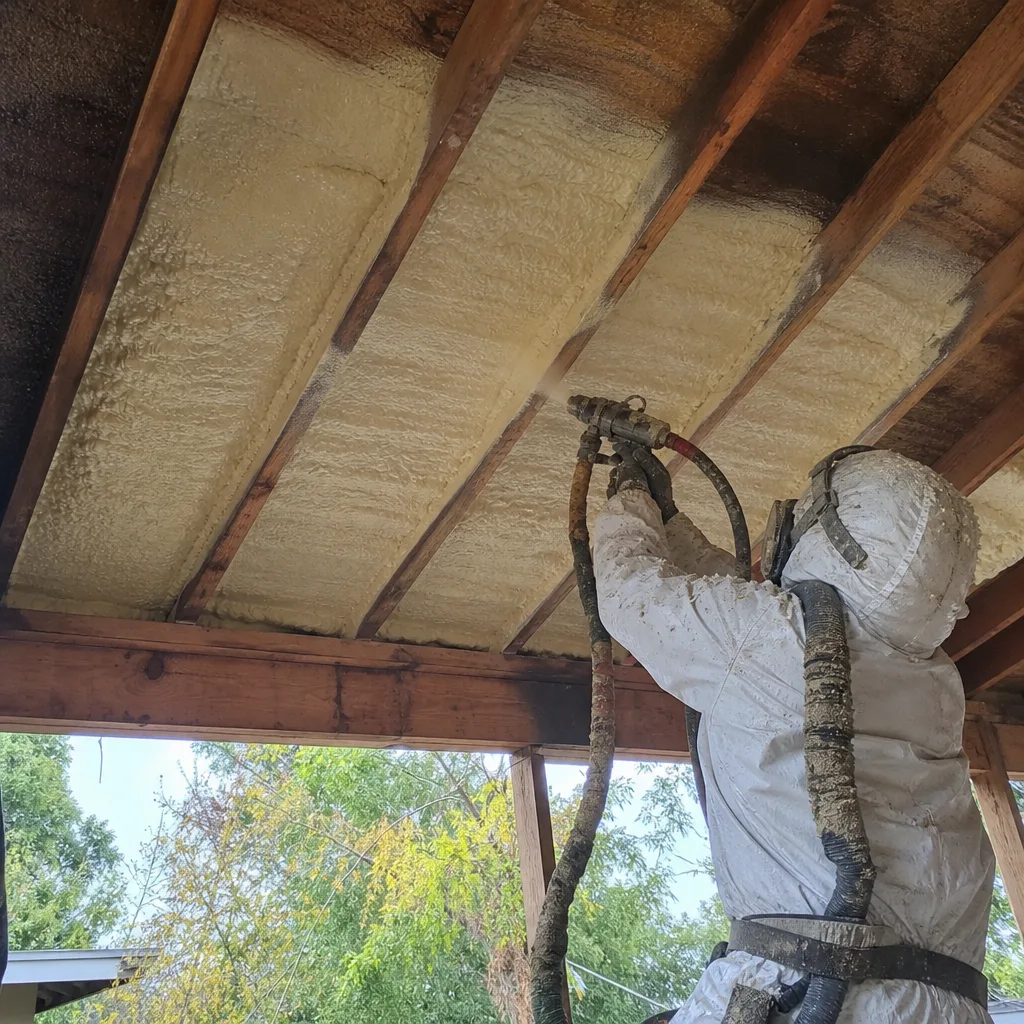
Dense-pack is blown-in cellulose or fiberglass installed at 3.5 pounds per cubic foot into closed wall cavities through exterior holes or from the interior, filling gaps that batts leave behind. In Palo Alto, we use this most in the 1920s bungalows of Professorville and the 1940s cottages near downtown where walls were never insulated originally. The material packs tight enough to slow air movement through the cavity, not just heat conduction. We drill and patch siding or drywall, blow to refusal pressure, and verify fill with thermal imaging. Before-and-after blower-door numbers are published on every dense-pack job so you can see the air leakage reduction in CFM50, the pressurization reading that shows, in one number, how much conditioned air your building envelope was losing.
Blown-In Top-Up
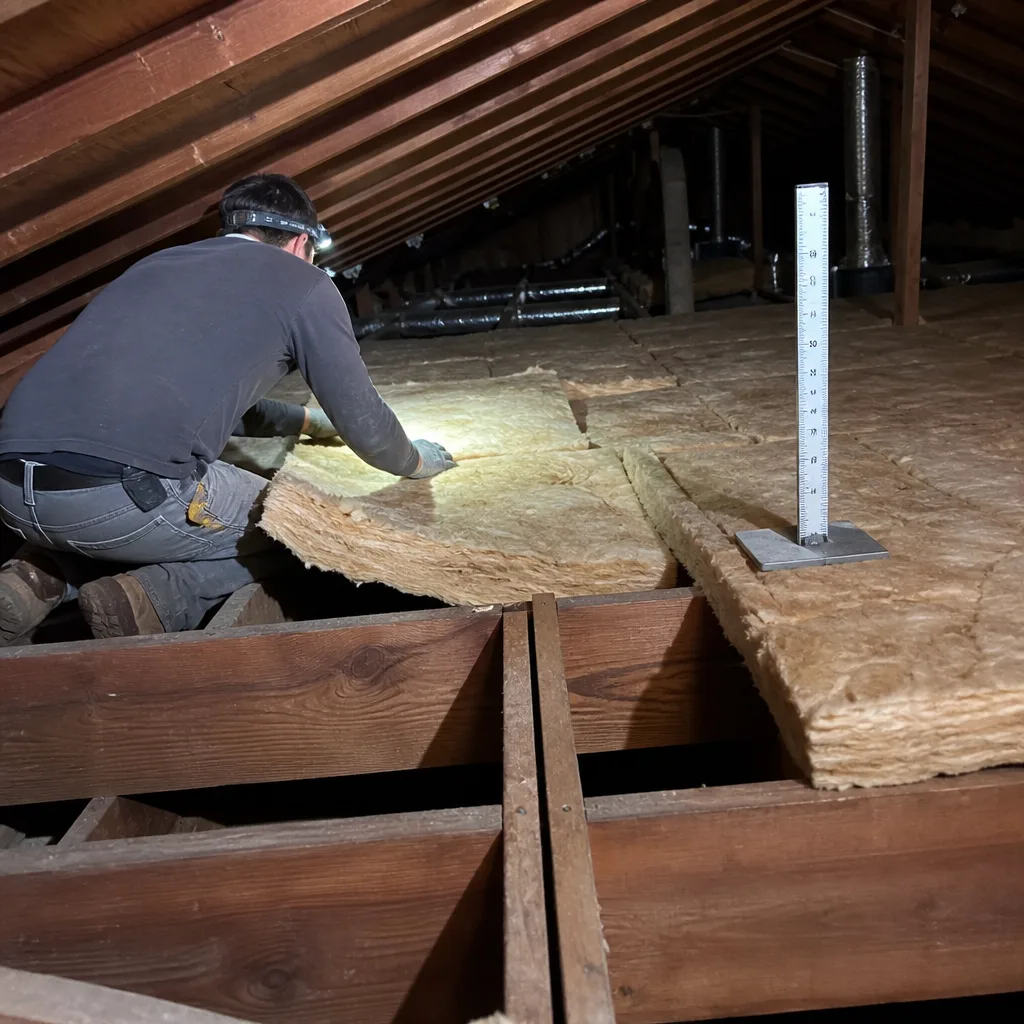
A Menlo Park Blown-In Insulation top-up adds material over existing insulation that has settled, compressed, or been disturbed by prior work, bringing the total assembly back to code minimum or above. In Palo Alto, we perform this most often in homes that had partial insulation added in the 1990s or 2000s, typically in neighborhoods like Duveneck/St. Francis and the areas near Gunn High School where a previous owner did some work but not enough. We inspect the existing layer first. If it’s wet, moldy, or rodent-contaminated, we remove it. If it’s merely compressed, we air seal any new penetrations, then blow on top. The written scope specifies starting and target R-values, and you get the photo record showing both.
What happens when you call
- 1
A real person answersNo phone trees - you reach a local pro.
- 2
You get an upfront price rangeHonest numbers before anyone is dispatched.
- 3
A background-checked tech heads outLicensed & insured, dispatched right away.
- 4
You approve before work beginsNothing starts until you say go.
Brands We Service for Blown-In Insulation
We work with Owens Corning fiberglass and mineral wool systems regularly, and we’ve installed their AttiCat blown-in fiberglass in hundreds of Palo Alto attics since 2016. Their loose-fill product achieves R-38 at roughly 14.75 inches when blown to proper density, and we verify that density with a calibrated hopper and depth gauges, not eyeball estimates. We also source cellulose from GreenFiber, a recycled-content product manufactured from post-consumer paper with borate treatment for fire and pest resistance. In Palo Alto’s dry climate, borate-treated cellulose performs well and doesn’t absorb moisture the way it might in fog-dominant zones closer to the coast.
Whether you have Owens Corning, GreenFiber, Johns Manville, or any other make, we can help. We don’t carry proprietary product lock-ins, and we select material based on your cavity depth, access constraints, and performance goals, not on distributor incentives. If you’ve received a quote specifying a brand you don’t recognize, bring it to us. Under Haven Standard Clause 1, we provide a Free Second Opinion on any written estimate, read it with you line by line, and explain where the material choice does or doesn’t match your home’s needs.
Signs You Need Blown-In Insulation Right Now
- Your upstairs rooms are 8 to 15 degrees warmer in summer than the downstairs. In Palo Alto, this is the most common symptom we see in two-story homes built before 1990, especially in neighborhoods like Green Acres and the Ranch-style homes south of Arastradero Road. Heat migrates through an under-insulated attic ceiling faster than your HVAC can counter it, and the temperature split worsens on clear days when solar gain hits the roof deck directly.
- Your energy bill spikes every August and January despite steady thermostat settings. Pacific Gas and Electric bills in Palo Alto average $180 to $340 monthly for single-family homes, but we’ve seen bills hit $500 or more in homes with R-19 attics and unsealed top plates. The HVAC runs longer to replace conditioned air leaking out and unconditioned air leaking in.
- You can see the ceiling joists through your attic insulation. Fiberglass batts installed in the 1970s and 1980s were often R-19, roughly 6 inches thick, and they’ve compressed to 4 inches or less. Current Title 24 standards for Palo Alto’s climate zone require R-38 minimum. If joists are visible, you’re at roughly half the code minimum.
- You feel drafts near outlets, baseboards, or interior walls on windy days. These aren’t window leaks. In Palo Alto’s older neighborhoods, unsealed top plates and balloon framing allow attic air to drop into wall cavities and exit through any opening. Blown-in dense-pack wall insulation, preceded by air sealing, stops this pathway.
- Your home was built between 1950 and 1990 and the attic has never been touched. This describes thousands of homes in Palo Alto, from the Eichlers to the ranch tracts near San Antonio Road. Original insulation has settled, been disturbed by wiring or ductwork retrofits, or was never adequate to begin with. A blower-door test, the pressurization reading that shows how much air your building envelope is losing, will quantify the problem in one number.
Our Blown-In Insulation Process - Step by Step
- 1
Schedule and arrival. You call (650) 352-3577 and a live person answers, 24/7. We book a window, not a vague “morning or afternoon.” Under Haven Standard: Arrive on schedule, you get a named technician and a text when they are on the way. Our technician arrives in a marked vehicle, uniformed, with photo ID.
- 2
Attic inspection and blower-door test. We access the attic, photograph current conditions, and on applicable jobs run a blower-door test to establish your home’s CFM50 baseline. This pressurization reading shows, in one number, how much conditioned air you’re losing. We also inspect for active leaks, knob-and-tube wiring that must be cleared by an electrician first, and rodent damage that requires remediation before insulation goes in.
- 3
Written scope and price. Before any work starts, you receive a written scope specifying material type, target R-value, air-sealing details, and flat price. Haven Standard Clause 1: no work starts without it. This is not an estimate that balloons later. The price is the price.
- 4
Air sealing first, then insulation. We seal top plates, can lights, plumbing and electrical penetrations, and chimney chases with fire-rated foam, caulk, or rigid baffles as appropriate. We never blow insulation over an unsealed attic floor. In Palo Alto’s climate, with hot dry summers and cool wet winters, air sealing typically reduces blower-door readings by 20 to 40 percent before insulation even goes in.
- 5
Installation, verification, and documentation. We blow to specified depth and density, spot-check with probes, and photograph finished conditions. On applicable jobs, we run a post-work blower-door test and publish the before-and-after numbers. You receive a Documented Photo Record and written warranty before the crew leaves. The 365-Day Done Right Promise applies: if it’s not done right, we make it right.
How Much Does Blown-In Insulation Cost in Palo Alto?
A typical Blown-In Insulation pricing for an attic top-up in a 1,200 to 2,000 square foot Palo Alto home runs $2,800 to $4,500, including air sealing of accessible penetrations. Full attic insulation removal and replacement with new blown-in material, including comprehensive air sealing, ranges from $5,500 to $9,200 depending on attic square footage, accessibility, and whether we need to build storage platforms or dam around recessed lighting. Dense-pack wall insulation for a 1,500 square foot home with 3-inch siding typically runs $4,200 to $7,800, including drill-and-patch work.
Several factors move the price within these ranges. Attic accessibility matters: a truss attic with a scuttle hole and 24-inch joist spacing takes less labor than a 1,200 square foot Eichler with a flat roof and 12-inch clearance. The condition of existing insulation affects removal cost; rodent-contaminated material requires HEPA vacuuming and disposal fees that clean settled fiberglass does not. Material choice shifts price too. Blown-in fiberglass runs roughly 15 to 25 percent more per R-value than cellulose, though it achieves higher R-value in constrained depths.
To avoid overpaying, get a written scope that specifies starting and target R-values, material brand and type, and whether air sealing is included or priced separately. Some Palo Alto contractors quote insulation alone at a low per-square-foot rate, then add air sealing as a line item that doubles the total. Our price includes sealing of accessible top plates and penetrations as standard, not an upsell. Every free estimate includes a written scope with flat pricing, and our Free Second Opinion on any written estimate lets you compare apples to apples. Call (650) 352-3577 to schedule.
Blown-In Insulation Near Palo Alto - Our Service Area
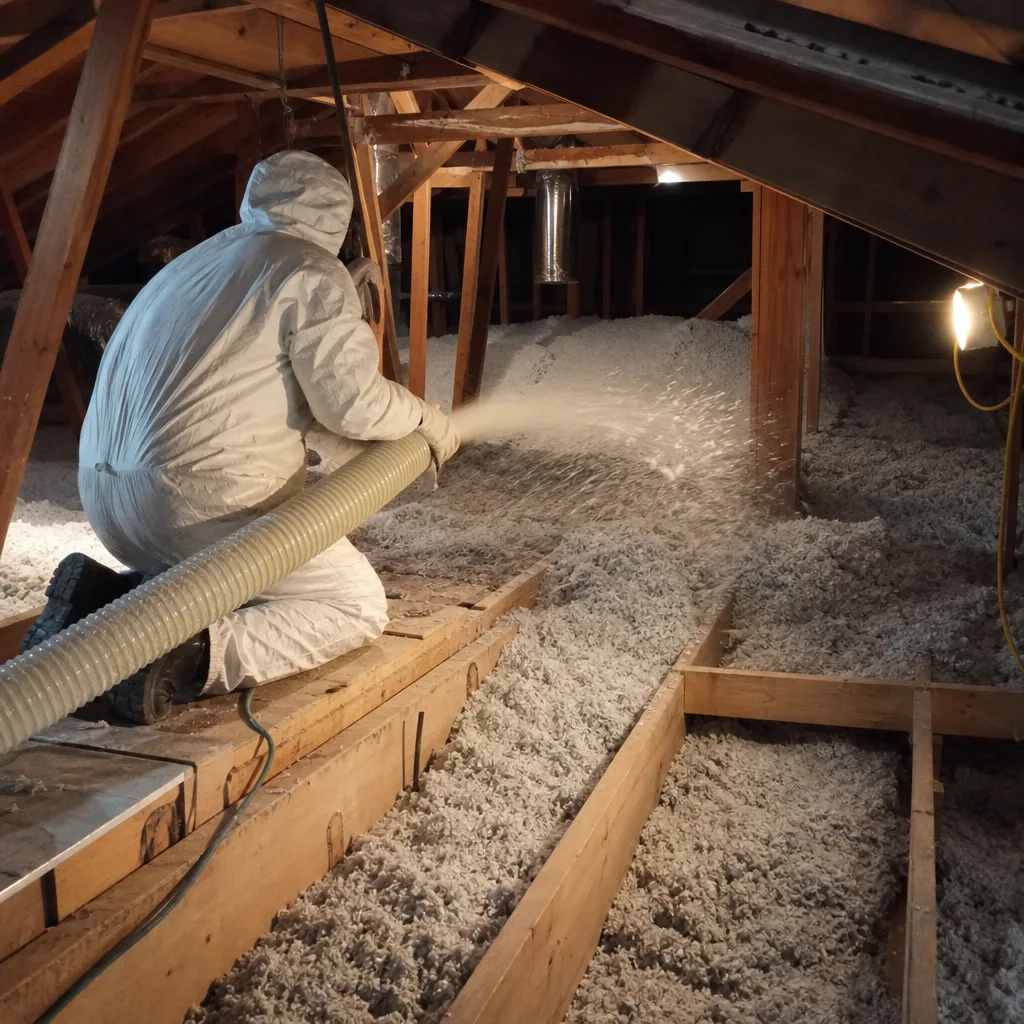
We serve Palo Alto and surrounding communities with typical response times of same-day to 48 hours depending on season. Our regular service area includes Blown-In Insulation in Los Altos Hills, Blown-In Insulation in Stanford, Los Altos, Mountain View, East Palo Alto, Portola Valley, Atherton, Menlo Park, North Fair Oaks, Sunnyvale, and Woodside. Homes in the hills west of Interstate 280, including parts of Portola Valley and Woodside, often require specialized access planning for our blowing equipment, and we coordinate that during the initial call. Whether you’re in the flatlands near San Antonio Road or the slopes above Foothill Expressway, we calculate travel and setup time into your written price, not as a surprise surcharge.
Serving Palo Alto, CA - Our Local Coverage Area
We’re based in the Palo Alto area and know this community well. Use the map below to see our service coverage - if you’re nearby, we can almost certainly help.
Frequently Asked Questions - Blown-In Insulation in Palo Alto
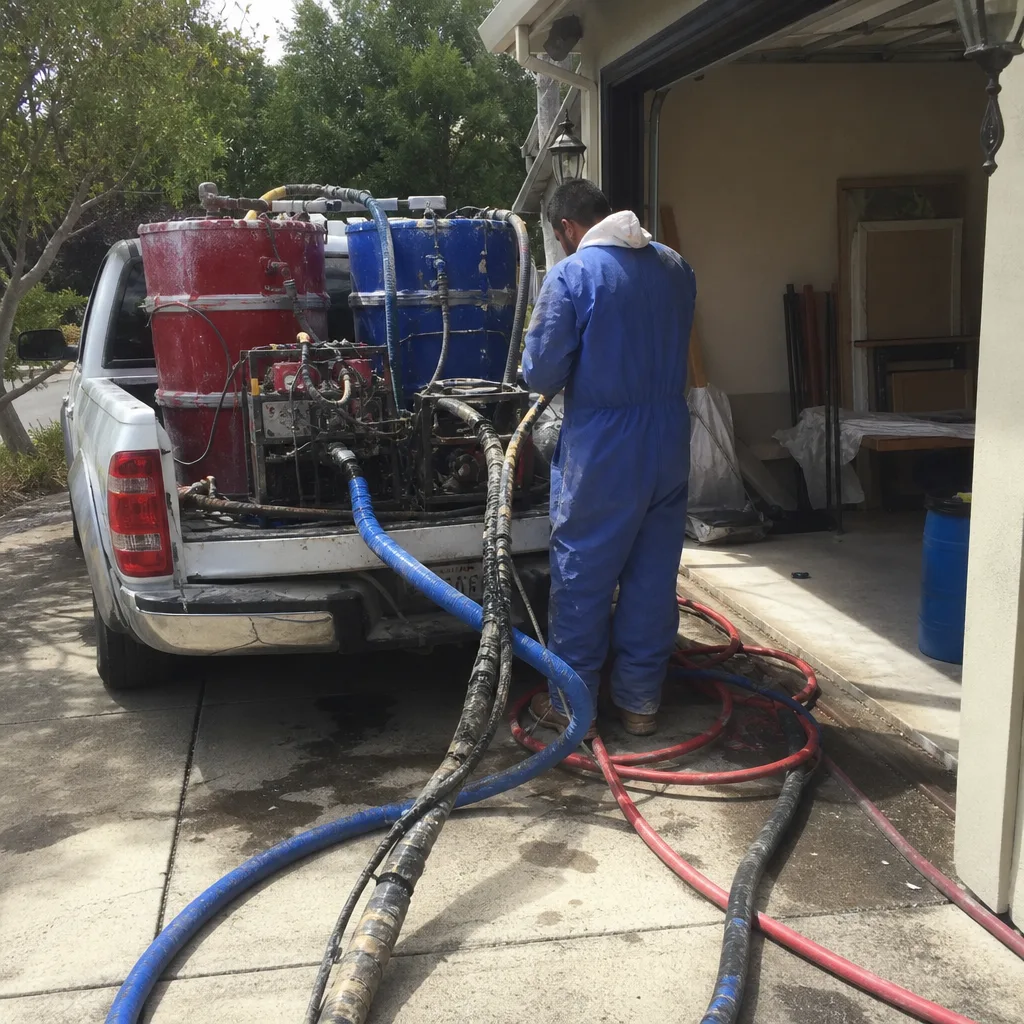
Blown-in insulation is loose fiber material, cellulose or fiberglass, installed with a blower hose to fill attic floors, wall cavities, or irregular spaces that batts cannot reach. It conforms around wires, pipes, and framing members without gaps, and when installed at proper density it slows both heat transfer and air movement. In Palo Alto, it’s the most common retrofit for homes with accessible attics and no existing insulation, or for topping off compressed material from prior decades.
A typical attic top-up in a 1,500 square foot Palo Alto home takes 4 to 6 hours including air sealing; full removal and replacement takes 1 to 2 days. Dense-pack wall insulation for a whole house requires 2 to 3 days including drill-and-patch work. We schedule start times, not open-ended windows, and you receive a text when your technician is en route. Call (650) 352-3577 for availability - estimates are free.
Most attic jobs run $3,200 to $7,800 installed, with wall dense-pack ranging $4,200 to $7,800 for a typical single-family home. The price depends on square footage, existing material condition, accessibility, and whether air sealing is needed. We publish a flat written price before any work starts under Haven Standard Clause 1, and our Free Second Opinion lets you verify competing quotes. Call for your specific scope.
Yes. We install Owens Corning AttiCat and Johns Manville blown-in fiberglass regularly, and we stock GreenFiber cellulose for homeowners who prefer recycled content. We do not have exclusive or preferred status with any manufacturer; we select material based on your home’s cavity depth, framing constraints, and performance goals. Bring us any written estimate specifying a brand and we’ll explain whether it’s the right match.
We answer calls 24/7 at (650) 352-3577, and we prioritize homes with no insulation and failed HVAC systems, elderly residents, or infant occupants during extreme heat or cold events. True insulation emergencies are rare, but we treat comfort-critical situations seriously and can often schedule same-day or next-day service. A live person, not voicemail, will take your call.
All completed work is covered by our 365-Day Done Right Promise: if it’s not done right, we make it right. You also receive a written warranty document before the crew leaves, specifying material and workmanship coverage. The Documented Photo Record, included on every job, supports any future claim by showing pre-condition, installation details, and finished depth. This is Haven Standard: Have it in writing.
Clear attic access points of stored items for 48 inches around the hatch or scuttle; our crew can move light items, but heavy storage requires advance notice. Ensure we have driveway or street parking for our blower truck, typically a 20-foot box truck. If your home has active knob-and-tube wiring, we require a licensed electrician’s clearance letter before insulation can cover it, per California electrical code. We’ll identify this during inspection if present. Call (650) 352-3577 and we’ll walk you through any home-specific preparation.
Schedule Your Blown-In Insulation Service in Palo Alto Today
Call (650) 352-3577 to speak with a live person, 24/7, and schedule your free estimate. We’ll inspect your attic, run a blower-door test if applicable, and deliver a written scope with flat pricing before any work starts. Every job closes with a Documented Photo Record and, where applicable, before-and-after blower-door numbers you can verify. Independently owned and operated under The Haven Standard since 2016.
Written by Wes Okafor, Owner at Topside Attic Insulation Palo Alto, serving Palo Alto since 2016.