
Blown-In Attic Insulation in Palo Alto, CA
Blown-in our Attic Insulation services in Palo Alto typically costs between $1,800 and $4,200 for a standard single-story home, and most jobs are completed in a single day. The process involves blowing loose-fill material – cellulose or fiberglass – across the attic floor at the correct depth to meet California’s Title 24 minimum of R-38, though most Palo Alto homes built before 2000 need to reach R-49 or higher to stop the thermal losses that show up on summer cooling bills and winter heating runs.
At Topside Attic Insulation Palo Alto, we don’t blow insulation over an unsealed attic floor. Air sealing – closing the gaps around top plates, recessed can lights, plumbing penetrations, and electrical chases – happens first, every time, before the first cubic foot of material leaves the hose. That sequencing matters because loose-fill insulation slows heat transfer by conduction, but it does almost nothing to stop air movement. If the air leaks stay open, the R-value on the bag means very little. You can reach Wes Okafor and the crew at (650) 352-3577 any time a live person answers, which is always.
Our full scope of attic work – including everything that happens before the blown-in material goes in – is covered on our Attic Insulation in Palo Alto page. This page focuses specifically on blown-in as a method: what it costs locally, when it makes sense, how we install it, and what you receive when we leave.
When You Need Blown-In Attic Insulation
- Your attic currently reads below R-30. A quick attic inspection – something we document with photos before any work begins – often reveals 3 to 4 inches of compressed, settled fiberglass batts in Palo Alto homes built between 1960 and 1990. At that depth and that condition, you’re sitting at R-11 to R-15, roughly a third of what Title 24 calls for and less than a quarter of what modern building science recommends for a Peninsula climate with cool marine nights and hot inland afternoons.
- Your upstairs rooms are consistently hotter or colder than downstairs. In the Professorville and Old Palo Alto neighborhoods, we regularly find that the top floor of two-story Eichler-influenced homes runs 8 to 12 degrees warmer in July than the ground floor. Inadequate or missing attic insulation is the single most common cause.
- You’ve already replaced your HVAC system but your bills didn’t drop the way the contractor promised. A new heat pump or furnace can only operate as efficiently as the envelope allows. If the attic is losing conditioned air through gaps and under-insulated decking, the new equipment runs longer cycles to compensate.
- You’re adding or finishing living space directly below the attic. Palo Alto’s permitting office (Development Services, 285 Hamilton Ave) requires that attic insulation meet current Title 24 standards when a permit triggers building envelope work. Blown-in cellulose or fiberglass is typically the most practical retrofit method for existing framing bays.
- You have an older blown-in installation that has settled. Cellulose settles over time – typically 15 to 20 percent in the first few years. A 10-inch blown-in application from 2005 may now read closer to 8 inches, which on most Palo Alto homes means you’ve drifted from R-38 to somewhere around R-30 or lower.
- You’re buying or selling a home in Palo Alto and a home energy audit flagged the attic. We work alongside several local real estate transactions each quarter where the inspection report or energy audit identifies attic insulation depth as a material condition. A written price before any work starts – Haven Standard Clause 1 – is something sellers and buyers both find useful when negotiating repair credits.
Our Blown-In Attic Insulation Process
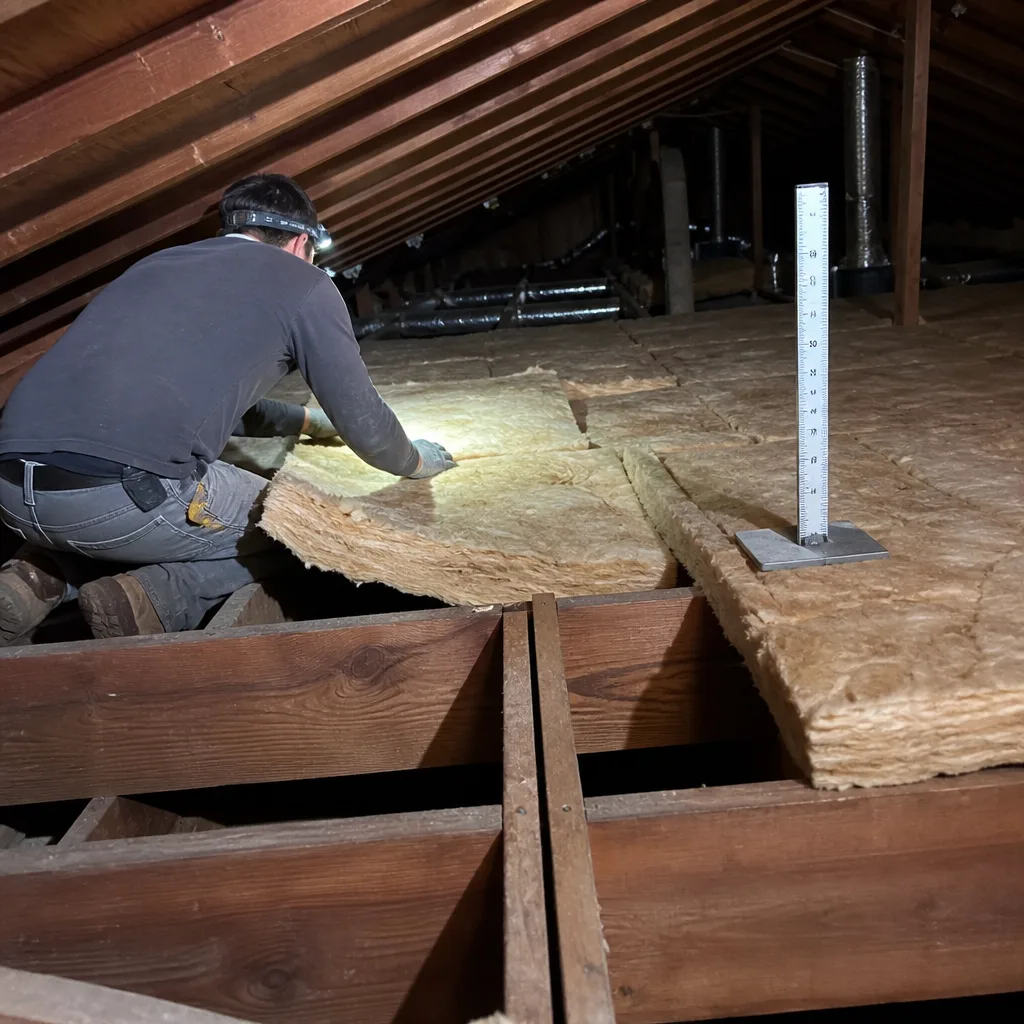
- Pre-job blower-door test and attic inspection. Before we carry anything into the house, a technician runs a blower-door test – a pressurization measurement that produces a single number, CFM50, showing how much air your building envelope is losing per minute at 50 pascals of pressure. We photograph the attic floor conditions, measure existing insulation depth at multiple points, and identify every penetration that needs to be sealed. You receive the pre-job blower-door reading in writing.
- Air sealing – completed before any insulation is placed. Top plates, the framed walls’ uppermost structural member, are a primary air-leakage path in most Palo Alto homes. We seal them with fire-rated caulk or two-component spray foam – the appropriate product depends on gap width. Recessed can lights that are not IC-rated (insulation-contact rated) get capped with sealed covers before insulation is added. Plumbing and electrical penetrations get foam or caulk. This step is non-negotiable; we will not skip it to lower the day-one labor number.
- Attic preparation and access setup. We lay protection on floors and stairways, position the blowing machine in the driveway or garage (the hose runs typically 50 to 150 feet depending on access point), install attic baffles – channels that keep eave vents clear so soffit-to-ridge airflow is maintained after insulation is added – and set depth rulers throughout the attic so the technician and the homeowner can both read the final depth from multiple vantage points.
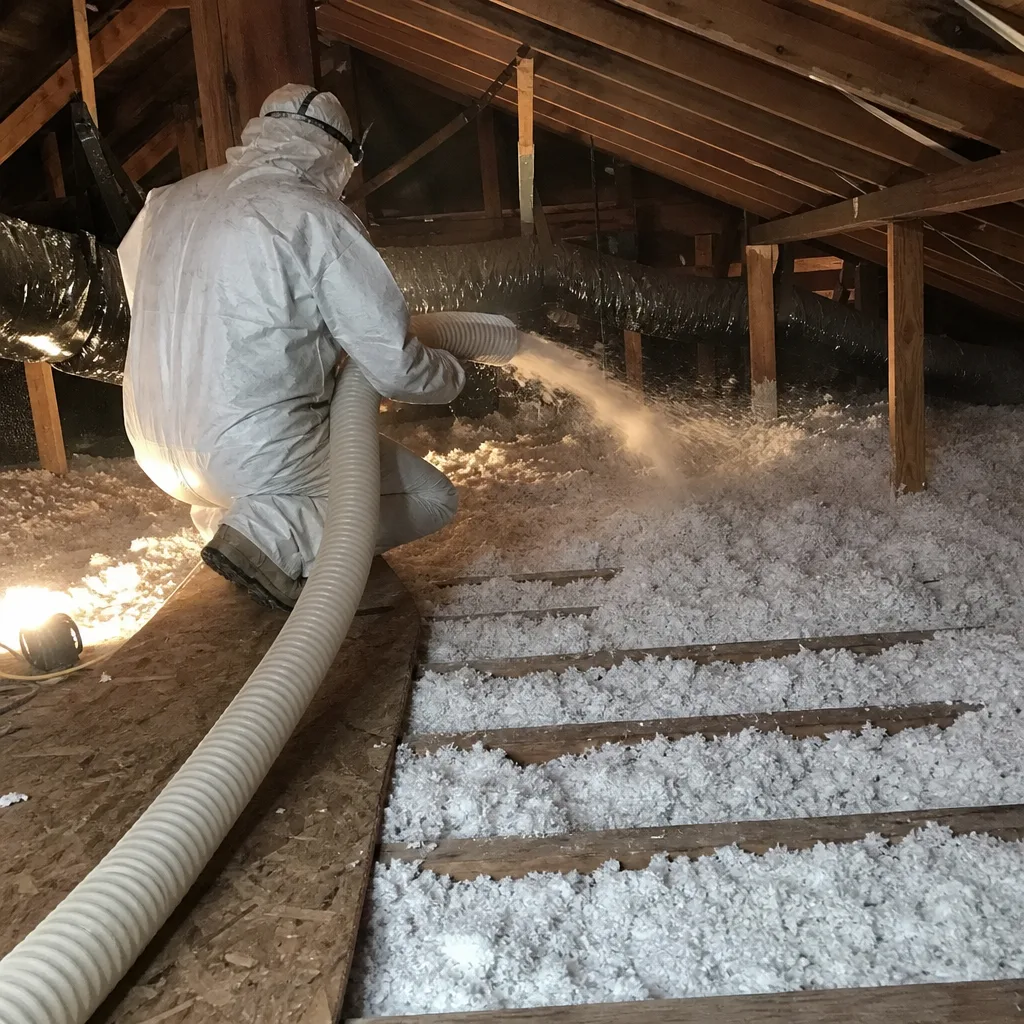
- Blown-in installation to specified depth. Material is blown in passes from the far end of the attic toward the access hatch, working systematically to hit consistent depth across the floor. On most Palo Alto homes targeting R-49, that means approximately 14 to 16 inches of GreenFiber cellulose or roughly 18 to 20 inches of fiberglass blown-in from Johns Manville or Owens Corning, depending on which material was specified in the written scope. Coverage charts for the material used are left with the homeowner as part of the documented record.
- Post-job blower-door test and verification. Once air sealing is complete and before we pack the truck, we run a second blower-door reading. The before-and-after numbers are documented and published on the job record – not available on request, included as standard. In a typical Palo Alto home where we seal top plates and recessed lights, the post-sealing CFM50 reading drops 20 to 40 percent compared to the pre-job number. On a recent job in the Midtown neighborhood, the reading moved from 3,800 CFM50 to 2,300 CFM50 after sealing – a 39 percent reduction in air leakage before the first bag of blown-in material was loaded.
- Documented photo record and written closeout. Every access point, every sealed penetration, every depth-ruler reading – photographed. The technician walks the homeowner through what was done, where, and with what material. You receive the written warranty, the scope of work, the material coverage data, and the before-and-after blower-door readings before the crew leaves. Under the 365-Day Done Right Promise, if anything isn’t right, we return and correct it – in writing, no ambiguity.
Blown-In Attic Insulation Pricing in Palo Alto
Most blown-in attic insulation jobs in Palo Alto fall into the following ranges. These are real numbers from jobs completed in Palo Alto and neighboring communities; they’re not national averages adjusted with a multiplier.
| Scenario | Typical Price Range |
|---|---|
| Small home under 1,200 sq ft attic floor area – air sealing + blown-in to R-38 | $1,800 – $2,400 |
| Mid-size home 1,200 to 1,800 sq ft attic floor – air sealing + blown-in to R-49 | $2,400 – $3,200 |
| Larger home 1,800 to 2,600 sq ft attic floor – air sealing + blown-in to R-49 | $3,200 – $4,200 |
| Blown-in only (no air sealing, existing sealed attic) – per 1,000 sq ft | $700 – $1,100 |
| Old insulation removal before new blown-in (add to above) | $600 – $1,400 depending on depth and condition |
What moves the price in Palo Alto specifically
- Access difficulty. Some Craftsman-era homes in the Crescent Park and Midtown neighborhoods have attic hatches barely 18 inches square, or the only access point is through a closet with an awkward angle. More difficult access adds time and therefore cost.
- Number of recessed can lights. A home with 30 unsealed can-light penetrations takes significantly longer to seal than one with 8. Each fixture that isn’t IC-rated needs a cap installed and sealed before insulation goes over it.
- Existing insulation condition. If old fiberglass batts are wet, compressed into a mat, or contaminated (rodent activity is common in older Palo Alto homes, particularly in the Ventura and Barron Park areas), removal is typically required before new material is added. We won’t blow over material that’s compromised.
- Target R-value. Going from R-30 to R-38 is a different job than going from R-11 to R-60. Palo Alto is in Climate Zone 3 under California’s Title 24; the code minimum is R-38 for existing homes and R-49 for new construction. Many homeowners in higher-end older properties choose R-60 when energy modeling shows the payback period makes sense.
- Material choice. GreenFiber cellulose and fiberglass blown-in from Owens Corning or Johns Manville are both solid performers in this climate. Cellulose runs slightly lower in material cost per bag; fiberglass settles less over time. The written scope specifies which material, which brand, and how many bags – no substitutions without written approval.
Every price is delivered in writing before any work starts. That’s Haven Standard Clause 1 – a flat price, a written scope, and a written warranty before anyone lifts a tool. If you have a written estimate from another contractor, bring it. We’ll read it with you at no charge – that’s the Free Second Opinion offer, and it applies to any written quote regardless of who wrote it.
For a precise number on your Palo Alto home, call (650) 352-3577. We’ll schedule an inspection, measure the attic, run the blower-door baseline, and give you a written price the same day. No voicemail, no callback window – a live person answers.
FAQs – Blown-In Attic Insulation in Palo Alto
How long does blown-in attic insulation last in a Palo Alto home?
Blown-in fiberglass maintains its R-value for 20 to 30 years under normal conditions; cellulose will settle 15 to 20 percent in the first few years and then stabilize, lasting a similar lifespan if the attic stays dry. The Peninsula’s relatively mild, dry climate is actually favorable for both materials compared to regions with extreme humidity swings. The biggest risk to longevity in Palo Alto attics isn’t climate – it’s moisture from a failing roof or unaddressed plumbing leak, or rodent activity compressing and contaminating the material. The documented photo record we leave after every job gives you a baseline so any future inspector can see what was installed, when, and at what depth. Call (650) 352-3577 if you want an inspection of an existing installation.
Do I need a permit in Palo Alto to add blown-in insulation?
Adding blown-in insulation to an existing attic without changing the structure or mechanical systems generally does not require a building permit in Palo Alto under the current municipal code, as of the date this page was written. However, if the work is part of a larger project that already has an open permit – a bathroom remodel, an ADU, a heating system replacement – the building inspector may ask that insulation meet current Title 24 standards as a condition of that permit’s final. We document what was installed and at what R-value so you have a clear record if your inspector asks. When in doubt, the City of Palo Alto Development Services Center at 285 Hamilton Ave can confirm whether your specific project triggers a permit requirement.
Is blown-in better than batt insulation for an older Palo Alto home?
For most retrofit attic projects in Palo Alto, blown-in outperforms Attic Batt Insulation on one practical measure: coverage. Batts come in fixed widths designed for standard framing. Palo Alto homes from the 1940s through 1970s have irregular joist spacing, odd-angled corners, and narrow runs near the eaves where a batt simply won’t lie flat. Blown-in material conforms to all of that without cutting or compression. Compression is the critical issue: a compressed batt loses R-value proportionally to how much it’s compressed, and most installers who try to fit batts into tight spaces end up with material that reads well on the bag but performs well below spec in the field. Blown-in goes where it goes. For new construction with clean 16-inch or 24-inch on-center framing, the difference is smaller – but in an existing home, blown-in is usually the right call.
Why do you air seal before blowing in insulation? Can’t you do both at once?
You can’t do them at the same time, and doing the sealing after the insulation is already in place is significantly harder – sometimes impossible for deeper penetrations buried under 14 inches of cellulose, which is why we install Attic Baffles & Ventilation Prep as part of our process. The reason the order matters is physical: insulation resists heat moving through it by conduction, but it has almost no resistance to air moving through it by convection. If a gap around a top plate or a recessed light is left open, warm air from the living space in winter moves directly through that gap into the attic, carrying heat with it. The insulation on either side of the gap does nothing to stop that air. Sealing first means the insulation you pay for actually performs at its rated value. Every job we do in Palo Alto follows that sequence – air seal, verify, then blow. The post-job blower-door reading shows you in one number whether the sealing worked. Call (650) 352-3577 to talk through what that number typically looks like for a home your size.
Why Palo Alto Homeowners Work with Topside Attic Insulation Palo Alto
Palo Alto’s housing stock is eclectic. You’ll find mid-century ranch homes in Barron Park sitting alongside 1920s Craftsman bungalows in Old Palo Alto and post-war tract homes near the Ventura neighborhood. What they share is that most of them were built before California’s current energy codes existed, and their attics reflect that – thin, settled insulation over unaddressed air gaps that have been losing conditioned air for decades.
Since 2016, Envelope Insulation Co. – operating as Topside Attic Insulation Palo Alto – has completed work on more than 9,000 homes across the region, every one with a written price before work started and a documented record when the crew left. Wes Okafor built the company around the Haven Standard because he found that the two things homeowners most consistently complained about with contractors were surprises on the final invoice and no way to verify that what was promised got done. The written scope, the before-and-after blower-door numbers, and the photo record exist to close both of those gaps.
You can read more about the full range of attic work we do – from initial audits through insulation removal and replacement – on the home page, or go directly to our Attic Insulation in Palo Alto overview if you’re still deciding which service fits your situation. If you already know blown-in is what you need, the fastest next step is to call (650) 352-3577. A live person picks up, we schedule an inspection, and you get a written price the same day – no voicemail, no callback window measured in business days.
Key Takeaways
- Blown-in attic insulation in Palo Alto runs $1,800 to $4,200 for most homes, with air sealing included.
- Air sealing always comes first – we do not blow insulation over an unsealed attic floor.
- Before-and-after blower-door readings are included on every applicable job, in writing.
- Written price before any work starts, 365-Day Done Right Promise, and a documented photo record on every visit – no exceptions.
- California Title 24 requires R-38 minimum for existing Palo Alto homes; most benefit from R-49 or higher.
- A live person answers at (650) 352-3577 any time you call.
Written by Wes Okafor, Owner at Topside Attic Insulation Palo Alto, serving Palo Alto since 2016.