
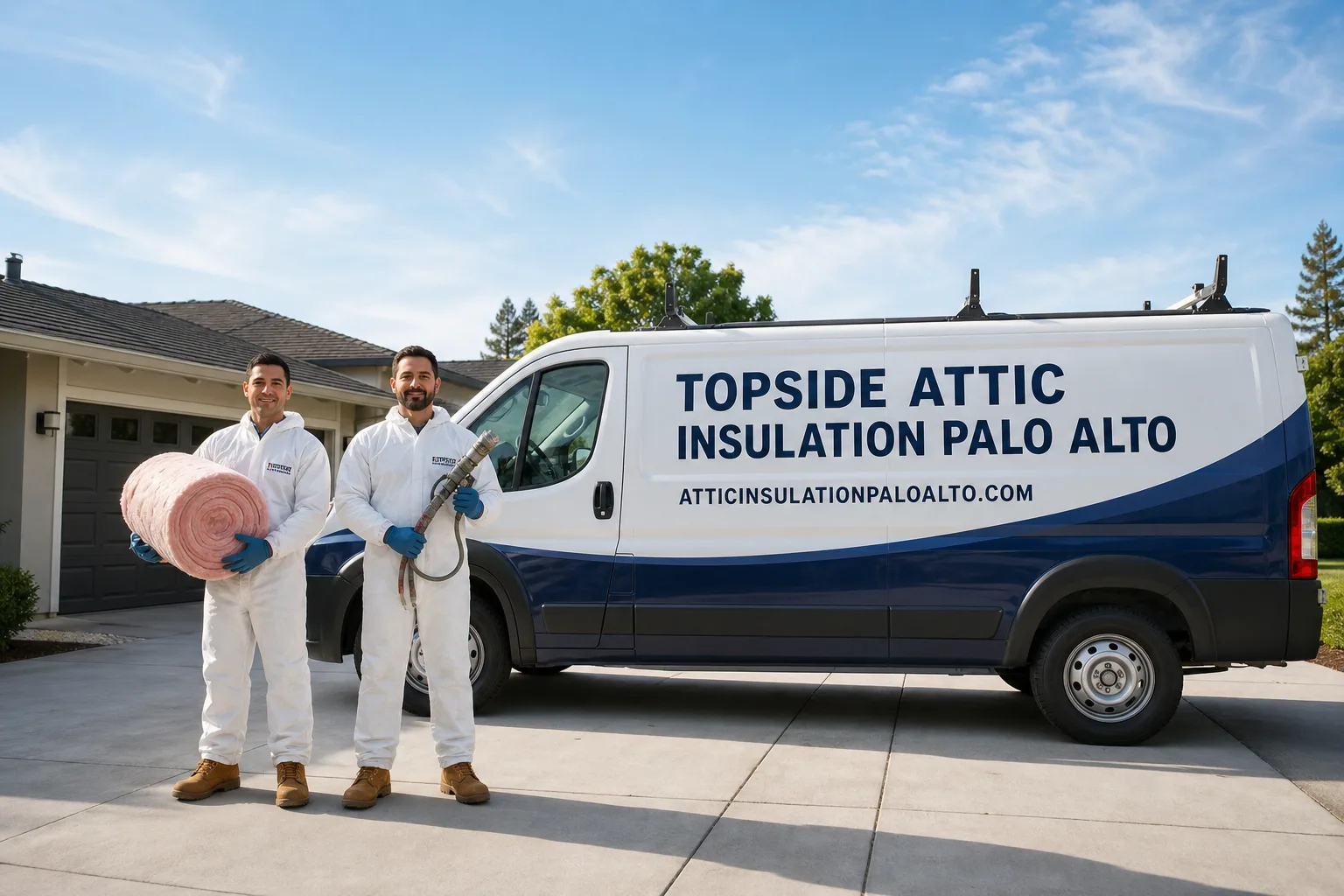
How Much Does Attic Insulation Cost in Palo Alto?
Attic Insulation Near Me in Palo Alto, CA typically costs between $1,800 and $4,500 for a standard single-story home, with most jobs landing around $2,400 to $3,200 once air sealing is included. The range moves based on attic square footage, current insulation condition, material choice, and whether the attic floor needs air sealing before any insulation goes in – which, in our experience across hundreds of Palo Alto homes, it almost always does.
At Envelope Insulation Co., every job starts with a written price before any work begins. No one lifts a tool until you have a flat price, written scope, and written warranty in hand – that’s Haven Standard Clause 1, and it applies to every job we run in Palo Alto.
Attic Insulation Cost Breakdown (2026)
Attic insulation in Palo Alto costs between $1,800 and $4,500 for most homes. Here’s how that breaks down by material and scope:
| Scope of Work | Typical Price Range (Palo Alto, 2026) | Notes |
|---|---|---|
| Blown-in fiberglass (existing insulation, 1,000 sq ft attic) | $900 – $1,600 | Top-up only, air sealing not included |
| Blown-in cellulose (existing insulation, 1,000 sq ft attic) | $850 – $1,500 | Top-up only, air sealing not included |
| Attic air sealing only (top plates, can lights, penetrations) | $400 – $950 | Completed before insulation is added – not an optional upsell |
| Air sealing + blown-in insulation (1,000 sq ft attic) | $1,800 – $2,800 | Most common scope for Palo Alto ranch-style homes |
| Air sealing + blown-in insulation (1,500 sq ft attic) | $2,400 – $3,600 | Common in Squares and Eichler neighborhoods |
| Full removal, air sealing + reinstallation (1,000 sq ft) | $2,800 – $4,500 | Required when existing insulation is contaminated, wet, or rodent-damaged |
| Spray foam (open-cell, rim joists and attic knee walls) | $600 – $1,800 | Targeted application; closed-cell adds 20-35% to material cost |
| Radiant barrier installation (1,000 sq ft attic) | $700 – $1,400 | Relevant for south-facing roof planes; often combined with blown-in |
| Attic cleaning and rodent proofing (before insulation) | $500 – $2,000 | Required if droppings or nesting material is present |
What These Ranges Reflect
Palo Alto’s housing stock spans a wider age range than most Peninsula cities. You’ll find 1950s Eichlers in the Green Gables and Greenmeadow neighborhoods sitting alongside 1970s ranch homes in Barron Park and newer construction near Stanford Research Park. The insulation needs, and costs, differ significantly between them.
Eichlers are a specific case. Their flat or low-slope rooflines mean attic access can be limited, and the original aluminum foil radiant barriers – where they still exist – need to be evaluated before any blown-in material goes over them. That evaluation adds time, and time affects price. We see this regularly in Greenmeadow and Fairmeadow. A full air-seal-and-insulate job in an Eichler often runs 10-20% higher than the same square footage in a conventional attic, purely due to access and geometry.
Homes near the foothills in the Barron Park and Duveneck-St. Francis neighborhoods sometimes have attics with steeper pitches and less clearance at the eaves – that also slows the work. On the other end of the scale, newer builds in the South of Forest Avenue area tend to have cleaner attic floors and fewer penetrations, which keeps the air-sealing scope tighter.
Material costs in Palo Alto run about 8-12% higher than the broader Bay Area average, reflecting local contractor overhead and disposal fees at Santa Clara County transfer stations. That’s already factored into the ranges above.
What Affects Attic Insulation Pricing in Palo Alto
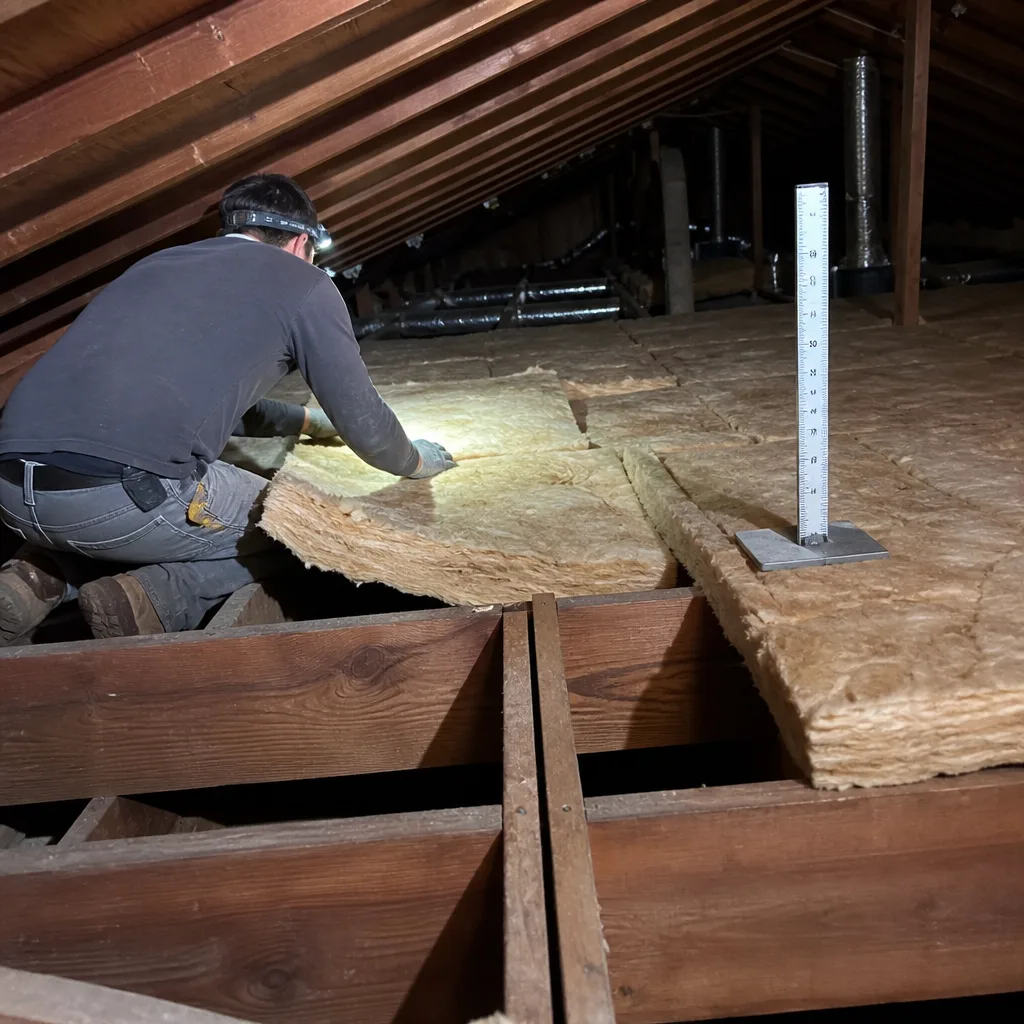
Six factors consistently move the price up or down on jobs we quote across Palo Alto:
- Attic square footage and geometry. Price scales with floor area, but it doesn’t scale linearly. A 1,500 sq ft attic isn’t simply 1.5x the cost of a 1,000 sq ft attic – access points, knee walls, and roof pitch all affect how long the crew is working in the space. Cramped eave sections in homes along Channing Avenue or in the Old Palo Alto neighborhood add labor time even when the total square footage looks modest on paper.
- Current insulation condition. If the existing insulation is clean, dry, and undisturbed, a top-up is usually the right move. If it’s compressed, contaminated with rodent activity, or waterlogged from a past roof leak, it needs to come out before anything new goes in. Removal adds $0.75 to $1.50 per square foot to the total job cost. We document what we find with photos before quoting removal – you’ll see exactly what we saw.
- Air sealing scope. This is the factor most homeowners don’t budget for, and it’s the one that determines whether the insulation actually performs. Top plates, recessed can lights, electrical penetrations, and HVAC boots that pass through the attic floor are all bypass paths for conditioned air. Sealing them before blowing insulation over the top is not optional at Envelope Insulation Co. – it’s how the job gets done. The air sealing scope depends on the home’s construction era: a 1960s Palo Alto home typically has three to four times as many unsealed penetrations as a home built after 2000. That scope difference can add $300 to $600 to the job total.
- Insulation material chosen. Blown-in fiberglass (Owens Corning or Knauf) and blown-in cellulose (GreenFiber) are the most common materials for attic floors in Palo Alto, and they price similarly. Spray foam from Icynene or Demilec costs more per square foot but is typically used in targeted applications – rim joists, knee walls, hard-to-reach eave spaces – rather than across an entire attic floor. Rockwool batts are occasionally used for cathedral ceiling cavities. None of these manufacturers have a preferred or exclusive relationship with us; we specify what the building needs.
- Target R-value. California’s Title 24 energy code requires R-38 minimum for attic insulation in Climate Zone 4, which covers most of Palo Alto. Some homeowners opt for R-49 or R-60, particularly in older homes where the existing depth is low and the heating load is high. Moving from R-38 to R-49 adds roughly $0.25 to $0.40 per square foot in material and labor. The performance return diminishes after R-49, and we’ll tell you that plainly rather than upsell you to a depth you don’t need.
- Access and site conditions. A clean, floored attic with a large scuttle hatch prices differently than an attic with a small ceiling hatch, no lighting, and HVAC equipment in the way. Homes in the Charleston Meadows area sometimes have original pull-down stairs that make equipment staging faster; homes with only a small ceiling cutout can add an hour or more of setup time. If rodent proofing is needed before insulation can go in – blocking entry points along the roofline or at soffit vents – that’s a separate line item quoted upfront, not a surprise added at the end.
A Note on Permit Requirements in Palo Alto
The City of Palo Alto Building Division does not require a permit for attic insulation that is a direct replacement or top-up of existing insulation, provided no structural or mechanical work is involved. If insulation removal involves disturbing materials suspected to contain asbestos – possible in homes built before 1978 – a separate asbestos survey may be required before work proceeds. We flag this during the initial walkthrough if it applies to your home, and we document it in the written scope. You’ll know before anyone starts work.
How to Save on Attic Insulation in Palo Alto
Start With the PG&E Energy Upgrade California Program
PG&E customers in Palo Alto may qualify for rebates through the Energy Upgrade California on-bill financing program or the TECH Clean California initiative, depending on the scope of work. As of 2026, attic insulation combined with air sealing has qualified for rebates in the $200 to $800 range for eligible single-family homes. The City of Palo Alto also runs its own Sustainability Program with periodic incentives for building envelope improvements – worth checking at cityofpaloalto.org before you schedule any work. We document the scope in a format compatible with most rebate applications, so you have what you need without chasing us for paperwork after the job closes.
Sequence the Work Correctly
The single biggest cost mistake we see is homeowners who paid a previous contractor to blow insulation in without sealing first. Two to three years later, energy bills haven’t moved much, and now the insulation has to come partially out to do the air sealing that should have happened first. Doing the work in the right order – air sealing completed, documented, then insulation installed over the top – costs less in the long run than correcting a job done backwards. The before-and-after blower-door numbers we publish on applicable jobs make this concrete: you’ll see the CFM50 reading before sealing and after, so you know the air sealing actually happened and actually worked.
Get a Second Opinion on Any Written Estimate
If you already have a written quote from another contractor, bring it to us. We’ll read it with you – line by line – and tell you whether the scope makes sense for your home. This is a standing offer under Haven Standard, and there’s no obligation attached. A second opinion on a $3,000 job takes about 20 minutes and occasionally catches scope gaps (missing air sealing, wrong R-value specified, no mention of existing insulation condition) that would have cost you money later.
Combine Scopes When You Can
If your home needs both attic insulation and crawl space work, scheduling them together typically reduces the total cost by $200 to $500 compared to running them as separate jobs – crew mobilization, disposal runs, and documentation are shared across the scope. The same applies if you’re planning insulation removal and replacement: the removal and reinstall crew visit can include air sealing in the same mobilization, which is almost always cheaper than two separate visits.
Don’t Over-Specify Material Depth
R-49 is a reasonable target for most Palo Alto homes with natural gas heat and older windows. Pushing to R-60 costs more in material and usually delivers diminishing returns on energy bills in Climate Zone 4. If a contractor is quoting you R-60 without explaining why your specific home warrants it, that’s worth asking about. We specify depth based on what the blower-door number tells us about where the air losses are, not on a standard depth that maximizes material sales.
For a written estimate specific to your home’s attic, call (650) 352-3577. You’ll get a flat price, written scope, and written warranty before any work starts – that’s not a policy we bend.
FAQs – Attic Insulation Cost in Palo Alto
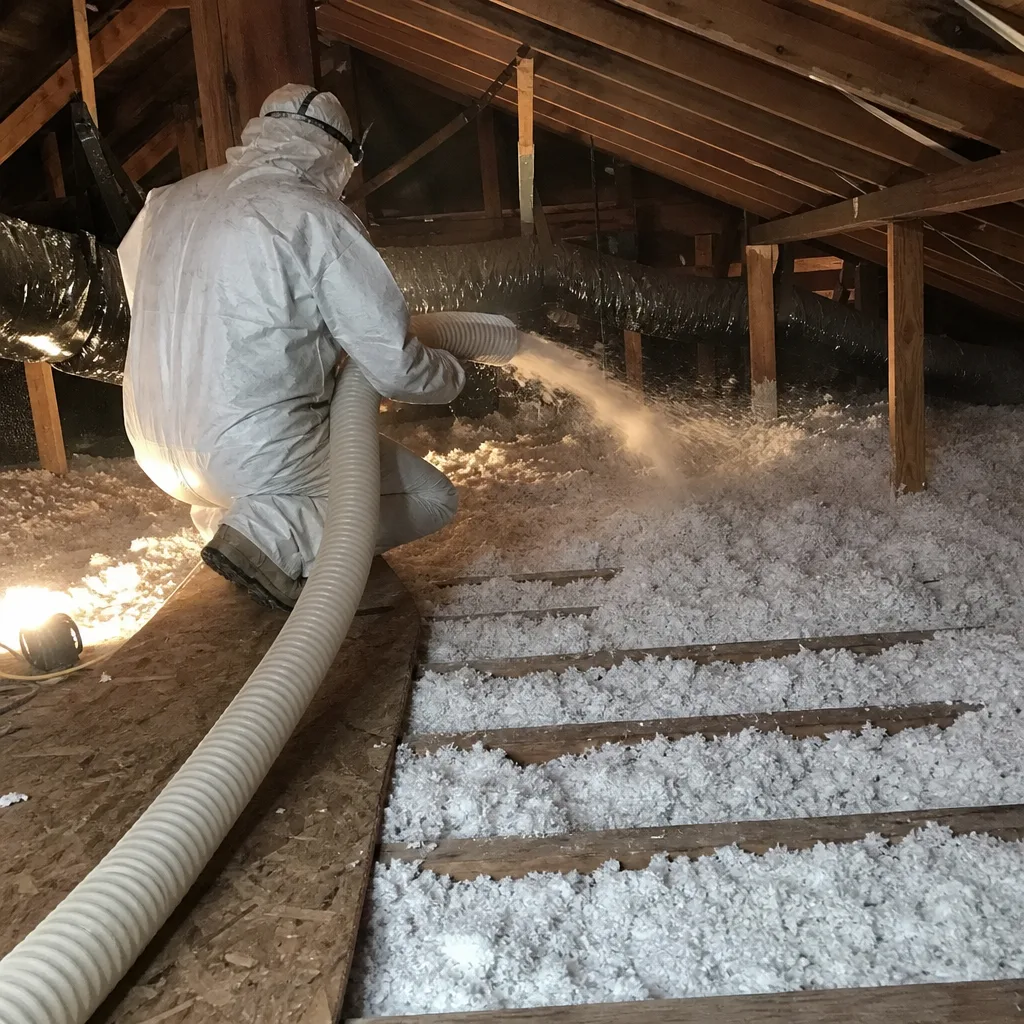
How much does attic insulation cost in Palo Alto for an average home?
Most Palo Alto homeowners pay between $2,400 and $3,600 for a full attic air sealing and blown-in insulation job covering a 1,200 to 1,500 square foot attic floor. Homes that need insulation removal first – due to rodent contamination or water damage – typically run $3,200 to $4,500 for the full scope including reinstallation. A top-up of clean, existing insulation on a smaller attic can come in under $1,500. The only way to get a number specific to your home is a walkthrough – ours is free, and you’ll have a written price before anyone schedules a crew. Call (650) 352-3577 to set that up.
Is it cheaper to repair or replace existing attic insulation in Palo Alto?
If the existing insulation is dry, uncontaminated, and still at a meaningful depth – say, R-19 or better – a top-up to R-38 or R-49 is almost always cheaper than full replacement, typically by $800 to $1,500. Replacement becomes necessary when insulation is wet (from roof leaks or condensation), compressed to the point of negligible R-value, or contaminated with rodent droppings or nesting material. We photograph the existing condition during the walkthrough so you can see exactly what we’re recommending and why – you’re not taking our word for it.
Does attic insulation require a permit in Palo Alto?
No permit is required for a standard attic insulation top-up or replacement in Palo Alto, provided the work doesn’t involve structural changes or HVAC modifications. The exception is if pre-1978 materials suspected to contain asbestos are disturbed during removal – in that case, a licensed asbestos abatement assessment may be required first. We identify this risk during the initial walkthrough and include any relevant documentation requirements in the written scope. Nothing should surprise you after we leave the first visit.
How long does attic insulation installation take in Palo Alto?
A standard air-seal-and-blow job on a 1,200 to 1,500 square foot attic typically takes 4 to 7 hours with a two-person crew. Jobs that include insulation removal add 2 to 4 hours depending on existing depth and access. Eichler homes and homes with limited attic access – common in parts of Old Palo Alto and Barron Park – sometimes run longer due to geometry. We give you a time estimate in the written scope so you know what to expect for the day. You’ll also receive a text when the technician is on the way, with their name – no anonymous crew showing up at your door.
What R-value does Palo Alto require for attic insulation?
California’s Title 24 energy code requires a minimum of R-38 for attic insulation in Climate Zone 4, which covers Palo Alto. Many homeowners opt for R-49 for better performance, particularly in homes with older HVAC systems or high summer cooling loads. We don’t recommend going above R-49 for most Palo Alto homes – the incremental energy savings rarely justify the additional material cost in this climate zone. The right target depends on your current insulation depth, the air sealing scope, and your heating and cooling system; we work that out during the walkthrough and put the specified R-value in writing before the job starts.
Will new attic insulation actually lower my energy bills?
Yes – but only if the air sealing is done first and done correctly. Insulation slows heat transfer; air sealing stops the bypass paths that let conditioned air escape regardless of insulation depth. On applicable jobs in Palo Alto, we run a blower-door test – a pressurization measurement that reads, in a single CFM50 number, how much air the building envelope is losing – before and after air sealing. We publish those numbers in the job documentation you receive when we leave. If the before reading was 3,800 CFM50 and the after reading is 1,900 CFM50, you have a documented record of exactly what changed. Energy bill reductions vary by home, but homes that go from minimal to proper air sealing plus insulation typically see 15 to 30% reductions in heating and cooling costs in the Palo Alto climate.
Does Envelope Insulation Co. offer financing or payment options?
We provide a written price before any work starts – that’s non-negotiable – and we’re happy to discuss payment timing as part of the written scope. For homeowners pursuing PG&E on-bill financing or other energy efficiency loan products, we document the job scope in a format that supports those applications. Ask about this during the estimate walkthrough and we’ll tell you exactly what paperwork we can provide.
Why the Sequence Matters: Air Sealing Before Insulation
This isn’t a positioning statement – it’s physics. Blown-in insulation is an air retarder, not an air barrier. If there are open top plates, unsealed recessed can lights, or gaps around plumbing and electrical penetrations in the attic floor, warm interior air will still move through those gaps by stack effect – rising in winter, pulling hot attic air down in summer. The insulation slows conductive heat transfer through the ceiling material, but it does nothing to stop air moving through the holes.
We see the results of insulation-without-sealing regularly in Palo Alto homes. A homeowner in the Ventura neighborhood had R-38 blown in four years ago. Their blower-door reading when we arrived was 5,200 CFM50 – high for a home that size, consistent with a poorly sealed attic floor. After sealing the top plates and 14 recessed can lights, the post-seal reading was 2,600 CFM50. Then we topped the insulation up to R-49. The homeowner now has a documented record of both changes – the air sealing result and the insulation depth – rather than a receipt for material they couldn’t verify was performing.
That documentation is part of every applicable job we run. It’s not a premium service or an optional add-on. It’s what “done right” looks like on paper.
Under the 365-Day Done Right Promise, if the work isn’t right, we make it right. That promise is written into every scope document – not stated verbally and forgotten.
Key Takeaways
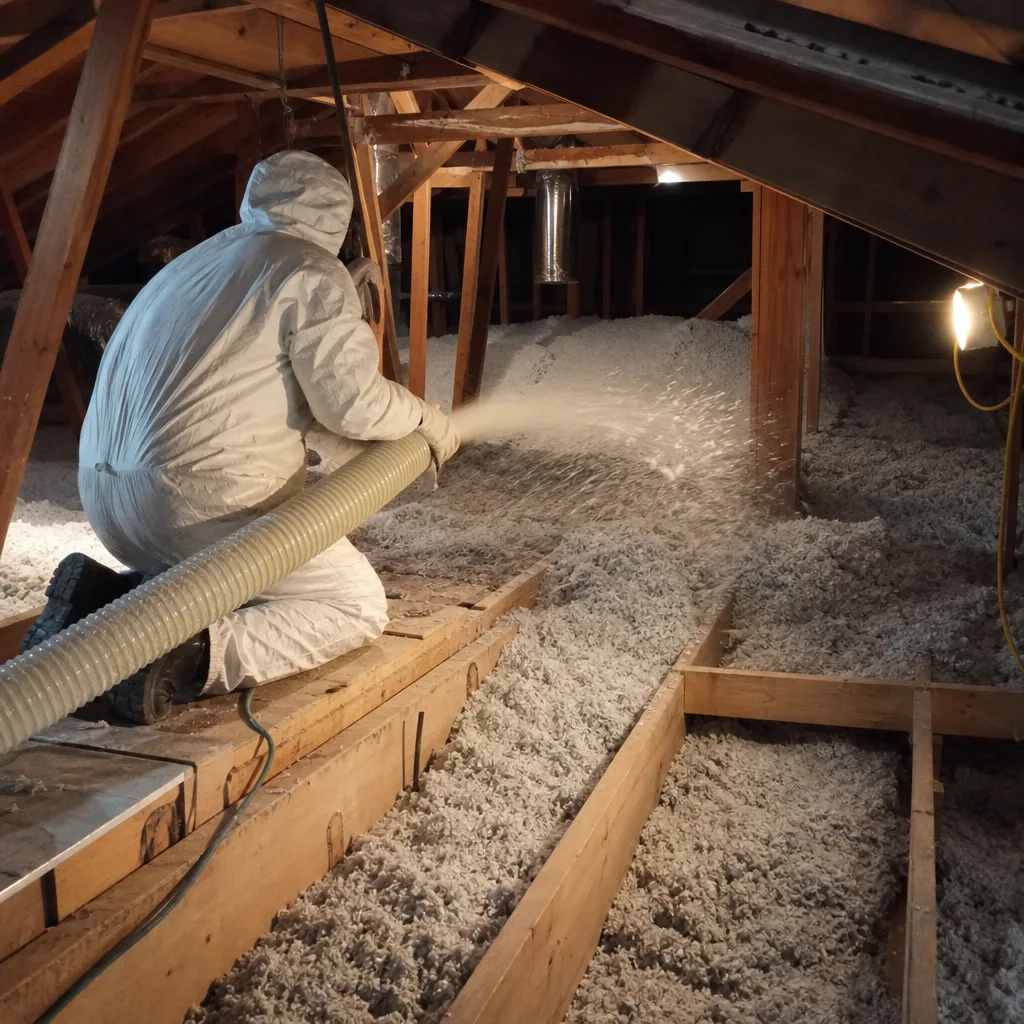
- Most attic insulation jobs in Palo Alto run $1,800 to $4,500, with the majority of single-family homes falling between $2,400 and $3,600 when air sealing is included.
- Air sealing should always be completed before insulation is added – it’s not an upsell, it’s the prerequisite that makes the insulation work.
- Eichler homes and properties in Old Palo Alto often carry a 10-20% premium due to access constraints and attic geometry.
- California Title 24 requires R-38 minimum in Palo Alto (Climate Zone 4); R-49 is a common target for better performance.
- PG&E and City of Palo Alto rebate programs can reduce net cost by $200 to $800 for eligible projects.
- No permit is required for standard insulation top-ups or replacements in Palo Alto, with limited exceptions for pre-1978 materials.
- You’ll receive a written price before any work starts, a documented photo record when the crew leaves, and before-and-after blower-door numbers on applicable jobs.
Get a Written Estimate for Your Palo Alto Home
If you’re trying to figure out what attic insulation will actually cost for your specific home – not a ballpark, a flat written price – call (650) 352-3577. Wes Okafor and the Envelope Insulation Co. crew have been running jobs in Palo Alto since 2016, and every estimate starts with a walkthrough and ends with a written price, written scope, and written warranty before anyone schedules a start date. That’s how we work, on every job, without exception.
If you already have a written estimate from another contractor, bring it. We’ll read it with you and tell you whether the scope covers what your attic actually needs. No pressure attached to that offer.
For more on what the full service looks like, visit our Attic Insulation in Palo Alto page, or head to our home to see the full range of building envelope services we provide.
Call (650) 352-3577 – a live person answers, 24 hours a day.
Written by Wes Okafor, Owner at Envelope Insulation Co. (operating as Topside Attic Insulation Palo Alto), serving Palo Alto since 2016. Pricing reflects the Palo Alto, CA market as of 2026. Topside Attic Insulation Palo Alto offers free estimates – call (650) 352-3577.
What Our Customers Say
"Crawl space encapsulation done properly. Photographs of the vapour barrier at every seam, and the damp smell in the hallway is gone."
- Ainsley P."The winter gas bill dropped by about a third. They had estimated a quarter, so they under-promised."
- Genevieve R."They photographed rodent damage in the old insulation that we had no idea about, and priced the exclusion work separately so we could decide."
- Harriet N.