
Last updated September 24, 2026
How to Hire a Insulation Contractor in Palo Alto: A Step-by-Step Guide
California requires insulation contractors to hold a C-2 (Insulation and Acoustical) license, yet a significant share of attic jobs in Santa Clara County are pulled under a general B license or no license at all. The homeowner bears the warranty and liability risk when that happens. In Palo Alto, where Building Department inspections are thorough and energy code compliance is strictly enforced, hiring the wrong contractor can mean a failed inspection, a voided manufacturer’s warranty, or insulation that performs well below its rated R-value within two years. This guide walks you through a vetting sequence that treats the hiring process as a technical audit, not a price comparison, with Insulation Warning Signs: A Palo Alto Homeowner’s Reference Guide to help you spot problems early. By the end, you’ll know how to verify credentials, read a bid for what it actually includes, and demand a written scope before any deposit changes hands.
Quick Answer
Hiring an insulation contractor in Palo Alto starts with verifying an active C-2 license on the CSLB website, then requesting a written scope that specifies air sealing, installed R-value after settling, product by brand name, and permit responsibility. Never pay a deposit until you have this document in hand. A legitimate contractor will provide it without pressure.
Table of Contents
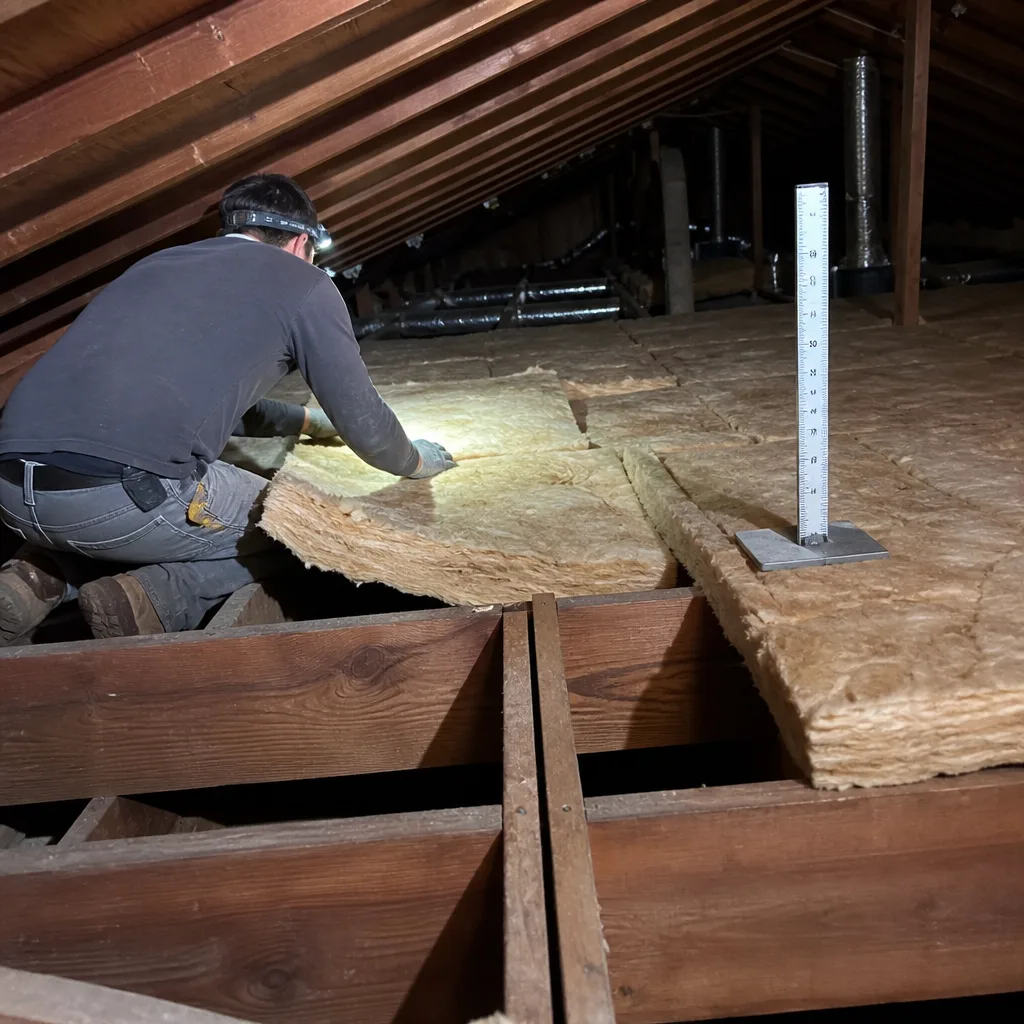
- How to Verify a C-2 License in Under Two Minutes
- The Five Questions to Ask Before Any Contractor Quotes
- How to Read a Bid: Why Square-Footage Pricing Hides Quality
- Red Flags Specific to the Peninsula Market
- What the Contract Must Contain Before You Sign
- Palo Alto Climate, Code, and Neighborhood Considerations
- Common Mistakes to Avoid
- When to Call a Professional
- Frequently Asked Questions
- The Bottom Line
How to Verify a C-2 License in Under Two Minutes
The Contractors State License Board (CSLB) maintains a public lookup tool at cslb.ca.gov. Here’s the exact sequence:
- Navigate to “Check a License” and enter the business name or six-digit license number.
- Confirm the classification reads “C-2 - Insulation and Acoustical.” A B (General Building) license legally covers insulation only when performed as part of a larger project under direct contract, not as a standalone scope. Many Peninsula operators skirt this by classifying attic work as “remodeling.”
- Check the “License History” tab. This reveals suspensions, disciplinary actions, and bond claims. A pattern of suspensions for insurance lapses suggests financial instability.
- Verify the Workers’ Compensation insurance status is “Active” unless the licensee certifies no employees. In Palo Alto, an uninsured worker on your property creates direct liability exposure.
- Cross-reference the business address. A P.O. box or out-of-county location isn’t disqualifying, but it complicates warranty enforcement.
We pull our C-2 license on every estimate walk. Ask the contractor to do the same. If they hesitate, that’s data.
In our experience across Palo Alto and the broader Peninsula, roughly one in four “insulation contractors” who quote attic jobs operate under an improper classification or expired license. The CSLB lookup takes 90 seconds. The cost of skipping it can be a full re-do when the inspector fails the job.
The Five Questions to Ask Before Any Contractor Quotes
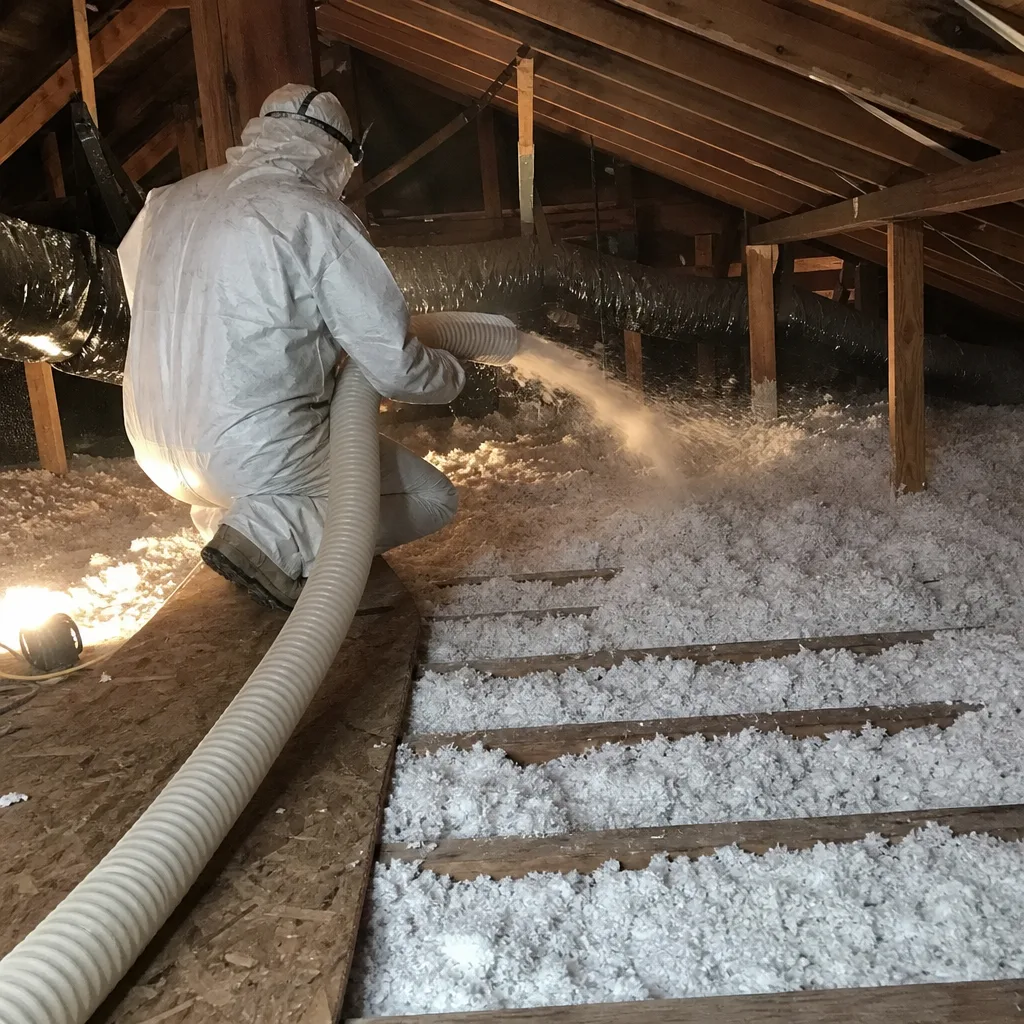
These questions filter out operators who treat insulation as a commodity installation. Ask them in this order, before any site visit is scheduled.
1. Do you perform air sealing before insulating?
The correct answer is yes, with specificity. Air sealing - the process of closing bypasses at top plates, can lights, plumbing penetrations, and chimney chases - must precede insulation. Blowing cellulose or fiberglass over an unsealed attic floor is standard practice among low-barrier-entry contractors, and it produces a result that looks full but leaks conditioned air continuously. Attic Insulation in Palo Alto requires this sequence because our marine climate creates pressure differentials that drive moisture into envelope cavities year-round.
Ask for the specific locations they seal. Vague answers like “we seal the big stuff” indicate a crew without a checklist.
2. Do you pull permits when required?
Palo Alto Building Department requires permits for insulation work that involves structural modification, spray foam application, or alterations to existing thermal envelope assemblies in homes built before Title 24 standards; see Insulation Permits, Codes & Inspections in CA: What You Need to Know for full requirements. A contractor who says “permits are the homeowner’s responsibility” or “we don’t usually bother for attics” is transferring liability to you. Permits also trigger inspections that verify installed depth and coverage, the two variables most commonly shortcutted.
3. Do you provide a blower-door test?
A blower-door test - a pressurization reading that shows, in one number, how much air your building envelope is losing - is the only objective verification that air sealing worked. The test should be performed before and after work. A contractor who doesn’t own a blower door or subcontracts testing to a third party without including it in scope is selling you an unverified result. Our standard is to publish before-and-after CFM50 readings on every applicable job so the homeowner can verify the performance change they paid for.
4. What is your installed R-value guarantee after settling?
Blown-in cellulose and fiberglass settle. The bag label lists an “initial” R-value per inch and a “settled” R-value. A contractor who quotes “R-38 to code” without specifying which figure they’re using is likely citing initial depth. In Palo Alto’s climate zone, Title 24 requires specific settled R-values for attic floors. The guarantee should be written, not verbal, and should specify remediation if settling drops performance below threshold within a defined period.
5. What does your written warranty cover?
The answer should reference materials, workmanship, and performance metrics. Ask for a sample warranty document before the quote. Under Haven Standard: Have it in writing - every job begins with a written price, a written scope, and a written warranty before anyone lifts a tool. If the contractor can’t produce this on request, they don’t have a standard process.
How to Read a Bid: Why Square-Footage Pricing Hides Quality
Square-footage pricing - “$1.50 per square foot for attic insulation” - is the most common format in Santa Clara County, and it’s designed to obscure what you’re actually buying. Two bids at identical per-square-foot rates can differ by 40% in delivered performance depending on air sealing detail, product selection, and installed depth methodology.
Here’s what a comparable bid format looks like:
- Scope section: Enumerates each task - air sealing of top plates, can light enclosures, plumbing and electrical penetrations, chimney chase blocking, baffle installation at eaves, insulation installation to specified depth, and debris removal.
- Materials section: Lists product by manufacturer and line - for example, “Johns Manville Climate Pro B-20 blown fiberglass, or approved equal” - with installed depth in inches and settled R-value target.
- Performance verification: States blower-door test protocol, target CFM50 reduction percentage, and who performs the test.
- Permit and inspection: Identifies permit responsibility, fee inclusion, and inspection scheduling.
- Documentation deliverable: Defines what the homeowner receives post-completion - photos, test results, permit final, warranty document.
- Price: Single flat figure for the defined scope, with change-order conditions specified.
A bid missing any of these sections is not comparable to one that includes them. The square-footage rate is a marketing number, not a technical specification.
In Palo Alto, where median home values exceed $3 million and energy costs rank among California’s highest, the financial case for proper envelope work is straightforward; our Insulation Cost Breakdown: The Palo Alto Homeowner’s Reference for 2026 details what to expect. But the return only materializes if the installed assembly performs as designed. A bid that doesn’t specify product, depth, and verification is a gamble, not an investment.
Red Flags Specific to the Peninsula Market
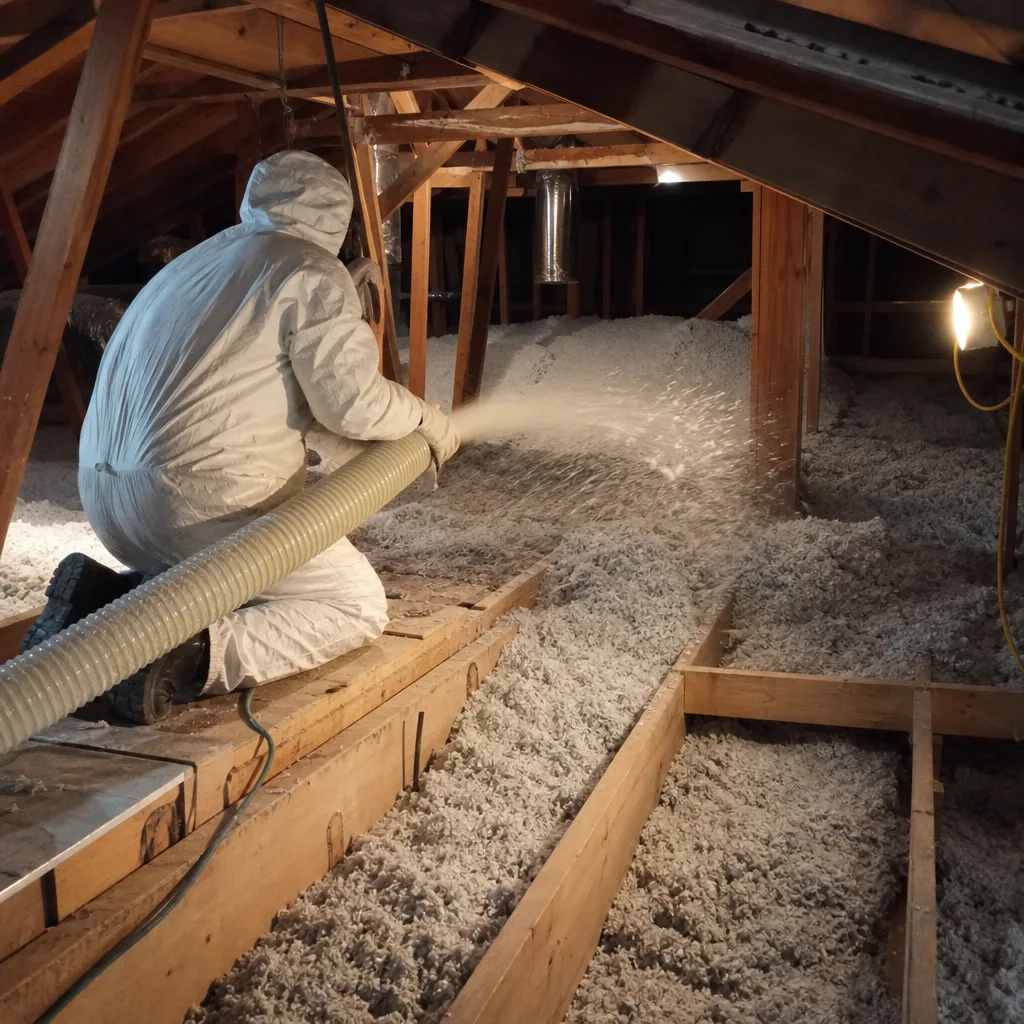
The Bay Area’s insulation market has minimal barrier to entry. A pickup truck, a rental blower from Home Depot, and a pallet of cellulose are sufficient to quote jobs. This creates predictable patterns of contractor behavior that signal elevated risk.
- Same-day quoting with deposit pressure: A contractor who measures your attic, writes a number on a card, and asks for a deposit before leaving is optimizing for closure rate, not installation quality. Proper scope development requires time to calculate volume, assess access, and specify materials.
- No mention of air sealing in the proposal: In Palo Alto’s climate, air sealing is not an upgrade. It’s prerequisite work. A proposal that skips it entirely indicates either ignorance of building science or deliberate omission to hit a lower price point.
- Vague product descriptions: “Blow in insulation to current code” or “green fiber product” without manufacturer, line, and R-value specification allows substitution with inferior material. Insist on product naming. We source from Johns Manville, Knauf, Rockwool, CertainTeed, and other specified manufacturers - no proprietary lock-in, but every product is named in writing before installation.
- No permit discussion: Palo Alto Building Department inspects insulation work for depth, coverage uniformity, and proper baffling at vents. A contractor who avoids permit conversation is avoiding inspection.
- Verbal warranties only: “Don’t worry, we’re covered” is not a warranty. Under Haven Standard: Have it in writing - the warranty document is delivered before work starts, not after completion when leverage has shifted.
- Cash-only pricing with no written scope: This structure eliminates paper trail and consumer protection. The CSLB bond and warranty fund require documented contract to trigger.
What the Contract Must Contain Before You Sign
The contract is the only document that matters if performance disputes arise. Here’s the minimum viable content:
- Scope of work: Task-by-task enumeration with no undefined terms. “Insulate attic” is insufficient. “Air seal top plates, can lights, and penetrations; install baffles at all vented eaves; blow fiberglass to 14 inches settled depth for R-38 performance; perform blower-door test before and after” is a scope.
- Product data sheets attached as exhibits: The manufacturer’s product data sheet for the specified insulation becomes part of the contract. This prevents substitution and establishes the standard against which installed depth and coverage are measured.
- Permit responsibility stated explicitly: “Contractor shall obtain all required permits and schedule inspections” or “Homeowner responsible for permit application and fees” - either is acceptable if clear. Silence is not.
- Defined post-job documentation deliverable: Specify what you receive and when. Our standard is a Documented Photo Record on every visit, plus before-and-after blower-door readings on applicable jobs, delivered within 48 hours of final inspection.
- Price and payment schedule: Flat price for defined scope, with deposit not exceeding 10% or $1,000 (whichever is less, per California law), and final payment contingent on permit final or defined completion criteria.
- Warranty terms: Duration, coverage scope, and claims process. Our 365-Day Done Right Promise - if it’s not done right, we make it right - is backed by a written warranty delivered before work starts.
- Start and completion windows: Defined with conditions for weather or permit delays.
Never sign a contract with blank sections, “see attached” references that aren’t attached, or payment terms that accelerate beyond work milestones. The Haven Standard requires a Written Price Before Any Work Starts - always - and this document is your only enforcement mechanism.
Palo Alto Climate, Code, and Neighborhood Considerations
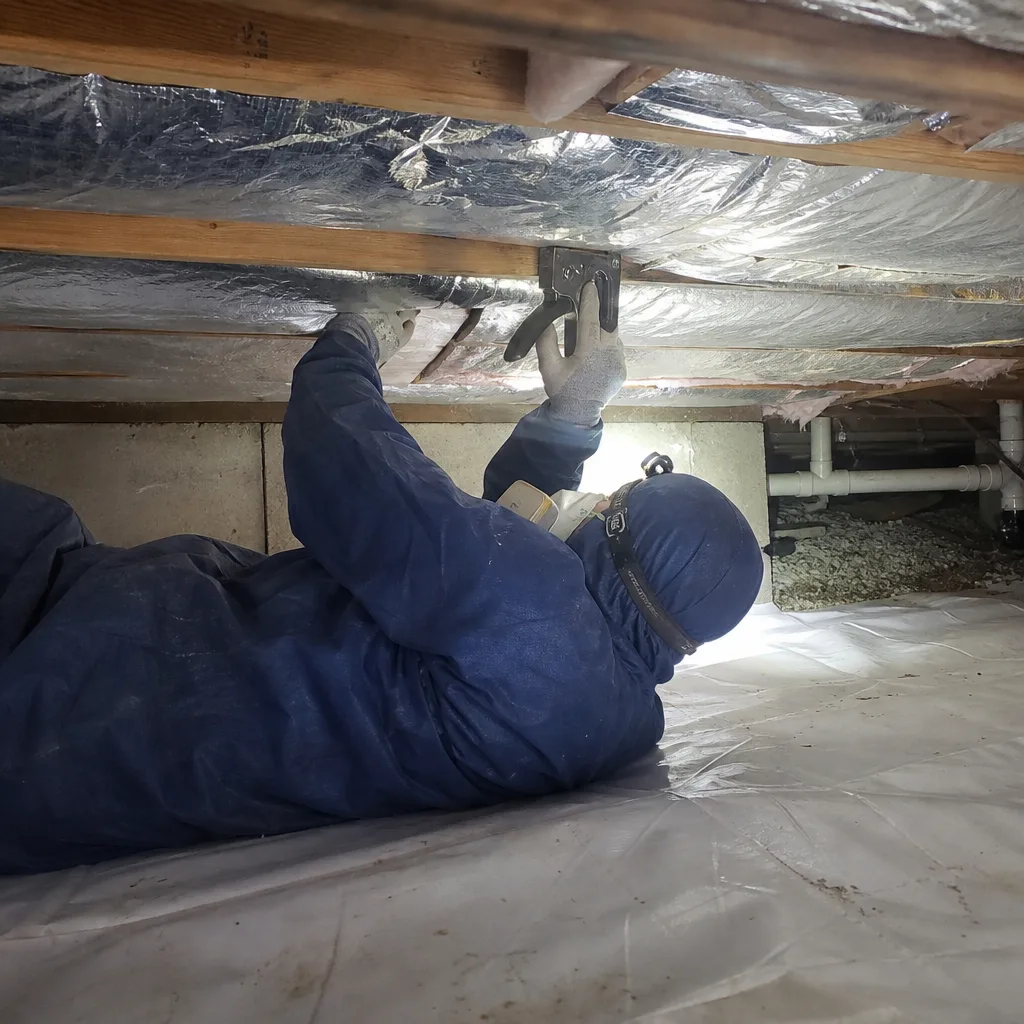
Palo Alto sits in California Climate Zone 4, a marine-influenced zone with mild, wet winters and dry summers. This climate pattern creates specific envelope performance risks that inform how insulation work should be scoped.
Moisture management: Our winter heating season is short but involves sustained Pacific moisture. Attic insulation installed without proper ventilation baffling - the channels that maintain airflow from soffit vents across the underside of the roof deck - traps humidity against sheathing. In Old Palo Alto and Professorville, where many homes date to the 1920s-1940s with original roof framing, this condition produces condensation and mold within two to three winters. Every scope in these neighborhoods should include baffle inspection and replacement where existing material is compressed or missing.
Title 24 compliance: California’s energy code specifies minimum R-values by climate zone and assembly type. For attic floors in Zone 4, the settled R-value requirement is R-38 for new construction and significant alterations. Many contractors quote initial depth that settles below this threshold. The contract should specify settled performance, not installed thickness.
Neighborhood housing stock patterns: In Barron Park and Southgate, the 1950s-1970s ranch and Eichler-influenced homes typically have minimal original attic insulation - often R-11 or less - and extensive can light penetrations that bypass the thermal envelope. These homes benefit disproportionately from air sealing before insulation. In newer construction north of Oregon Expressway, builder-grade fiberglass batts often have gaps at electrical top plates and bath fan housings that compromise rated performance.
Tree canopy and fire risk: Palo Alto’s urban forest is dense, particularly in the Professorville and Community Center neighborhoods. Attic ventilation strategies must account for ember exposure during fire season. Radiant barrier installation - a reflective surface that reduces radiant heat transfer - is sometimes specified in addition to insulation for homes with significant sun exposure or limited venting options. Topside Attic Insulation Palo Alto home provides full building envelope assessment including radiant barrier evaluation where appropriate.
Permit timelines: Palo Alto Building Department typically processes insulation permits within 5-10 business days, with inspections available within 48 hours of request. A contractor who quotes “next day start” without permit lead time is either skipping permit or hasn’t done enough Palo Alto work to know the process.
Common Mistakes to Avoid
- Treating the lowest bid as the baseline: In our experience, the lowest bid in Santa Clara County attic work typically omits air sealing, specifies settling-prone depth, or excludes permit costs. Normalize bids to comparable scope before comparing price.
- Assuming all fiberglass or cellulose is equivalent: Product density, binder content, and fire retardant treatment vary significantly by manufacturer. A bid that doesn’t name product doesn’t guarantee performance.
- Skipping the blower-door verification: Without a number, you don’t know if air sealing worked. The “feel test” - checking for drafts - is unreliable in mild climates where pressure differentials are subtle.
- Accepting verbal scope changes: Crews discover conditions - buried junction boxes, active rodent issues, degraded existing material. Every change should be documented in writing with price impact before execution. Under Haven Standard: Have it in writing applies to changes too.
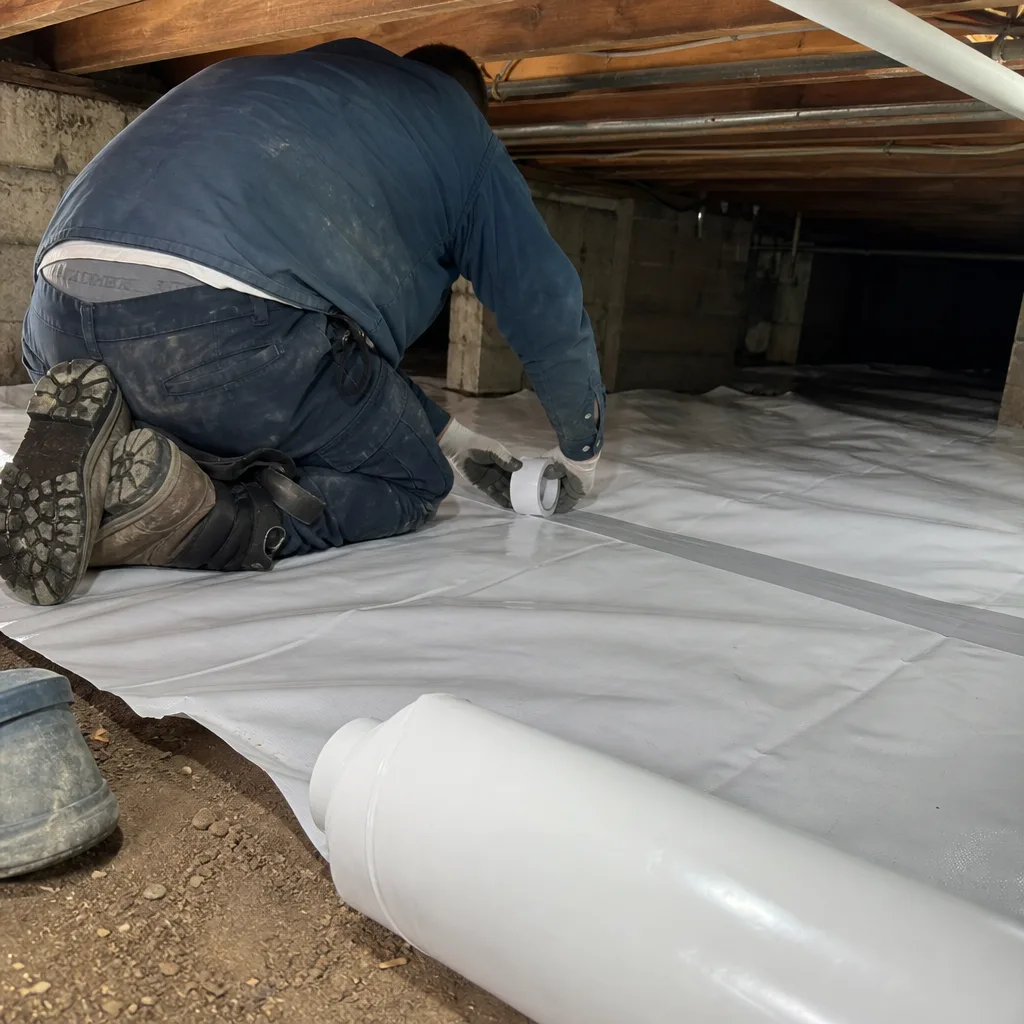
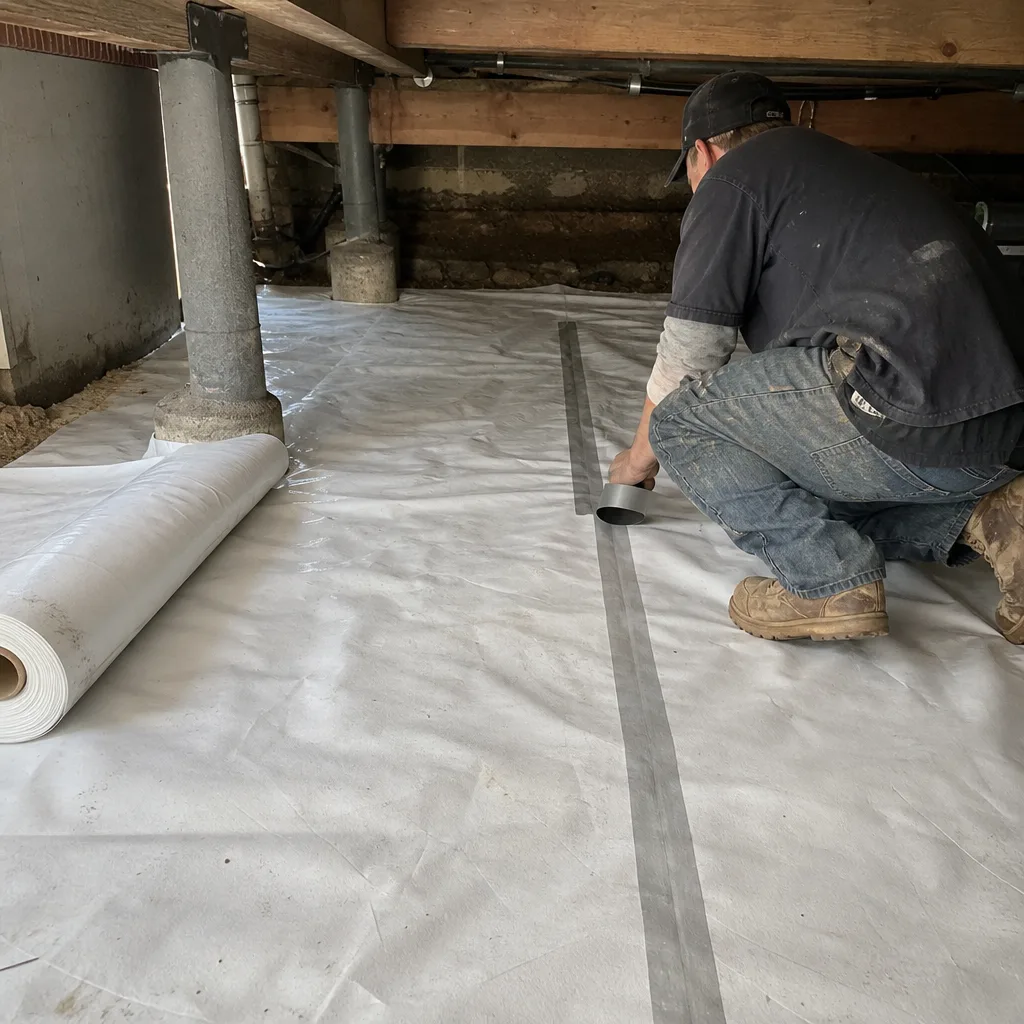
- Neglecting crawl space evaluation: In Palo Alto’s older neighborhoods, crawl space conditions directly affect attic performance through stack effect pressure. A contractor who scopes attic work without assessing the crawl space is treating symptoms. Crawl Space Encapsulation & Vapor Barrier in Palo Alto is often the complementary scope that makes attic investment perform.
- Paying deposits to unverified licensees: California limits residential deposits to 10% or $1,000. A contractor who requests more before work starts is either non-compliant or financially stressed.
When to Call a Professional
Call a licensed insulation contractor when you observe temperature stratification between floors, energy bills trending upward without rate changes, visible insulation degradation in attic or crawl space access, or planning any envelope modification that triggers Title 24 compliance. In Palo Alto, where building department scrutiny is consistent and energy costs are substantial, professional assessment typically pays for itself in identified scope optimization.
Topside Attic Insulation Palo Alto offers free estimates in Palo Alto - call (650) 352-3577. Every estimate includes a written scope, a Written Price Before Any Work Starts, and a Free Second Opinion on any written estimate you bring us. We’ll read competing quotes with you, line by line, no obligation.
Frequently Asked Questions
Most complete attic insulation jobs in Palo Alto, including air sealing and blown-in fiberglass or cellulose to R-38 settled, run between $3,200 and $6,800 for single-family homes between 1,500 and 3,500 square feet. Spray foam applications, Spray Foam Insulation in Palo Alto, or homes requiring extensive air sealing at complex rooflines fall at the upper end. Call (650) 352-3577 for a written price on your specific home - estimates are free.
Yes, if the work involves spray foam, structural modification, or alteration of the thermal envelope in homes predating current Title 24 standards. The permit triggers inspection that verifies installed depth and coverage. A contractor who suggests skipping permit is transferring inspection risk to you.
Air sealing closes the bypasses - gaps at top plates, can lights, plumbing and electrical penetrations - that allow conditioned air to escape into unconditioned attic space. Without it, insulation performs like a sweater with holes: it has material, but it doesn’t stop airflow. In Palo Alto’s marine climate, unsealed attics also draw moisture into wall cavities during winter pressure differentials.
Check for uneven depth, compressed or disturbed areas, visible gaps at eaves or around penetrations, and signs of moisture staining or rodent activity. A blower-door test provides the definitive answer - it measures actual envelope leakage in CFM50, a single number that reveals whether your insulation is working with or against air movement.
Sometimes, but only after assessment. Wet, compressed, or contaminated existing material must be removed. Clean, dry fiberglass or cellulose in reasonable condition can be supplemented, but the assembly only performs if air sealing is addressed first. We provide insulation removal and replacement when conditions require it, with a Documented Photo Record showing before, during, and after conditions.
A typical Palo Alto single-family attic - air sealing plus blown-in insulation - requires one to two days for completion, plus permit processing time. Complex rooflines, extensive air sealing detail, or crawl space encapsulation performed concurrently extends the schedule. We provide a written start and completion window before any deposit is accepted.
The Bottom Line
Hiring an insulation contractor in Palo Alto is a technical vetting process, not a price shopping exercise. Verify the C-2 license. Demand a written scope that specifies air sealing first, product by name, installed R-value after settling, and blower-door verification. Read every bid for what it includes, not what it costs per square foot. And never pay a deposit until the contract contains scope, materials, permit responsibility, documentation deliverables, and warranty terms in writing. The contractors who survive this filter are the ones who treat your home’s envelope as a system, not a commodity. For more guides & resources, explore our blog.
Written by Wes Okafor, Owner at Topside Attic Insulation Palo Alto, serving Palo Alto since 2016.