
Last updated September 24, 2026
Insulation Cost Breakdown: The Palo Alto Homeowner’s Reference for 2026
A $1,400 attic insulation bid and a $2,800 bid for the same 1,500-square-foot Palo Alto attic can both be accurate. The first covers blown insulation only. The second covers the air sealing that makes the insulation actually perform. Without a line-item scope, there is no way to compare them, and the cheaper job will often cost more to correct than the original bid. In this guide, we’ll break insulation cost into its actual components so you can tell whether a low bid reflects efficiency or a missing step, and point you to more guides & resources for deeper reading.
Quick Answer
Most complete attic insulation jobs in Palo Alto run between $2,200 and $4,800 for a typical 1,500-square-foot attic, including air sealing, blown insulation to R-38, and a blower-door test. A basic blow-over of existing insulation without air sealing starts around $1,200 but will not deliver the performance improvement most homeowners expect. The 60-80% bid variation you see quoted for identical square footage comes down to whether air sealing, penetration treatment, and performance verification are included in scope.
Table of Contents
- Why Insulation Bids in Palo Alto Vary by 60-80% for the Same Attic
- Line-Item Cost Breakdown: What You’re Actually Paying For
- Why Attic Square Footage Is a Poor Primary Cost Driver
- The ROI Math for Palo Alto Specifically
- Rebates and Incentives Available in 2026
- How to Read a Bid and Spot Hidden Cost Transfers
- Material Types and Real-World Performance in Palo Alto’s Climate
- Common Mistakes to Avoid
- When to Call a Professional
- Frequently Asked Questions
- The Bottom Line
Why Insulation Bids in Palo Alto Vary by 60-80% for the Same Attic
The Bay Area insulation market has a transparency problem. Homeowners receive bids that look comparable on paper but describe fundamentally different jobs. We’ve reviewed competitor quotes for Palo Alto homes where the spread between low and high bids exceeded $3,000 for the same address. The cause is rarely markup or greed. It’s scope omission.
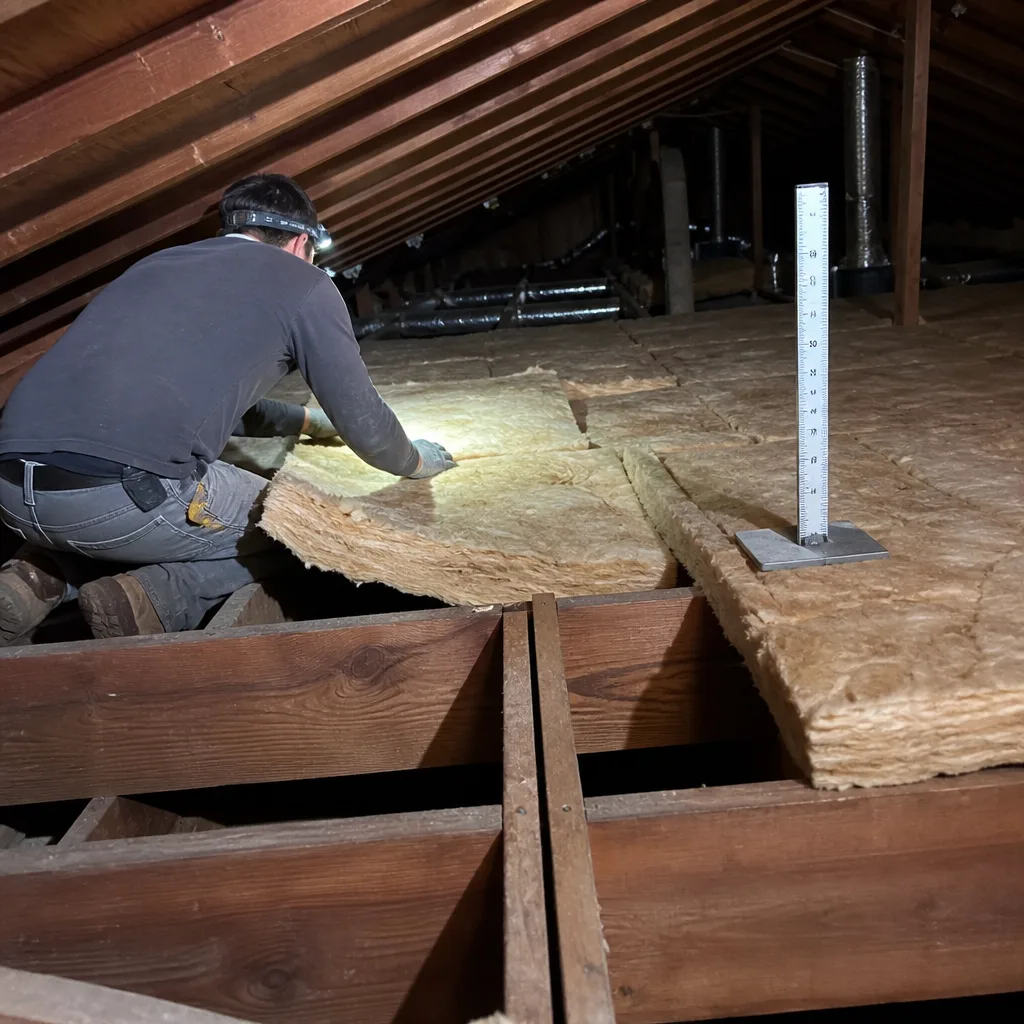
Here’s what happens. A contractor quotes $1,400 to blow cellulose over existing insulation in a 1,500-square-foot attic. Another quotes $2,800 for the same attic. The homeowner chooses the lower bid, not realizing that the $1,400 job:
- Does not include air sealing of top plates, can lights, or plumbing/electrical penetrations
- Does not include a blower-door test to establish a baseline or verify results
- Does not account for debris disposal or protection of finished spaces below
- Carries no performance warranty beyond material defects
The $2,800 bid, properly itemized, includes all of these. In our experience across Palo Alto neighborhoods from Old Palo Alto to Barron Park, the homes that perform poorly after insulation work-Insulation Warning Signs: A Palo Alto Homeowner’s Reference Guide covers how to spot this-are almost always the ones where air sealing was skipped. The insulation sits on top of a leaky ceiling, doing a fraction of its rated job.
Under The Haven Standard, we publish before-and-after blower-door numbers on every applicable job. A typical unsealed Palo Alto attic from the 1960s or 1970s reads 3,500-5,000 CFM50 before work. After proper air sealing and insulation, that number drops to 1,800-2,500 CFM50. Without the sealing step, the post-insulation reading might fall to 3,200 CFM50, a marginal improvement that the homeowner paid full price to not receive.
The variation also reflects labor market realities. Palo Alto sits in Santa Clara County, where prevailing wage requirements apply to certain permit-triggering jobs-see Insulation Permits, Codes & Inspections in CA: What You Need to Know for details-and where skilled insulation technicians command $35-50 per hour. Contractors who underbid often make up the difference by skipping preparation steps, using lower-density installation, or subcontracting to unverified crews.
Line-Item Cost Breakdown: What You’re Actually Paying For
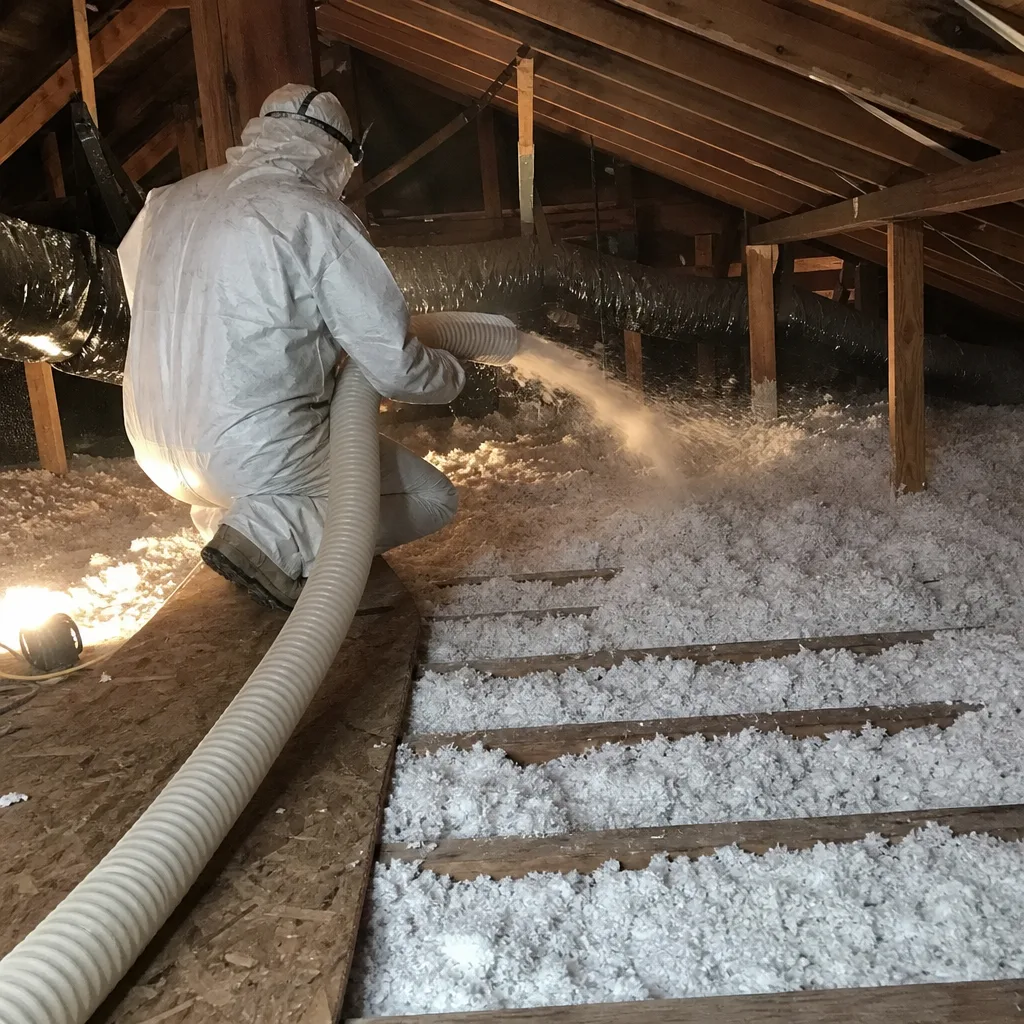
To compare bids accurately, you need to see these components separated. Below are 2026 Bay Area material and labor ranges based on current supplier pricing and prevailing wages in Santa Clara County. These are installed prices for a typical Palo Alto single-family home.
Air Sealing Labor and Materials
- Top plate sealing with one-part foam and backer rod: $0.80-1.40 per linear foot
- Can light airtight covers (Tenmat or equivalent): $18-28 each, installed
- Plumbing and electrical penetration foam/mastic: $12-22 per penetration
- Drywall-to-top-plate joint treatment: $0.60-1.00 per linear foot
- Chase and soffit boxing with rigid foam: $150-300 per chase
- Attic access hatch weatherstripping and insulation: $120-200
A typical 1,500-square-foot Palo Alto attic with 12 can lights, standard plumbing/electrical penetrations, and 180 linear feet of top plate runs $800-1,400 for complete air sealing.
Blown Insulation by Material Type
Prices below are per square foot per inch of settled depth, including labor and equipment. R-38 in an attic typically requires 10-12 inches of cellulose, 11-14 inches of fiberglass, or 8-10 inches of mineral wool.
- Cellulose (GreenFiber or equivalent): $0.55-0.75 per square foot per inch
- Fiberglass (Johns Manville or CertainTeed): $0.45-0.65 per square foot per inch
- Mineral wool (Rockwool): $0.85-1.15 per square foot per inch
For a 1,500-square-foot attic at R-38:
- Cellulose: $1,650-2,250
- Fiberglass: $1,350-1,950
- Mineral wool: $2,550-3,450
Spray Foam (Open-Cell)
Open-cell spray foam (Icynene or Demilec) at 3.5 inches for R-13 in walls, or 5.5 inches for R-20 in roof decks:
- $1.20-1.80 per board foot installed
- Typical 1,500-square-foot attic with 2×10 rafters: $4,500-7,200
Ancillary Costs
- Existing insulation removal (vacuum and bag): $1.00-1.60 per square foot
- Debris disposal (Santa Clara County waste stream): $150-350 per job
- Blower-door test as standalone service: $350-550
- Permit fees for Santa Clara County insulation work: $180-420 depending on valuation
- Rodent damage repair and sanitization (common in Palo Alto’s mature neighborhoods): $400-1,200
Performance Verification
We include blower-door testing on every applicable job at no additional charge. Some contractors charge separately or omit it entirely. The test takes 45-90 minutes and produces a documented CFM50 reading that becomes part of your permanent record.
A complete job, properly itemized, might look like this for a 1,500-square-foot Palo Alto attic:
- Air sealing: $1,100
- Cellulose insulation to R-38: $1,950
- Debris disposal: $225
- Permit: $285
- Blower-door test: included
- Total: $3,560
The same attic quoted at $1,400 likely includes only the insulation line item, with air sealing, disposal, permits, and testing all excluded.
Why Attic Square Footage Is a Poor Primary Cost Driver
Most homeowners and many contractors use attic square footage as the primary pricing input. This produces misleading comparisons. Two attics of identical size can differ by 40% in actual labor and material requirements.
The factors that matter more:
- Penetration density. A 1970s Palo Alto ranch in Green Acres with 18 can lights, three bathroom fans, and two HVAC penetrations requires 2-3 times the air-sealing labor of a 1990s build in Southgate with surface-mounted fixtures and minimal plumbing stacks.
- Top-plate linear footage. Complex rooflines with multiple dormers or a hip roof create more linear feet of wall-to-ceiling junction that must be sealed. A simple gable roof might have 120 linear feet of top plate. A cross-gable or Tudor-style home in Professorville can exceed 300 linear feet.
- Existing insulation condition. Insulation compressed by storage, damaged by rodents, or contaminated with organic material must be removed before new material is installed. In Palo Alto’s older neighborhoods, we find original 1950s rock wool or vermiculite that requires full removal and specialized disposal. This adds $1,500-2,400 to a job that a per-square-foot quote would not capture.
- Access difficulty. Attics with scuttle hatches in closets, limited headroom, or HVAC equipment blocking movement slow installation and increase labor hours. Some Palo Alto Eichlers have attic access only through exterior roof hatches, requiring additional safety setup.
- Chimney and chase count. Each fireplace chase or furnace chimney passing through the attic must be boxed with rigid foam and sealed, a detail rarely included in square-foot pricing.
When we evaluate a Palo Alto home, we measure these elements during our initial assessment and build the written price from the actual conditions, not from a square-foot multiplier. This is Haven Standard Clause 1: a flat price based on a specific scope, delivered before any work starts.
The practical implication: if you receive a quote based only on square footage, you are not receiving a quote for a specific job. You are receiving an estimate for an average job that may not resemble your home. The variance shows up later as change orders, or it doesn’t show up at all and the work is incomplete.
The ROI Math for Palo Alto Specifically
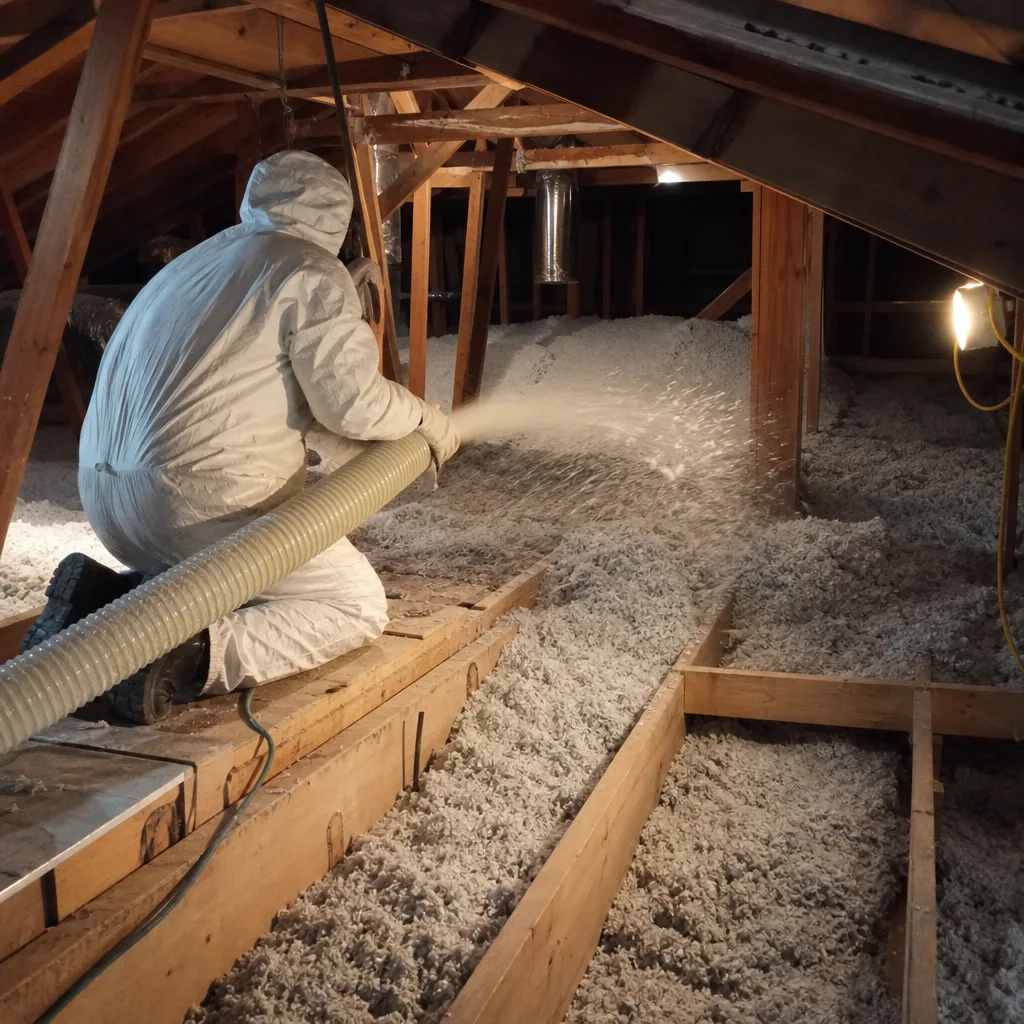
Insulation payback depends on local climate, energy rates, and the starting condition of the building envelope; for maintenance timing, see Seasonal Insulation Care for Palo Alto: Year-Round Homeowner’s Guide. Palo Alto’s specific conditions produce different numbers than national averages suggest.
Climate Data
Palo Alto sits in Climate Zone 3C, a marine climate with mild winters and dry summers. Heating degree days average 2,400 annually; cooling degree days average 800. This means heating dominates energy use, but the load is moderate compared to inland or national averages. The payoff for envelope improvements comes from reducing the hours your system runs, not from extreme temperature differentials.
PG&E Rate Structure
PG&E’s tiered and time-of-use rates heavily penalize consumption above baseline. As of early 2026, Palo Alto customers on the E-TOU-C plan see:
- Baseline tier: $0.32-0.36 per kWh
- 101-400% of baseline: $0.48-0.55 per kWh
- Over 400% of baseline: $0.65-0.72 per kWh
Gas heating customers on the E-TOU-C plan with gas service see winter gas rates of $1.80-2.40 per therm, with usage above baseline triggering the higher tier.
The tiered structure means envelope improvements produce nonlinear savings. Reducing total consumption by 20% can drop you into a lower rate tier, compounding the dollar savings beyond the raw kWh or therm reduction.
Worked Example: Air-Seal-Plus-Insulation vs. Insulation Only
Consider a 1,800-square-foot Palo Alto home built in 1968, original R-11 fiberglass in the attic, unsealed top plates, 12 can lights. Annual heating and cooling cost: $2,400 (mixed gas/electric, typical usage pattern).
Scenario A: Insulation Only
- Cost: $1,600 (blown cellulose over existing)
- Attic performance improvement: R-11 to R-38
- Air leakage reduction: minimal (no sealing)
- Estimated annual savings: $280-340
- Simple payback: 4.7-5.7 years
Scenario B: Full Air Seal Plus Insulation
- Cost: $3,400 (air sealing, removal of degraded existing insulation, new cellulose to R-38, blower-door verified)
- Attic performance improvement: R-11 to R-38
- Air leakage reduction: 35-45% (verified by blower-door)
- Estimated annual savings: $520-680
- Simple payback: 5.0-6.5 years
The payback periods look similar, but the performance divergence accelerates over time. Scenario B’s savings are durable; Scenario A’s insulation will underperform as air continues to wash through it. More importantly, Scenario B’s home is more comfortable, with fewer temperature stratification complaints and less dust infiltration, factors that don’t appear in simple payback math but drive real homeowner satisfaction.
In Palo Alto’s housing market, where median home values exceed $3 million, the comfort and air quality improvements also support resale value. Disclosure documents now routinely include energy audit results, and buyers in this market research utility costs.
Rebates and Incentives Available in 2026
Several programs reduce net cost for Palo Alto homeowners. The key is understanding which stack and which exclude each other.
Federal 25C Tax Credit (Energy Efficient Home Improvement Credit)
Through 2032, homeowners can claim 30% of qualified insulation and air sealing costs, up to $1,200 annually. The credit applies to materials and labor for building envelope components. Key requirements:
- Work must be performed on your primary residence
- Products must meet applicable ENERGY STAR or IECC standards
- Credit is nonrefundable (reduces tax liability but cannot exceed it)
- Annual cap of $1,200 is shared with other 25C categories (doors, windows, energy audits)
For a $3,400 air-seal-plus-insulation job, the 25C credit returns $1,020, reducing net cost to $2,380.
PG&E Rebates
PG&E’s Energy Upgrade California program offers insulation rebates tied to whole-home energy performance. As of 2026:
- Attic insulation upgrade (R-11 or below to R-38+): $0.15-0.25 per square foot, depending on income qualification
- Air sealing with verified 15% leakage reduction: $150-400 flat incentive
- Must use a participating contractor and complete pre- and post-work assessment
PG&E rebates generally do not stack with federal credits for the same measure, but they can stack for different measures on the same job. We handle the rebate paperwork as part of our standard process and specify in the written price which incentives apply to your specific scope.
BayREN (Bay Area Regional Energy Network)
BayREN offers additional rebates for comprehensive energy upgrades in participating counties, including Santa Clara. These require a Home Energy Score or equivalent audit and are typically accessed through participating contractors. Rebates range from $200-1,500 depending on total project scope and measured savings.
Palo Alto Utilities (City of Palo Alto Electric Customers)
Homes served by City of Palo Alto Utilities rather than PG&E have a separate rebate schedule. CPAU offers:
- Attic insulation: $0.20-0.30 per square foot for R-38+
- Air sealing: $200 flat with pre/post blower-door documentation
- Must use CPAU-approved contractor list
We maintain active status with both PG&E and CPAU programs and will specify in your written price which rebates we are applying for on your behalf.
How to Read a Bid and Spot Hidden Cost Transfers
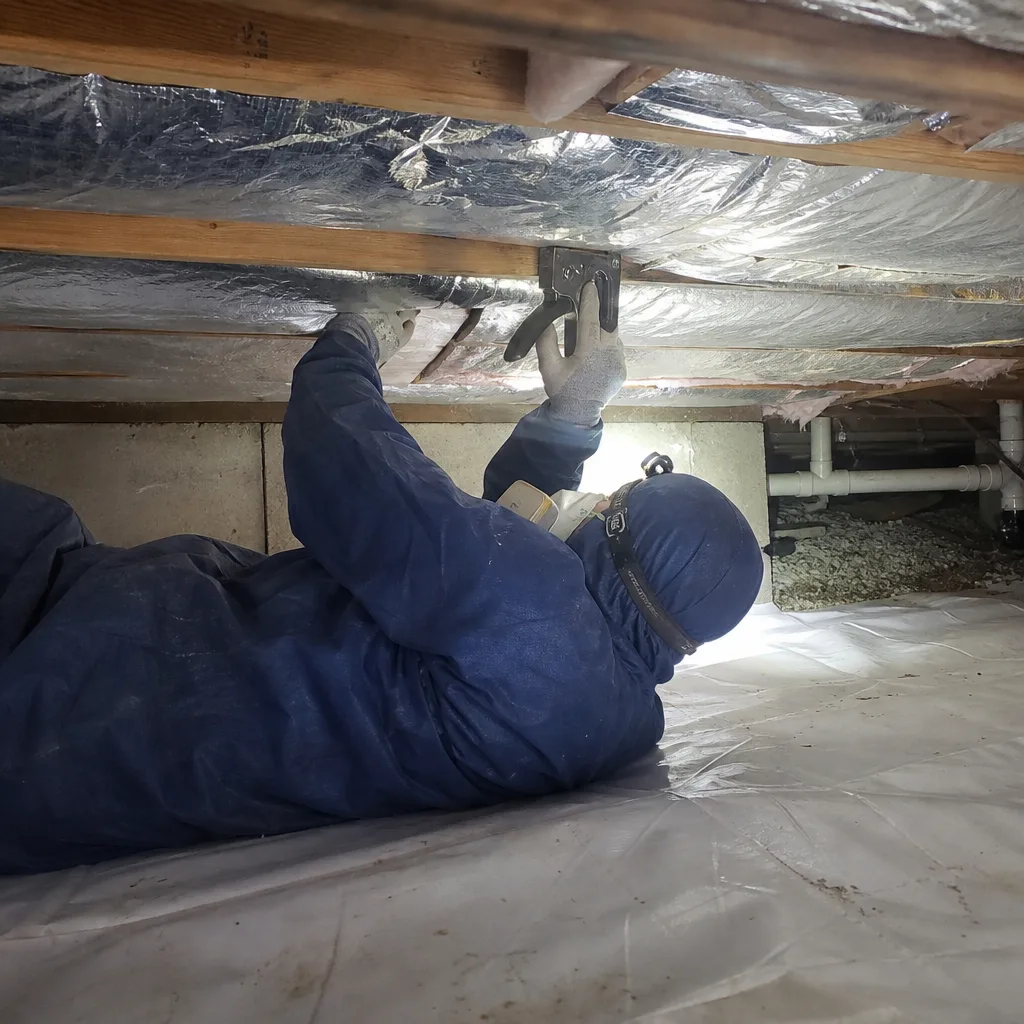
The written price is your protection. A proper bid from any contractor should itemize scope, specify materials by type and depth, and state what happens when conditions differ from expectation. Here’s what to verify.
1. Who pays for debris disposal?
Some bids exclude disposal, transferring cost to you after the job. Santa Clara County’s waste stream requires bagged insulation to go to specific facilities; dumping fees run $150-350 per load. If disposal is not itemized, ask. Our written price includes disposal for all removed materials.
2. Who is responsible if the blower-door reading fails?
A “failed” reading means the post-work test shows inadequate leakage reduction, indicating missed penetrations or incomplete sealing. Some contracts treat this as the homeowner’s problem, requiring additional payment for rework. Under our 365-Day Done Right Promise, we return and correct at no charge if the post-work reading does not meet the target we specified in writing.
3. Does the warranty cover settled depth or only material defects?
Blown insulation settles 10-20% in the first year. A warranty that covers only manufacturing defects in the raw material does not protect you if the installed depth was insufficient or if settlement leaves thin spots. Our documentation includes depth measurements at multiple attic locations, photographed and recorded, so settlement can be verified against the original installation.
4. Is the permit included and pulled?
Santa Clara County requires permits for insulation work that involves removal or that exceeds certain valuation thresholds. Unpermitted work can complicate resale and insurance claims. Our written price specifies permit responsibility and includes the fee.
5. What protects finished spaces during work?
Attic work produces dust and debris. The bid should specify floor protection, containment, and cleanup standards. We include a Documented Photo Record on every visit, showing pre-protection, work in progress, and post-cleanup condition.
6. Are material brands specified?
A bid that says “blown insulation” without naming type and manufacturer allows substitution to lower-grade product. We specify materials sourced from Owens Corning, Johns Manville, Knauf, Rockwool, CertainTeed, Icynene, Demilec, or GreenFiber, with no proprietary lock-in that forces a single brand choice.
7. What is the payment schedule?
Haven Standard requires no payment until the written scope is complete and documented. Be wary of bids requiring substantial deposit before work begins or before documentation is delivered.
Material Types and Real-World Performance in Palo Alto’s Climate
Material selection affects cost, but also installation quality requirements and long-term performance. Palo Alto’s marine climate, with high humidity in winter mornings and dry summers, creates specific conditions.
Cellulose (GreenFiber and equivalents)
Recycled paper fiber treated with borate for fire and pest resistance. Dense-pack cellulose at 3.5 pounds per cubic foot performs well in Palo Alto’s moderate temperature swings and provides good sound attenuation between floors. The borate treatment resists the moisture that can accumulate in unvented attic spaces during winter fog events. Cellulose requires careful installation density; underblowing leaves voids that are difficult to detect visually. We verify depth and density with probe measurements during installation.
Fiberglass (CertainTeed, Johns Manville)
Lower installed cost and consistent R-value per inch, but more sensitive to air movement. In a leaky attic, fiberglass allows air to filter through, reducing effective R-value by 30-50% in extreme cases. This is why air sealing is prerequisite, not optional, for fiberglass installations in older Palo Alto homes. Blown fiberglass also requires higher installation depth for equivalent R-value, which can exceed joist depth in some attics without proper damming.
Mineral Wool (Rockwool)
Highest fire resistance and best sound blocking, with natural moisture resistance that performs well near the Bay’s humidity. The higher material cost is justified in specific applications: homes with wood stoves or fireplaces, multi-story buildings where floor sound transmission matters, or where space constraints limit installation depth. In Palo Alto’s Eichler and similar mid-century homes with shallow roof pitches, mineral wool’s R-value per inch can achieve code compliance where thicker materials cannot.
Open-Cell Spray Foam (Icynene, Demilec)
Used for roof deck applications where the attic is conditioned space, or in complex geometries where blown material cannot achieve consistent coverage. Open-cell is vapor-permeable, appropriate for Palo Alto’s climate where moisture can dry to either direction. Cost is significantly higher and requires specialized equipment and training. We use spray foam where geometry or performance requirements justify it, not as a default upsell.
Radiant Barriers
Foil-faced products that reduce radiant heat gain through roof decks. Effective in cooling-dominated climates with significant ductwork in attics. Palo Alto’s cooling load is moderate, and radiant barriers produce diminishing returns in homes with ducts inside conditioned space or with already-well-insulated attics. We evaluate attic duct location and existing insulation before recommending.
Common Mistakes to Avoid
- Accepting a per-square-foot price without scope detail. A $1.20/sq ft quote tells you nothing about air sealing, material type, or verification. Demand line-item breakdowns.
- Blowing insulation over unsealed can lights. Standard recessed can lights are thermal and air leakage points. Covering them with insulation without airtight enclosures creates a fire hazard and wastes energy. We see this repeatedly in Palo Alto attic inspections of competitor work.
- Ignoring existing insulation condition. Wet, compressed, or rodent-contaminated insulation cannot be effectively topped. The new layer simply follows the contour of the damaged layer, perpetuating thin spots and air paths.
- Skipping the blower-door test to save $400. Without measured verification, you have no evidence the work performed as intended. The test is the only way to know whether air sealing was thorough or cosmetic.
- Assuming all contractors pull permits. Unpermitted insulation work in Santa Clara County can trigger red flags during sale inspections. Verify permit status before work begins.
- Choosing material based on internet research without climate context. Recommendations optimized for Phoenix or Minneapolis do not apply to Palo Alto’s marine climate. Local experience with actual performance data matters more than generic efficiency claims.
- Neglecting attic floor air sealing in homes with HVAC ducts in the attic. Palo Alto has thousands of homes with ductwork running through vented attics. Leaky attic floors pressurize the attic with conditioned air, which then leaks out through roof vents. Sealing the attic floor is often more impactful than additional roof insulation in these homes.
When to Call a Professional
Call for assessment when you notice uneven temperatures between rooms, dust accumulation near ceiling fixtures, or energy bills that rise without usage changes. These symptoms indicate envelope performance problems that insulation alone will not fix.
Also call before any major HVAC replacement. A right-sized system for a leaky home will be oversized for a sealed home, producing short-cycling and humidity control problems. We recommend sealing and insulating first, then running a Manual J load calculation on the improved envelope.
In Palo Alto’s competitive real estate market, pre-sale energy improvements with documented blower-door results can differentiate a listing. We provide the documentation that transfers to the buyer.
Topside Attic Insulation Palo Alto offers free estimates in Palo Alto and surrounding communities. Every estimate includes a written price before any work starts, under Haven Standard Clause 1. Call (650) 352-3577 to schedule. A live person answers 24/7.
Frequently Asked Questions
Most complete attic insulation jobs in Palo Alto run $2,200-4,800 for a typical 1,500-square-foot attic, including air sealing, blown insulation to R-38, debris disposal, permit, and blower-door verification. A basic blow-over without air sealing starts around $1,200 but will not deliver comparable performance. Call (650) 352-3577 for a written price specific to your home - estimates are free.
Adding new insulation over old is cheaper upfront, but only if the existing material is dry, uncompressed, and uncontaminated. In Palo Alto’s older neighborhoods, we find that 60-70% of attics with original insulation have rodent damage, moisture staining, or compression that makes topping ineffective. Removal and replacement costs more initially but produces measurable performance that the cheaper option cannot match. We assess condition during our free estimate and specify in the written price whether removal is recommended.
No, and you should be wary of any contractor who offers same-day installation without a written scope and permit check. Our process requires measurement, blower-door baseline testing where applicable, permit application for Santa Clara County, and material ordering. This typically takes 3-7 business days from estimate acceptance. The delay protects you from rushed work and undocumented conditions.
The federal 25C tax credit covers 30% of qualified insulation and air sealing costs, up to $1,200 annually. PG&E offers $0.15-0.25 per square foot for attic insulation upgrades plus flat incentives for verified air sealing. City of Palo Alto Utilities customers have a separate schedule at $0.20-0.30 per square foot. These programs generally do not stack for the same measure but can combine across different measures on one job. We specify applicable rebates in your written price and handle the paperwork.
Look for specific line items: top plate sealing, can light covers, penetration foam, and blower-door testing. A bid that says “insulation” or “R-38 blown cellulose” without these items does not include air sealing. Ask directly, and get the answer in writing. Under The Haven Standard, we itemize every component and publish before-and-after blower-door numbers so you can verify the result.
Even tract homes in Palo Alto develop different conditions over decades. One may have had a prior owner install can lights, creating penetration density the other lacks. Roof orientation affects attic temperature and moisture patterns. Prior rodent activity, storage usage, and maintenance history all change the actual scope. We price from measured conditions, not from square footage and year built.
You should receive a final invoice matching the written price, a Documented Photo Record showing before, during, and after conditions, and on applicable jobs, before-and-after blower-door readings showing CFM50 reduction. You should also receive any warranty documents and rebate application materials. This is standard on every Envelope Insulation Co. job; if your contractor does not provide this, you have no verification of what was actually done.
The Bottom Line
Insulation bids in Palo Alto vary widely because they describe different jobs, not different prices for the same job. The only way to compare accurately is a line-item scope that separates air sealing, insulation, materials, verification, and disposal. The lower bid is not a bargain if it omits the sealing that makes insulation perform, skips the test that verifies results, or transfers disposal and permit costs to you after signing. A written price before any work starts, with documented verification when the crew leaves, is the minimum standard for a job that will actually deliver the comfort and savings you are paying for.
Written by Wes Okafor, Owner at Topside Attic Insulation Palo Alto, serving Palo Alto since 2016.