
Crawl Space Insulation in Palo Alto, CA
Crawl space insulation in Palo Alto typically runs between $1,800 and $4,200 depending on square footage, existing conditions, and whether air sealing is needed first. Most jobs in our area are completed in one day, and every one starts with a written price before any work begins.
If your floors feel cold in the morning, your HVAC runs longer than it used to, or you’ve noticed a musty smell drifting up from below, the crawl space under your Palo Alto home is likely the source. Uninsulated or failing crawl space insulation is one of the most common – and most overlooked – drivers of energy loss in homes built before 2005, and it’s particularly common in the older ranch-style and post-war bungalows across Barron Park, Midtown, and the Ventura neighborhood.
At Topside Attic Insulation Palo Alto, we don’t treat insulation as something you drop in and walk away from. Wes Okafor built this company around a straightforward conviction: insulation installed over air leaks doesn’t perform – it just hides the problem. That’s why air sealing comes first on every crawl space job we run, period. If you want the full picture of what that looks like from inspection to encapsulation, the Crawl Space Encapsulation & Vapor Barrier in Palo Alto page covers the broader scope. This page focuses on the insulation layer specifically – what it costs, how we install it, and what to expect when the crew leaves.
Questions before you read further? Call (650) 352-3577. A live person picks up – no voicemail loops.
When You Need Crawl Space Insulation
Not every crawl space problem announces itself. Here are the clearest signs that the insulation under your floor is either missing, degraded, or working against you:
- Cold or uneven floors in winter. Palo Alto winters are mild compared to much of the country, but nighttime temperatures in January and February regularly drop into the low 40s. Without insulation between the crawl space and your subfloor, that cold air conducts straight up through the wood. If your kitchen or hallway floor feels noticeably colder than the rest of the house, the crawl space is almost always the first place to look.
- Higher-than-expected heating and cooling bills. Conditioned air you paid to heat or cool escapes through an uninsulated floor assembly at a rate that shows up on your PG&E bill every month. In homes along Alma Street or in the El Camino Park area, we regularly see households overpaying by $800 to $1,400 annually before the crawl space is addressed.
- Musty odors moving through the house. Odors from a crawl space that draws in outdoor air – a condition called stack effect – travel upward through gaps in the subfloor and into living areas. The smell is a signal, not just a nuisance. It often means moisture is accumulating below.
- Sagging, wet, or compressed batt insulation. Fiberglass batts installed decades ago in Palo Alto crawl spaces were never designed to handle ground moisture without a properly installed vapor barrier beneath them. When they absorb moisture, they compress, sag, and lose R-value. In some cases they fall entirely and sit on the ground – providing no insulation value at all.
- Pest activity in the crawl space. Rodents nest in degraded fiberglass batts. If an inspection has turned up evidence of rats or mice in the crawl space, the insulation almost certainly needs to come out before new material goes in. We handle removal as a discrete step, documented with photos, before any reinstallation.
- A recent home energy audit flagged the floor assembly. If you’ve had a blower-door test – a pressurization reading that quantifies, in a single CFM50 figure, how much air your building envelope is losing – and the report pointed to the crawl space as a major leakage zone, insulation alone won’t fix it. The air leaks need sealing first. That sequence is non-negotiable in how we work.
Our Crawl Space Insulation Process
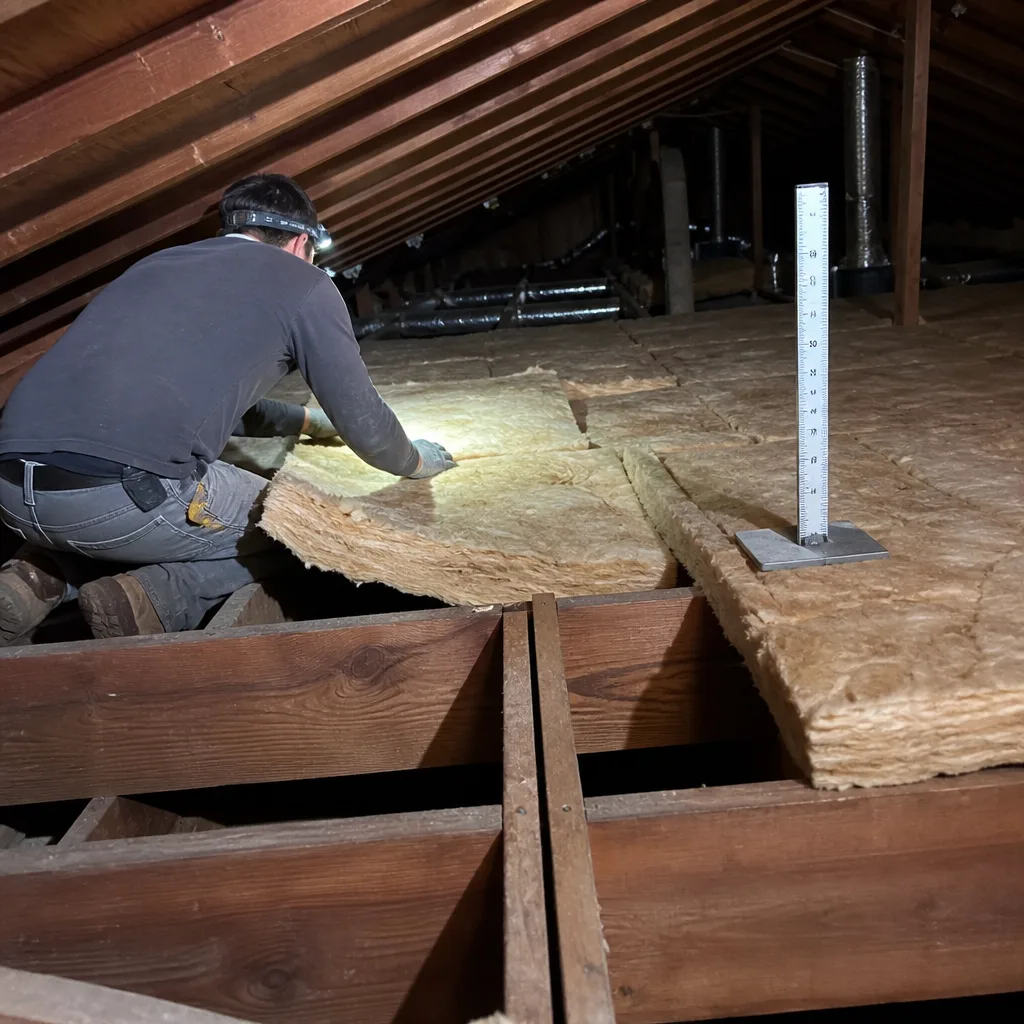
The steps below reflect what actually happens on a Topside Attic Insulation job in Palo Alto. The sequence matters as much as the materials.
- Written scope and price before anything starts. Under Haven Standard Clause 1, you receive a flat written price and a written scope of work before we lift a tool. The price you see is the price you pay. This isn’t a practice we adopted recently – it’s been the rule at Envelope Insulation Co. since 2016, on all 9,000-plus homes we’ve worked on.
- Full crawl space inspection and photo documentation. Your named, background-checked technician enters the crawl space and documents what’s there: existing insulation type and condition, vapor barrier status, signs of moisture, pest evidence, standing water, and duct insulation condition. Every finding is photographed. You receive that photo record whether or not you proceed with the job. Knowing what’s down there is useful regardless.
- Existing insulation removal, if needed. Saturated, pest-contaminated, or severely degraded batts come out first. Leaving compromised material in place and installing over it is a shortcut we don’t take. Removed material is bagged and hauled off the property.
- Air sealing of penetrations and rim joists. This is the step that separates a performance upgrade from a cosmetic one. Before any insulation goes in, we seal rim joists, subfloor penetrations, plumbing and electrical pass-throughs, and any visible gaps between the conditioned floor above and the crawl space below. On applicable jobs, we run a blower-door test before and after this step so the number is documented, not estimated. A reading that drops from 3,800 CFM50 to 1,900 CFM50 tells you exactly what changed – not a feeling, a measurement.
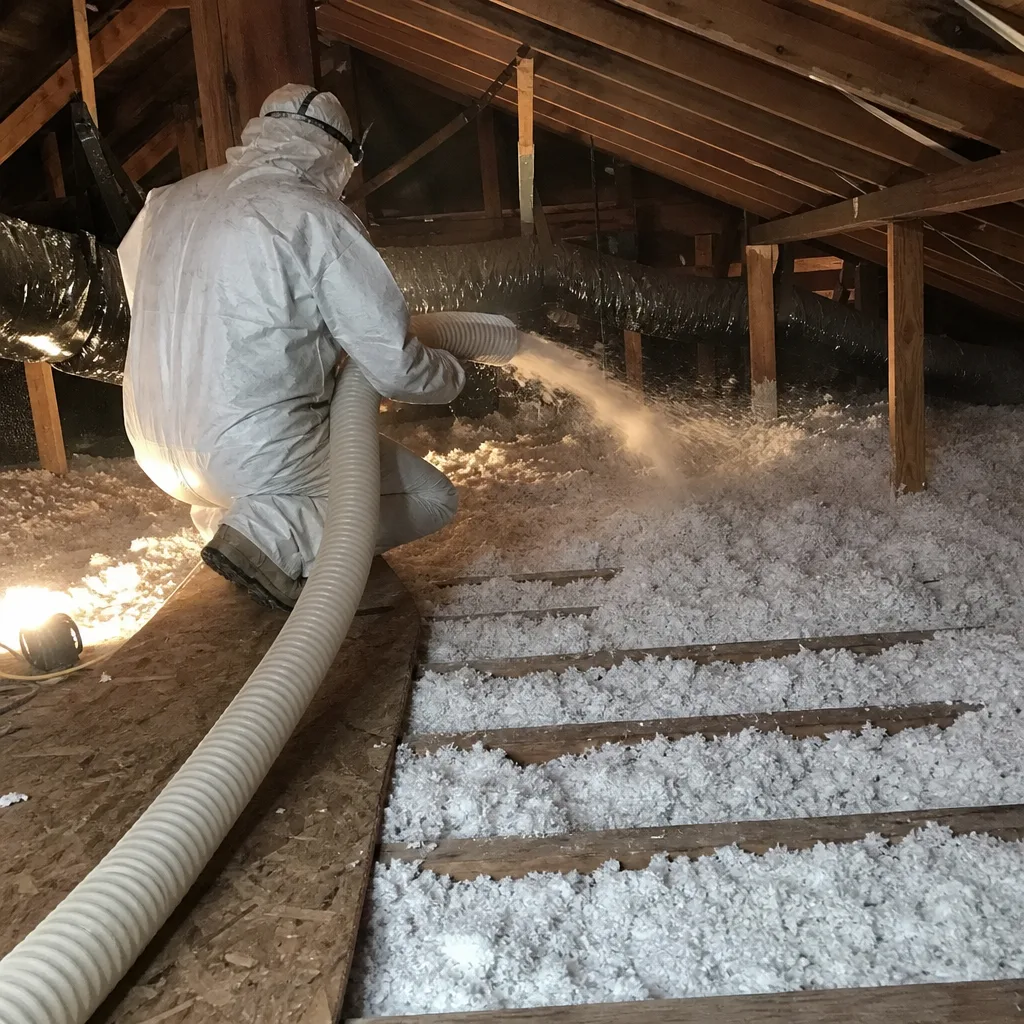
- Insulation installation to the specified R-value. For most Palo Alto homes, the target is R-19 to R-30 in the floor assembly, depending on the home’s construction and your energy goals. We use materials from Johns Manville and Owens Corning – faced or unfaced fiberglass batts sized for your joist depth – or, where conditions warrant, two-component spray foam for an air-impermeable application at the rim joist. Material choice is made based on what your specific crawl space needs, not on what we happen to stock.
- Final walk-through, documentation, and written warranty delivery. When the crew is done, your technician walks through the findings, confirms the scope was completed as written, and hands you the documented photo record and the written 365-Day Done Right Promise. If anything isn’t right within a year of completion, we come back and make it right. That’s in writing before anyone starts.
Crawl Space Insulation Pricing in Palo Alto
Crawl space insulation in Palo Alto costs more than the national average for a few practical reasons: Bay Area labor rates, the age and access complexity of the crawl spaces in many older Palo Alto neighborhoods, and the fact that most jobs in this market require air sealing and crawl space encapsulation & vapor barrier work before insulation goes in. A number quoted without accounting for those factors will change at the job site. Ours won’t.
| Scope | Typical Range (Palo Alto) |
|---|---|
| Insulation installation only (clean crawl space, no prior removal) | $1,800 – $2,600 |
| Removal of existing material + reinstallation | $2,400 – $3,400 |
| Air sealing + insulation (full floor-assembly upgrade) | $2,800 – $4,200 |
| Spray foam at rim joist + batt insulation in floor | $3,200 – $4,800 |
| Full encapsulation scope (vapor barrier + insulation + air sealing) | $4,500 – $8,500+ |
What moves the number up or down:
- Crawl space height and access. A crawl space under 18 inches of clearance – more common in the older Crescent Park and College Terrace homes – takes longer and sometimes requires specialized equipment. That’s real labor cost, and we account for it in the written price, not as a surprise on the invoice.
- Square footage. Most Palo Alto single-family homes fall between 1,200 and 2,800 square feet of crawl space area. The ranges above reflect that spread.
- Condition on arrival. A crawl space with intact vapor barrier, no moisture damage, and no existing insulation is the cleanest starting point. Add contaminated batts, standing water evidence, or active pest activity and the scope changes – always disclosed in writing before work begins.
- R-value target. California Title 24 requires a minimum of R-19 for floor insulation in Climate Zone 4, which covers Palo Alto. Upgrading to R-30 costs incrementally more in materials but is often worth doing if you’re already pulling and replacing.
- Whether duct sealing is included. HVAC ducts running through the crawl space often lose 20 to 30 percent of conditioned air through leaky connections. Sealing them while the crew is already down there adds cost but reduces payback time on the whole project.
Every estimate from Topside Attic Insulation Palo Alto is a written flat price – no ranges on the invoice, no “starting at” language. If you have a written estimate from another contractor, bring it to us. We’ll read it with you, line by line, and tell you what’s in it and what isn’t. That second opinion is free, and it’s not a sales tactic – it’s useful information regardless of who you hire.
FAQs – Crawl Space Insulation
What R-value do I need for crawl space insulation in Palo Alto?
California Title 24 requires R-19 minimum for floor insulation in Climate Zone 4, which applies to Palo Alto. In practice, we recommend R-25 to R-30 for homes with older subfloors or significant air leakage, because the marginal cost of the additional insulation material is small once the crew is already working in the space. The right target for your home depends on joist depth and what the crawl space inspection finds. Call (650) 352-3577 to schedule a free written estimate – we’ll tell you exactly what your floor assembly needs based on what we see, not a general formula.
Do I need a vapor barrier before insulating the crawl space?
Yes, in most Palo Alto crawl spaces, a vapor barrier should be in place before insulation is installed. Ground moisture migrating upward through an unlined dirt or concrete crawl space floor will reach the insulation above it and degrade its performance over time – sometimes within a few years. California’s Title 24 building code requires a ground vapor retarder in crawl spaces, and the Haven Standard at Envelope Insulation Co. treats this as a prerequisite, not an add-on. If you’re not sure what’s currently under your home, the inspection step will document it. See the full Crawl Space Encapsulation & Vapor Barrier in Palo Alto page for how vapor barrier and insulation work together as a system.
How long does crawl space insulation installation take in Palo Alto?
Most crawl space insulation jobs in Palo Alto are completed in a single day. A straightforward installation with no prior material removal – roughly 1,000 to 1,500 square feet – typically takes four to six hours from arrival to documentation. Jobs that include removing degraded existing insulation, sealing air penetrations, and installing new material often run six to eight hours. Larger homes in areas like Old Palo Alto or south of Oregon Expressway, where crawl spaces sometimes exceed 2,500 square feet, may require two days. Your written scope will specify the expected timeline before work starts.
Can I insulate my crawl space myself, or should I hire a professional?
Installing batt insulation in a crawl space is within the physical reach of an experienced DIYer, but there are two reasons we’d still recommend a professional assessment first. The first is sequencing: insulation installed over unsealed air leaks doesn’t improve performance in any measurable way – it just covers the problem. Without a blower-door test or at minimum a thorough visual inspection, you won’t know what you’re sealing, and some of the most significant leakage points (rim joists, subfloor penetrations, duct connections) aren’t visible without getting into tight spaces. The second is material selection: in Palo Alto’s Climate Zone 4, California Title 24 has specific requirements for crawl space vapor barrier class and installation method that affect whether the assembly performs as intended or traps moisture. A written estimate from us costs nothing and tells you exactly what’s there before you decide how to proceed. Call (650) 352-3577 to set one up.
Why Topside Attic Insulation Palo Alto
Wes Okafor started Envelope Insulation Co. in 2016 with one operating rule that hasn’t changed: seal the air leaks before the insulation goes in, document the result, and give the homeowner a written price before anyone starts work. That sequence has held across more than 9,000 homes.
In Palo Alto specifically, the crawl spaces we work in tend to be older, tighter in clearance, and more likely to have layers of previous insulation attempts stacked on top of each other. The California Avenue corridor, Southgate, and the streets south of Oregon Expressway have a high concentration of 1950s to 1970s construction where the original fiberglass batts – if they’re still there at all – have been in place for 40-plus years. Those jobs require a full assessment before a material recommendation makes sense.
What you get when we finish a job:
- A documented photo record of conditions before and after work
- Before-and-after blower-door readings on applicable jobs, in CFM50, showing the actual measured change
- A written warranty under the 365-Day Done Right Promise
- A copy of your written scope with the completed checklist
- Materials from manufacturers including Johns Manville and Owens Corning – no proprietary product lock-in
If you’ve already received a written estimate from another contractor, bring it. We’ll go through it with you at no charge. If it’s a fair price for the right scope, we’ll tell you that. If something’s missing, we’ll point to it specifically.
To schedule a free written estimate for crawl space insulation at your Palo Alto home, call (650) 352-3577. A live person answers. You can also start by visiting our home page to see the full scope of what we do across the building envelope.
Written by Wes Okafor, Owner at Topside Attic Insulation Palo Alto, serving Palo Alto since 2016.