
Crawl Space Vapor Barrier in Palo Alto, CA
Our Crawl Space Encapsulation & Vapor Barrier services use a heavy-duty polyethylene sheet installed across the ground and up the foundation walls of your crawl space to block soil moisture before it migrates into your floor system, subfloor framing, and living space above. In Palo Alto, where winter rain totals regularly top 15 inches and many homes in Crescent Park, Barron Park, and the Squares sit over shallow, clay-heavy soil that retains groundwater well into spring, an unsealed crawl space is one of the more reliably damaging things we find during an inspection. Most vapor barrier installations for a single-story Palo Alto home run between $1,200 and $3,800, depending on crawl space square footage, access conditions, and whether the existing ground cover needs to be removed first.
If you’re seeing condensation on your subfloor joists, a musty smell when the forced-air system kicks on, or soft spots in your hardwood, the crawl space is often where that problem originates. This page covers what we look for, what we do about it, and what the work costs. For the full scope of crawl space work including insulation, drainage matting, and full encapsulation, see our Crawl Space Encapsulation & Vapor Barrier in Palo Alto page. To talk through what your specific crawl space needs, call us at (650) 352-3577 – a live person picks up, any hour.
When You Need a Crawl Space Vapor Barrier
Not every crawl space in Palo Alto has obvious standing water. The damage often happens gradually, driven by vapor – invisible moisture that moves through bare soil, condenses on cold framing, and feeds wood rot and mold before a homeowner ever notices. These are the situations where a vapor barrier is the right first call:
- Musty or earthy odor from floor vents or lower-level rooms. When your HVAC system pulls air from a crawl space with high relative humidity, that smell travels. In homes along Matadero Creek and the Mayfield neighborhood, where seasonal groundwater sits close to grade, this is one of the most common complaints we field between December and April.
- Condensation or dark staining on floor joists. If your joists show dark streaks, surface mold, or visible moisture droplets during a crawl space inspection, the soil below is the source. Bare dirt releases several gallons of water vapor per day into an unprotected crawl space.
- Soft, springy, or squeaky floors above the crawl space. Wood that has been cycling through wet and dry seasons loses structural stiffness over time. Homes built before 1985 in Palo Alto often have original Douglas fir subfloors that telegraph this problem early.
- Elevated indoor humidity that persists despite HVAC operation. If your whole-house humidity runs above 60% during wet months and your HVAC system is sized correctly, the crawl space is a strong candidate for the moisture source – not the system.
- Evidence of pest activity in the crawl space. Rodents, termites, and wood-boring beetles all prefer damp framing. If you’ve had a pest inspection that flagged crawl space moisture, a vapor barrier is usually the remediation step that comes before any wood treatment.
- A home inspection report that flagged crawl space moisture or inadequate ground cover. This is common on Palo Alto homes sold in the 2015-2025 window, particularly mid-century ranches in the College Terrace and Professorville neighborhoods where the original vapor barrier – if there was one – is degraded plastic sheeting that has shifted or torn.
Our Crawl Space Vapor Barrier Process
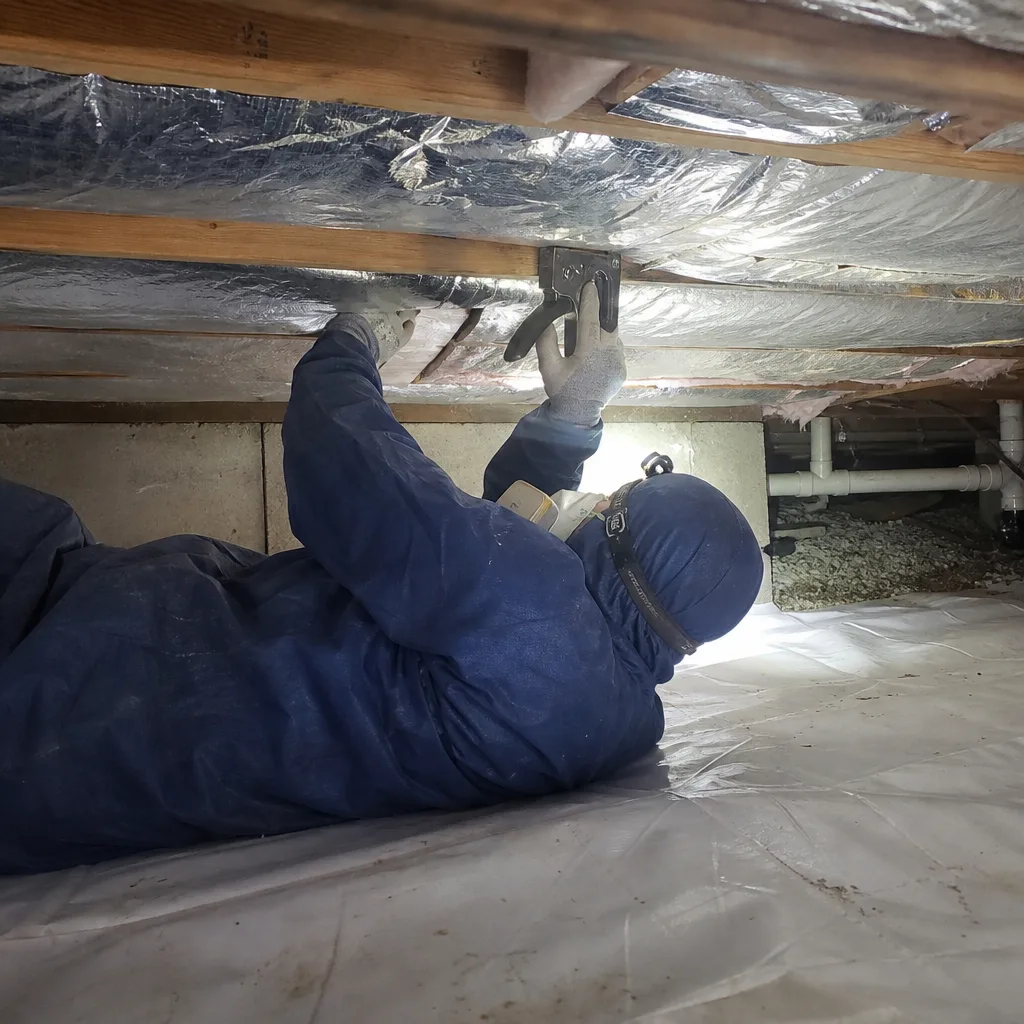
Every job at Topside Attic Insulation Palo Alto starts with a written price before anyone lifts a tool – that’s Haven Standard Clause 1, and it applies here the same as it does on every other job Wes Okafor’s team runs. Here is what the installation looks like from the first visit to the documented close:
- Inspection and moisture mapping. We enter the crawl space and document conditions with photos before anything else happens. We note the ground condition, existing cover (if any), joist moisture content using a pin-type meter, ventilation configuration, and access points. This photo record is yours – included in your job file, not available on request. In Palo Alto crawl spaces, we pay particular attention to the north-facing and shaded sections of the foundation, where solar drying never reaches and moisture accumulates fastest.
- Removal of deteriorated existing material. Old, torn, or inadequately overlapped plastic sheeting does more harm than good – it traps debris and rodent nesting material against the soil. We remove anything that isn’t serviceable and document what came out. Disposal is handled off-site; you don’t have a pile of wet plastic in your driveway.
- Ground preparation and debris clearance. Protruding rocks, construction debris, and organic material left against the soil surface can puncture new liner or create moisture pockets. We clear and level the ground surface across the installation area before any material goes down.
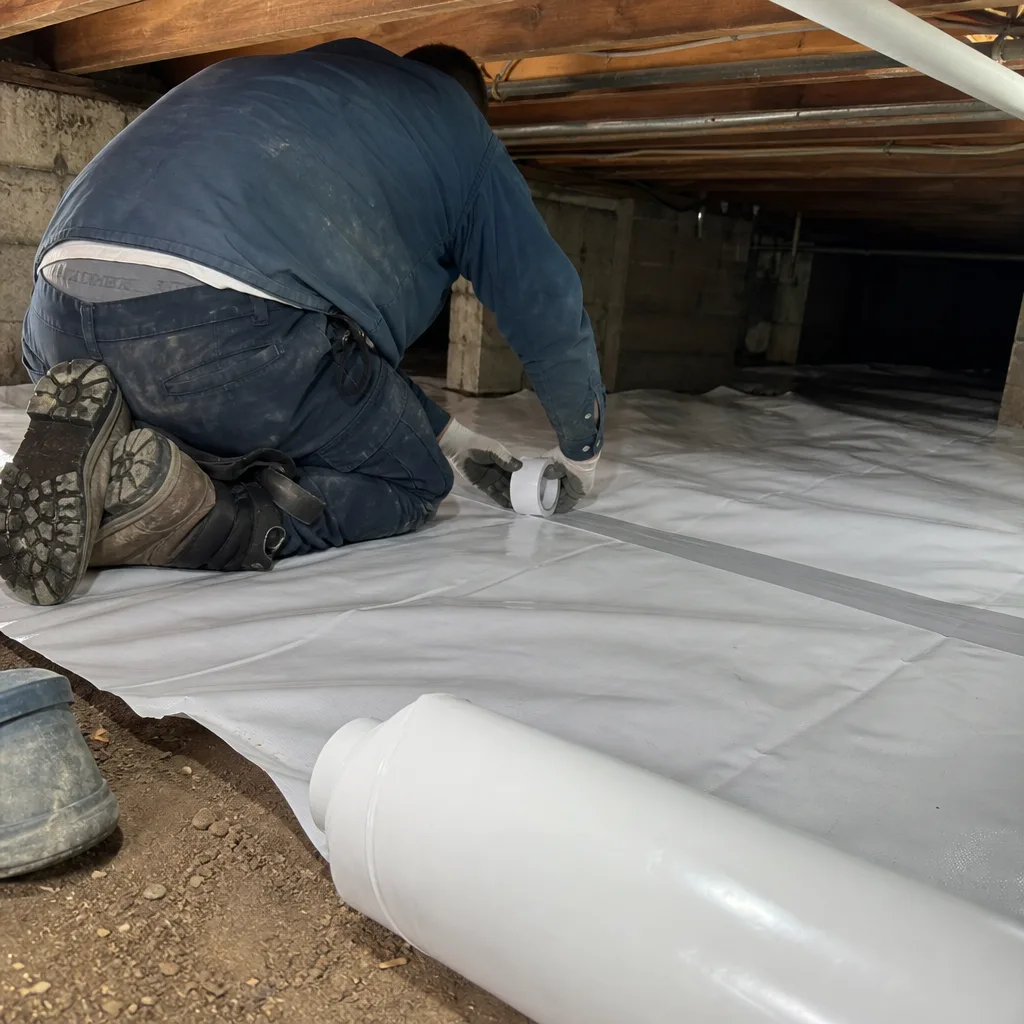
- Barrier installation – ground and wall coverage. We install a minimum 6-mil polyethylene liner (we typically use 12-mil on Palo Alto jobs given local soil moisture levels) across the entire ground surface with overlapping seams of at least 12 inches, sealed with moisture-rated tape. The liner runs up the foundation stem walls and is mechanically fastened – not just leaned against the wall. Penetrations for pipes, posts, and piers are cut, fitted, and sealed individually. A vapor barrier that stops six inches short of a pipe penetration does about half the job.
- Seam sealing and penetration detailing. Every seam, every wall transition, and every penetration gets a second pass before we close up. This is where most cut-rate installations fail – a single unsealed seam at a center-post penetration can allow enough moisture through to defeat the rest of the barrier within a season.
- Final documentation and written close-out. We re-photograph the completed crawl space from the same angles as the before shots, note the liner specification installed, and record the access point condition. You receive a written scope, a written warranty under the 365-Day Done Right Promise, and a photo record that documents what was done and what materials were used. On jobs that include air sealing work above – such as sealing the crawl space rim joists – we also provide blower-door readings before and after, so you have a number that shows the air-sealing result, not just our word for it.
Crawl Space Vapor Barrier Pricing in Palo Alto
How Much Does Crawl Space Encapsulation & Vapor Barrier Cost? (2026 Price Guide) - Palo Alto, CA: installation runs between $1,200 and $3,800 for most residential jobs. That range reflects real variation – not a bait-and-switch. Here is what drives the number:
- Crawl space square footage: Most Palo Alto single-family homes have crawl spaces ranging from 400 to 1,400 square feet. Material and labor scale directly with area. A 600-square-foot crawl under a Barron Park ranch runs differently than a 1,200-square-foot crawl under a two-story in Old Palo Alto.
- Liner thickness and specification: Standard 6-mil liner is the code floor. We use 12-mil as a default on Palo Alto jobs because the Bay Area’s seasonal moisture load justifies it. The difference in material cost is real but not dramatic – typically $150 to $350 for the whole job.
- Access and clearance: A crawl space with 24 inches of clear height and a standard 18×24 inch access hatch costs less to work in than one with 14 inches of clearance and a hatch on the exterior north side. Restricted access adds labor time.
- Removal of existing material: If there’s old poly sheeting, rodent nesting material, or debris that needs to come out first, that adds to the scope. We document what we found and what was removed, so you aren’t paying for labor you can’t verify.
- Sealing of rim joists and penetrations: Adding spray foam air sealing to the rim joist band – the framing at the top of the foundation wall where the floor system meets the foundation – is often done in the same visit. That work is scoped and priced separately, with its own before-and-after blower-door reading. Johns Manville and Owens Corning materials are available for this application depending on the detail required.
Under Haven Standard Clause 1, you receive a flat written price before any work begins. No hourly billing, no “we’ll see what we find.” If we open the crawl space and find conditions that change the scope – unusual debris volume, structural concerns, active water intrusion – we stop, document what we found, and present a revised written price before proceeding. You decide; we don’t proceed without your sign-off.
For a written estimate on your Palo Alto crawl space, call (650) 352-3577. If you have a competing written quote, bring it – we’ll read it with you as part of our Free Second Opinion on any written estimate.
FAQs – Crawl Space Vapor Barrier
How thick should a crawl space vapor barrier be in Palo Alto?
A minimum of 6 mil is required by California Building Code for a conditioned or sealed crawl space, but for Palo Alto specifically, we pair our Crawl Space Insulation with 12-mil liner as a standard practice. The Bay Area’s wet winters – combined with the clay-heavy soil common in Barron Park, Greenmeadow, and the Midtown neighborhoods – mean a thinner liner faces more puncture risk from soil contact and more cumulative moisture exposure over its service life. The 12-mil material carries a longer documented service life and holds up better around post and pier penetrations where thin poly tends to tear at the cut edge within a few seasons. To get a written price specific to your crawl space, call (650) 352-3577.
Does a vapor barrier replace crawl space encapsulation, or is it different?
A vapor barrier is a component of encapsulation, not a synonym for it. A full Crawl Space Encapsulation & Vapor Barrier in Palo Alto scope includes the ground-and-wall liner, sealed rim joists, conditioned air supply or dehumidification, and sometimes drainage matting – essentially converting the crawl space into a semi-conditioned buffer zone. A vapor barrier installation on its own addresses ground moisture and is the right starting point when the crawl space has adequate passive ventilation, no active water intrusion, and doesn’t need to be fully conditioned. We’ll tell you which scope your crawl space actually needs during the inspection, and we’ll put it in writing before the job starts.
How long does a crawl space vapor barrier last?
A properly installed 12-mil liner in a Palo Alto crawl space should perform for 15 to 25 years under normal conditions – meaning no standing water events, no major pest damage, and no significant foundation movement that shifts the liner off the wall. The seams and penetration details are what fail first on most installations; a liner that was taped with non-moisture-rated tape or that was folded rather than overlapped at the seams will show failures within 5 to 8 years. Our installations use moisture-rated tape at every seam, and we document the seam locations in the photo record so you can verify the detailing without climbing into the crawl space yourself.
Can I install a crawl space vapor barrier myself?
The installation itself – rolling out poly and taping seams – is physically possible as a DIY project, but the details that actually determine whether it works are easy to get wrong without seeing a lot of crawl spaces. Penetration sealing around piers and pipes, mechanical fastening at the stem wall, and proper overlap at seams are the steps most DIY installations skip or underdo. In Palo Alto, where a failed liner means another season of moisture cycling through your subfloor framing, the cost of redoing a partial job usually exceeds the cost of having it done correctly the first time. If you want a second opinion on work you’ve already done or a quote to complete a partial installation, call (650) 352-3577 and we’ll schedule an inspection with a written assessment.
Written by Wes Okafor, Owner at Topside Attic Insulation Palo Alto, serving Palo Alto.