
Attic Baffles & Ventilation Prep in Palo Alto, CA
Attic baffles are cardboard, foam, or rigid channels installed between rafters at the eave line to hold insulation back from the soffit vents, keeping a clear airway from the roof’s edge to the ridge. Without them, blown-in or batt insulation slides toward the eaves during installation and blocks the very vents it needs to work alongside. In Palo Alto, where older Ranch-style homes in Crescent Park and the post-WWII tract neighborhoods on the Midtown side frequently have shallow 2×6 rafter bays and original soffit vents that were never designed with insulation depth in mind, blocked ventilation is not a rare edge case – it’s the most common problem we find when we pull back a hatch and look.
This page covers what attic baffle and ventilation prep work actually involves, what it costs in the Palo Alto market, and why Envelope Insulation Co. – operating as Topside Attic Insulation Palo Alto under The Haven Standard since 2016 – treats this prep as a hard prerequisite rather than an optional line item. If you are already familiar with the service and want to get a written price, call us at (650) 352-3577 – a live person answers, no voicemail loop. If you are earlier in your research, our full Attic Insulation in Palo Alto page covers the broader scope of what a properly sequenced insulation job looks like.
A quick direct answer for the research-phase homeowner: attic baffle and ventilation prep in Palo Alto typically runs $350 to $900 as a standalone scope on an average single-story home, depending on rafter bay count, existing vent condition, and whether any blocking or debris removal is needed first. When bundled with our Attic Insulation services, the prep labor is often the difference between an installation that performs and one that fails a blower-door retest six months later.
When You Need Attic Baffles & Ventilation Prep
Not every attic needs baffle installation before insulation. Some homes already have adequate rafter vents from a previous job. But in Palo Alto’s housing stock – which skews heavily toward 1950s through 1980s construction in neighborhoods like Barron Park, College Terrace, and Old Palo Alto – the conditions that create baffle problems are more rule than exception. Here are the scenarios where this prep work is necessary:
- Existing insulation is touching the roof sheathing at the eaves. When blown-in cellulose or fiberglass packs the rafter bays all the way to the fascia, soffit vents are blocked. Warm, moisture-laden air from inside the conditioned space has nowhere to go, and the roof deck above the eaves stays wet during Peninsula fog events. We’ve pulled mold-stained sheathing from homes in Professorville where no one realized the soffit vents had been covered for a decade.
- You’re adding insulation to an attic that currently has less than R-30. The 2022 California Energy Code requires R-38 minimum for attic insulation in Climate Zone 4 (which covers Palo Alto). Getting to that depth without baffles in place first means the new material will almost certainly migrate toward the eaves during installation and block the ventilation pathway.
- Your attic has blocked or missing soffit vents. Original 1960s aluminum strip vents in Palo Alto homes frequently get painted over during exterior repaints or clogged with debris from the mature tree canopy common in Squares and Eichler neighborhoods. We assess every vent before recommending a baffle count.
- You’ve had a roofing contractor install new decking or shingles recently. Re-roofing work sometimes disturbs existing baffles or pushes insulation at the eave line out of position. A post-roofing ventilation check before you add insulation is straightforward and catches problems before they’re buried under 14 inches of new material.
- Your upstairs rooms run noticeably hotter than the rest of the house. Palo Alto’s summer afternoons regularly reach the mid-90s, and a poorly ventilated attic can trap heat that pushes radiant load into the living space below. Blocked soffit vents are one of the most common causes of this symptom – and one of the most overlooked, because the blockage is invisible from the living area.
- You have a spray foam job planned for the roof deck (unvented assembly). If you’re converting to an unvented attic assembly using closed-cell foam applied to the underside of the roof sheathing, existing baffles need to be confirmed or removed depending on the design. The prep work changes, but it doesn’t disappear. We document what we find and what we do to it before foam application begins.
Our Attic Baffles & Ventilation Prep Process
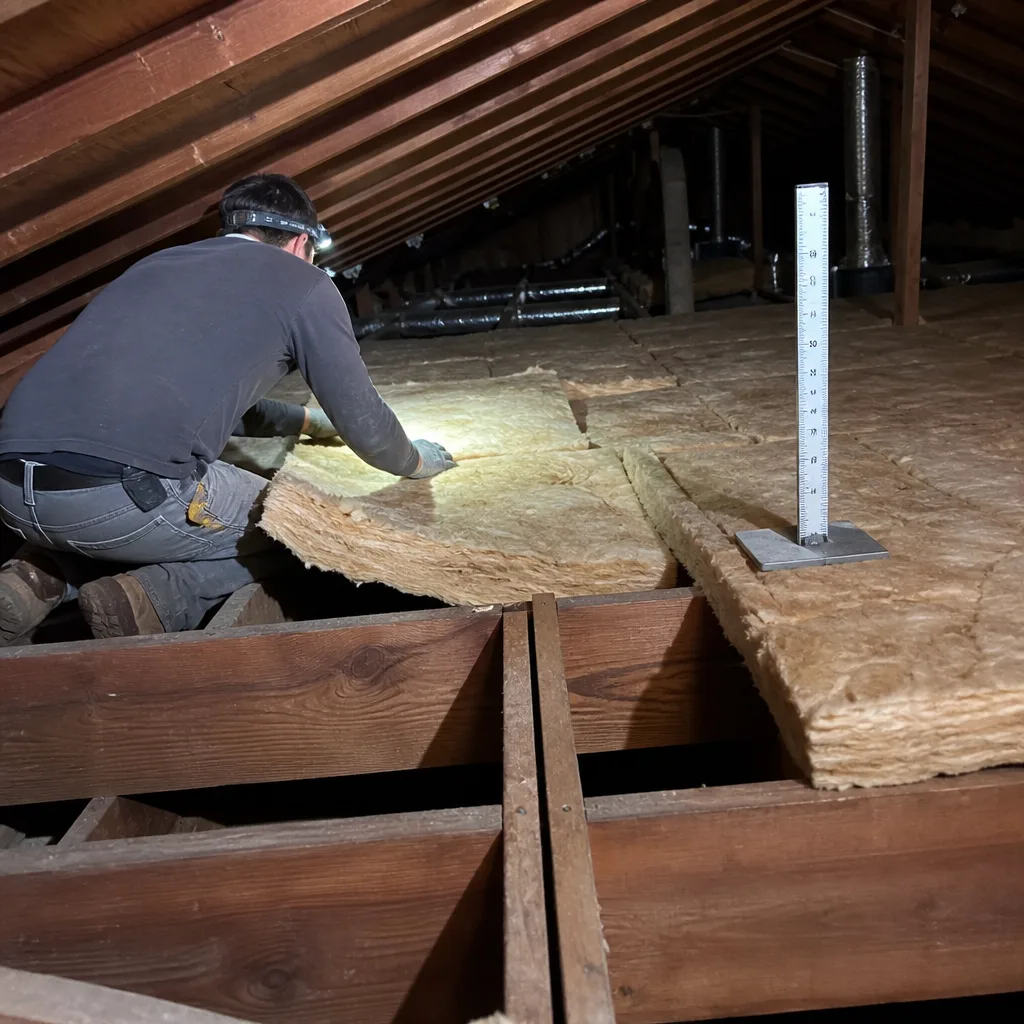
We follow the same documented sequence on every job. Under Haven Standard Clause 1, you receive a written price and written scope before any work starts – not a ballpark, a flat price. Here is what the work itself looks like once the scope is agreed and signed:
- Initial attic assessment and vent count. A technician physically enters the attic and maps every rafter bay from ridge to eave. We count existing soffit vents, note which are blocked (by insulation, paint, or debris), measure the clear airway dimension in the rafter bays, and photograph the condition of the roof sheathing and any existing baffles. This documentation becomes part of the Documented Photo Record you receive when we leave – not a slide deck, a timestamped photo file tied to your job record.
- Debris and insulation clearing at the eave line. Where existing insulation has migrated into the soffit area, we pull it back by hand to expose the rafter bay and the back of the soffit vent. In older Palo Alto homes we commonly find compressed fiberglass batts that were pushed toward the eaves during previous insulation top-ups – sometimes as far back as the 1980s – that have been blocking ventilation airflow for decades. This material is set aside or removed from the attic depending on its condition.
- Soffit vent clearing and condition check. Painted-over or physically blocked vents are cleared or flagged for replacement. We check the free area (the actual open square inches per vent) against the attic’s net free area requirement under California Building Code Section 1202A. In Palo Alto’s Climate Zone 4, the standard ventilation ratio is 1:150 of attic floor area unless a vapor retarder is present, which shifts it to 1:300. We note the ratio we found and the ratio the attic will have after prep.
- Baffle installation, bay by bay. We install rafter vents – typically AccuVent or equivalent rigid foam baffles – in each rafter bay, stapling them to the roof sheathing so they hold a clear 1.5-inch minimum channel from the soffit to the open attic space. On homes with narrow rafter bays common in older Palo Alto construction (2×6 at 24-inch spacing), baffle selection matters; we use a profile that fits the bay without compressing and creating a choke point higher up.
- Blocking and air-sealing at the top plate level. Once baffles are set, we air-seal the top plate – the framing member where the exterior wall meets the attic floor – using spray foam or caulk as appropriate to the gap width. This step is not optional. Envelope’s position since 2016 has been that insulation goes in after air sealing, not before, and the top plate is one of the three highest-priority air-sealing locations in any attic. We won’t skip this step to save time.
- Final walkthrough, photo record, and blower-door baseline (when applicable). On jobs that include both ventilation prep and a full insulation installation, we conduct a blower-door test – a pressurization measurement that gives a single CFM50 number showing how much conditioned air the home’s envelope was losing before the work – before insulation is added. A second test runs after. Both numbers go into your job record. If we did ventilation prep only without insulation, we document the rafter bay count, baffle type installed, vent free area before and after, and provide the photo record. You know exactly what was done and where.
Attic Baffles & Ventilation Prep Pricing in Palo Alto
Ventilation prep pricing in Palo Alto is straightforward to scope once we know the attic’s rafter bay count and the condition of existing soffit vents. The numbers below reflect what we see on actual Attic Insulation Near Me in Palo Alto, CA jobs in this market – not a national average.
| Scope | Typical Range (Palo Alto) | What Drives the Variation |
|---|---|---|
| Baffle installation only (baffles in place, soffit vents clear) | $350 – $550 | Rafter bay count; average 1,200-1,600 sq ft single-story home |
| Baffle installation + soffit vent clearing | $450 – $700 | Number of painted or debris-blocked vents; degree of obstruction |
| Full ventilation prep (baffles + vent clearing + top-plate air sealing) | $700 – $1,100 | Linear feet of top plate; penetration count (can lights, wiring, pipes) |
| Ventilation prep bundled with full attic insulation installation | Prep labor typically adds $400 – $700 to the total job cost | Prep is priced separately on every written scope so you can see it as its own line |
Two things affect cost more than any other in Palo Alto specifically. First, attic access: the compact attic spaces in Eichler homes near Greenmeadow and the low-slope rooflines common in the south end of Palo Alto near Barron Park require more time per bay than a taller attic with a standard 7:12 pitch. Second, debris load: Palo Alto’s tree canopy – particularly the mature oaks and liquid ambers in the Old Palo Alto and Professorville neighborhoods – sends leaf matter into soffit vents at a rate that adds clearing time beyond what a cleaner suburban attic requires.
Under Haven Standard Clause 1, the price you get from us is a flat, written number – not an estimate that adjusts upward once the crew is in the attic. If we find something unexpected during the job that changes the scope, we stop, document it, and get your written approval before we continue. No surprises at invoice.
We also offer a free second opinion on any written estimate you’ve received from another contractor. Bring us the quote; we’ll read it with you and tell you plainly what’s in it, what’s missing, and what the number should look like for the specific scope described. Call (650) 352-3577 to schedule that conversation – it’s a live person, not a form.
Why Ventilation Prep Can’t Be Skipped Before Insulation
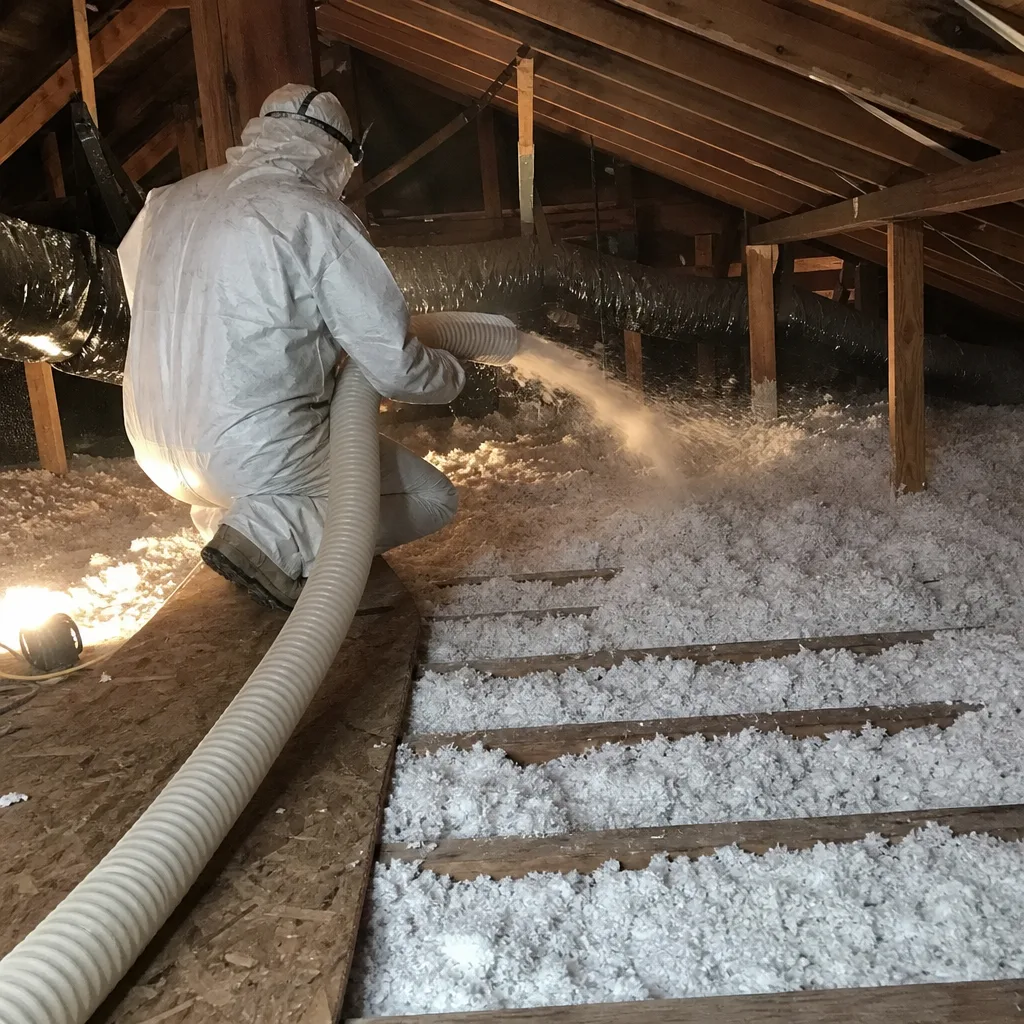
This is the part of the job that some insulation contractors skip because it adds time and doesn’t show up in a before-and-after photo the way a clean new layer of Attic Batt Insulation or blown-in GreenFiber does. It matters anyway, for two reasons that compound each other.
The first is physical: insulation needs airflow to work correctly. A baffle-free attic in Palo Alto where blown-in material has packed the soffit area is an attic where the roof deck above the eaves stays damp during the marine-layer mornings that roll in from the Bay in spring and fall. Over years, that moisture load can cause sheathing decay at the eave line – a repair that runs several times the cost of the baffle installation that would have prevented it.
The second is performance: a blower-door test on a home where insulation was added without proper air sealing at the top plate often shows little or no reduction in CFM50 compared to the pre-insulation reading. The insulation adds R-value, but the unconditioned attic air is still short-circuiting through the framing cavities into the living space. You paid for insulation; you got R-value on paper but not the energy performance you expected. We’ve re-done other contractors’ work in Palo Alto enough times to be direct about this.
Our full home page covers the complete building-envelope service line if you’re evaluating more than just attic prep. The Attic Insulation in Palo Alto page goes deeper on material selection, R-value requirements for Climate Zone 4, and how the full insulation job sequences from air sealing through final blower-door confirmation.
FAQs – Attic Baffles & Ventilation Prep
Do I need attic baffles if my Palo Alto home already has soffit vents?
Yes, soffit vents and baffles serve different functions. Soffit vents are the openings; baffles are the channels that keep insulation from blocking those openings once it’s installed. A home can have fully functional soffit vents and still lose all airflow through them within weeks of a blown-in insulation job if no baffles were installed first. In Palo Alto homes where R-38 or greater insulation depth is required under California’s 2022 Energy Code, the insulation will physically reach the soffit line without a baffle holding it back. If you’re not sure what’s in your attic, we can tell you after a 30-minute assessment – at no charge before any work begins. Call (650) 352-3577 to schedule.
How much does attic baffle installation cost in Palo Alto?
Baffle installation as a standalone scope in Palo Alto typically runs $350 to $550 for a standard 1,200 to 1,600 square foot single-story home with clear soffit vents, though total costs vary depending on scope-see our guide on How Much Does Attic Insulation Cost? (2026 Price Guide) - Palo Alto, CA for full details. Add $100 to $200 if vents need clearing, and $250 to $550 more if top-plate air sealing is included. Full ventilation prep before insulation – baffles, vent clearing, and air sealing combined – usually lands between $700 and $1,100 on a typical Palo Alto home. Every price we give is in writing before work starts; there is no “we’ll see what we find” billing on any Envelope job. Call (650) 352-3577 for a flat written number specific to your home.
Can attic ventilation prep be done the same day as insulation installation?
Yes, and on most jobs it is. Ventilation prep is the first phase of the attic insulation sequence – baffles and air sealing go in before any insulation material is added. On a typical Palo Alto single-story home, prep takes two to four hours depending on rafter bay count and existing vent condition; insulation follows in the same visit. If we discover conditions during prep that require additional work – damaged sheathing, missing vent sections, significant debris load – we document it and discuss scope adjustment before proceeding. We don’t rush prep to make a same-day insulation window; we do it in the right order or we don’t do it.
What happens if I skip ventilation prep and just add insulation?
Skipping baffle installation before blown-in insulation typically blocks soffit ventilation within the first season. The consequences in Palo Alto’s climate – where marine-layer humidity is present most mornings from March through June – are moisture accumulation at the eave line, potential sheathing deterioration over three to seven years, and in some cases reduced insulation performance because attic air is bypassing the thermal layer through unblocked top-plate gaps. On a blower-door test, a home where insulation was added over an unsealed attic floor often shows minimal improvement in CFM50 over the pre-insulation baseline. That means you paid for insulation and got R-value on paper but not the air-sealing performance that actually moves the needle on energy bills. We’ve documented this exact pattern on re-work jobs in Palo Alto; it’s preventable, and preventing it is the point of this prep step.
Key Takeaways
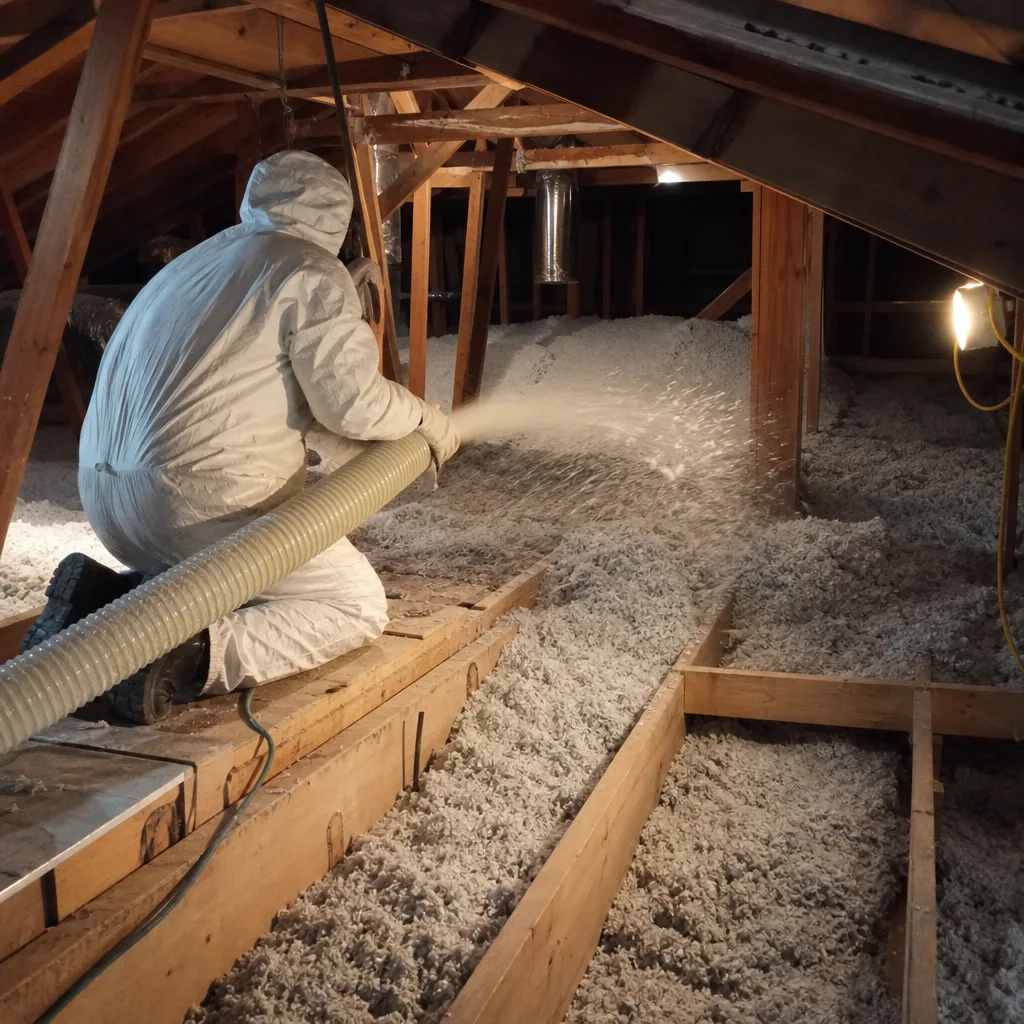
- Attic baffles hold insulation back from the soffit vents – without them, blown-in material blocks the ventilation pathway regardless of how many vents the roof has.
- California’s 2022 Energy Code requires R-38 minimum in Palo Alto (Climate Zone 4). Reaching that depth without baffles in place virtually guarantees blocked soffit vents.
- Full ventilation prep – baffles, vent clearing, and top-plate air sealing – typically runs $700 to $1,100 as a standalone scope in Palo Alto.
- Envelope’s sequencing rule since 2016: air sealing and ventilation prep are completed before any insulation is added, not after. This is a hard process requirement, not a preference.
- Every job closes with a Documented Photo Record and, on full insulation jobs, before-and-after blower-door numbers so you can verify what the work actually did to your home’s envelope performance.
- Under the 365-Day Done Right Promise: if anything about the ventilation prep or insulation installation isn’t right within a year of completion, we make it right – in writing, before work starts, as part of the scope.
Get a Written Price for Your Attic Prep
If your Palo Alto home is due for new insulation or you’ve had another contractor suggest baffle work without being specific about scope or price, we’re straightforward to talk to. Wes Okafor and the Topside Attic Insulation Palo Alto crew have documented ventilation prep and insulation work across Palo Alto neighborhoods from Fairmeadow to Duveneck-St. Francis since 2016. Every job gets a written price before anyone lifts a tool, a Documented Photo Record when we leave, and a 365-Day Done Right Promise in writing.
Call (650) 352-3577 to get a flat written estimate – a live person answers, and we can usually schedule an assessment within a few business days. If you have a competing written estimate, bring it; we offer a free second opinion on any written quote.
Written by Wes Okafor, Owner at Topside Attic Insulation Palo Alto, serving Palo Alto since 2016.