
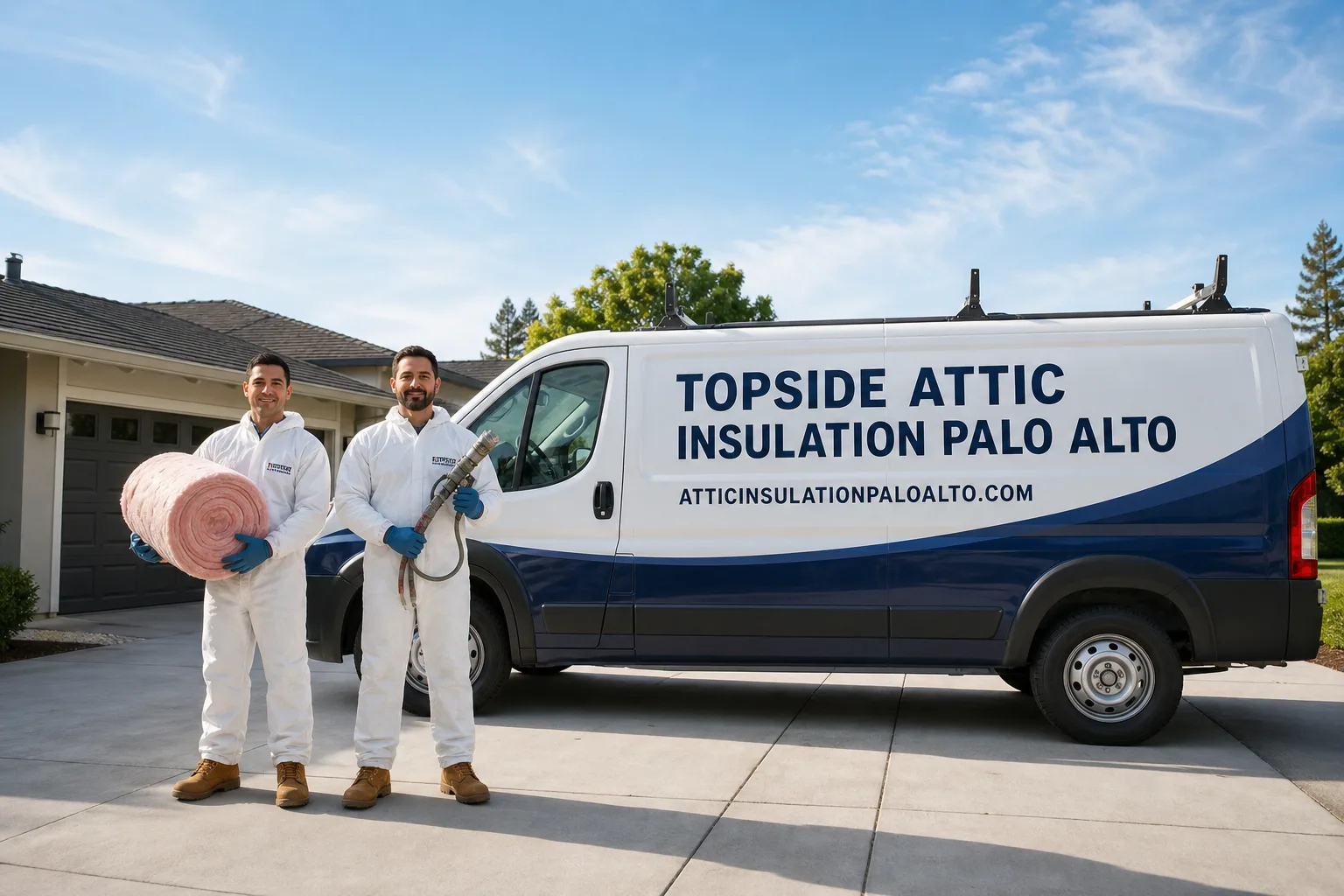
Fast, Reliable Blown-In Insulation Across Stanford
Blown-in insulation in Stanford, CA typically costs $2.80-$5.40 per square foot installed, with most faculty lease home attic jobs running $3,200-$6,800 depending on whether air sealing and university coordination are required. Our crews are dispatched from the San Francisco Bay Area office and can usually be on-site in Stanford within 24-48 hours once Stanford Facilities Management or R&DE has approved the scope. Call (650) 352-3577 for a free estimate with a written price before any work starts.
Stanford isn’t a typical city, and blown-in insulation here isn’t a typical trade job. Virtually every structure sits on university-owned land, which means contractors must navigate Stanford’s internal approval chains - R&DE for faculty housing, Stanford Utilities for buildings on district heating and cooling loops - before a single hose enters an attic. We’ve completed over 9,000 sealed and insulated homes since 2016, and enough of them have been in Stanford that we know the difference between a scope that sails through review and one that gets bounced back for missing coordination with the Central Energy Facility.
Why Topside Attic Insulation Palo Alto Is Stanford’s Preferred Blown-In Insulation Company
Our reputation in Stanford was built on jobs where the documentation mattered as much as the installation. Faculty lease homeowners and university facilities staff both need records - blower-door numbers, photo logs, written scopes - and we deliver them on every job without being asked. Reviews from Stanford customers consistently mention our crew’s familiarity with R&DE’s inspection scheduling and our willingness to revise scopes when Stanford Real Estate flags a conflict with lease terms.
Response time to Stanford averages same-day or next-day once university approvals are in hand. We don’t promise what we can’t control - the R&DE review timeline is Stanford’s - but we do keep a slot open for approved scopes so we’re not adding our own delay to the process. Our technicians are background-checked and uniformed, and calls are answered by a live person 24/7, which matters when a Facilities Management inspector requests a same-day walkthrough before signing off.
Local knowledge that actually changes outcomes: we know which 1960s faculty lease clusters off Campus Drive East have shallow attic profiles that won’t hold a standard R-49 depth without compressing the blown-in material. We know which buildings tie into the Central Energy Facility district loops and require pressure-balance review with Stanford Utilities. This isn’t generic Bay Area experience applied to a Stanford zip code - it’s specific to working inside the university’s property system.
Our Blown-In Insulation Services in Stanford
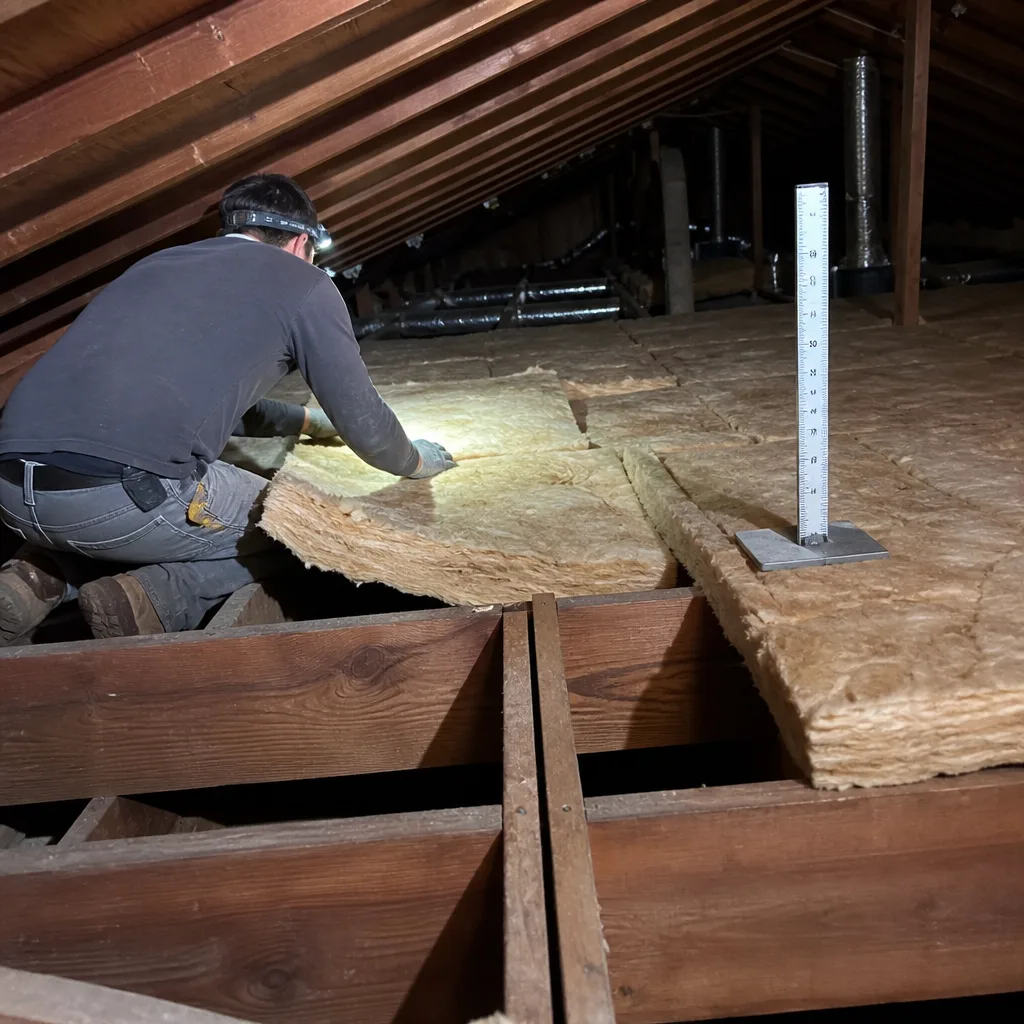
Blown-In Cellulose
Blown-in cellulose - ground paper fiber treated with borate fire retardant - is our most common specification for Stanford faculty lease homes built between the 1940s and 1970s. The material fills irregular joist bays and covers top plates well, which matters in these homes where original construction left gaps at the ceiling plane. We source from GreenFiber, a borate-treated cellulose that handles the damp winter conditions near Stanford better than ammonium-sulfate-treated alternatives, which can off-gas in humid attic environments. Every cellulose job in Stanford includes air sealing first; we won’t blow insulation over an unsealed attic floor. The blower-door test - a pressurization reading that shows, in one number, how much air your building envelope is losing - is performed before and after, with both readings published in your documented record.
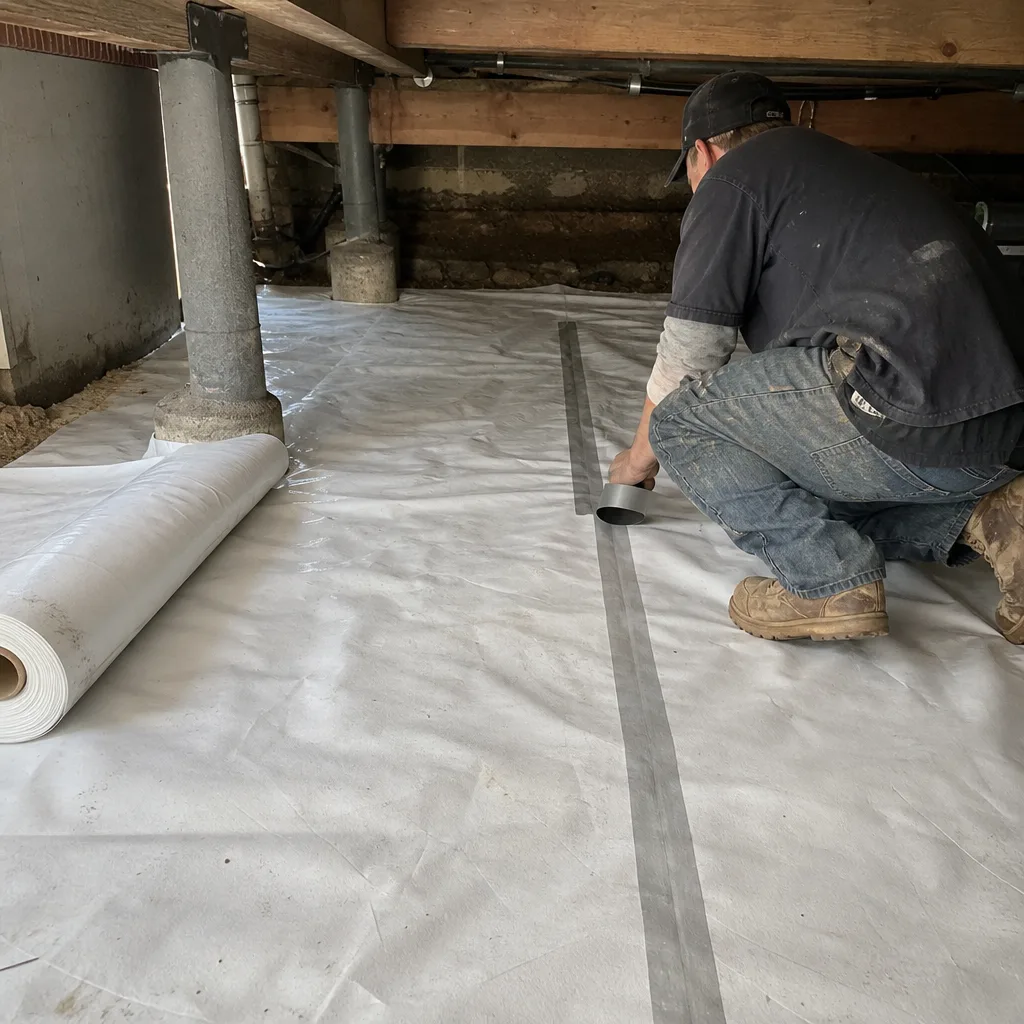
Blown-In Fiberglass
Blown-in fiberglass - spun glass fibers blown dry - works best in Stanford’s tighter joist bays where cellulose might bridge or leave voids. We use Owens Corning fiberglass for top-up applications over existing insulation where the university’s target depth hasn’t been met, and for homes where moisture sensitivity is a concern despite proper air sealing. Fiberglass doesn’t absorb water the way cellulose can, which is relevant in Stanford’s fog-driven winter climate where poorly sealed attics see intermittent wetting. Under Haven Standard: Have it in writing, every fiberglass specification includes the target settled depth, the installed weight per square foot, and the before-and-after blower-door target.
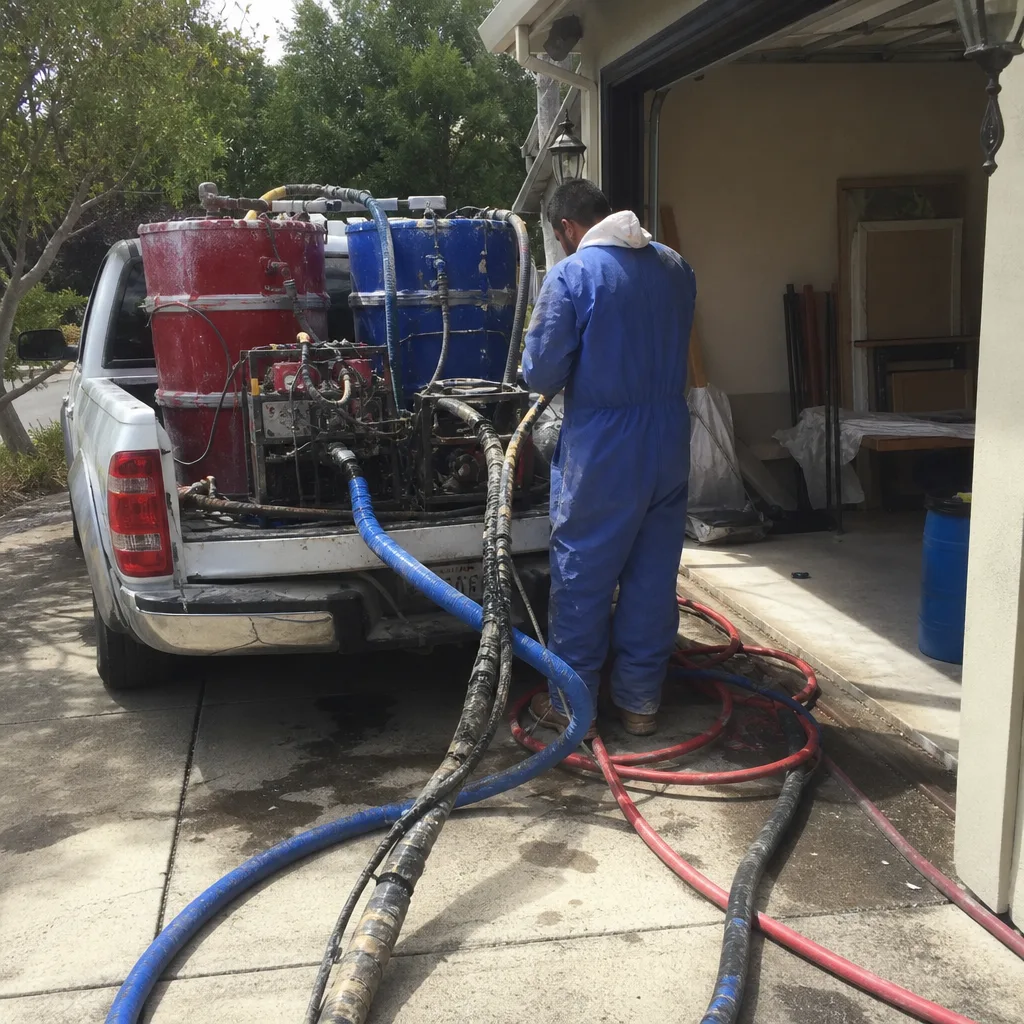
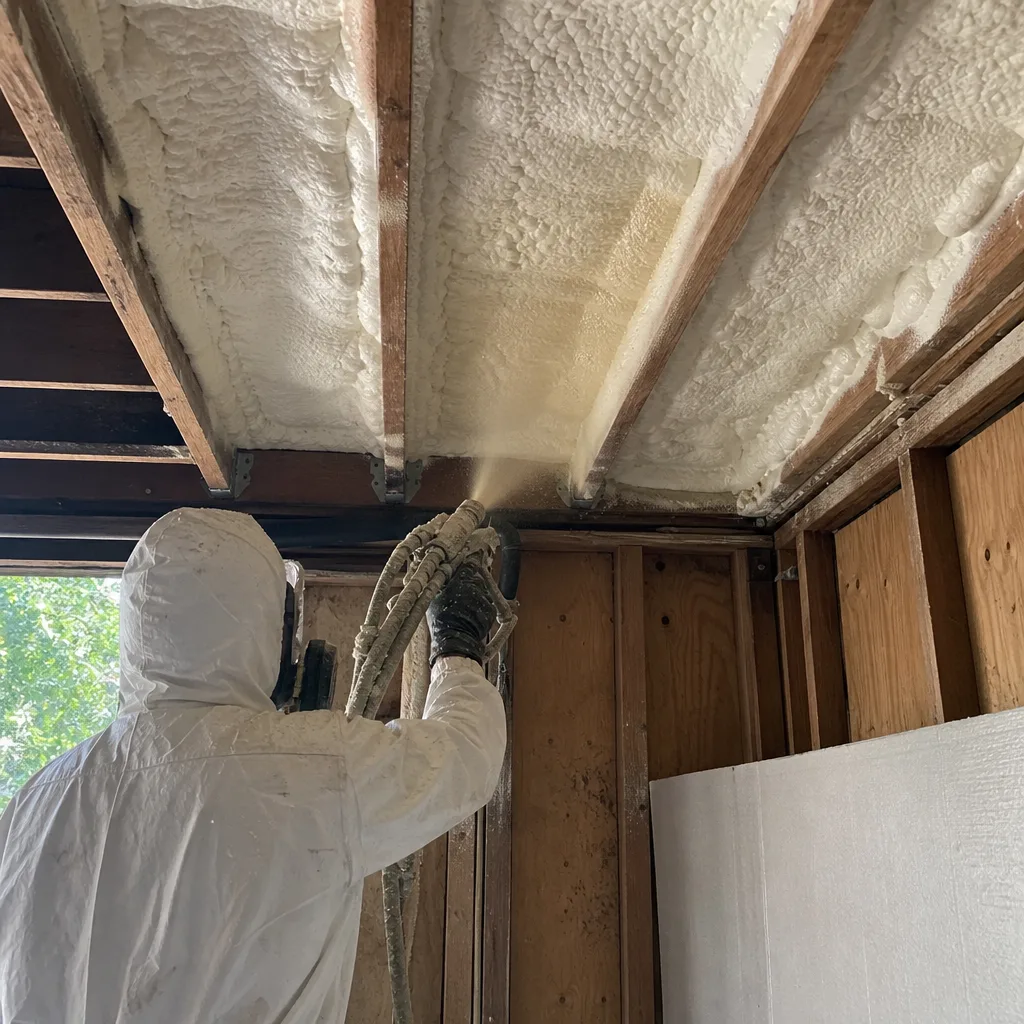
Dense-Pack Wall Insulation
Dense-pack wall insulation - cellulose or fiberglass blown into closed wall cavities at 3.5 pounds per cubic foot or higher - is the standard retrofit for Stanford’s 1940s-1970s faculty lease homes with empty stud bays. These homes were built with no wall insulation, and dense-pack is often the only practical upgrade short of gut renovation. In Stanford, dense-pack scopes require extra attention: historic sandstone-and-red-tile structures on the core campus have preservation constraints that limit where drill holes can be placed and how they’re patched, and R&DE review will reject scopes that don’t address this. We’ve worked with Stanford’s preservation office to develop acceptable patching protocols for these buildings. Dense-pack also changes the pressure dynamics of buildings on the Central Energy Facility district loops, so we coordinate with Stanford Utilities before and after installation.
Blown-In Top-Up
Blown-in top-up - adding material over existing insulation to reach current code or university-specified depth - is common in Stanford where original mineral wool or early fiberglass has settled below performance thresholds. We see this most in the 1960s-era homes off Escondido Road and along the Campus Drive corridor, where shallow attics were under-insulated from construction and decades of settling have made the problem worse. Our top-up jobs include removal of any compressed or moisture-damaged existing material, air sealing of the ceiling plane, and then installation of new blown-in cellulose or fiberglass to the target depth. The university’s Real Estate office often specifies a minimum R-value for lease renewals or capital improvements; we quote to that number, not a generic “as much as fits.”
What happens when you call
- 1
A real person answersNo phone trees - you reach a local pro.
- 2
You get an upfront price rangeHonest numbers before anyone is dispatched.
- 3
A background-checked tech heads outLicensed & insured, dispatched right away.
- 4
You approve before work beginsNothing starts until you say go.
Trusted Brands We Service in Stanford
We stock and install materials from Owens Corning, Johns Manville, and GreenFiber, with no proprietary product lock-in that would limit what’s specified for your Stanford job. Owens Corning fiberglass is our standard for top-up applications where the university has specified a synthetic fiber; GreenFiber borate-treated cellulose is our default for new blown-in and dense-pack work in faculty lease homes; Johns Manville provides high-density fiberglass options for moisture-sensitive applications near the Fogarty and Golf Course Drive areas where winter fog infiltration is most persistent. Because we maintain local inventory for the Stanford market, material lead times don’t add delay to already-complex R&DE approval schedules. Every product is documented in your written scope with manufacturer, model, and installed density or weight.
Common Blown-In Insulation Problems We See in Stanford Homes
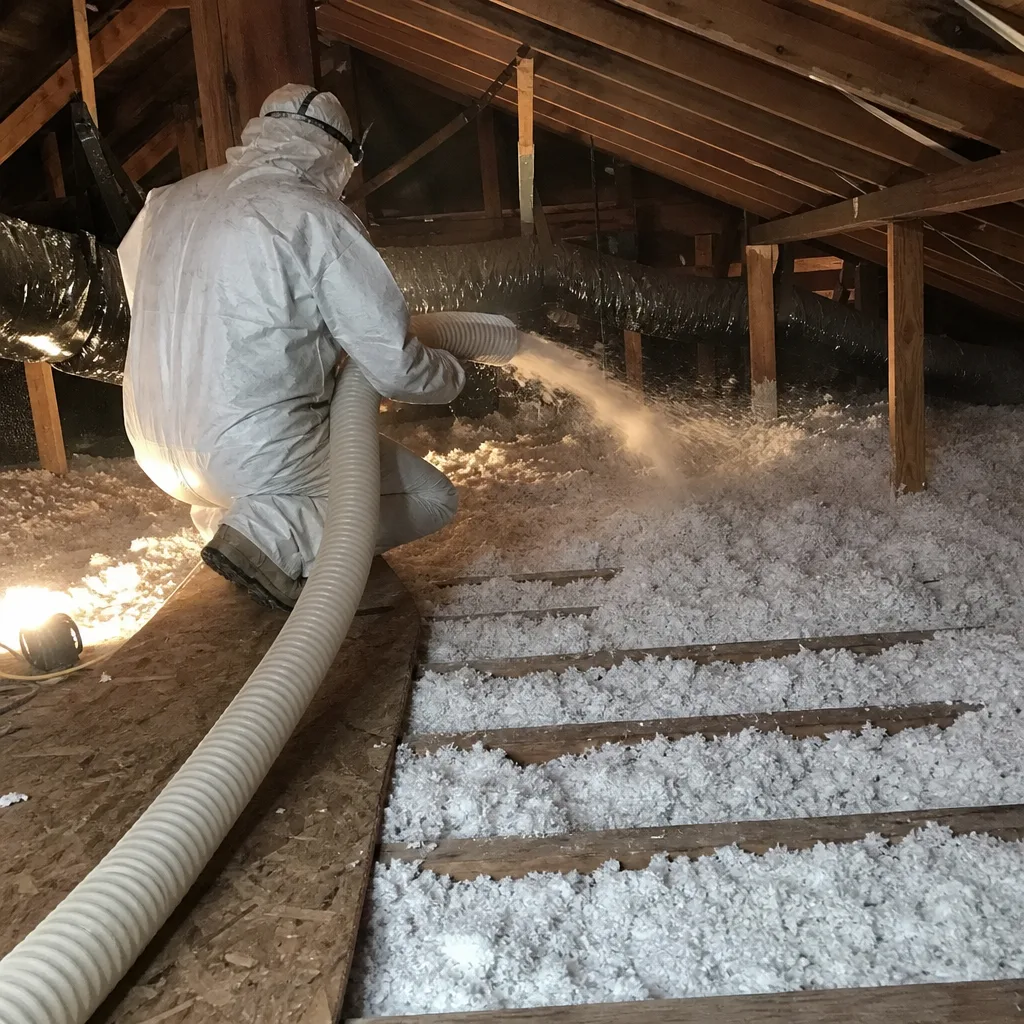
- Fog-driven moisture infiltration. Cool, damp winter mornings and radiation fog off the Bay wet poorly air-sealed attics, causing blown-in cellulose to clump and settle unevenly in 1940s-1970s faculty lease homes. We find this most often in the Escondido Road corridor where fog lingers until mid-morning. The fix is never “more insulation” - it’s air sealing first, then replacement of damaged material.
- Wide diurnal swings killing R-value effectiveness. Stanford’s 30°F night-to-afternoon temperature swings let attics lose thermal performance quickly when blown-in insulation isn’t paired with a continuous air barrier. Under shallow low-pitch roofs common in faculty lease housing, this effect is amplified because there’s less attic volume to buffer the swing. Our blower-door test quantifies the leak before we spec the insulation.
- Historic preservation limits blocking standard retrofits. Sandstone-and-red-tile core campus structures have constraints that prohibit standard blown-in attic work or unplanned dense-pack wall holes. Scopes get rejected, or worse, contractors proceed without approval and create patch-work that fails R&DE inspection. We address preservation constraints in the initial scope submission so approval is a single cycle, not a revision loop.
- Coordination failures with Central Energy Facility systems. Buildings on district heating and cooling loops need envelope changes reviewed by Stanford Utilities to prevent pressure-balance or condensation issues. We’ve seen uncoordinated insulation jobs create supply-return imbalances that the Central Energy Facility has to compensate for. Our standard protocol includes Utilities notification for any building within 500 feet of a known district loop.
Pricing for Blown-In Insulation in Stanford, CA
A typical blown-in cellulose attic job in a Stanford faculty lease home runs $3,200-$5,800, including air sealing of the ceiling plane, top-plate sealing, and can-light covers. Blown-in fiberglass top-up over existing material in good condition runs $1,800-$3,400. Dense-pack wall insulation for a 1,200-square-foot home with open stud bays runs $4,500-$7,200, with pricing at the higher end when preservation-constrained patching is required for core campus structures.
What moves the number: Stanford’s internal approval process doesn’t add to our price, but it does add time, and time affects crew scheduling efficiency. Homes on district loops require the Utilities coordination step, which we include at no additional fee. Shallow attics that need custom baffling or raised heel truss modifications run higher. Material choice - GreenFiber cellulose versus Owens Corning fiberglass - affects cost by roughly 15 percent either direction.
Under Haven Standard Clause 1: flat price, written scope, written warranty before anyone lifts a tool. We also offer a Free Second Opinion on any written estimate you’ve received from another contractor. Call (650) 352-3577 for your written price.
We Also Serve Cities Near Stanford
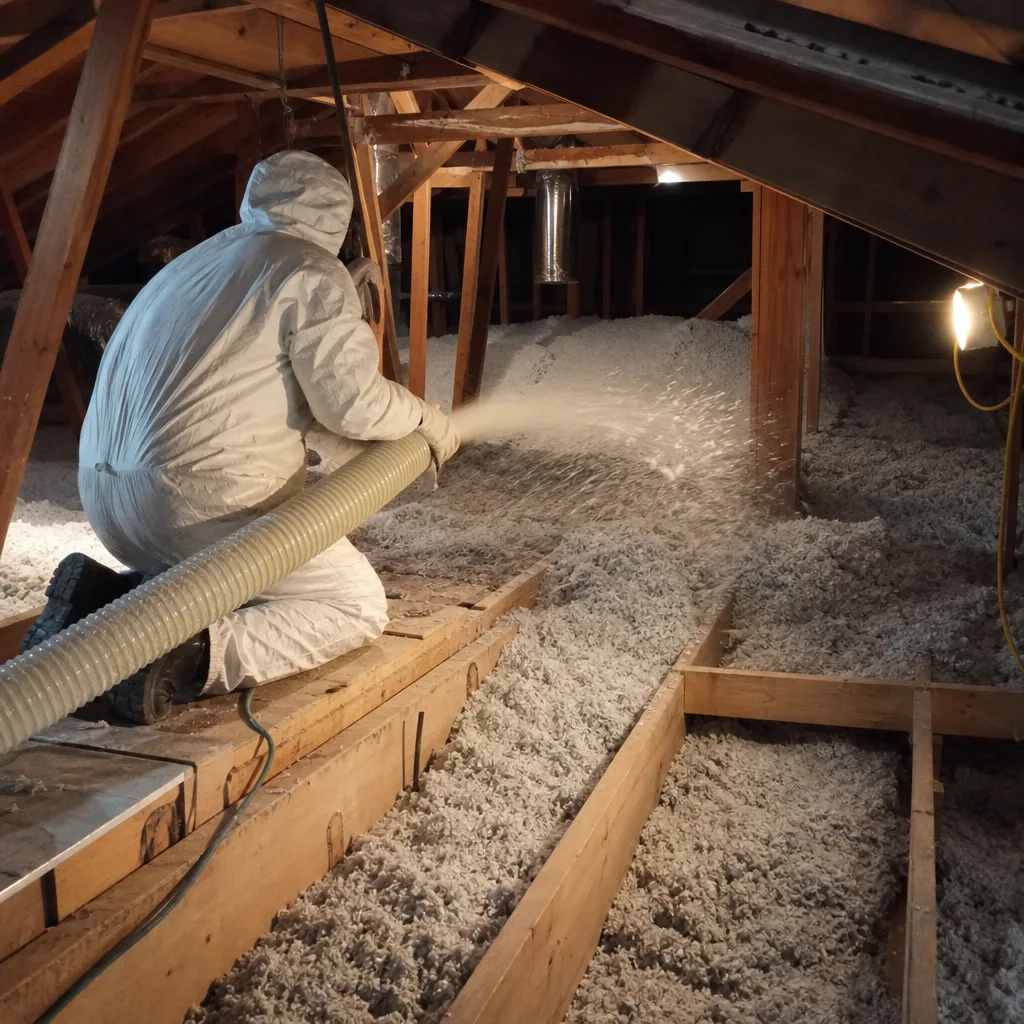
Our crews work throughout the mid-Peninsula, including Blown-In Insulation in Stanford and surrounding communities. We also serve Palo Alto, Menlo Park, Atherton, and Los Altos with the same documented approach - written price first, blower-door numbers on applicable jobs, photo record on every visit. If you’re in a neighboring city and found this page while researching, the same standards apply.
Serving Stanford, CA - Our Local Coverage Area
We’re based in the Stanford area and know this community well. Use the map below to see our service coverage - if you’re nearby, we can almost certainly help.
FAQs - Blown-In Insulation in Stanford
Stanford’s Real Estate office and R&DE (Residential & Dining Enterprises) must approve the scope before work begins; Santa Clara County permitting alone is not sufficient because the land is university-owned. Our standard process includes submitting the written scope, blower-door protocol, and material specification to R&DE at the same time we deliver your price, so the approval timeline runs parallel to your decision, not after it. Call (650) 352-3577 and we’ll walk you through the specific approval chain for your building.
Buildings connected to the Central Energy Facility’s district heating and cooling loops require coordination with Stanford Utilities before envelope changes are made, because insulation and air-sealing modifications can alter pressure balance and condensation risk in the centralized system. We log every qualifying job with Stanford Utilities as part of our standard closeout documentation. This coordination step has no equivalent anywhere else in Santa Clara County.
Stanford’s winter radiation fog and higher relative humidity cause intermittent moisture cycling in poorly air-sealed attics, which accelerates cellulose clumping and settlement compared to the drier conditions just 10 miles inland in San Jose. The cellulose itself is the same material; the difference is the building envelope it’s installed in. That’s why our Blown-In Insulation protocol for Stanford always includes blower-door-verified air sealing before any material goes in.
No, not without modification: these structures have preservation constraints that limit drill-hole placement, patching materials, and sometimes prohibit attic work entirely. We’ve developed scope protocols with Stanford’s preservation office that specify acceptable approaches for each building type. Standard blown-in retrofits proceed only after preservation review; dense-pack wall work requires custom patching plans. We address this in our initial scope submission so you don’t get a mid-job stop-work order.
We typically specify GreenFiber borate-treated cellulose for the main attic field, with Owens Corning R-49 fiberglass top-up in joist bays too tight for an even cellulose blanket without compression. This hybrid approach - which we used on the Campus Drive East job logged with Stanford Utilities - achieves the target R-value within the depth constraints of 1960s-era shallow attics. The exact spec is written into your scope before R&DE submission.
Ready for your written price? Call (650) 352-3577. A live person answers 24/7, and every estimate includes a flat price, written scope, and written warranty before any work starts - Haven Standard Clause 1, no exceptions. We also provide a Free Second Opinion on any written estimate you’ve already received.
Written by Wes Okafor, Owner at Topside Attic Insulation Palo Alto, serving Stanford and the mid-Peninsula since 2016.