
How Much Does Wall Insulation Cost in Palo Alto?
Wall insulation in Palo Alto typically costs between $1,800 and $6,500 for a whole-home project, depending on the installation method, wall construction, and square footage. Blown-in retrofits on a 1,500-square-foot ranch run closer to $2,200-$3,400, while open-wall spray foam on a full gut-renovation can reach $5,000-$6,500 or more. Every quote we provide at Envelope Insulation Co. is a written flat price before any work starts – no estimates that balloon after the crew arrives.
Wall Insulation Cost Breakdown (2026)
Palo Alto’s labor market runs 15-25% higher than inland Bay Area cities, and that shows up directly in insulation bids. The figures below reflect current 2026 contractor pricing in Palo Alto, Menlo Park, and the surrounding Peninsula corridor – not national averages padded with a disclaimer.
| Installation Method | Typical R-Value | Cost Per Square Foot (installed) | Whole-Home Range (1,400-2,200 sq ft) |
|---|---|---|---|
| Dense-pack blown-in cellulose (retrofit, closed walls) | R-13 to R-19 | $1.80-$2.80 | $2,100-$4,200 |
| Dense-pack blown-in fiberglass (retrofit, closed walls) | R-13 to R-15 | $1.90-$2.90 | $2,200-$4,400 |
| Fiberglass batt (open walls, new construction or gut reno) | R-13 to R-21 | $0.80-$1.40 | $1,800-$3,200 |
| Mineral wool / Rockwool batt (open walls) | R-15 to R-23 | $1.20-$2.00 | $2,000-$4,000 |
| Open-cell spray foam (open walls, gut reno) | R-13 to R-21 | $1.50-$2.50 | $2,400-$4,800 |
| Closed-cell spray foam (open walls, maximum performance) | R-21 to R-28+ | $3.00-$5.00 | $4,200-$6,500+ |
| Air sealing only (top plates, penetrations, can lights) | N/A | $0.40-$0.90 | $600-$1,800 |
A few things drive that range wider than people expect. First, access method matters more than material cost on retrofit jobs: drilling small holes in siding or drywall, injecting insulation, and patching everything back is a skilled, time-consuming process – it accounts for roughly 40-55% of the total labor charge on a typical Palo Alto bungalow. Second, wall depth varies considerably across the housing stock here. Older Eichler homes and mid-century ranches in the College Terrace and Barron Park neighborhoods often have 2×4 framing (3.5-inch cavities), which caps you at around R-15 with dense-pack. Newer construction in the Downtown North or Midtown areas may have 2×6 framing (5.5-inch cavities), allowing R-19 to R-23 with the right product. That physical difference alone can shift a bid by $600-$1,200 on an average home.
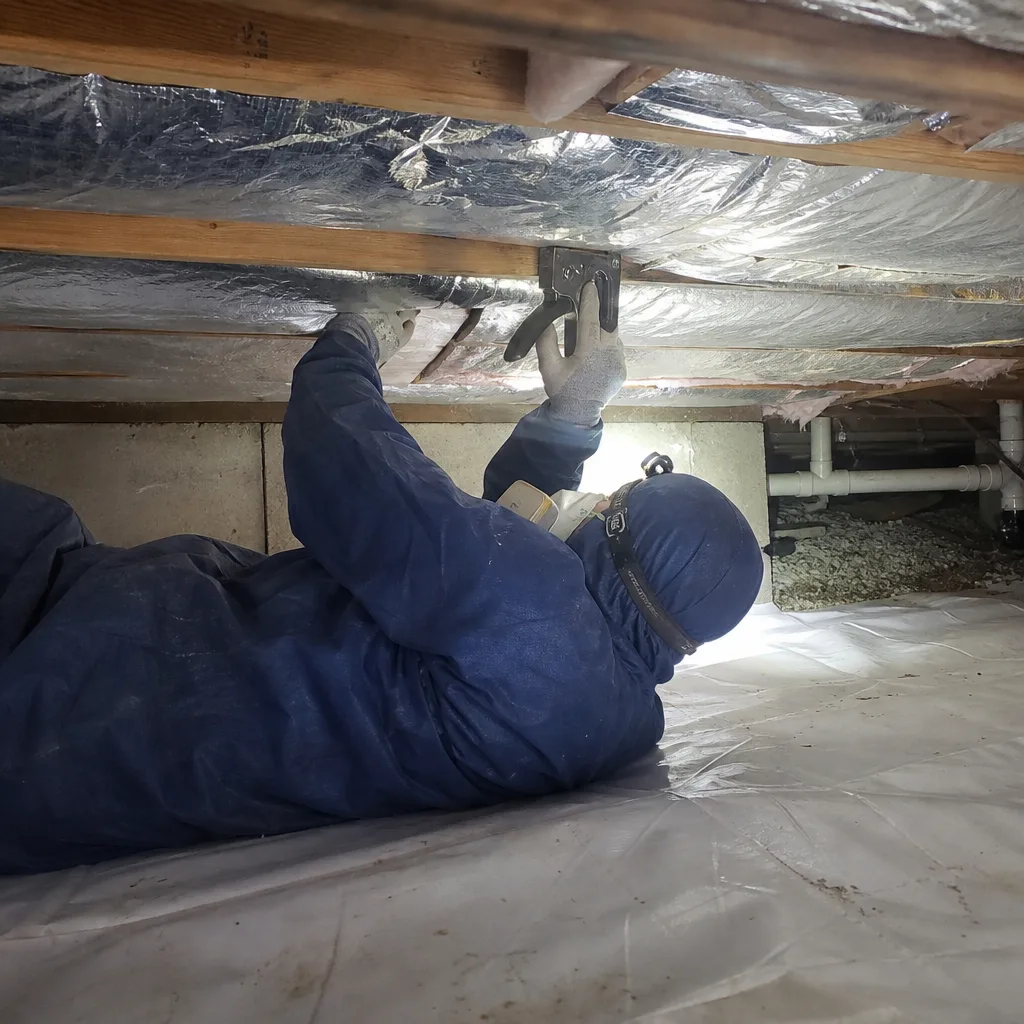
Third – and this is specific to the Peninsula microclimate – Palo Alto sits close enough to the Bay that marine moisture intrusion is a real concern in uninsulated or under-insulated walls. We regularly find moisture damage in walls on the west-facing elevations of homes in Crescent Park and Old Palo Alto when we open them up. That discovery can add $300-$800 in remediation before insulation goes in, which is why we document every cavity we open with photos before and after – part of the Documented Photo Record included on every job.
What Affects Wall Insulation Pricing in Palo Alto
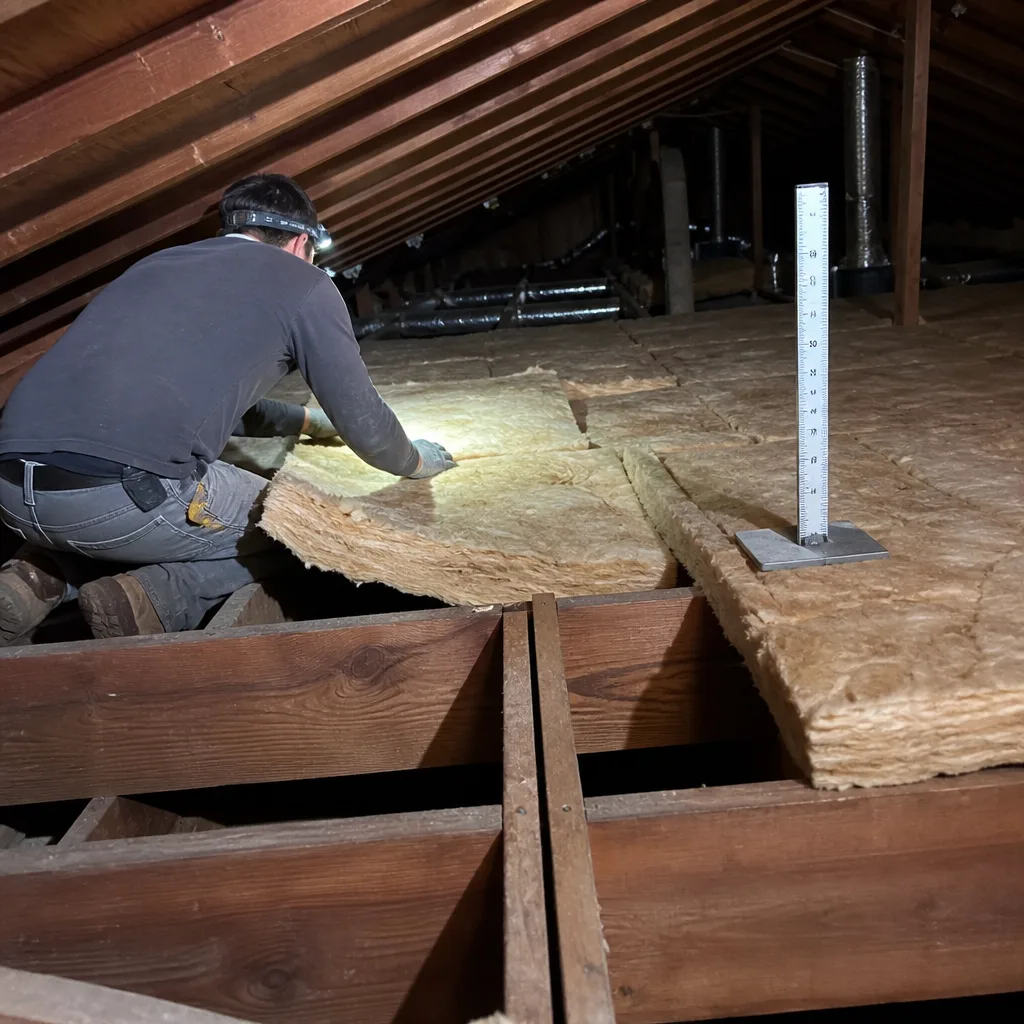
- Wall access method (retrofit vs. open wall): If your drywall is already down – during a kitchen remodel or an addition, for example – batt insulation goes in at $0.80-$2.00 per square foot. Closed walls that need to stay intact require drilling and dense-packing, which adds $0.80-$1.50 per square foot in labor.
- Home age and framing generation: Pre-1960 homes in Palo Alto – particularly the post-war tract housing around Ventura and Greenmeadow – often have 2×4 walls, plaster-over-lath interiors, and no vapor retarder. Each of those details changes the scope. Older plaster walls are harder to drill cleanly and more prone to cracking during dense-pack installation, which adds time.
- Material choice and performance target: Closed-cell spray foam from Icynene or Demilec costs roughly 2-3 times more per square foot than GreenFiber cellulose blown into the same cavity, but it also adds structural rigidity and a vapor retarder in one step. The right choice depends on the assembly, not on which product costs less upfront.
- Linear feet of air sealing required: Under The Haven Standard at Envelope Insulation Co., we seal before we insulate – no exceptions. If your top plates, can lights, and plumbing penetrations haven’t been air-sealed, that work happens first and is priced separately. On a typical 1,800-square-foot Palo Alto home, air sealing runs $800-$1,500 depending on how many penetrations exist. Skipping it and blowing insulation over open gaps is exactly the kind of shortcut that produces a $4,000 job with $800 worth of actual performance gain.
- Local permit requirements: Santa Clara County and the City of Palo Alto require a building permit for spray foam insulation applied in wall cavities and for work that involves opening more than a threshold amount of wall area. Permit fees in Palo Alto currently run $300-$700 for a typical insulation scope. We pull permits where required – if a contractor tells you a permit isn’t needed for a full spray foam job, that’s worth a second look.
- Debris removal and patch work: Dense-pack retrofit jobs leave small circular drill holes that need patching. Spray foam jobs on open walls may require masking and cleanup of overspray. Both add $150-$400 to the final cost on most jobs, and both are itemized in our written scope before work begins – no line items that appear on the final invoice that weren’t on the original quote.
How to Save on Wall Insulation in Palo Alto
Palo Alto homeowners have access to several programs that can reduce the out-of-pocket cost of our Wall Insulation services, and a few of them are genuinely worth the paperwork.
Bay Area Regional Energy Network (BayREN) Rebates
BayREN administers rebates for Santa Clara County homeowners who upgrade wall insulation as part of a whole-home efficiency project. As of 2026, rebates for insulation and air sealing combined can reach $500-$1,500 depending on the scope and the pre-upgrade condition of the home. These rebates require documentation – specifically, a pre-work and post-work blower-door test showing measurable improvement. That’s standard procedure on every applicable Envelope Insulation Co. job: we record the blower-door reading before sealing and after, and you receive both numbers in writing so you have the documentation the rebate application requires.
PG&E Energy Upgrade California Programs
PG&E offers bill credits and co-pay programs through Energy Upgrade California for qualifying improvements. The income qualification thresholds were raised in 2025, which means more Palo Alto households qualify than in prior years. If you haven’t checked eligibility recently, it’s worth a 10-minute call to PG&E’s program line before you schedule any insulation work.
Federal Tax Credits (25C)
The Inflation Reduction Act’s 25C credit covers 30% of the cost of insulation materials (not labor) up to $1,200 per year. On a $3,500 project where materials account for roughly half the cost, that works out to a $525 credit. Not transformative, but not nothing either. Your tax preparer can confirm eligibility based on your specific situation.
Time your project with open-wall work
If you’re already planning a bathroom remodel, a kitchen renovation, or an addition, you have open walls. Batt insulation installed in open cavities costs $0.80-$1.40 per square foot versus $1.80-$2.80 for a retrofit dense-pack. Coordinating with your general contractor to have insulation in before drywall goes up is the single most effective way to cut costs without cutting corners.
Get a second opinion on any written estimate
Under The Haven Standard, Envelope Insulation Co. offers a free second opinion on any written estimate from another contractor. Bring us the scope and the number – we’ll read it with you and tell you plainly whether the proposed material, R-value, and method make sense for your specific wall assembly. Call (650) 352-3577 to schedule that review at no charge.
Don’t skip air sealing to save money
This one sounds counterintuitive, but paying to add insulation over unsealed walls is one of the least efficient ways to spend money on a home envelope. A blower-door test on a typical Palo Alto mid-century home with no air sealing often reads 3,500-5,000 CFM50 – meaning the home is exchanging its conditioned air with the outside at a rate that no amount of wall insulation fully compensates for. Seal the leaks first, then add insulation, and both investments perform. Skip the sealing, and the insulation underperforms from day one.
Wall Insulation Methods: Which One Fits Your Palo Alto Home?
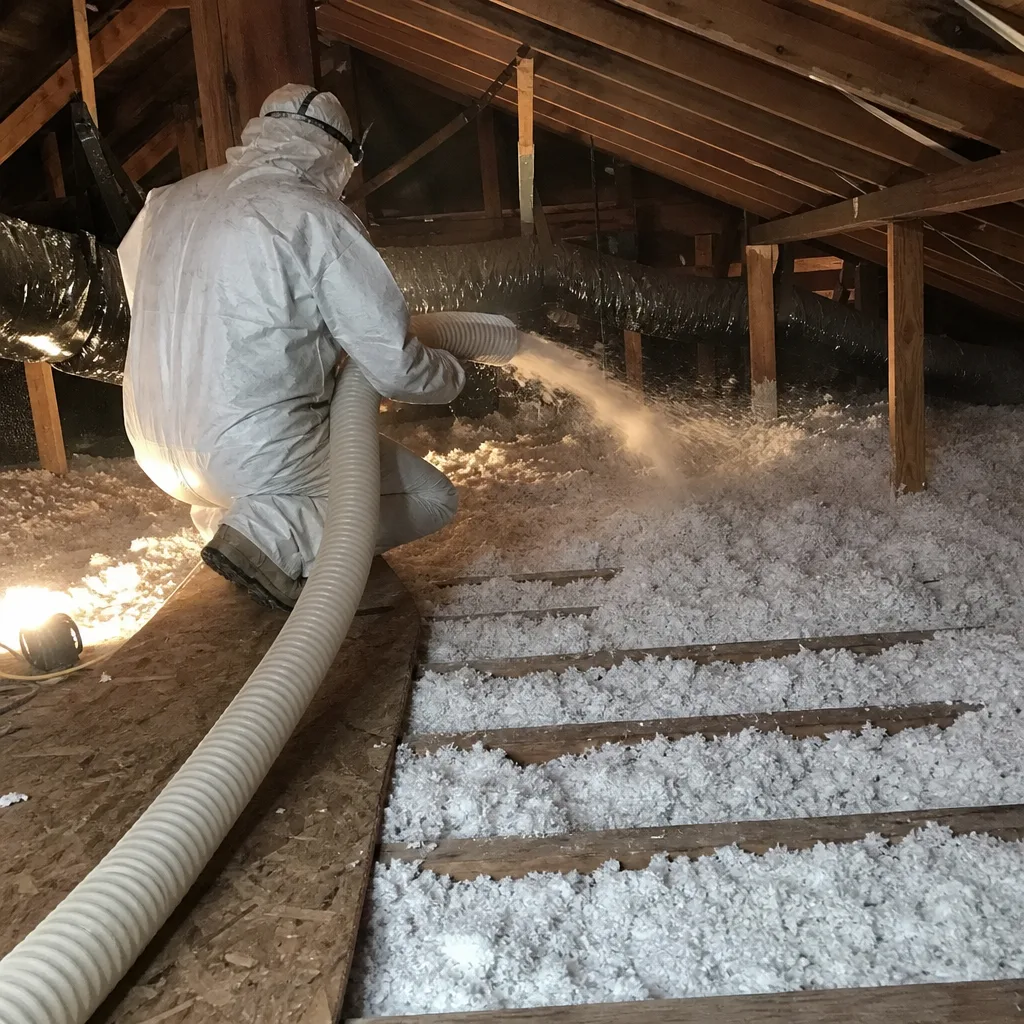
The right method depends on your wall construction, your access situation, and what you’re trying to solve. Here’s how the main options play out across the housing stock we see regularly in Palo Alto.
Dense-Pack Blown-In (Retrofit, Closed Walls)
This is the most common method for existing Palo Alto homes where walls are staying intact. A technician drills small holes (typically 2 inches in diameter) at measured intervals, fills each cavity under pressure with cellulose or fiberglass, and patches the holes. Done correctly – and “correctly” means packing the material to the right density so it won’t settle – a dense-pack job adds R-13 to R-19 to a previously empty 2×4 cavity with no drywall disruption beyond the patch holes.
We use GreenFiber cellulose and Johns Manville fiberglass on these jobs, selected based on the cavity geometry and moisture conditions. Cellulose performs better in the slightly damp conditions we see in west-facing Palo Alto walls; fiberglass is sometimes preferred where the homeowner has known moisture history and wants a material less susceptible to mold if something goes wrong later.
Fiberglass or Mineral Wool Batts (Open Walls)
When walls are open – during a remodel, after fire damage, or during new construction – batt insulation is faster and less expensive than blown-in. Owens Corning and Knauf fiberglass batts run R-13 to R-21 depending on thickness. Rockwool mineral wool batts cost more but offer better fire resistance, better sound attenuation, and slightly better performance in the edge-of-bay moisture environment Palo Alto sits in.
On jobs where open-cell or closed-cell spray foam isn’t in the budget, Rockwool batts are our default recommendation for 2×6 framed walls in new construction. The performance difference over fiberglass batts is measurable and the additional cost is modest at the whole-home scale.
Spray Foam (Open Walls, High-Performance Projects)
Closed-cell spray foam from Icynene or Demilec achieves R-6 to R-7 per inch, which means a 3.5-inch 2×4 cavity reaches R-21 or more – higher than any batt or blown-in option in the same space. It also acts as a vapor retarder and adds measurable racking strength to the wall assembly. The tradeoff is cost: $3.00-$5.00 per square foot installed versus $0.80-$1.40 for batts.
Open-cell spray foam is less dense and achieves R-3.7 to R-4 per inch, which means a 2×4 cavity lands around R-13. It’s vapor-permeable, which is sometimes an advantage in mixed-climate assemblies. We source Icynene and Demilec products for spray foam applications and can walk through the assembly logic on any specific project during the estimate.
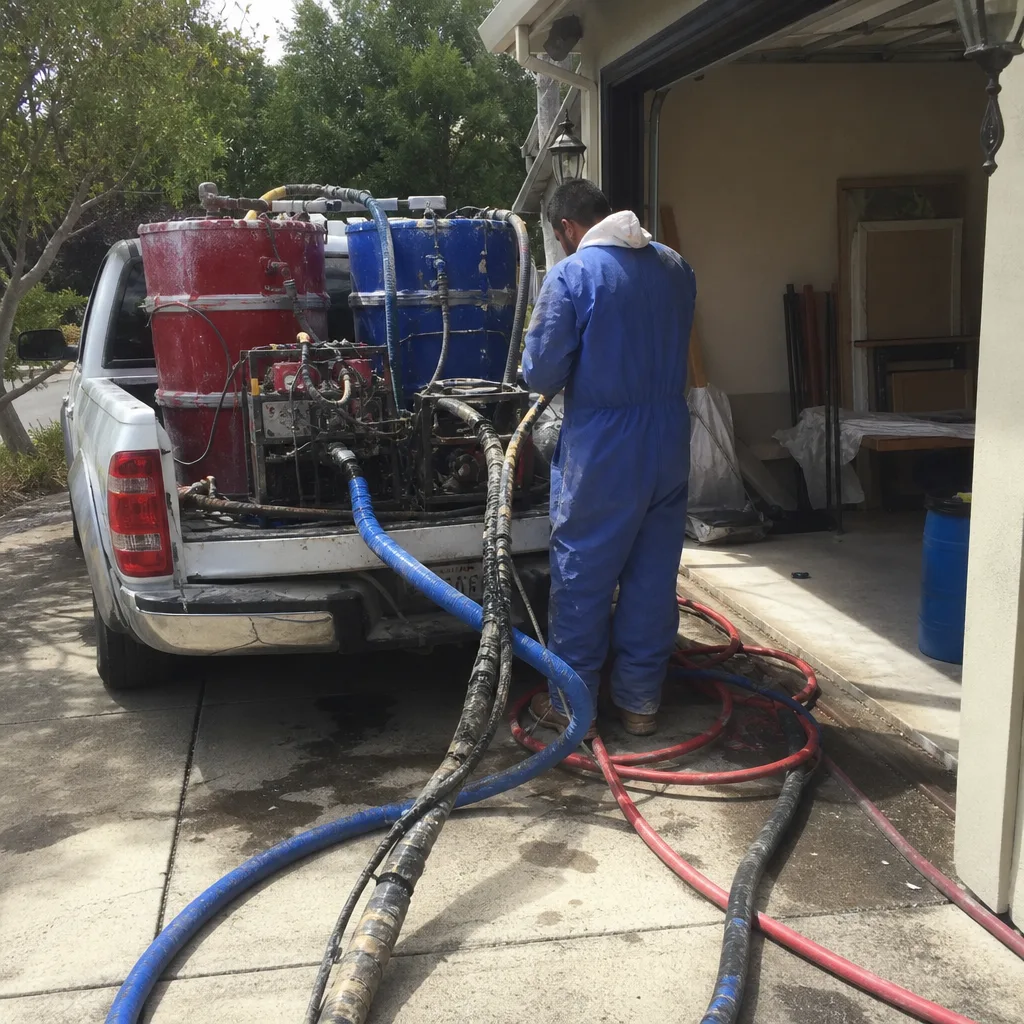
A brief note on safety: spray foam installation involves chemical components that require full respiratory protection, proper ventilation, and a cure window before re-occupancy – typically 24 hours for open-cell and up to 72 hours for closed-cell depending on the product and temperature. This is not a DIY application. A trained technician with proper PPE and calibrated equipment is the only safe way to install spray foam in a living space.
Palo Alto’s Housing Stock: Why It Matters for Insulation
Palo Alto has one of the more varied residential building stocks on the Peninsula, and the era of construction matters as much as the square footage when you’re pricing a wall insulation job.
The Eichler homes concentrated in the Greenmeadow, Fairmeadow, and Green Gables neighborhoods are a special case. Joseph Eichler’s post-war designs used radiant floor heat, large glass walls, and open-beam ceilings – but the wall cavities in many of these homes are shallow, the original insulation (where it exists) is often fiberglass batt that has compressed or settled, and the exterior skin is a painted T1-11 or stucco over sheathing with limited weather barrier behind it. Dense-packing an Eichler exterior wall requires careful pressure calibration to avoid blowing out the exterior finish. We’ve done dozens of these homes since 2016 and they’re a different job than a 1990s two-story in Midtown.
Homes in the Old Palo Alto and Crescent Park neighborhoods tend to be 1920s-1940s construction: plaster over lath, 2×4 framing, and in many cases no wall insulation at all – which was standard practice before energy codes required it. These homes lose a significant amount of conditioned air through both air movement and conduction through uninsulated walls. A blower-door test on a typical unrenovated 1930s home in Old Palo Alto often reads 4,500-6,000 CFM50 before any sealing or insulation work. After a complete air sealing and dense-pack insulation project, we typically see those numbers fall to 2,000-3,000 CFM50 – a reduction that translates directly into lower utility bills and more consistent room temperatures.
The newer infill construction in Downtown North and the California Avenue corridor tends to be better framed but not always better insulated – framing to code minimum doesn’t mean the walls are performing at the level a 2026 energy-conscious buyer expects. On Wall Insulation in Palo Alto projects, the pre-work assessment always includes a cavity inspection and, where applicable, a blower-door baseline reading so the homeowner knows exactly what they’re starting with.
The Air Sealing Question: Why We Won’t Skip It
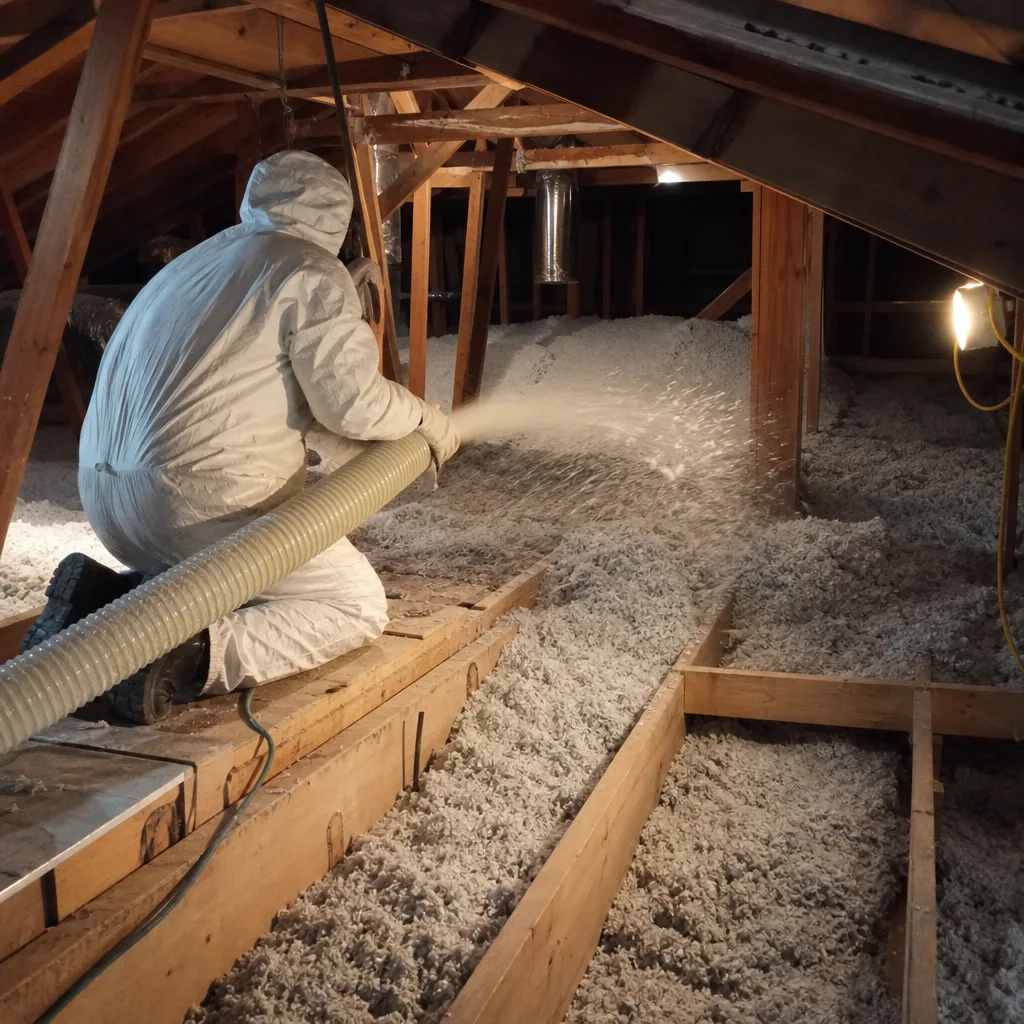
The single most common shortcut in wall insulation – on the Peninsula and everywhere else – is blowing insulation into wall cavities without first sealing the air pathways through the building envelope. Insulation reduces heat conduction through the wall material. It does almost nothing to stop air movement through gaps at top plates, bottom plates, electrical boxes, plumbing penetrations, and the dozens of other intentional and unintentional holes that exist in any frame wall.
At Envelope Insulation Co., air sealing is a prerequisite, not an option. Before any insulation goes into any wall, we seal top plates, penetrations, electrical boxes, and any accessible gaps using appropriate sealants and foam – all documented in the Documented Photo Record you receive when the job closes. The blower-door test measures the result in a single number (CFM50 – cubic feet per minute of air moving through the building envelope when the house is pressurized to 50 Pascals), and you receive both the before and after reading in writing. That’s the documented evidence that the air-sealing work actually performed. You can read about the full approach on our home page.
A contractor who proposes blowing insulation into your walls without discussing air sealing first is not wrong that insulation adds value. They’re just leaving most of the available performance gain on the table.
What Happens on an Envelope Insulation Co. Wall Insulation Job
Because our target customer researches contractors before making contact and reads the scope carefully before signing anything, we’ll describe the job sequence plainly.
Step 1 – Written price before anything else. You receive a flat written price, a written scope of work, and a written warranty before anyone starts. Haven Standard Clause 1. There is no “we’ll see what we find” pricing structure once we arrive – the scope accounts for what we observed during the assessment, and if we find something materially different once a wall is opened, we stop and give you a revised written price before proceeding.
Step 2 – Blower-door baseline (on applicable jobs). A blower-door test – a pressurization measurement that shows, in one number, how much air your building envelope is losing – establishes the starting point. This reading is recorded and included in your documentation.
Step 3 – Air sealing first. Top plates, can lights, plumbing and electrical penetrations, and any accessible gaps are sealed before any insulation is installed. We don’t insulate over unsealed assemblies.
Step 4 – Wall insulation installation. Method and material depend on your wall construction and the written scope. Drill locations, fill verification, and patch work are all documented in photos.
Step 5 – Post-work blower-door reading (on applicable jobs). The after reading is recorded. You receive both numbers – before and after – so you can see the performance change in a single measurable figure, not just take our word for it.
Step 6 – Documented Photo Record delivered. Every job closes with a complete photo record. You know what was done, where, and what it looked like when we left.
The 365-Day Done Right Promise covers all completed work: if something isn’t right within a year of the job closing, we make it right. That promise is in writing before anyone starts, not offered retroactively if a problem surfaces.
FAQs – Wall Insulation Cost in Palo Alto
How much does wall insulation cost per square foot in Palo Alto?
Installed wall insulation in Palo Alto runs $0.80-$5.00 per square foot depending on method – fiberglass batts in open walls are at the low end ($0.80-$1.40), dense-pack blown-in cellulose or fiberglass retrofits run $1.80-$2.90, and closed-cell spray foam is $3.00-$5.00 or more. Labor costs on the Peninsula run 15-25% higher than inland Bay Area markets, so national per-square-foot figures you find online will consistently underestimate what a legitimate Palo Alto contractor will quote. Call (650) 352-3577 for a written flat-price estimate specific to your home’s square footage and wall type.
Is it worth insulating the walls of an older Palo Alto home?
Yes, in most cases – with a caveat about sequencing. Pre-1960 homes in neighborhoods like Old Palo Alto, Crescent Park, and Ventura typically have no wall insulation at all and blower-door readings in the 4,000-6,000 CFM50 range before any work. Adding dense-pack insulation to previously empty 2×4 cavities adds R-13 to R-15 of conductive resistance and, when combined with proper air sealing, measurably reduces heating and cooling loads. The caveat: insulating without air sealing first produces a fraction of that result. A house with air moving freely through the envelope loses conditioning faster than the insulation can compensate. Air sealing first is the prerequisite that makes the insulation investment perform.
How long does a wall insulation retrofit take in Palo Alto?
A typical whole-home dense-pack retrofit on a 1,400-2,200 square foot Palo Alto home takes one to two days on site. Day one is usually air sealing and setup; day two is drilling, filling, and patching. Homes with more complex wall configurations, plaster-over-lath interiors (common in Old Palo Alto), or significant moisture remediation needs may run longer. The written scope you receive before work starts will include an estimated timeline so you’re not guessing.
Does Palo Alto require a permit for wall insulation?
It depends on the method and scope. Blown-in dense-pack insulation in existing closed walls generally does not require a permit in Palo Alto if no structural work is involved. Spray foam insulation applied to open wall cavities, or any work that involves opening a threshold amount of wall area, typically requires a building permit from the City of Palo Alto. Permit fees currently run $300-$700 for a typical insulation scope. We pull permits where required and include permit costs in the written price before work starts – there are no permit fees that appear as surprises on a final invoice.
Can you insulate just one wall or one room, or does it have to be the whole house?
You can insulate a single wall or a single room – it’s a common starting point for Palo Alto homeowners working within a budget or tackling a specific comfort problem in one area of the house. A single exterior wall retrofit typically runs $400-$1,200 depending on length, wall height, and access conditions. The tradeoff is that partial insulation produces partial results: a house where two exterior walls are insulated and two are not will still have conductive and air-movement losses through the uninsulated sections. We’ll give you an honest read on what a partial project will and won’t accomplish during the estimate so you can make the decision with accurate expectations rather than optimistic ones. Call (650) 352-3577 to schedule.
Key Takeaways
- Wall insulation in Palo Alto costs $1,800-$6,500 for a whole-home project in 2026, with most retrofit dense-pack jobs running $2,100-$4,400.
- Palo Alto labor rates run 15-25% higher than inland Bay Area markets – national averages will underestimate local bids.
- Air sealing (top plates, penetrations, electrical boxes) must happen before insulation is added; insulating over unsealed gaps leaves most of the performance gain on the table.
- Wall framing era matters: 2×4 cavities (common in pre-1980 homes) cap out at R-15 with dense-pack; 2×6 framing allows R-19 to R-23.
- BayREN rebates and the federal 25C tax credit can reduce net cost by $500-$1,700 on qualifying projects – both require documentation that a blower-door test provides.
- Every Envelope Insulation Co. job includes a written price before work starts, a Documented Photo Record on completion, and before-and-after blower-door readings on applicable jobs.
- The 365-Day Done Right Promise applies to all completed work – in writing, before anyone starts.
Get a Written Price for Your Palo Alto Home
Wes Okafor and the team at Envelope Insulation Co. have assessed and insulated more than 9,000 homes since 2016, every one with a written price before work started and a documented record when the crew left. If you’re working through a competing estimate or trying to understand whether the proposed scope makes sense for your specific wall assembly, bring it to us – we offer a free second opinion on any written estimate, no obligation.
To schedule a no-cost assessment and receive a written flat price specific to your Palo Alto home, call (650) 352-3577. A live person answers – no voicemail loop, no callback window measured in business days. Under Haven Standard: Arrive on schedule, you get a named technician and a text when they are on the way.
Pricing reflects the Palo Alto market as of 2026. Topside Attic Insulation Palo Alto offers free estimates – call (650) 352-3577.
Written by Wes Okafor, Owner at Envelope Insulation Co., serving Palo Alto since 2016.
What Our Customers Say
"Crawl space encapsulation done properly. Photographs of the vapour barrier at every seam, and the damp smell in the hallway is gone."
- Ainsley P."The winter gas bill dropped by about a third. They had estimated a quarter, so they under-promised."
- Genevieve R."They photographed rodent damage in the old insulation that we had no idea about, and priced the exclusion work separately so we could decide."
- Harriet N.