
Rockwool Crawl Space Encapsulation: The Palo Alto Owner’s Guide
Rockwool Comfortboard 80 and Comfortboard 110 rigid mineral wool boards are what we most often see in Palo Alto crawl spaces that were encapsulated between 2015 and 2022, and we stock the full range of compatible fastening systems, vapor-barrier transition tapes, and perimeter sealants for same-day repair or replacement. Most Rockwool crawl space encapsulation repairs in Palo Alto run $1,800-$4,200 installed, depending on whether we’re replacing degraded boards, re-sealing the perimeter to the foundation wall, or both. We carry the 2-inch and 3-inch thicknesses on every truck, along with the stainless steel masonry fasteners that won’t corrode in the damp soil-gas conditions common below grade in Old Palo Alto and Professorville.
Owners usually discover the problem two ways: a musty smell that returns after winter rains, or an energy bill that creeps up eighteen months after the original install. The Rockwool itself doesn’t fail, the seal does. Once the perimeter adhesive or the seam tape between the board and the vapor barrier separates, warm moist air from the crawl space hits the cold foundation wall, and the assembly starts working backward.
Which Rockwool Models This Applies To
Rockwool does not manufacture a dedicated crawl-space encapsulation kit. What we see in Palo Alto homes is Rockwool Comfortboard 80 or Comfortboard 110 - rigid mineral wool boards rated at R-4.2 per inch - installed as the insulation layer beneath a separately sourced polyethylene or reinforced vapor barrier. The Comfortboard 80, at 8 pounds per cubic foot density, is the standard choice for below-grade walls; Comfortboard 110, denser at 11 pcf, gets specified when the assembly needs to double as a pest-resistant barrier or where foundation irregularities require a board that won’t compress during backfill.
To identify what you have, look for the foil-faced label on the board edge: “ROCKWOOL Comfortboard 80” or “110,” followed by the thickness in inches and a batch code. If the label is gone, measure thickness and density - a 2-inch Comfortboard 80 weighs roughly 1.4 pounds per square foot. The critical compatibility gotcha: Rockwool’s mineral wool is hydrophobic and will not wick water, but it is not a vapor barrier on its own. Any repair must include a Class I or Class II vapor barrier (6-mil polyethylene minimum, 10-mil reinforced preferred) lapped and sealed to the board face, or the assembly fails California Title 24 moisture-control requirements for conditioned crawl spaces.
We source OEM Rockwool boards through authorized distributors in San Jose, and we also stock a quality aftermarket equivalent, Owens Corning Thermafiber RainBarrier, for jobs where the original specification is overbuilt for the actual load. We do not claim exclusive or preferred status with Rockwool - we are an independent service provider.
Signs Your Rockwool Crawl Space Encapsulation Is Failing
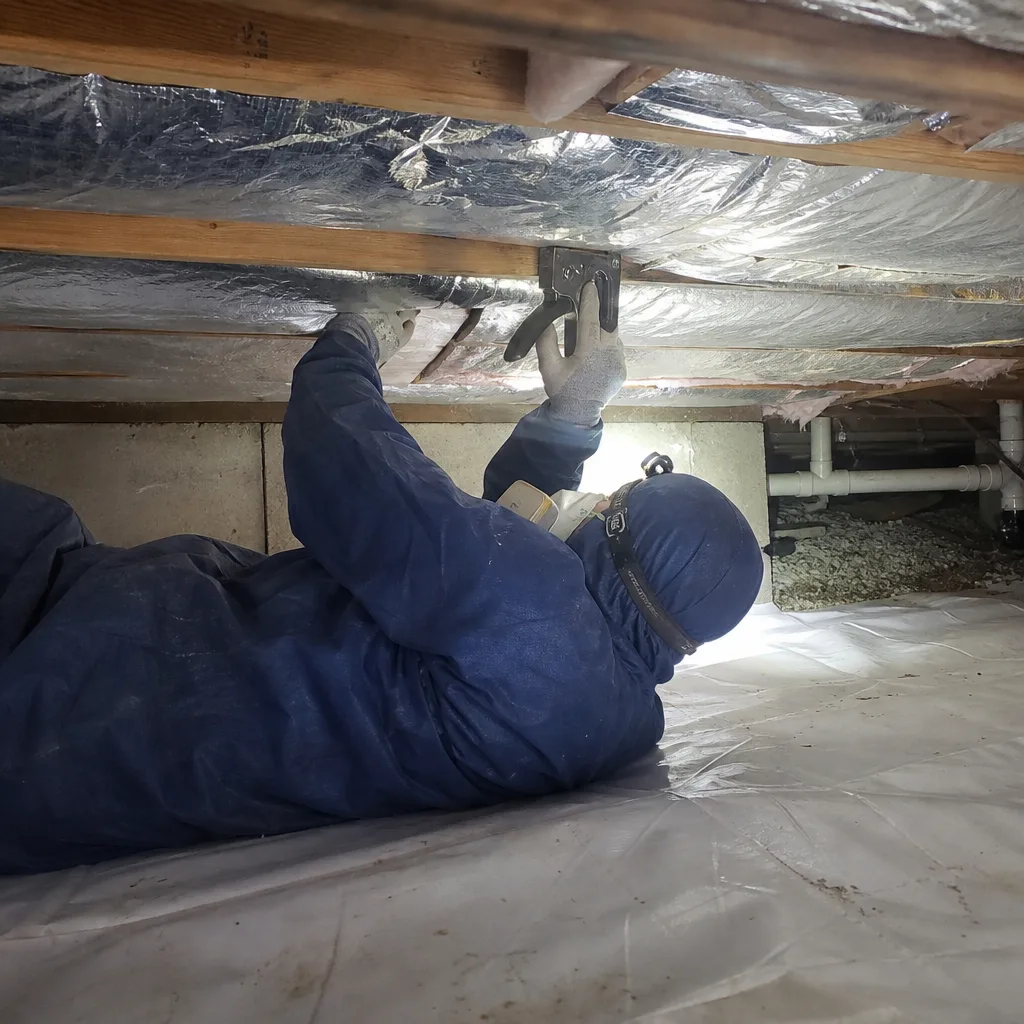
- Musty odor returning after rain. The perimeter seal between the Rockwool board and the concrete or block wall has failed, allowing soil gas and moisture to bypass the vapor barrier. In Palo Alto’s clay-heavy soils, especially in the Duveneck and St. Francis Acres areas, seasonal expansion pulls adhesive beads away from the wall over three to five wet-dry cycles.
- Insulation boards sagging or pulling away from the wall. The stainless steel pin fasteners have corroded (we see this when non-marine-grade fasteners were substituted) or the board density was underspecified for the span between attachment points. Comfortboard 80 needs support every 16 inches vertically on an uneven wall; wider spacing creates a belly that traps condensation.
- Visible mold or staining on the vapor barrier face. Warm, humid crawl space air is reaching the cold side of the assembly. The seam tape between the polyethylene sheet and the Rockwool face has delaminated, often because the installer used a generic HVAC tape instead of a butyl-based membrane tape rated for damp-substrate application.
- Floor above feels cold in winter despite heating. The thermal bridge at the rim joist - where the Rockwool board meets the wood framing - was never properly air-sealed with expanding foam or a backer rod and sealant. Stack effect, the buoyancy of warm air rising and pulling cold air in at the base of the house, pulls directly through this gap in Palo Alto’s January temperature swings.
- Energy bill climbing 12-18 months post-install. The assembly is intact visually but the blower-door number - the CFM50 reading that measures how much air leaks through the envelope under pressure - has degraded because the crawl space was never fully isolated from the house during original encapsulation. We see this in ranch homes near Midtown Palo Alto where the crawl space communicates with the attic through plumbing and electrical chases.
Replacement Cost & What’s Included
| Scope | Price Range (Palo Alto) | What’s Included |
|---|---|---|
| Perimeter re-seal only (tape, sealant, spot fasteners) | $1,800 - $2,600 | Removal of failed adhesive, surface prep, new butyl tape, marine-grade fasteners, photo documentation |
| Partial board replacement (up to 30% of area) | $2,400 - $3,400 | Matching Rockwool thickness/density, new vapor barrier integration, perimeter seal, blower-door verification if scoped |
| Full encapsulation re-do (boards + barrier + sealing) | $3,200 - $4,200 | Complete removal, foundation wall cleaning, new Comfortboard 80 or 110, 10-mil reinforced barrier, rim-joist air sealing, documented photo record, written warranty |
What drives the range: access difficulty (crawl spaces under 18 inches require rotation work), whether the existing vapor barrier is salvageable, and whether we need to coordinate with a pest-control contractor if rodent damage is present. Every job gets a Written Price Before Any Work Starts - Haven Standard Clause 1 - and closes with a Documented Photo Record. The 365-Day Done Right Promise covers all completed work.
DIY or Call Us?
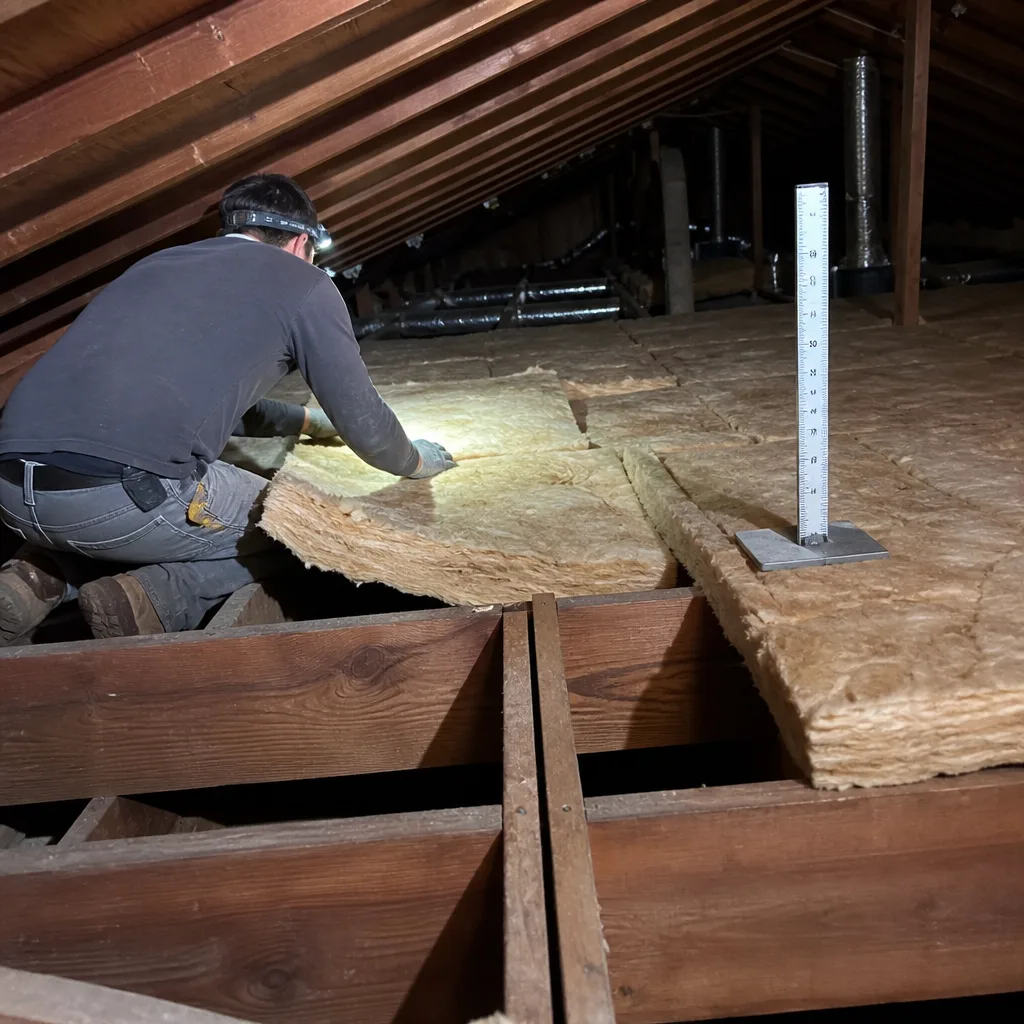
What you can safely check: verify the board label and thickness, photograph any sagging or separated seams, and confirm whether your crawl space has active ventilation or was designed as a sealed conditioned space. Do not enter the crawl space alone if you smell gas, see standing water near electrical, or have a history of rodent activity without proper PPE.
Where DIY goes wrong: removing Rockwool boards without isolating the vapor barrier tears the polyethylene, creating more repair area than you started with. Re-adhering to a damp concrete wall without a moisture-tolerant primer guarantees failure within two seasons. And mineral wool fibers are respirable - OSHA requires N95 minimum for disturbance, and we run P100s with forced-air helmets on tight-access jobs. The combustion-safety check matters too: if your furnace or water heater draws combustion air from the crawl space, sealing it without verifying makeup air can backdraft the flue. Wes Okafor won’t close a job without that check; it’s how carbon monoxide problems start.
Seal the leaks first. The insulation has nowhere to work if the air is moving around it. Call (650) 352-3577 for a free estimate - we’ll read your existing scope with you, even if another company installed it.
FAQs
Properly installed with marine-grade fasteners and butyl seam tape, the assembly should perform 15-20 years. We’ve seen failures at 3-5 years where non-rated adhesives were used or where the crawl space was sealed without addressing bulk water intrusion first. Call (650) 352-3577 for a free inspection if you’re unsure of your install date or materials.
Yes, if the Rockwool boards are intact and the failure is limited to perimeter sealing or vapor-barrier delamination. We cut back the damaged polyethylene, re-tape to the board face, and re-seal the wall joint. If the boards are water-stained, compressed, or rodent-damaged, partial replacement is the only fix that meets Title 24. Estimates are free - call (650) 352-3577.
Most re-seal jobs finish in one day. Partial board replacement runs one to two days depending on access. Full re-dos rarely exceed three days. We text a named technician’s arrival window the morning of, and you’ll receive the Documented Photo Record within 24 hours of crew departure.
We stock Comfortboard 80 and 110 in 2-inch and 3-inch thicknesses, 10-mil reinforced vapor barrier, butyl transition tape, marine-grade masonry fasteners, and closed-cell spray foam for rim-joist sealing. We also stock Reflectix if your original assembly used a reflective component. Same-day repair is available for most Palo Alto addresses when you call before noon.
Written by Wes Okafor, Owner, Topside Attic Insulation Palo Alto at Topside Attic Insulation Palo Alto, serving Palo Alto and nearby areas.