
Rockwool Attic Insulation: The Palo Alto Owner’s Guide
Rockwool attic insulation installation in Palo Alto typically runs $2.80 to $4.20 per square foot for batt installation and $1.90 to $3.10 per square foot for blown-in loose-fill, with most complete attic jobs falling between $4,200 and $8,800 depending on accessibility and whether air sealing is scoped. We stock both Rockwool Comfortbatt and Safe’n’Sound batts in R-30 and R-38 configurations on our Palo Alto trucks, and we can usually inspect and quote same-day. Most owners realize their Rockwool insulation is underperforming when upstairs rooms stay hot through September despite running the AC, or when PG&E bills spike after a mild month - signs that the mineral wool has settled, been displaced by rodent activity, or was installed over an unsealed attic floor where stack effect, the buoyancy of warm air rising and pulling cold air in at the base of the house, is undermining whatever R-value the batts claim on paper.
Which Rockwool Models This Applies To
Rockwool’s residential attic line breaks into two families that behave differently in Palo Alto’s climate. Comfortbatt is the thermal batt, available in R-15 through R-38, with a density of 2.8 pounds per cubic foot and a melting point above 2,150°F. Safe’n’Sound is the acoustic-dense batt at 4.0 pounds per cubic foot; we see it mis-spec’d for attics when an owner or previous contractor grabbed the wrong SKU at the supply house. The label is printed on the kraft facing every 24 inches: look for “COMFORTBATT” or “SAFE’N’SOUND” in the product code, plus the R-value and dimensions. Comfortbatt comes in 15.25-inch widths for 16-inch on-center framing and 23-inch widths for 24-inch on-center; Safe’n’Sound only ships in 15.25-inch.
Here’s the compatibility gotcha that costs Palo Alto homeowners: Rockwool batts are sized friction-fit, meaning they’re slightly wider than the cavity. Compress a 6.25-inch R-23 Comfortbatt into a 2×6 cavity and you lose R-value; leave a 3.5-inch batt flopping in a 2×6 and convection loops form. We also stock Owens Corning Thermafiber, which is mineral wool from the same parent company but with slightly different density specs, as a quality aftermarket equivalent when Rockwool’s lead times stretch past two weeks. Topside Attic Insulation Palo Alto is an independent service provider, not affiliated with Rockwool.
Signs Your Rockwool Attic Insulation Is Failing
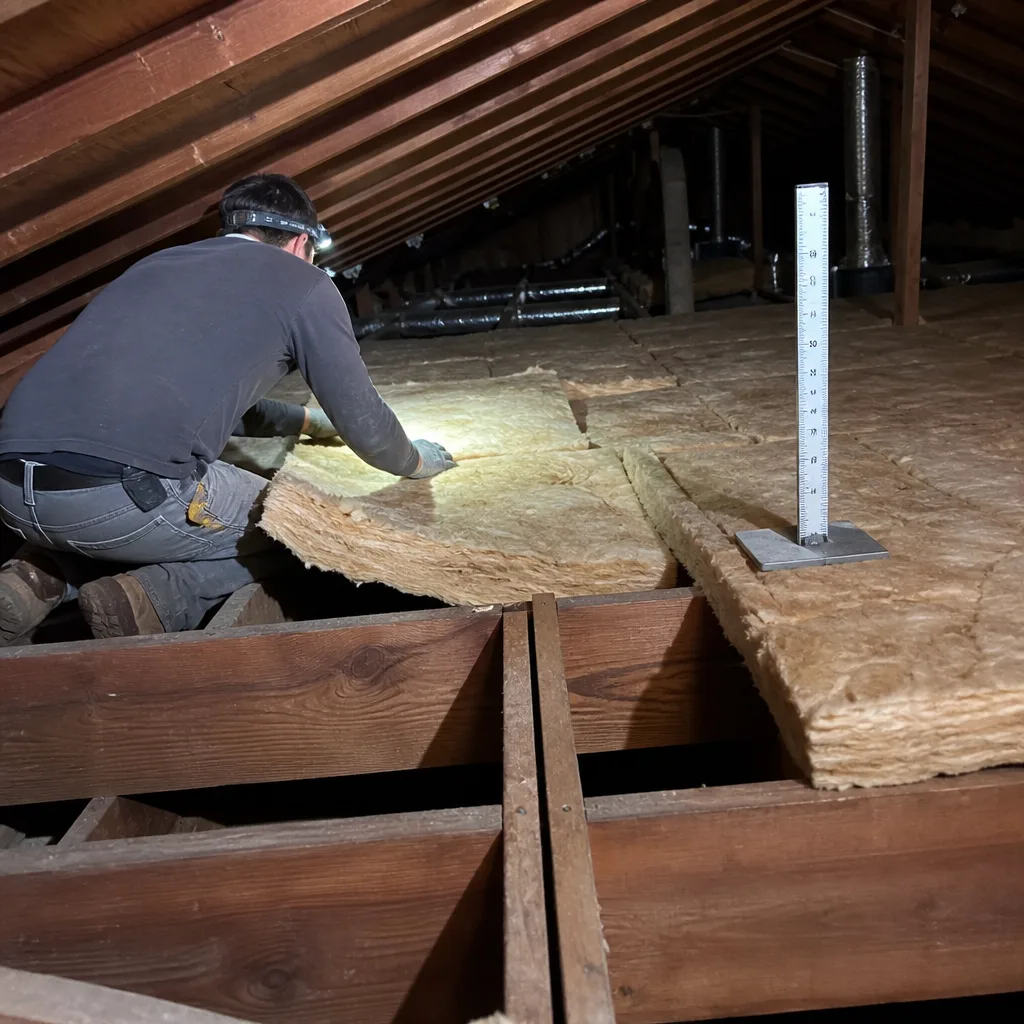
- Uneven temperature floors. The upstairs bedroom runs 8 to 12 degrees warmer than the thermostat setting in July, or colder in January. This usually means the batts have settled below the top plates, creating a thermal bypass where conditioned air escapes into the attic.
- Moisture staining on the ceiling drywall below. Rockwool is hydrophobic and won’t hold water like fiberglass, but if it was installed over an unsealed attic floor, warm moist air from the living space hits the cold roof deck and condenses. The stain is the symptom; the air leak is the disease.
- Visible compression or displacement. Batts that look thin, torn, or kicked aside near the attic hatch suggest a previous contractor walked through without plywood walkways, or that rodents have tunneled through. Compressed Rockwool loses up to 30% of its rated R-value.
- Dust accumulation around ceiling penetrations. Dark streaking near recessed can lights or drywall seams means air is moving through the insulation, carrying fine particles with it. The insulation isn’t failing; the air sealing underneath it was never done.
- Ice damming or premature shingle wear. In Palo Alto’s occasional freeze events, heat escaping through thin or bypassed insulation melts roof snow that refreezes at the eaves. We see this most on ranch homes in the Greenmeadow and Charleston Gardens areas where original R-19 batts have settled to R-12 effective.
Replacement Cost & What’s Included
| Scope | Price Range (Palo Alto) | Typical Home Size |
|---|---|---|
| Rockwool Comfortbatt batt replacement, attic only | $4,200 - $6,400 | 1,200 - 1,800 sq ft footprint |
| Rockwool blown-in loose-fill over existing (if salvageable) | $2,800 - $4,600 | 1,200 - 1,800 sq ft footprint |
| Full removal + Rockwool replacement + air sealing | $6,800 - $8,800 | 1,200 - 1,800 sq ft footprint |
| Air sealing only (top plates, penetrations, can lights) | $1,800 - $3,200 | Varies by leakage |
What drives the range: attic height (steep cathedral ceilings require scaffolding), whether we need to build a storage platform or raised walkway, the condition of existing insulation (rodent-soiled batts require full removal per Cal/OSHA), and whether the job includes a blower-door test. We publish before-and-after blower-door numbers on every applicable job so you can see the performance change in CFM50, the pressurization reading that shows, in one number, how much air your building envelope was losing. Every job starts with a written price under Haven Standard Clause 1: flat price, written scope, written warranty before anyone lifts a tool. The 365-Day Done Right Promise covers all completed work.
DIY or Call Us?
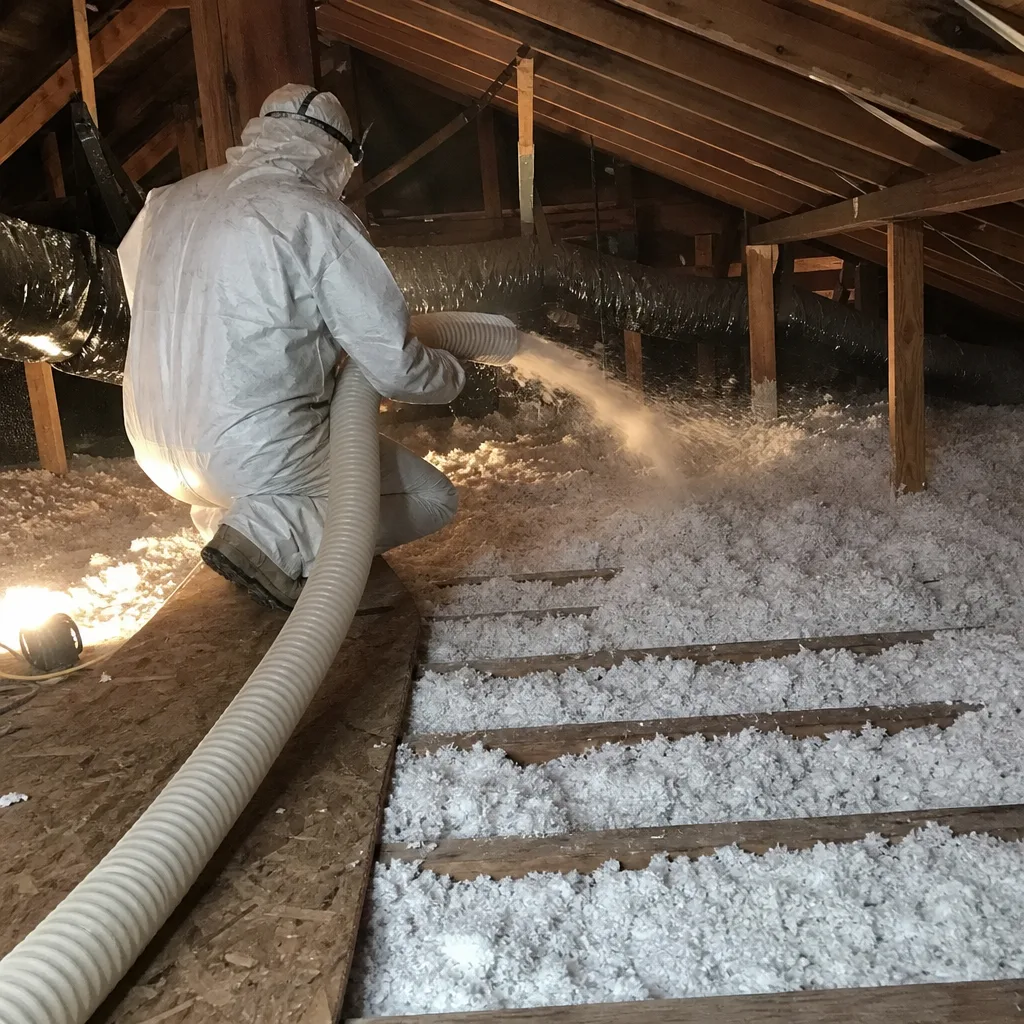
What you can safely check yourself: read the existing batt labels for product code and R-value, measure cavity depths with a tape measure, and photograph any stained or compressed areas from the attic hatch. Do not compress the batts while inspecting; you’ll degrade the friction fit.
Where DIY goes wrong: Rockwool batts are itchier than fiberglass and the fibers are stiffer, so inadequate PPE leads to forearm rashes that last days. More critically, most Palo Alto attics built before 1990 have active knob-and-tube wiring buried under insulation, which is a fire hazard if disturbed and a code violation if covered. We do a full electrical survey before any batt goes in. And without a blower-door test, you’re guessing at air leaks; we’ve found homes in Old Palo Alto with 3,800 CFM50 pre-sealing that dropped to 1,900 after proper air sealing, a difference no amount of additional R-value could achieve. Seal the leaks first. The insulation has nowhere to work if the air is moving around it.
Call (650) 352-3577 for a written price before any work starts. We also provide free second opinions on any written estimate you’ve already received.
FAQs
Rockwool mineral wool is rated for the life of the building when kept dry and undisturbed, but in practice we see effective performance drop after 15 to 25 years due to settling, rodent damage, or - most commonly - installation over an unsealed attic floor that allowed air washing. Call (650) 352-3577 and we’ll inspect what you’ve got; estimates are free.
Localized damage from a roof leak or rodent nesting can be spot-repaired if the surrounding batts are clean and the vapor barrier above is intact. We cut out the soiled section, bag it per disposal requirements, and friction-fit new batts. If more than 30% of the attic shows compression, displacement, or soiling, full replacement is more cost-effective. Call (650) 352-3577 for an exact quote - estimates are free.
A straightforward batt replacement in a 1,500-square-foot attic takes one day; add a second day if we’re doing full air sealing with a blower-door test. Jobs requiring old insulation removal, deck repair, or electrical remediation run two to three days. We deliver a Documented Photo Record on every visit so you see what was done without climbing up yourself.
Yes. We carry Comfortbatt R-30 and R-38 in both 15.25-inch and 23-inch widths, plus Safe’n’Sound for attic-floor sound dampening when that’s scoped. For blown-in, we stock Rockwool Granulated Wool and can source Thermafiber or GreenFiber if your timeline is tight. Call (650) 352-3577 - a live person answers 24/7.
Written by Wes Okafor, Owner, Topside Attic Insulation Palo Alto at Topside Attic Insulation Palo Alto, serving Palo Alto and nearby areas.