
Owens Corning Crawl Space Encapsulation: The Palo Alto Owner’s Guide
We stock and install Owens Corning-compatible crawl space encapsulation systems in Palo Alto, with most complete jobs running between $3,800 and $7,200 depending on crawl footprint, existing moisture damage, and whether the rim joist needs air sealing before the vapor barrier goes down. Same-day assessments are available, and we carry 12-mil and 20-mil reinforced polyethylene sheeting, seam tape, and closed-cell spray foam for rim joist sealing on our trucks. Most Palo Alto owners discover their encapsulation has failed when they notice a sharp musty smell returning after months of absence, or when their hardwood floors start cupping above the crawl space during our winter rainy season.
Which Owens Corning Models This Applies To
Owens Corning does not manufacture a branded crawl space encapsulation kit, but their building products division produces the individual components that contractors and homeowners combine into a system: Foamular NGX rigid foam board for rim joist insulation, PinkWrap housewrap for above-grade transitions, and the ProPink blown-in fiberglass that some older Palo Alto installations used in crawl spaces before encapsulation became standard practice. If your home has an Owens Corning component in the crawl, you’ll find the Pink Panther logo and a product code starting with “FB” for Foamular board or “PP” for loose-fill batts. We also see Reflectix radiant barrier installed in the same spaces, often as a standalone attempt at moisture control that needs integration into a proper encapsulation system.
The compatibility gotcha in Palo Alto’s 94024 and 94301 zip codes: many 1950s ranch homes near Midtown have existing Foamular NGX 250 board cut into rim joist cavities, but the board was installed without sealing the edges to the framing with closed-cell foam. That gap lets moist bay air circulate behind the board, which is why we find black staining on the backside of otherwise intact Owens Corning foam during inspections. We do not remove sound Foamular unless it’s water-damaged; we seal the perimeter with Demilec closed-cell foam and layer a continuous vapor barrier over the ground, terminating six inches up the stem wall per California Title 24 moisture control requirements.
Signs Your Owens Corning Crawl Space Encapsulation Is Failing
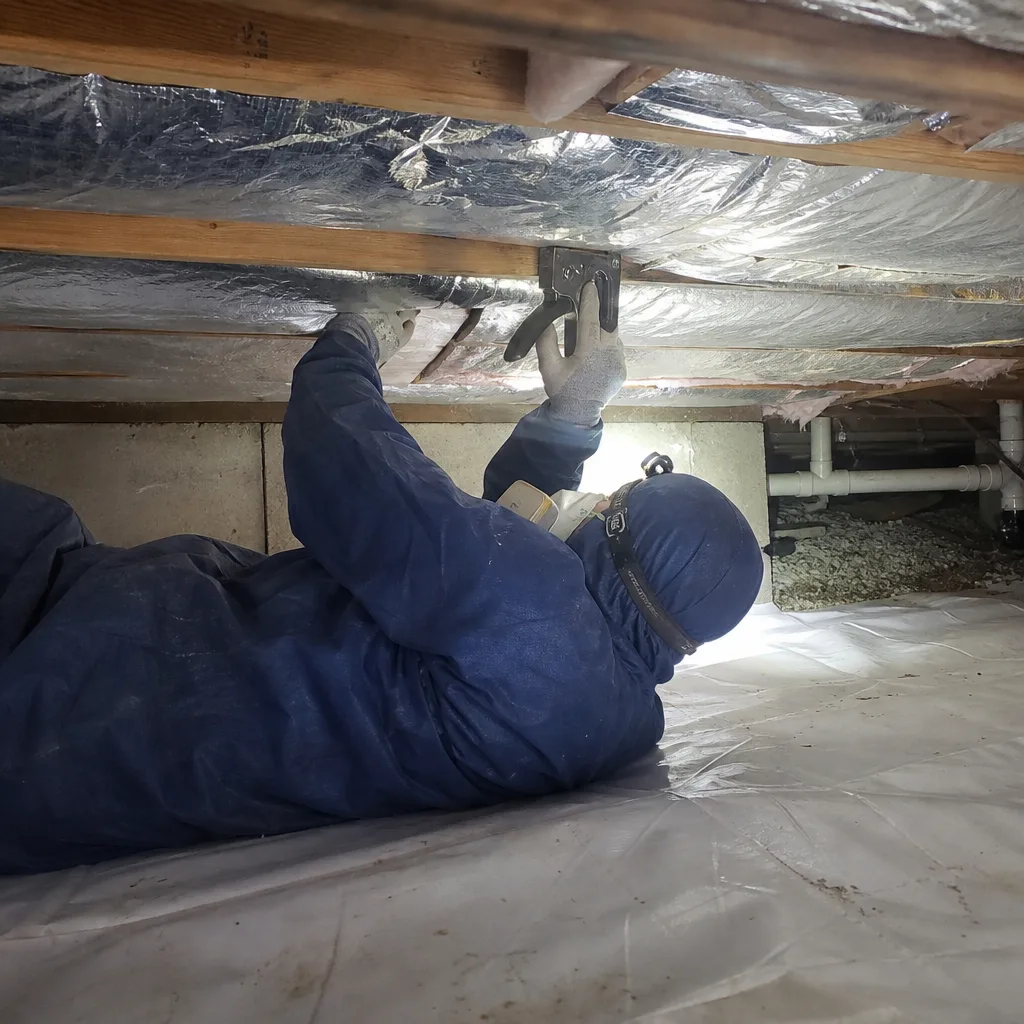
- Musty odor returning in winter. The vapor barrier has torn at a seam or pulled away from the wall termination, letting soil moisture evaporate into the crawl. In Palo Alto’s clay-heavy soils near San Francisquito Creek, this happens faster than in sandy areas because the ground holds water longer after rain.
- Hardwood cupping or laminate buckling above the crawl. Relative humidity above 70% in the crawl space migrates upward through the subfloor. We measure this with a thermo-hygrometer probe; readings above 65% mean the encapsulation is no longer maintaining the sealed environment.
- Condensation on ductwork or plumbing lines. This indicates the dew point is being reached inside the crawl, usually because the vapor barrier has lost its seal at the perimeter or the dehumidifier (if one was installed) is undersized for the air volume.
- Increased pest activity. A failing barrier creates the damp, dark environment that attracts subterranean termites and carpenter ants. We’ve found this particularly in older Palo Alto homes with original foundation vents that were never sealed during encapsulation.
- White chalky residue on the vapor barrier surface. This is efflorescence from mineral salts in the soil moisture, and it means water is migrating through or around the barrier rather than being blocked by it. The barrier material itself may be intact but improperly lapped or taped at seams.
Replacement Cost & What’s Included
A full Owens Corning-compatible encapsulation in Palo Alto typically runs $3,800 to $5,400 for a 1,200-square-foot crawl with straightforward access, and $5,400 to $7,200 if we need to remove degraded existing material, treat for mold, or rebuild access hatches to meet current code. The lower end assumes sound rim joist foam that only needs air sealing at edges; the higher end includes removing water-damaged Foamular NGX and installing new rigid board plus a 20-mil reinforced barrier with woven scrim.
Every job includes: removal and disposal of failed material; cleaning and preparation of the substrate; installation of 12-mil or 20-mil reinforced polyethylene with six-inch wall overlap; sealing all seams with pressure-sensitive tape rated for damp substrates; closed-cell spray foam at rim joists and penetrations; and a post-installation photo record with moisture readings. Under our 365-Day Done Right Promise, if humidity readings climb back above 60% within a year, we return and find the breach at no charge. We publish before-and-after blower-door numbers on encapsulation jobs where the scope includes attic air sealing, so you can see the whole-envelope improvement, not just the crawl.
DIY or Call Us?
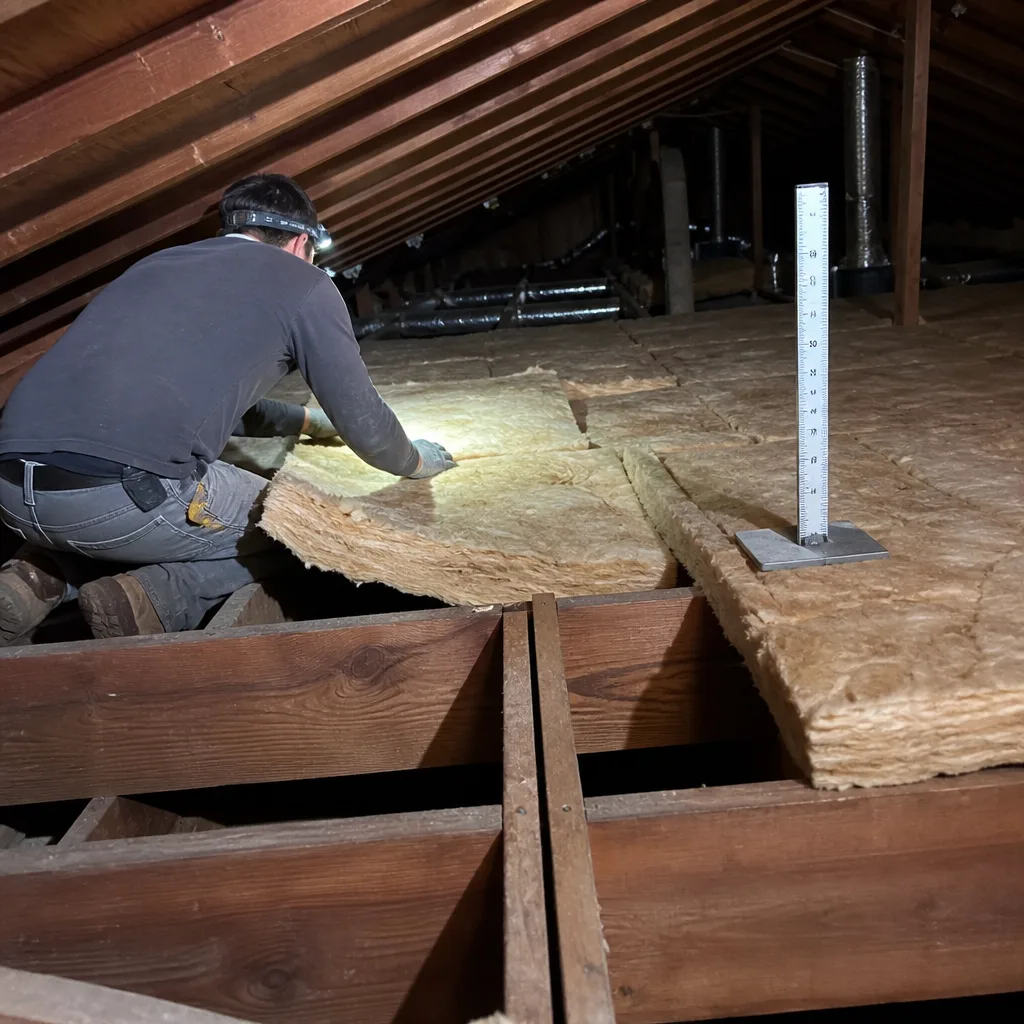
An owner can safely check three things: the condition of the access hatch seal, whether the vapor barrier has pulled away from walls at the perimeter, and whether the dehumidifier reservoir is filling (if equipped). These observations help us diagnose over the phone.
Where DIY goes wrong: cutting and fitting polyethylene in a confined crawl space with active wiring, plumbing, and gas lines creates real hazard. The 20-mil reinforced barrier we use weighs roughly 0.45 pounds per square foot, which becomes unwieldy in a 3-foot clearance space, and the seam tape requires a dust-free surface and consistent pressure that a homeowner’s knee-pad application rarely achieves. More critically, if your home has a gas furnace or water heater with combustion air drawn from the crawl, sealing the space without verifying makeup air requirements can backdraft the flue. Wes Okafor does a combustion-safety check on any gas appliance before we close a crawl encapsulation, because depressurizing a house without verifying draft is how carbon monoxide problems start. Seal the leaks first. The insulation has nowhere to work if the air is moving around it.
For a written price before any work starts, call (650) 352-3577. We also provide free second opinions on any written estimate you’ve already received.
FAQs
A properly installed 20-mil reinforced barrier with closed-cell rim joist sealing typically lasts 15 to 20 years in Palo Alto’s climate, though the 12-mil standard product often shows seam stress at 8 to 12 years in homes near the foothills where summer temperature swings in the crawl exceed 30 degrees. Call (650) 352-3577 and we’ll assess your current material’s condition.
Isolated punctures smaller than a quarter can be patched with compatible tape if the surrounding material is still supple and the substrate is clean; widespread embrittlement, seam failure, or staining beneath the barrier means full replacement is the only durable fix. We carry patch kits on our trucks for minor repairs, but we’ll tell you honestly if patching is throwing good money after bad. Estimates are free.
Most Palo Alto crawl spaces between 800 and 1,500 square feet take one to two days for a crew of two, assuming standard clearance and no hazardous material removal; homes with original Redwood City-era foundation configurations or active rodent issues may need an additional day for remediation and proofing before the barrier goes in. Call (650) 352-3577 to schedule an assessment with a written timeline.
Yes, we carry 12-mil and 20-mil reinforced polyethylene sheeting, pressure-sensitive seam tape, closed-cell spray foam for rim joist sealing, and Foamular NGX rigid board in common thicknesses on every crawl space truck serving Palo Alto. For Owens Corning-specific components we don’t stock, our supplier relationship means next-day delivery to your job site, not a two-week order delay. Call (650) 352-3577 to confirm availability for your specific repair.
Written by Wes Okafor, Owner, Topside Attic Insulation Palo Alto at Topside Attic Insulation Palo Alto, serving Palo Alto and nearby areas.