
Knauf Radiant Barrier Installation: The Palo Alto Owner’s Guide
Knauf radiant barrier installation in Palo Alto typically runs $2,800-$4,600 for an average attic, depending on square footage and whether the existing insulation can stay or needs to come out first. We stock Knauf EcoSeal-compatible radiant barrier systems and can usually schedule installation within 48 hours, same-day for urgent heat-gain issues. Most Palo Alto homeowners realize something’s wrong when their upstairs rooms won’t cool below 78°F even after sunset, or when their summer PG&E bill jumps 30% against the same thermostat setting.
Which Knauf Models This Applies To
Knauf manufactures radiant barrier products in two primary configurations: perforated foil-faced batts designed for attic floor applications, and loose radiant barrier foil rolls, commonly 48 inches wide, meant for rafter-line or truss installation. The critical distinction is whether your existing attic uses Knauf’s EcoSeal System, which pairs a water-based elastomeric air-sealing spray with foil-faced insulation, or a standalone radiant barrier retrofit.
Check your attic for the Knauf product code printed on the foil facing, usually starting with “RB-” for barrier rolls or “EFB-” for encapsulated foil batts. The EcoSeal designation will appear on a separate label if the air-sealing component was part of the original scope. We do not recommend mixing Knauf’s foil-faced batts with standard fiberglass on the same plane; the thermal reflectivity drops where surfaces touch, and you’ll see hot spots on thermal imaging.
Topside Attic Insulation Palo Alto is an independent service provider, not affiliated with Knauf. We also stock Reflectix radiant barrier products for homeowners who need a different spec or faster turnaround on non-standard widths.
Signs Your Knauf Radiant Barrier Installation Is Failing
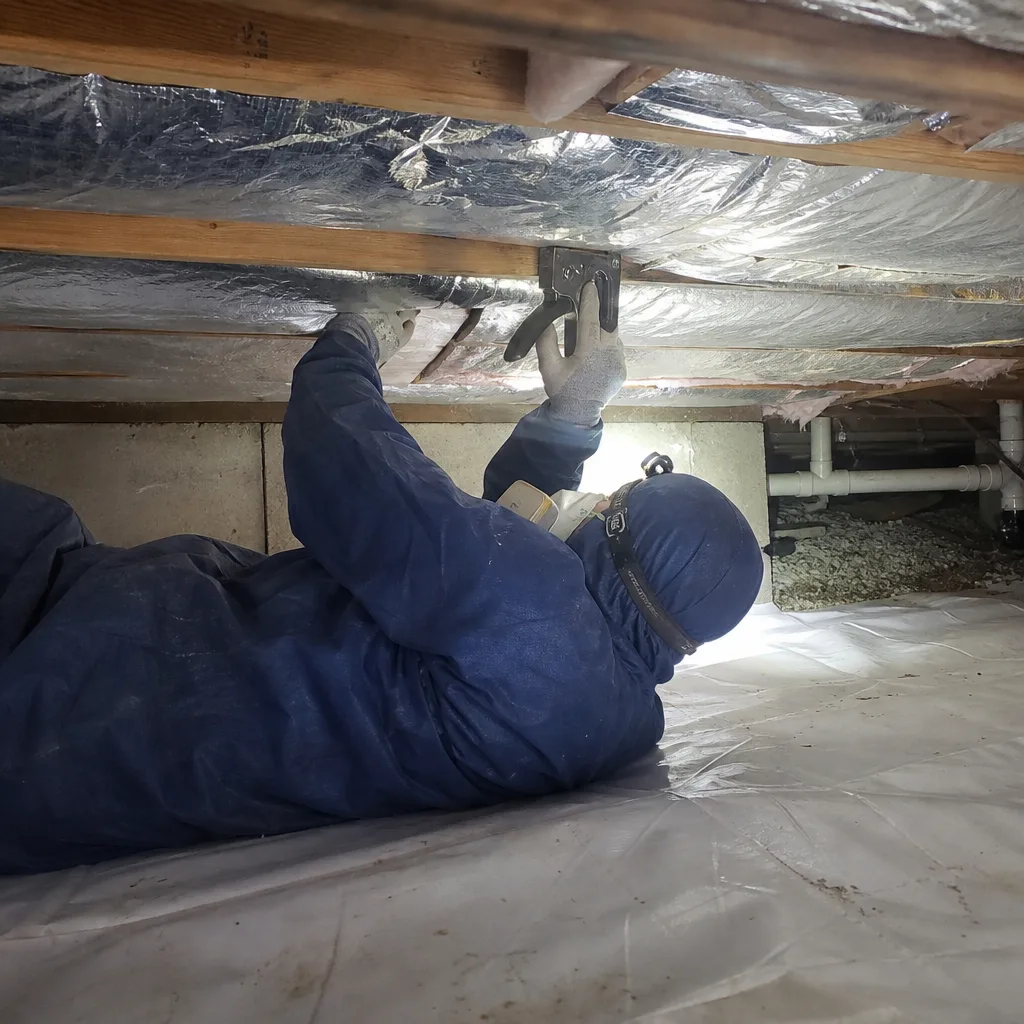
- Upstairs rooms stay hot past 9 p.m. Radiant barrier works by reflecting solar heat before it radiates into living space. When foil facing tears, oxidizes, or collects dust, emissivity rises and the attic floor becomes a heat radiator instead of a reflector. In Palo Alto’s dry summers, dust accumulation alone can raise surface emissivity from 0.03 to 0.30 in three to four years.
- Air conditioning runs continuously on mild days. A properly functioning radiant barrier should reduce attic heat gain by 20-30°F at peak. If your compressor cycles on when outdoor temps are below 82°F, the barrier has likely detached from rafters or degraded at staple points.
- Visible tears, sagging, or foil oxidation visible from the attic hatch. Knauf’s foil facing uses a reinforced aluminum layer, but staple pull-through at truss chords is common in homes with seasonal humidity swings. Once the foil sags, it traps moisture against rafters and the degradation accelerates.
- Hot spots on ceiling drywall detected by thermal camera or even hand. These map directly to gaps in radiant barrier coverage. We see this most often in Palo Alto Eichler and ranch-style homes where original barrier installations stopped at partition walls instead of running continuous to the eaves.
- Musty attic smell after the first fall rain. Perforated radiant barrier allows moisture migration, but tears create concentrated wetting at the breach. Knauf’s perforated products are designed to dry, but only if the perforation pattern stays intact.
Replacement Cost & What’s Included
| Scope | Price Range |
|---|---|
| Radiant barrier retrofit, standard attic (1,200-1,800 sq ft) | $2,800-$3,800 |
| Radiant barrier with existing insulation removal | $3,800-$4,600 |
| EcoSeal air sealing + new radiant barrier | $4,200-$5,500 |
| Partial repair (localized tear replacement, under 200 sq ft) | $680-$1,200 |
The range depends on three factors: attic accessibility (cathedral ceilings add labor), whether we need to remove degraded existing barrier before installing new, and whether the job includes air sealing of top plates and can lights first. We never install new radiant barrier over an unsealed attic floor. Seal the leaks first. The insulation has nowhere to work if the air is moving around it.
Every job closes with a Documented Photo Record showing before-and-after coverage, and on full retrofits we provide blower-door numbers if air sealing is scoped. The 365-Day Done Right Promise covers all completed work.
DIY or Call Us?
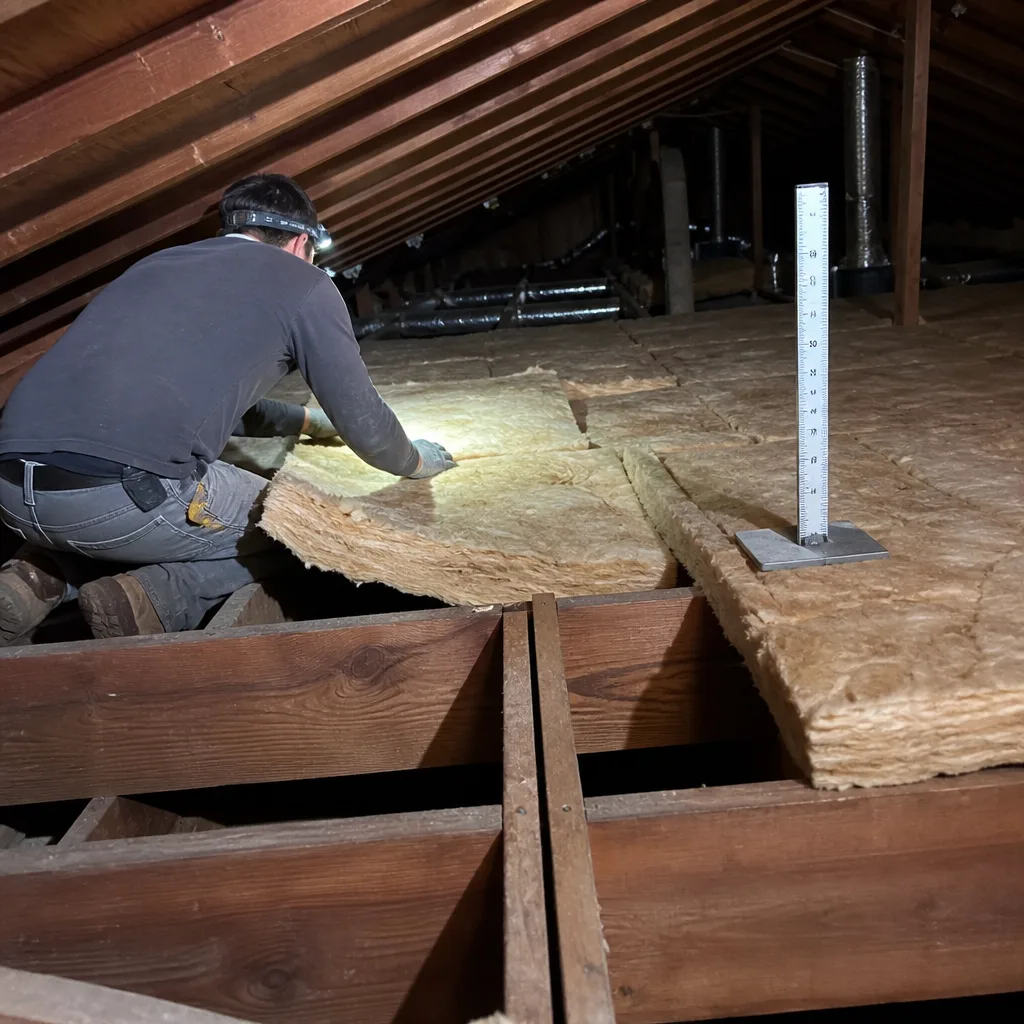
There’s nothing inherently dangerous about radiant barrier material itself, unlike high-tension garage door springs or live electrical work. The hazard is what you disturb getting to it. Palo Alto attics built before 1980 often contain vermiculite insulation that may harbor asbestos, and walking joist-to-joist in a dark attic with a staple gun is how knees go through ceilings.
What you can safely check from the attic hatch with a flashlight: whether the foil is still taut and continuous, whether staple lines are intact, and whether any sections have fallen to the attic floor. Do not attempt to re-staple loose sections while balancing on joists. The thermal performance depends on precise emissivity values and installation angles that change with sag.
If you’re seeing the symptoms above, call (650) 352-3577. We’ll scope the job, give you a written price before any work starts, and schedule installation around your availability.
FAQs
Properly installed Knauf radiant barrier maintains reflectivity for 15-25 years in Palo Alto’s dry Mediterranean climate, though dust accumulation begins reducing performance after year 5 without maintenance. Homes near Foothill Expressway or Page Mill Road, where construction dust and pollen loads run higher, may see faster surface soiling. Call (650) 352-3577 and we’ll assess whether your existing barrier can be cleaned or needs replacement.
Small punctures under two inches can be patched with matching foil tape without significant performance loss, but sagging sections or staple pull-through require full replacement because the air gap geometry is compromised. We don’t patch over large areas; the labor approaches replacement cost and the result is visually obvious. Call (650) 352-3577 for an exact quote - estimates are free.
Most Palo Alto attic radiant barrier installations finish in one day, two if we’re removing old insulation and running air sealing first. Crews arrive at 8 a.m., protect flooring and furnishings, and typically clear the site by 4 p.m. You’ll receive the Documented Photo Record and written scope completion by end of day.
We stock Knauf-compatible 48-inch perforated foil rolls and EcoSeal air-sealing compound on every Palo Alto crew vehicle, plus Reflectix alternatives for non-standard applications. For EcoSeal System jobs, the water-based elastomeric is mixed on-site to fresh spec. Same-day installation is available for most standard attic geometries.
Written by Wes Okafor, Owner, Topside Attic Insulation Palo Alto at Topside Attic Insulation Palo Alto, serving Palo Alto and nearby areas.