
Knauf Crawl Space Encapsulation: The Palo Alto Owner’s Guide
Knauf crawl space encapsulation repair in Palo Alto typically runs $2,800-$5,400 for a full vapor barrier and seal system on a standard 1,200-1,800 sq ft footprint, with most jobs completed in one day. We stock Knauf-compatible reinforced poly, seam tape, and mechanical fasteners on every truck, and we can usually inspect and quote same-day if you call before noon. Most owners discover the failure when they notice a musty smell returning after a dry winter, or when they spot pooling water under the barrier in the April-May transition when Palo Alto’s clay-heavy soils start shedding the winter saturation.
Which Knauf Models This Applies To
Knauf doesn’t sell a branded “encapsulation system” the way some manufacturers do. Instead, we match Knauf-compatible materials to the existing assembly: the reinforced polyethylene vapor barrier (commonly 12-20 mil), closed-cell spray foam or rigid foam board at the perimeter walls, and the mechanical fastening schedule that holds it all in place. The critical identifier is the mil thickness stamped on the existing poly edge - 6-mil builder-grade plastic fails fast in Palo Alto’s seasonal groundwater fluctuation, while 12-mil and up holds up. If your original installer used Knauf’s EcoSeal or similar water-based sealant at the seams, that product has a 7-10 year service life in our climate before re-taping is necessary. We carry both OEM Knauf-compatible seam tape and a commercial-grade acrylic adhesive tape that outperforms it on damp concrete. Check the label on your existing barrier; if it reads “Knauf Insulation” with a lot code starting KI-, we know exactly which fastening pattern and overlap schedule the original crew likely followed.
Signs Your Knauf Crawl Space Encapsulation Is Failing
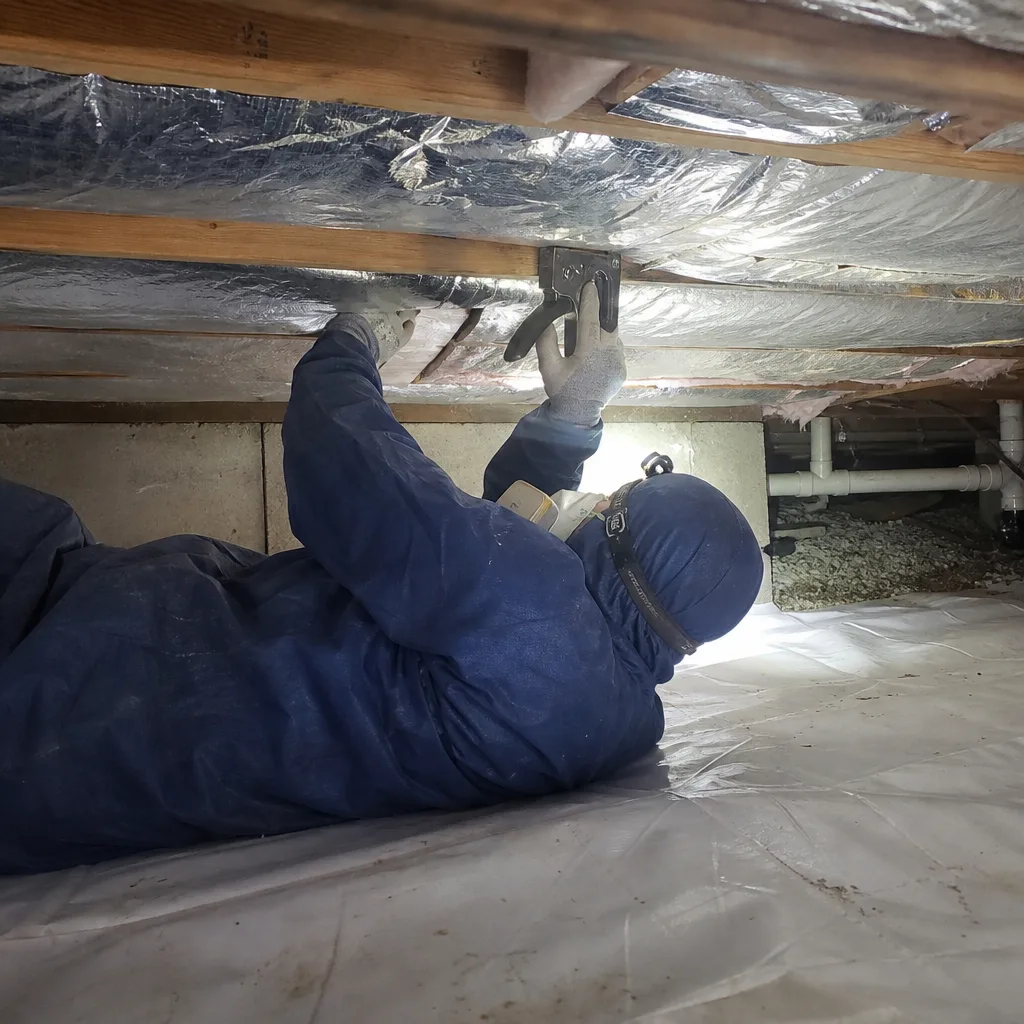
- Musty odors returning in spring. Palo Alto’s winter rains load the soil, then the May dry-down pulls that moisture through any compromised seam. If you smell earthiness in your first-floor HVAC return, the vapor barrier seal has likely failed at a perimeter joint or penetration.
- Pooling water on top of the barrier. This means groundwater is entering faster than your drainage system can evacuate it, or the barrier was never properly sealed to the foundation walls. In Old Palo Alto homes with original perimeter drains, we see this when the drain tile has silted in.
- Sagging or torn poly, especially near the access hatch. The 6-mil builder-grade material many crews used pre-2018 tears on the crawl floor gravel within 3-5 years. A 12-mil reinforced product should not sag unless the fasteners have pulled out of damp framing.
- Efflorescence on interior foundation walls. White chalky deposits mean moisture is migrating through the concrete and evaporating into the crawl space. Your vapor barrier may be intact but the wall seal is failing, or the barrier was never extended up the walls to grade.
- Increased humidity readings upstairs. We bring a hygrometer on every crawl inspection. If your first-floor relative humidity climbs above 60% in summer despite the HVAC running, stack effect is pulling conditioned air down through bypasses and replacing it with damp crawl air.
Replacement Cost & What’s Included
| Component | Typical Range (Palo Alto) |
|---|---|
| Full vapor barrier replacement, 12-mil reinforced, 1,200-1,800 sq ft | $2,800-$4,200 |
| Upgrade to 20-mil with woven reinforcement | $3,800-$5,400 |
| Perimeter wall insulation (Knauf ThermaFiber or equivalent rigid board) | $1,200-$2,400 additional |
| Sump pump or drainage correction if needed | $1,800-$3,500 additional |
| Seam re-tape only (localized repair, barrier otherwise sound) | $650-$1,400 |
The spread depends on three things: how much existing material we remove and haul, whether the foundation walls need prep (efflorescence removal, crack patching), and whether your home needs active depressurization or just passive sealing. We price every job with a Written Price Before Any Work Starts - Haven Standard Clause 1 - and that written scope includes the mil rating, the overlap schedule, and the fastener type. Every full encapsulation carries our 365-Day Done Right Promise. On jobs where we also air-seal the floor above, you’ll receive before-and-after blower-door numbers showing the reduction in stack-effect-driven infiltration.
DIY or Call Us?
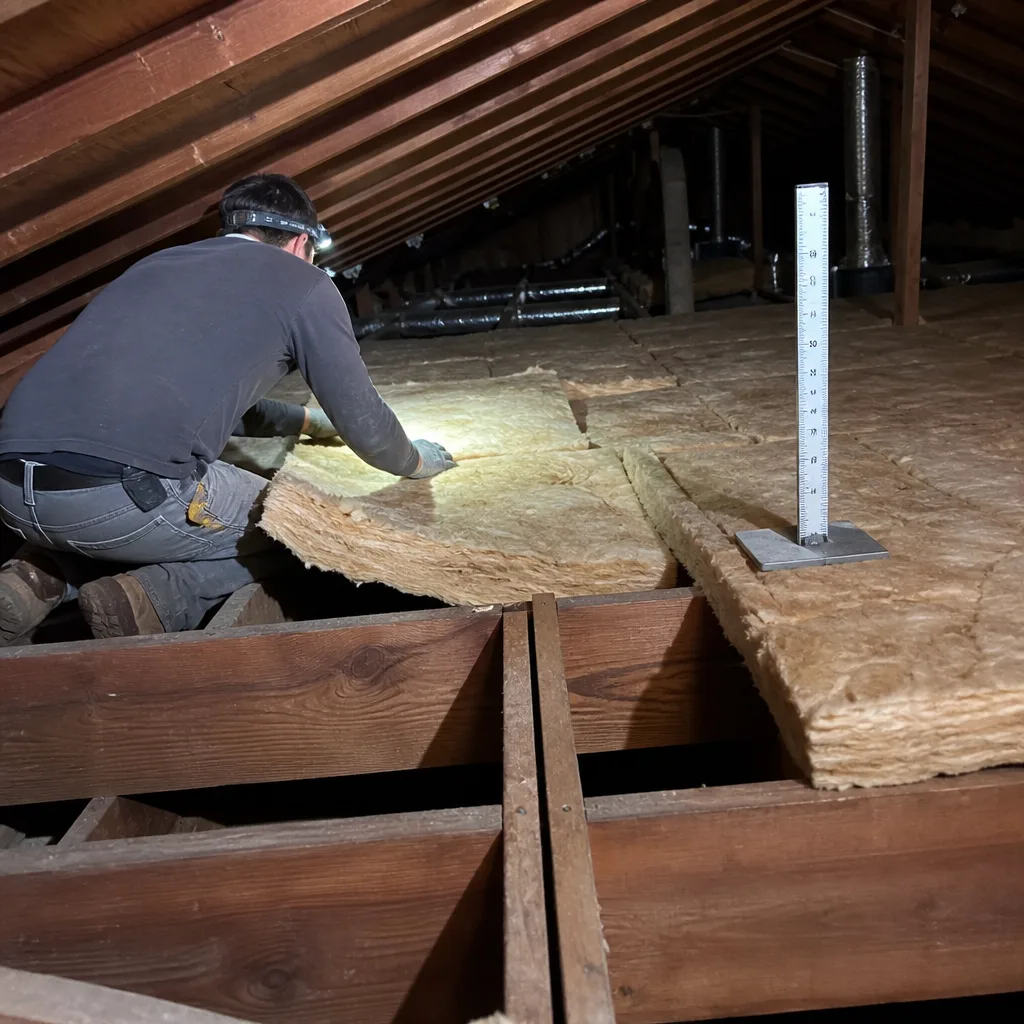
Here’s what you can safely check yourself: the mil rating on your existing barrier, whether water is pooling (indicates drainage, not just barrier failure), and whether your access hatch is weatherstripped. What goes wrong fast in DIY: cutting poly to fit around piers and plumbing stacks without the proper overlap schedule, which creates new leak points; using housewrap tape instead of vapor-barrier-rated acrylic adhesive, which delaminates in damp conditions; and missing the wall-to-barrier seal, which is where most moisture enters. Crawl spaces also present real hazards - confined space, possible rodent-borne contaminants, and gas appliance combustion air issues if you seal too tightly without verifying makeup air. We do a combustion-safety check on any gas appliance in or adjacent to the crawl space before we close a job, because depressurizing a house without verifying flue draft first is how carbon monoxide problems start. If you’re unsure about any of that, call (650) 352-3577 and we’ll walk through what you’re seeing. Estimates are free, and we bring a written price to the visit.
FAQs
A properly installed 12-mil reinforced barrier with sealed seams lasts 15-20 years in Palo Alto’s climate; 20-mil woven product extends that toward 25. The limiting factor is usually the seam adhesive, not the poly itself, which is why we use tape rated for damp-cure conditions rather than pressure-sensitive only. Call (650) 352-3577 if you’re unsure of your installation age - we can inspect and quote repair versus full replacement.
Localized re-taping works if the poly is intact, properly overlapped, and the damage is limited to seam separation or small punctures. If the material is embrittled, extensively torn, or was 6-mil builder-grade to begin with, patching is false economy. We offer free estimates to assess which path makes sense for your specific assembly.
Most standard crawl spaces in Palo Alto - 1,200-1,800 sq ft with good access - are completed in one day by a two-person crew. Tight clearances, extensive debris removal, or drainage corrections add a second day. We schedule arrival windows and text when the technician is en route, under Haven Standard: Arrive on schedule.
Yes. We carry 12-mil and 20-mil reinforced poly, vapor-barrier-rated acrylic seam tape, mechanical fasteners for both concrete and wood sill plates, and Knauf-compatible rigid foam board for perimeter walls. Same-day installation is available for most standard sizes if we inspect and quote by early afternoon.
Topside Attic Insulation Palo Alto is an independent service provider; we are not affiliated with Knauf Insulation. We also stock parts for Reflectix and other major building envelope brands.
Seal the leaks first. The insulation has nowhere to work if the air is moving around it. That’s the sequence Wes Okafor learned at Richard J. Daley College, where the building science curriculum ran heavy on air-sealing fundamentals before a single batt of insulation ever came up in class, and it’s the sequence we still follow on every crawl space job from Old Palo Alto to the newer builds near Stanford.
Ready to get your crawl space dry and documented? Call (650) 352-3577 for a free estimate with a written price before any work starts. We answer live, 24/7.
Written by Wes Okafor, Owner, Topside Attic Insulation Palo Alto at Topside Attic Insulation Palo Alto, serving Palo Alto and nearby areas.