
Knauf Attic Air Sealing: The Palo Alto Owner’s Guide
Knauf attic air sealing components installed in Palo Alto homes typically run $340 to $780 for complete replacement, including removal of degraded materials and installation of new Knauf-compatible sealing at top plates, penetrations, and the attic hatch. Most jobs we scope in Palo Alto are completed same-day once parts are confirmed, and we stock Knauf-compatible acrylic-latex sealants, fire-rated caulk for can light housings, and rigid foam board for chimney saddles on our trucks. Homeowners usually discover the failure when a recent insulation upgrade didn’t stop the draft, or when their winter PG&E bill spikes despite new thermostat settings.
Which Knauf Models This Applies To
Knauf doesn’t brand attic air sealing as a discrete “system” the way they mark insulation batts, so the compatibility question is about matching the sealing strategy to the Knauf insulation already in place. We most commonly encounter this in Palo Alto homes with Knauf EcoSeal or Knauf Jet Stream blown-in fiberglass systems installed between 2012 and 2022, where the original builder or retrofitter skipped comprehensive air sealing before blowing insulation.
To identify what you’re working with, check the attic floor for Knauf bag remnants or specification labels, usually printed with density ratings of 0.5 to 1.0 pounds per cubic foot for loose-fill applications. The critical compatibility gotcha: Knauf Jet Stream Ultra, the higher-density variant specified for many Palo Alto new builds after 2018, requires a minimum 2-inch depth of continuous air sealing at the top plate because its higher density can mask rather than stop air movement at the framing joint. We’ve opened attics in the Greenmeadow and Duveneck neighborhoods where the insulation looked full but the blower-door reading was still above 3,500 CFM50.
OEM Knauf sealants aren’t sold through residential distribution, so we source Knauf-compatible materials, fire-rated acrylic-latex and two-component polyurethane foam, that meet the same ASTM C920 and ASTM D1985 specifications. The aftermarket equivalent performs identically; the failure point is almost never the sealant chemistry but the application depth and surface prep.
Signs Your Knauf Attic Air Sealing Is Failing
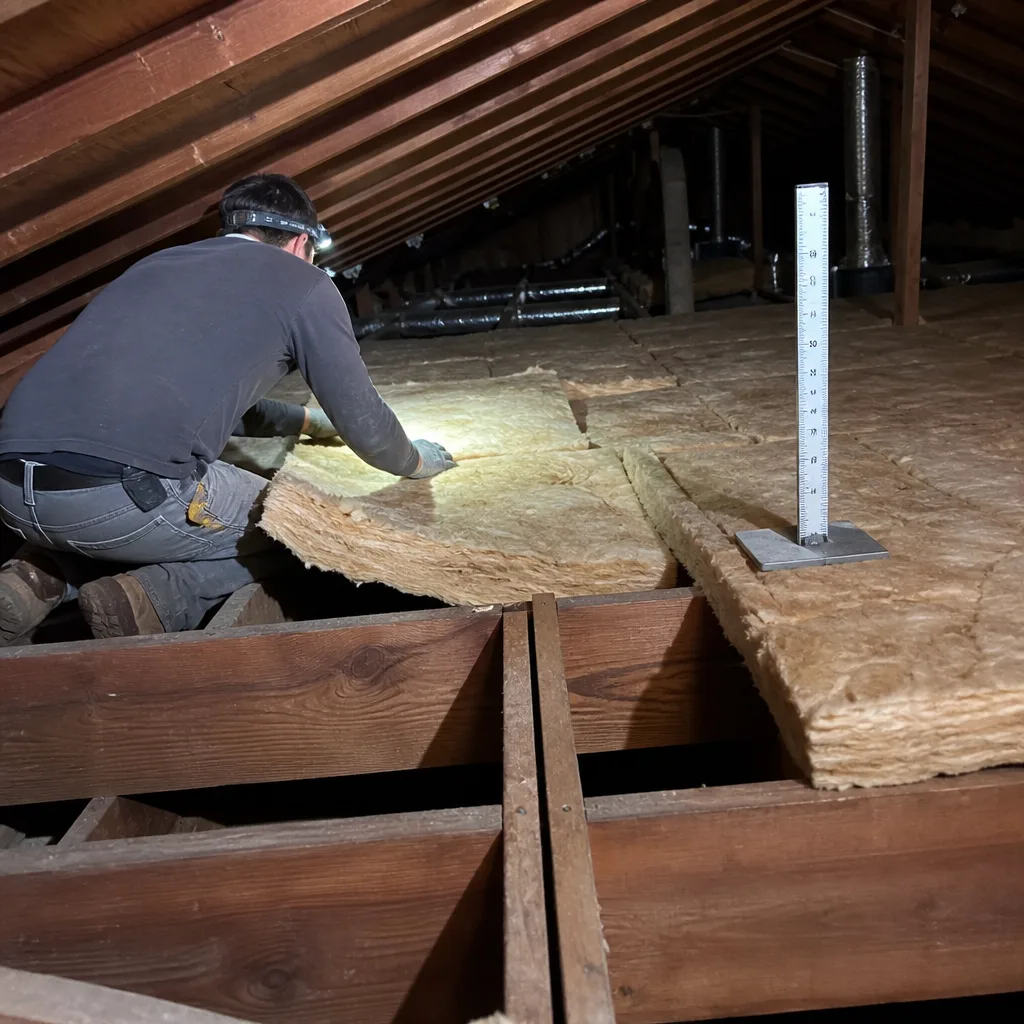
- Dust streaks on insulation surfaces. Air moving through gaps carries fine particles that deposit on fiberglass. In Palo Alto, we see this most on the north-facing attic slopes where winter pressure differentials are highest. The dust isn’t cosmetic; it’s documenting a leak path that bypasses your insulation entirely.
- Cold spots on ceiling drywall below, especially near interior walls. Top plates, the horizontal framing member where interior walls meet the ceiling, are rarely sealed in pre-2010 construction. Warm interior air escapes here, cools against the drywall, and creates perceptible temperature bands you can feel walking barefoot.
- Ice damming or concentrated melt patterns on the roof after rare freeze events. Palo Alto’s freeze-thaw cycles are mild but telling. Heat escaping through unsealed penetrations melts roof snow unevenly; water runs to the eave and refreezes. If you see this on a south bay roof, the attic floor is leaking conditioned air.
- Can light housings that feel like heat lamps in summer. Unsealed IC-rated housings in a hot attic become thermal chimneys. We measure attic temperatures above 140°F in Palo Alto ranch homes with dark shingles; without a fire-rated foam cap or sealed box, that heat radiates straight into the living space.
- Blower-door test results that don’t improve after insulation-only upgrades. This is the definitive sign. We recently tested a home in Old Palo Alto where the owner had added R-38 blown fiberglass but the CFM50 dropped only 8%. The top plates, wire penetrations, and a 6-inch plumbing stack chase were still wide open. Seal the leaks first. The insulation has nowhere to work if the air is moving around it.
Replacement Cost & What’s Included
| Scope | Price Range | Typical Palo Alto Home |
|---|---|---|
| Targeted sealing (top plates + 5-10 penetrations) | $340 - $520 | 1,200-1,800 sq ft ranch or Eichler |
| Comprehensive attic floor seal (all plates, penetrations, chimney saddle, access hatch) | $580 - $780 | 2,000+ sq ft with multiple HVAC drops |
| Chimney saddle rebuild with fire-rated foam board | $180 - $290 (add-on) | Required for masonry chimneys in pre-1975 homes |
What drives the range: attic accessibility (cathedral ceilings with limited headroom add labor), quantity of can light housings needing sealed boxes, and whether we need to remove existing insulation to access the floor deck. Every job gets a written price before any work starts, Haven Standard Clause 1, with line-item breakdown of materials and labor hours. The 365-Day Done Right Promise covers adhesion failure or visible gaps; we return and touch in at no charge. On applicable jobs, you receive before-and-after blower-door numbers showing the actual CFM50 reduction.
DIY or Call Us?
There’s a safe middle ground and a hard stop. An owner can verify the problem with a simple smoke pencil or incense stick on a breezy day, watching for lateral drift near outlets and ceiling fixtures. You can also photograph existing sealant for condition assessment, looking for crumbling, shrinkage gaps, or areas where the material never bonded to dusty framing.
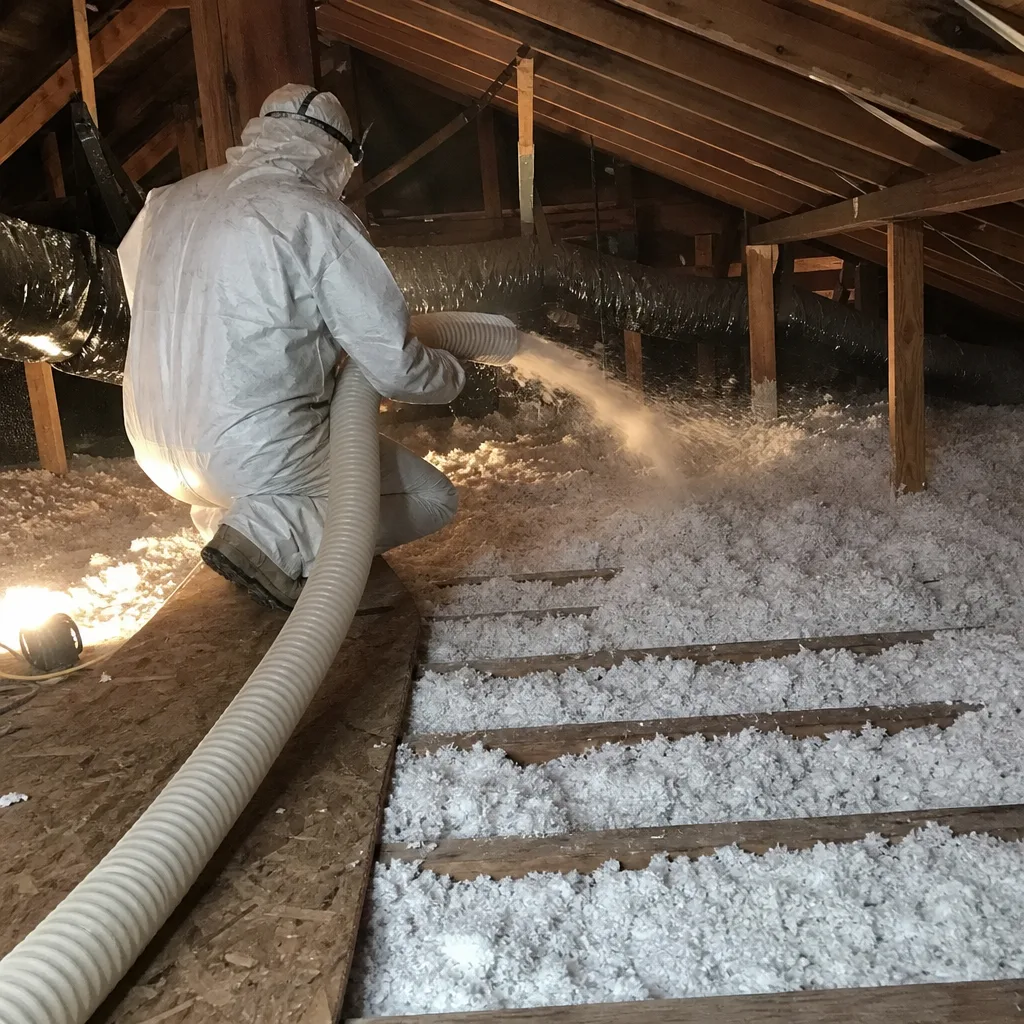
The hard stop is the work itself. Attic air sealing requires working at height on joists or walkboards, often in 130°F+ temperatures, with respiratory protection against fiberglass particulate. More critically, sealing around gas appliance vents, recessed lighting, and combustion air intakes without understanding draft requirements creates real hazards. Wes Okafor does a combustion-safety check on any gas appliance in the attic space before the job closes, because depressurizing a house without verifying the flue draft first is how carbon monoxide problems start. For the actual sealing, call (650) 352-3577. Estimates are free, and we bring the written scope with us.
FAQs
Properly applied acrylic-latex sealant lasts 15 to 25 years in Palo Alto’s climate, though the thermal cycling of unconditioned attics can accelerate shrinkage at material interfaces. We warranty our work for 365 days and expect a quality seal to outlast the insulation above it. Call (650) 352-3577 if you see new dust streaks or feel drafts returning.
Spot repair works only where the original sealant is still well-adhered and the gap is under 1/4 inch. In most Palo Alto attics we inspect, the builder-grade caulk has either pulled away from the top plate or was never applied continuously. Partial repair usually fails within two seasons because new material won’t bond reliably to degraded old. We quote replacement with removal of the failed layer.
Most residential attic air sealing jobs in Palo Alto run 4 to 7 hours for a two-person crew. A targeted scope with good attic access can finish in a half-day; comprehensive sealing with insulation removal and replacement adds a full day. We confirm the timeline in your written scope before anyone lifts a tool.
Yes. We carry Knauf-compatible fire-rated acrylic-latex sealant, two-component polyurethane foam for larger gaps, rigid foam board for chimney saddles, and pre-cut covers for standard can light housings. For specialized penetrations or odd framing conditions, we pull additional material from our Palo Alto warehouse same-day. Call (650) 352-3577 to confirm availability for your specific configuration.
Ready to stop the leaks before adding insulation? Call (650) 352-3577 for a free estimate with written pricing. We’ll bring a blower-door test if you want to see the number, and you’ll leave with a documented scope before any work starts.
Written by Wes Okafor, Owner, Topside Attic Insulation Palo Alto at Topside Attic Insulation Palo Alto, serving Palo Alto and nearby areas.