
Johns Manville Vapor Barrier Installation: The Palo Alto Owner’s Guide
Johns Manville vapor barrier installation in Palo Alto typically runs $1,800-$3,400 for a standard crawl space or attic application, and we stock JM-compatible 6-mil and 10-mil reinforced polyethylene on our trucks for same-day starts. Most owners discover the problem during a home sale inspection, a musty smell in the first-floor hallway, or when their energy audit flags elevated humidity readings in the crawl space. The vapor barrier sits between soil and living space; once it tears, separates at seams, or was never properly sealed to foundation walls, moisture migrates upward and the insulation above it starts absorbing water like a sponge.
Which Johns Manville Models This Applies To
Johns Manville does not sell vapor barriers as discrete “models” the way they do batt insulation, but their building science division specifies three product families we install against regularly: JM 6-mil clear polyethylene for basic crawl space coverage, JM 10-mil reinforced scrim for high-traffic or rodent-prone areas, and JM cross-laminated heavy-duty barriers for commercial-grade or occupied basement conversions. The part number you want is printed on the rolled edge, usually formatted as JM-6CLR, JM-10R, or JM-CLHD followed by width and length codes.
To identify what you have now, look for the white JM logo tape on existing seams, or check your original insulation invoice for “vapor retarder” or “ground cover” line items. If your current barrier is generic hardware-store plastic with no reinforcement, it is not JM-specified and was likely installed as a cost shortcut. We also stock Reflectix radiant barriers for hybrid assemblies where the owner wants both moisture control and reflective heat rejection, common in Palo Alto’s warmer microclimates near the Foothills.
Topside Attic Insulation Palo Alto is an independent service provider, not affiliated with Johns Manville. We source JM materials through authorized distribution and will show you the mill markings on the roll before we cut it.
Signs Your Johns Manville Vapor Barrier Installation Is Failing
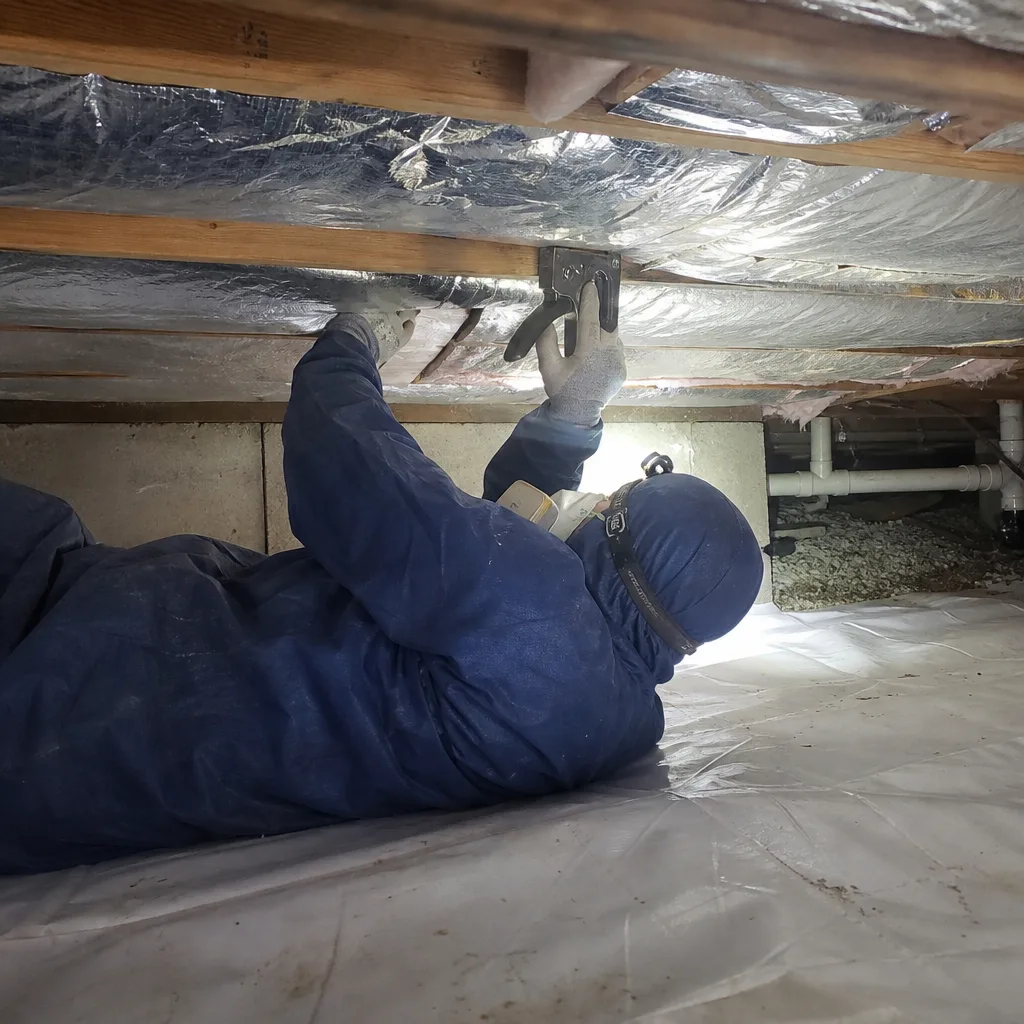
- Condensation on ductwork or framing in the crawl space. This means moisture is passing through or around the barrier and hitting cooler surfaces. In Palo Alto, where summer marine layer keeps soil damp well into September, a compromised barrier lets that moisture evaporate directly into the envelope.
- Musty odors on the first floor, especially near kitchen and bathroom plumbing walls. The stack effect, the buoyancy of warm air rising and pulling cold air in at the base of the house, draws crawl space air through every gap in the floor system. A failed vapor barrier is usually the first domino.
- Insulation sagging or discolored above the crawl space. Fiberglass batts lose R-value once they hit roughly 2% moisture content by weight. If the vapor barrier underneath has torn or pulled from the walls, the batt above is likely wet and performing at half its rated value or less.
- White mineral deposits (efflorescence) on foundation walls. This signals liquid water is moving through the concrete and evaporating at the surface. A properly sealed JM barrier should extend 6-12 inches up those walls and be taped at the seam; if it is not, the wall becomes a secondary moisture source.
- Pest activity concentrated in specific crawl space zones. Rodents tear unreinforced polyethylene for nesting material. JM’s 10-mil reinforced scrim resists this, but if your original installer used the 6-mil basic grade to save money, you will find shredding along the centerline where traffic is heaviest.
Replacement Cost & What’s Included
Most Johns Manville vapor barrier replacements in Palo Alto fall between $1,800 and $3,400 for residential crawl spaces under 1,500 square feet. The low end covers a straightforward 6-mil swap with seam taping and wall extension on a clean, accessible site. The high end includes 10-mil reinforced material, full foundation wall sealing with JM-compatible butyl tape, remediation of wet or compressed insulation above, and a post-install blower-door test to verify the floor system is not still pulling crawl space air.
What drives the range: access clearance (some Midtown Palo Alto crawl spaces were built to 18-inch height in the 1950s), existing barrier removal and disposal, mold or rot remediation on framing, and whether the job includes re-insulating above the new barrier. We itemize this in writing before anyone enters the crawl space. Under Haven Standard Clause 1, you get a flat price, written scope, and written warranty before any work starts. The 365-Day Done Right Promise covers seam separation, tape failure, or material defects we installed.
DIY or Call Us?
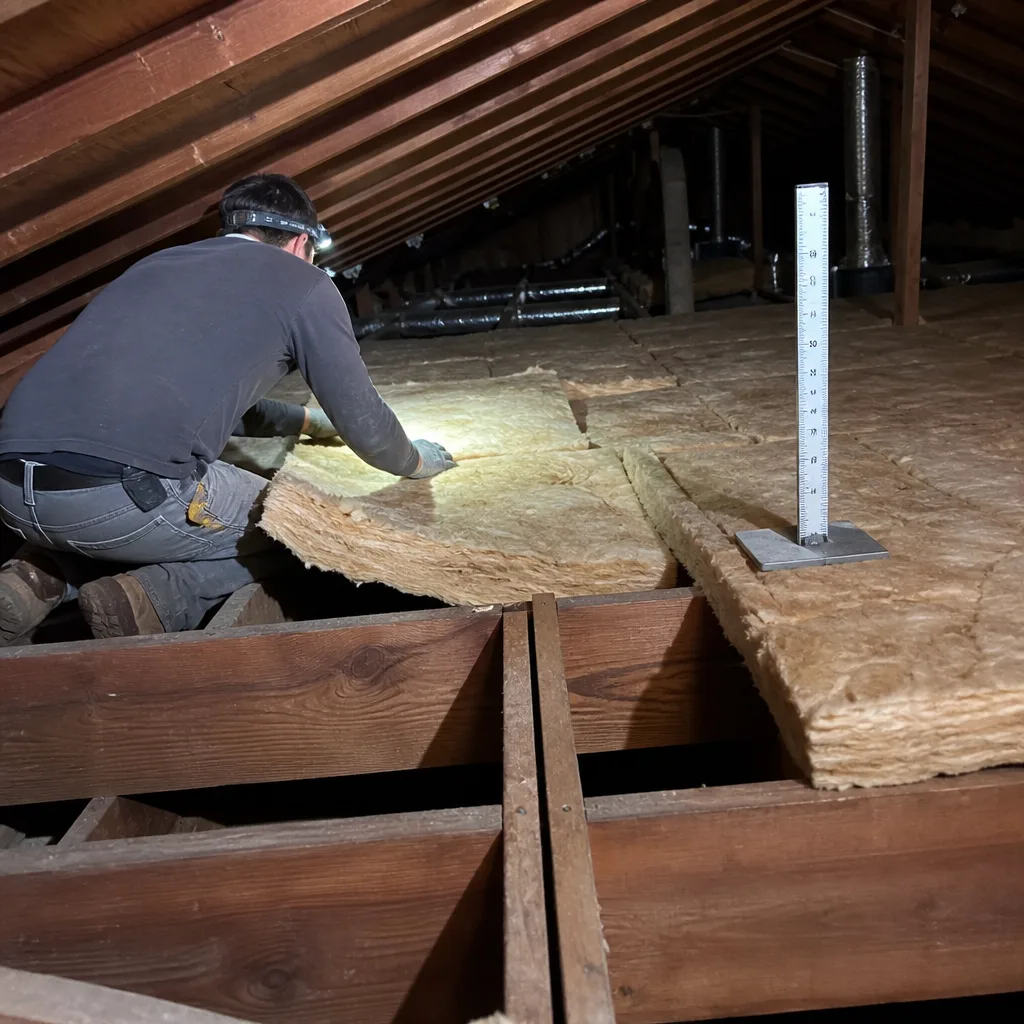
An owner can safely check three things: confirm the barrier is torn or separated from walls, measure the crawl space square footage, and photograph any wet insulation or framing for documentation. Do not enter the crawl space if you smell gas, see active mold blooms covering more than a few square feet, or find standing water with no obvious source. These conditions require professional assessment first.
Where DIY goes wrong: vapor barrier installation looks like laying down a tarp, but performance lives in the details. Seams must overlap 12 inches and be taped with pressure-sensitive tape rated for polyethylene, not duct tape, which degrades in months. The barrier must extend up foundation walls and be mechanically fastened or sealed to prevent the “bathtub effect” where water runs underneath at the perimeter. And in Palo Alto’s older homes, particularly the ranch-style stock near Charleston Meadows, floor systems often have unsealed plumbing and electrical penetrations that bypass the barrier entirely. We air-seal those before the barrier goes down. Seal the leaks first. The insulation has nowhere to work if the air is moving around it.
Call (650) 352-3577 for a free estimate. We will bring a sample of each JM grade so you can feel the difference between 6-mil and reinforced 10-mil before deciding.
FAQs
A properly installed JM 10-mil reinforced barrier typically lasts 15-20 years in Palo Alto, while 6-mil basic grade shows seam failure or rodent damage in 7-12 years. The marine-influenced humidity and clay-heavy soils in parts of Old Palo Alto accelerate degradation if wall sealing was skipped during original installation. Call (650) 352-3577 for an exact quote on replacement - estimates are free.
Patching works for isolated punctures smaller than a dinner plate using JM-compatible polyethylene tape, but widespread tearing, seam separation, or material that has become brittle and translucent means full replacement. We have never seen a patch job outlast three years in a trafficked crawl space. Call (650) 352-3577 for an exact quote - estimates are free.
How long does the installation take?
Most residential crawl spaces in Palo Alto take one day for removal and replacement, or two days if we are also air-sealing the floor system and replacing wet insulation above. We deliver a Documented Photo Record the same evening the crew leaves. Call (650) 352-3577 to schedule - we stock JM materials on our trucks.
Yes. We carry JM 6-mil clear, 10-mil reinforced scrim, and cross-laminated heavy-duty rolls in 12-foot and 16-foot widths, plus JM-compatible seam tape and butyl wall sealant. For same-day starts, we need to confirm your crawl space dimensions by phone or photo. Call (650) 352-3577 - a live person answers 24/7.
Written by Wes Okafor, Owner, Topside Attic Insulation Palo Alto at Topside Attic Insulation Palo Alto, serving Palo Alto and nearby areas.