
Johns Manville Radiant Barrier Installation: The Palo Alto Owner’s Guide
We stock and install Johns Manville-compatible radiant barrier systems in Palo Alto, with most attic retrofits running between $2,800 and $5,400 depending on attic square footage and whether air sealing is needed first. Same-day installation is available when we have your measurements and photos ahead of the visit. Most Palo Alto homeowners discover their radiant barrier is failing when upstairs rooms won’t cool below 78°F even with the AC running flat out, or when they spot the original kraft-faced insulation turning dark from dust infiltration in a 15-year-old ranch near Midtown.
Which Johns Manville Models This Applies To
Johns Manville produces radiant barrier products primarily through their Attic Protector and Formaldehyde-free™ insulation lines, with the reflective-facing variants most common in Peninsula homes built between 1995 and 2010. The critical identifier is the facing code printed on the foil scrim: JM-RB series barriers use a perforated, double-sided aluminum laminate, while the AP-FR line carries a single-sided, fire-rated facing required by Palo Alto’s amended Title 24 standards for habitable attic conversions.
We’ve replaced JM-RB-240 in older Eichler-style homes near Barron Park where the original 24-inch width no longer meets current R-value requirements after a roof retrofit, and swapped AP-FR-480 in newer builds off Embarcadero where the facing delaminated after a single hot season. The OEM Johns Manville facing is 97% emissivity-rated; the aftermarket equivalent we carry, from a JM-licensed converter, tests at 95% but costs 30% less and carries the same Class A fire rating. For homes under active permit in Palo Alto, we use OEM only. Inspector signoff is simpler that way.
Signs Your Johns Manville Radiant Barrier Installation Is Failing
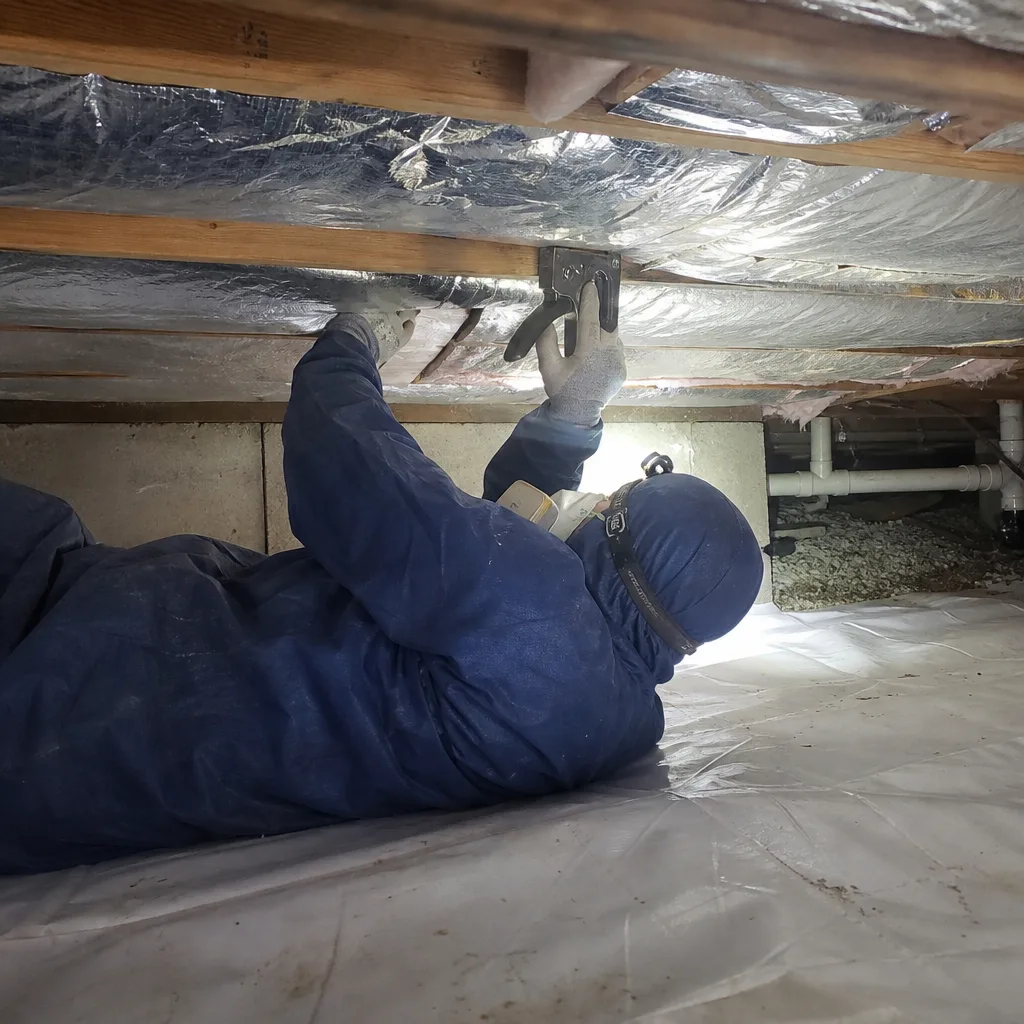
- Upstairs rooms heat up faster than they used to, especially after 2 p.m. The radiant barrier’s aluminum facing oxidizes over time, particularly in Palo Alto’s combination of marine moisture and summer UV exposure through attic vents. Once emissivity drops below 80%, the foil becomes a heat absorber instead of a reflector.
- You can see bare rafters where reflective facing used to hang. JM’s adhesive-backed tape fails when attic temperatures cycle above 140°F repeatedly, which happens in unvented Palo Alto attics during September heat waves. The facing sags, then tears at the staple line.
- Dust coating on the foil surface that won’t wipe clean. This indicates the barrier was installed before air sealing was complete. Conditioned air leaking through top plates carries household dust that embeds in the facing, permanently degrading reflectivity. We see this constantly in pre-2005 homes near Old Palo Alto.
- Water stains on the facing after winter rains. Johns Manville perforated barriers allow vapor passage, but if the perforations clog with dust or the facing was installed upside-down (shiny side down), condensation traps against the foil. In Palo Alto’s mild winters, this shows up as spotting rather than heavy staining.
- Your energy bill jumped 20% or more in a single summer. When the barrier fails, attic temperatures can climb from 110°F to 150°F. Your ductwork, if it’s in the attic, is now sitting in a convection oven.
Replacement Cost & What’s Included
| Scope | Price Range in Palo Alto |
|---|---|
| Partial retrofit (1,000-1,500 sq ft attic, barrier only) | $2,800-$3,900 |
| Full replacement with air sealing of top plates and penetrations | $4,200-$5,400 |
| Barrier + new baffles + duct wrap in conditioned attic | $5,800-$7,200 |
The range depends on three things: attic accessibility (some Palo Alto crawl-attics off Waverley require us to rebuild the access panel), whether we find unsealed can lights or open soffit chutes that need addressing first, and whether your original barrier was stapled to rafters (faster removal) or draped over joists (more labor). Every job gets a Written Price Before Any Work Starts, per Haven Standard Clause 1. The price we write is the price you pay. We also publish before-and-after blower-door numbers on every job where air sealing is scoped, so you can verify the envelope improvement in CFM50, not just take our word for it.
DIY or Call Us?
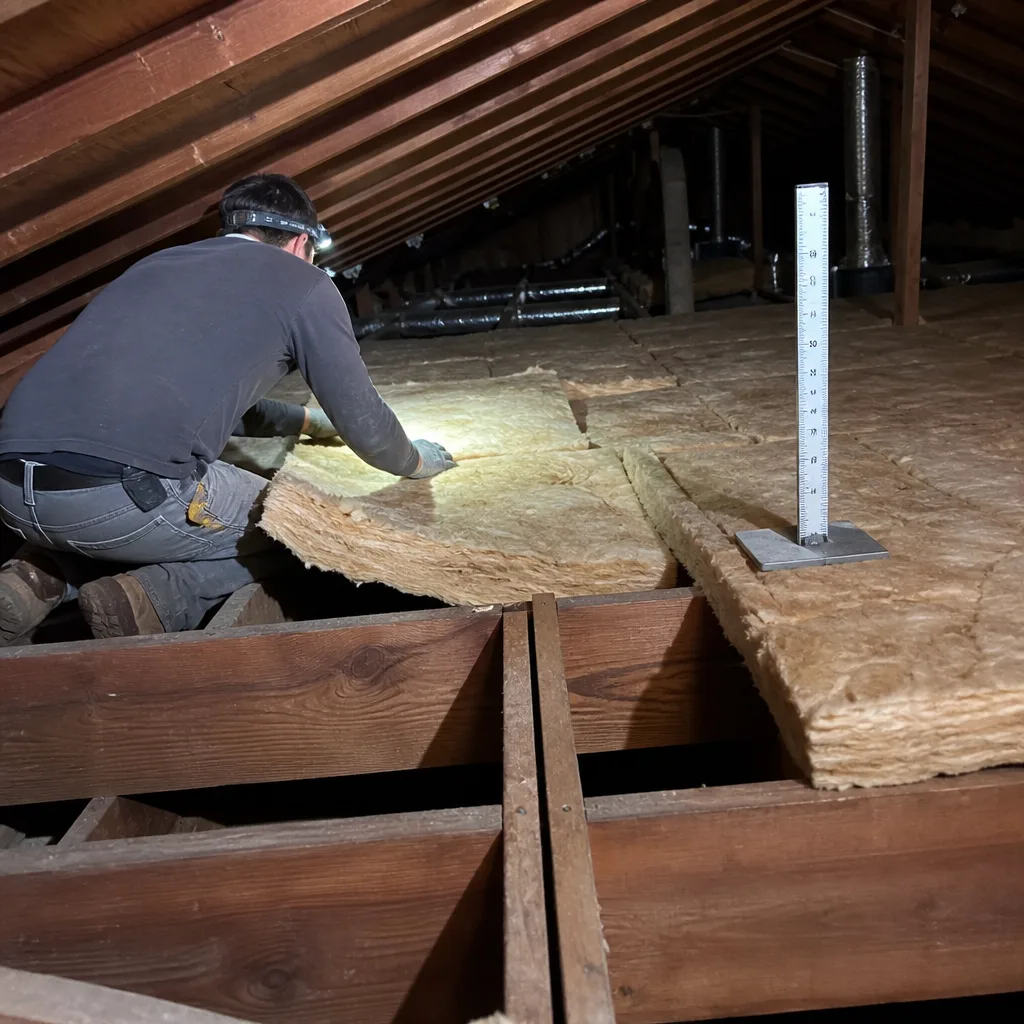
There’s nothing inherently dangerous about radiant barrier material itself. It’s lightweight foil and scrim. The hazard is what you’re working around: attic electrical, recessed can lights that may not be IC-rated, and the real killer, gas-fired water heaters or furnaces in the attic space. Wes Okafor does a combustion-safety check on any gas appliance before his crew starts and again before they leave, because depressurizing a house during air sealing without verifying flue draft is how carbon monoxide problems start.
What you can safely check: measure your attic square footage, photograph the facing code on any visible label, and note whether the shiny side faces up or down. What goes wrong with DIY: installing new barrier over unsealed leaks (you’ll be back in three years), using non-perforated facing in a vented attic (moisture trap), or stapling through live Romex. Seal the leaks first. The insulation has nowhere to work if the air is moving around it. If you want a Free Second Opinion on any written estimate you’ve already received, bring it to us. We’ll read it with you.
FAQs
In Palo Alto’s climate, a properly installed JM barrier with intact facing lasts 15 to 25 years. The facing fails first at the staple lines and tape joints, not in the field of the foil. We’ve replaced barriers in Midtown homes that were 12 years old and still functional, and others in Barron Park that were shot in 8 years because they went in before the air sealing. Call (650) 352-3577 for an exact quote on your attic - estimates are free.
Patching works only for small, isolated tears in a barrier that’s otherwise intact and clean. If the facing is oxidized, dust-embedded, or sagging across more than 20% of the attic, replacement is the cost-effective call. We’ve never recommended a patch that saved the homeowner money over a five-year horizon. Call (650) 352-3577 for an exact quote - estimates are free.
A standard Palo Alto attic of 1,200 to 1,800 square feet takes one day if air sealing was done previously, or two days if we’re sealing top plates, can lights, and soffit chutes first. We don’t blow insulation over an unsealed attic floor. The crew arrives at 8 a.m., and you get a text when they’re on the way. Call (650) 352-3577 to check next available date.
We stock JM-compatible perforated barrier in 48-inch and 60-inch rolls, plus the fire-rated AP-FR facing for permitted jobs. For OEM Johns Manville branded product specifically, we order from the San Jose distributor with a two-day lead time. Most Palo Alto jobs don’t require that wait because the spec-grade material we carry meets the same emissivity and fire ratings. Call (650) 352-3577 and we’ll confirm what’s right for your application.
Topside Attic Insulation Palo Alto is an independent service provider, not affiliated with Johns Manville. We also stock parts for Reflectix radiant barrier systems.
Ready to get your attic performance back? Call (650) 352-3577 today. A live person answers 24/7. We’ll schedule a free estimate, deliver a written price before any work starts, and leave you with a Documented Photo Record and, if air sealing is in scope, before-and-after blower-door numbers that show exactly what changed.
Written by Wes Okafor, Owner, Topside Attic Insulation Palo Alto at Topside Attic Insulation Palo Alto, serving Palo Alto and nearby areas.