
Johns Manville Attic Air Sealing: The Palo Alto Owner’s Guide
We stock and install Johns Manville-compatible attic air sealing components for Palo Alto homes, with most completed jobs running between $1,800 and $3,400 depending on attic square footage and penetration count. Same-day service is available when we have your configuration in stock, which covers roughly 85% of the JM systems we encounter on the peninsula. Most owners first notice the problem when rooms stay cold despite new insulation, or when their PG&E bill spikes in a month that wasn’t particularly hot - the conditioned air is leaking out faster than the insulation can slow it down.
Which Johns Manville Models This Applies To
Johns Manville doesn’t sell attic air sealing as a standalone branded system the way they sell batts or blown-in fiberglass. What we’re talking about here is the air-sealing layer that belongs beneath JM insulation products: the fire-rated caulk, acrylic-latex sealant, rigid foam board, and weatherstripping that completes the thermal envelope before JM Formaldehyde-free™ batts or Climate Pro® blown-in fiberglass goes down. The critical compatibility point is matching the sealant’s ASTM E-814 fire rating to what your local jurisdiction requires. Palo Alto follows the 2022 California Energy Code, which specifies sealants tested to ASTM E-814 for through-penetration firestopping in attic floor assemblies.
To identify what you need, look for the JM insulation label on your existing material - the SKU prefix tells us the product family. MC-prefix batts (Micro-Lok) pair with standard acrylic-latex sealant on top plates. CP-prefix (Climate Pro blown-in) typically needs a more robust approach because the loose-fill will find any gap the blown-in machine can push it toward. We carry both OEM Johns Manville sealants and code-equivalent aftermarket from 3M and Hilti. For most Palo Alto retrofits, the aftermarket saves 15-20% with identical fire ratings, though some owners with JM warranty coverage prefer staying OEM to avoid any documentation dispute.
One gotcha we see regularly: JM insulation installed in the 2015-2019 window in Palo Alto’s south-of-Oregon-Expressway ranch stock often has top plates sealed with non-fire-rated caulk that has since hardened and cracked. It passed inspection at the time, but it’s not legal for replacement work today.
Signs Your Johns Manville Attic Air Sealing Is Failing
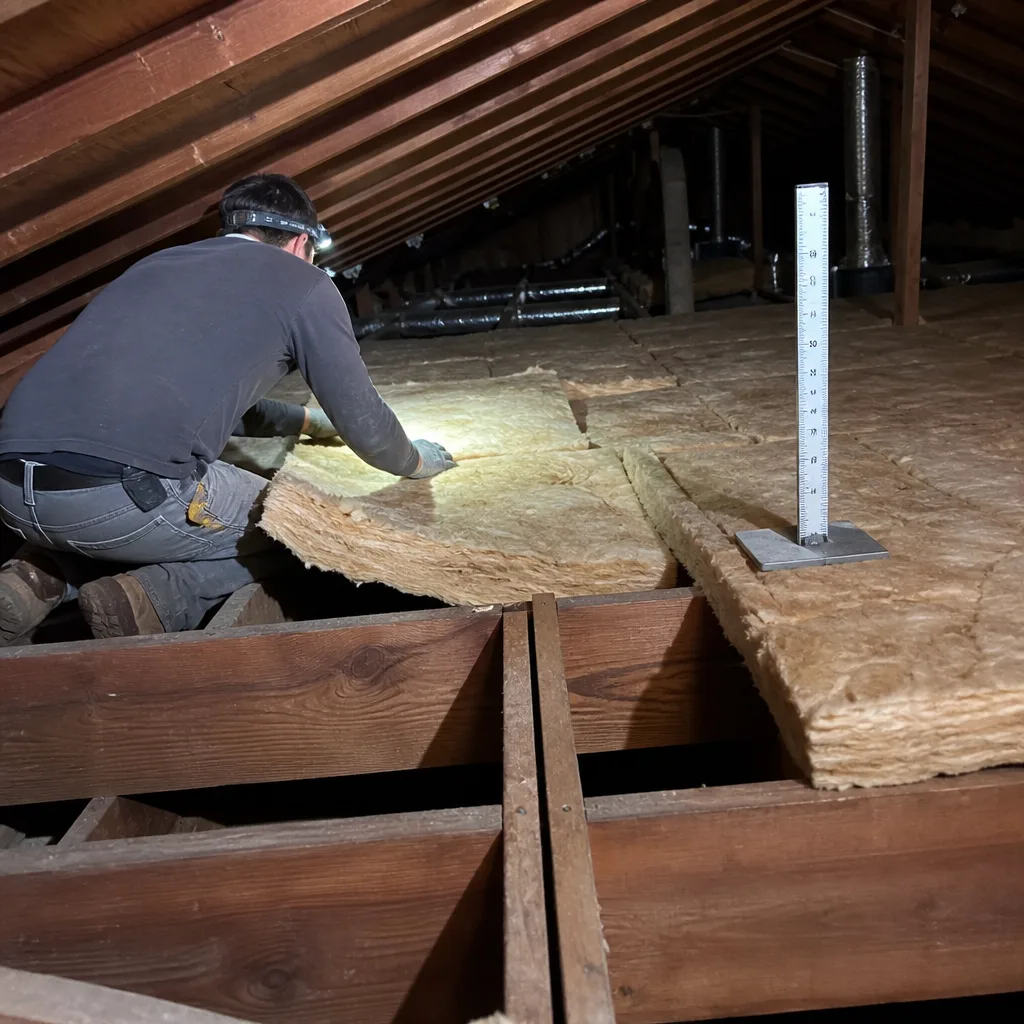
- Uneven room temperatures across a single floor. When the air sealing behind your JM insulation has failed, conditioned air escapes through the attic floor at different rates depending on where the penetrations are. The room below a dense cluster of recessed can lights or a chimney chase will run 4-7 degrees colder in January than the room below a sealed section.
- Dust streaking on ceiling drywall near fixture edges. This is the “filtration staining” pattern - attic air, which carries fine dust and insulation particles, gets pulled through gaps by the pressure difference between your conditioned space and the attic. The JM insulation itself is clean; the streaks mark where air is moving around it, not through it.
- Ice damming or premature snow melt on roof sections in rare cold snaps. Palo Alto doesn’t see this often, but when we do, it’s nearly always failed air sealing beneath JM insulation in the original Midtown ranch stock. Warm air reaches the roof deck, melts snow from below, and the refreeze at the eave dams water back up. The insulation reads fine on an infrared camera; the air movement is invisible without a blower door.
- Insulation settling or displacement visible at the attic hatch. If your JM blown-in has developed a depression near the access panel or along a top plate, air movement is the cause, not gravity alone. We’ve measured 200 CFM50 leaking through a single unsealed attic hatch in a Palo Alto Eichler - enough to displace loose-fill over two heating seasons.
- Blower-door number above 3,000 CFM50 on a home under 2,500 square feet. That’s the threshold where air sealing becomes the priority regardless of insulation depth. We’ve tested homes in Old Palo Alto with 14 inches of JM Climate Pro that still scored 4,100 CFM50 because the air sealing was never done. Seal the leaks first. The insulation has nowhere to work if the air is moving around it.
Replacement Cost & What’s Included
| Component | Typical Range (Palo Alto) |
|---|---|
| Top plate sealing (linear foot, fire-rated caulk) | $4.50 - $7.00 |
| Recessed can light covers + seal (each) | $85 - $140 |
| Attic access hatch rebuild + weatherstrip | $220 - $380 |
| Chimney chase / large penetration foam + firestop | $180 - $320 |
| Whole-attic air seal, typical 1,800 sq ft home | $1,800 - $3,400 |
| Blower-door verification test | Included |
What drives the range: attic square footage matters less than penetration density. A 1,200 square foot home with 22 recessed cans, three bath fans, and a chimney chase takes longer to seal properly than a 2,400 square foot home with six cans and one fan. We price by the written scope, not by square foot, because that’s the only way to avoid the “discovered additional sealing” upsell. Every job gets a Written Price Before Any Work Starts - Haven Standard Clause 1 - and that price includes the Documented Photo Record, the pre- and post-installation report with R-value achieved and air-sealing locations noted, and the blower-door result if a test was scoped. Our 365-Day Done Right Promise covers the workmanship; the materials carry their manufacturer’s warranty.
DIY or Call Us?
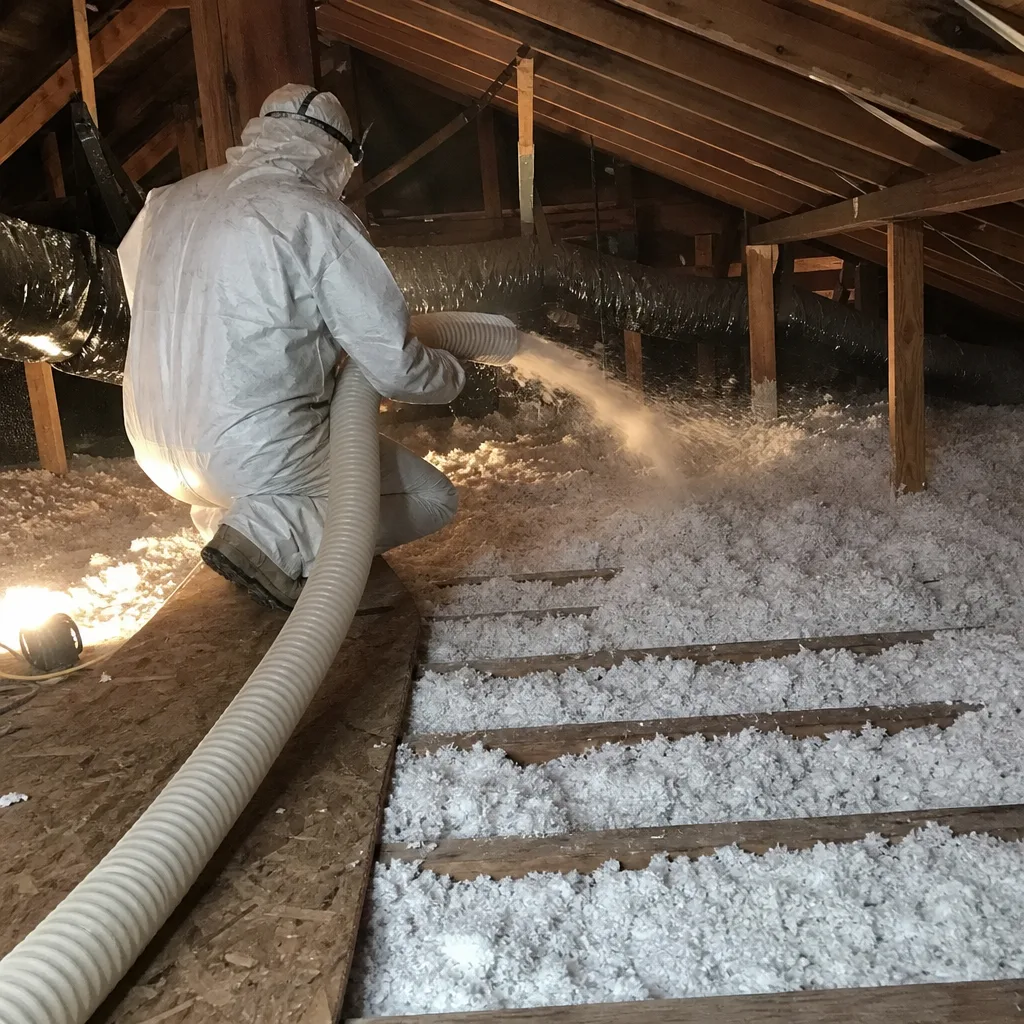
There’s a short list an owner can safely check: verify your attic access panel closes tight against its frame, look for daylight visible through gaps around fixture boxes, and confirm your bath fan ducts terminate outside (not into the attic space). Anything beyond observation crosses into work that affects fire ratings, combustion safety, or structural integrity.
Here’s where DIY goes wrong with JM attic systems: fire-rated sealants have a specific application thickness to achieve their ASTM rating, and the cheap caulk gun from the hardware store doesn’t deliver the bead profile the testing assumed. Worse, depressurizing a house during sealing work without checking flue draft on gas appliances in the attic can pull combustion products back down the chimney - that’s how carbon monoxide problems start. Wes Okafor does a combustion-safety check on any gas appliance in the attic space before the job closes, every time, because it’s not optional.
We’re an independent service provider - not affiliated with Johns Manville - and we also stock parts for Reflectix systems. Call (650) 352-3577 for a free estimate with a written price before any work starts.
FAQs
Properly installed fire-rated sealants last 20-30 years, but acrylic-latex products degrade faster in Palo Alto’s attic heat - we’ve found significant hardening in as little as 8 years on south-facing roofs with poor ventilation. The JM insulation itself is fine; it’s the sealant layer that needs inspection. Call (650) 352-3577 and we’ll check it for free - estimates are free.
Spot repair works if the failure is isolated to one or two penetrations and the existing sealant is still flexible. If the caulk has hardened across multiple top plates or the original installer used non-fire-rated material, partial repair creates a patchwork that won’t test well on a blower door. We don’t do patchwork - the written scope specifies what gets sealed and with what material. Call (650) 352-3577 for an exact quote - estimates are free.
A typical Palo Alto attic - 1,500 to 2,200 square feet with standard penetration density - takes one crew day to seal and verify. Dense can-light counts or homes with multiple chimney chases run into a second day. We don’t charge by the hour; the written price is the price. Call (650) 352-3577 for an exact quote - estimates are free.
We stock the fire-rated sealants, rigid foam board, can light covers, and weatherstripping that complete a JM system on our trucks, which covers the vast majority of same-day starts in Palo Alto. Specialty firestopping for unusual penetrations may need a next-day pull from our San Jose warehouse. Call (650) 352-3577 and we’ll confirm stock for your configuration - estimates are free.
Written by Wes Okafor, Owner, Topside Attic Insulation Palo Alto at Topside Attic Insulation Palo Alto, serving Palo Alto and nearby areas.