
Icynene Attic Air Sealing: The Palo Alto Owner’s Guide
Icynene attic air sealing in Palo Alto typically runs $2,800-$5,400 for a complete top-floor envelope seal on a single-family home, and most jobs we scope can start within 48 hours. We stock Icynene-compatible open-cell foam, backer rod, and acrylic sealant compounds on every truck, so we’re not waiting on a distributor run when your attic is leaking conditioned air into the roof deck. Most Palo Alto owners figure out something’s wrong when their upstairs rooms won’t hold temperature even after the HVAC runs, or when they spot dusty insulation stripes around can-light housings - telltale signs that air is moving through the attic floor faster than the insulation can slow it.
Which Icynene Models This Applies To
Icynene’s product line splits into two families that matter for attic work: the open-cell LD-C-50 series (the soft, breathable foam most common in California attics) and the closed-cell H2Foam Lite series used where vapor drive is severe. The LD-C-50 is what we encounter in roughly 85% of Palo Alto jobs, from the ranch homes off Middlefield Road to the newer builds near the Stanford campus where builders spec’d it for sound dampening between floors.
To identify what you’ve got, check the application label on any exposed foam surface - Icynene stamps the series code and install date in ink that fades to purple after about five years. If the foam is soft enough to dent with a fingernail and rebounds slowly, it’s open-cell LD-C-50. Hard, glossy foam that won’t compress is closed-cell. The critical compatibility gotcha: closed-cell H2Foam Lite requires a different primer and cannot be patched with open-cell material without delamination at the joint. We’ve rebuilt entire seal jobs in Old Palo Alto where a handyman tried bridging the two types with generic caulk and the seam opened within two seasons.
We source OEM Icynene material through authorized distribution, but for small repairs and penetration seals we also carry Demilec-equivalent open-cell foam that meets the same ASTM E84 and ICC-ESR ratings at a lower per-board-foot cost. The decision point is size: anything under 10 square feet of failed seal, we typically quote with aftermarket equivalent; anything larger, the thermal expansion coefficients match better if we stay within the Icynene family. We do not stock Reflectix parts for Icynene systems - that’s a radiant barrier product line with different adhesion chemistry - but we can source it if your attic has a hybrid system.
Topside Attic Insulation Palo Alto is an independent service provider, not affiliated with Icynene or Demilec.
Signs Your Icynene Attic Air Sealing Is Failing
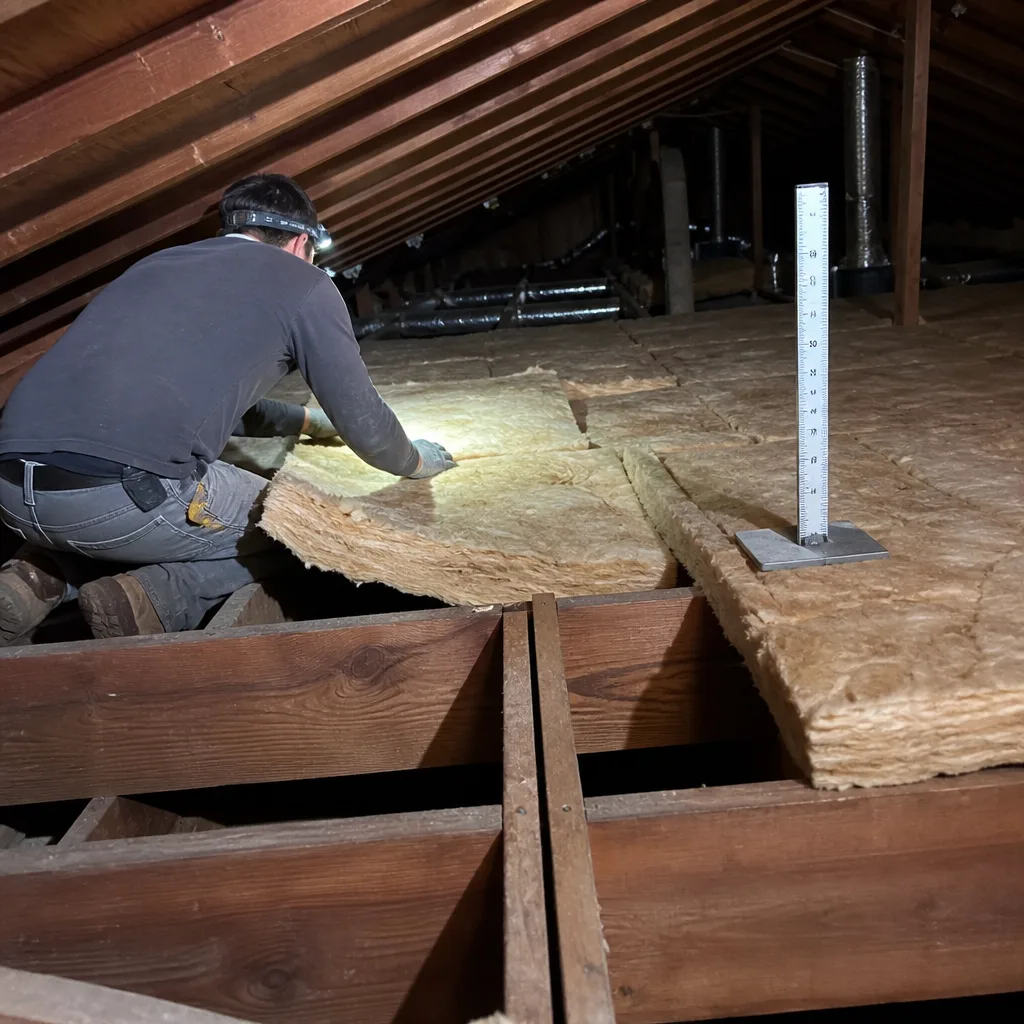
- Hot or cold ceiling patches directly below the attic. Air bypassing the Icynene seal at top plates or electrical penetrations creates thermal bridging you can feel with your hand. The foam itself hasn’t vanished; it’s the seam against the framing member that has cracked from seasonal expansion.
- Dust streaking on insulation batts or blown-in material. Where air moves, it carries drywall dust and outdoor particulate that deposits in clean lines. In Palo Alto’s dry summers, these streaks darken within a single season and are often the first visible clue.
- Can lights that drip condensation in winter. Unsealed IC-rated housings leak warm, moist interior air into the cold attic. The Icynene seal was supposed to stop this at the housing perimeter, but the acrylic sealant bead has pulled away from the metal flange.
- Ice damming or premature shingle wear at the eaves. Even in mild Palo Alto winters, stack effect pulls heated air through gaps in the attic floor. Warm roof decks melt overnight frost, which refreezes at the cold overhang. The insulation is doing its job; the air sealing underneath it has failed.
- Energy bills that climb without rate changes. A blower-door test we ran last month on a 2019 build near Midtown read 3,400 CFM50 - nearly double what the same floor plan tested at rough-in. The Icynene was intact but the builder had missed two plumbing chase seals that opened under vibration.
Replacement Cost & What’s Included
| Scope | Typical Range in Palo Alto | What Drives It |
|---|---|---|
| Spot repair (1-3 penetrations or seams) | $650-$1,400 | Access difficulty, whether we need to move existing insulation |
| Partial attic floor reseal | $1,800-$3,200 | Linear feet of top plate, number of can lights, chase complexity |
| Complete attic envelope seal | $2,800-$5,400 | Attic square footage, roof pitch (steep = slower work), pre-existing foam removal |
| Add blower-door verification | $350-$500 | Included in most full-seal scopes; optional for spot repairs |
The range exists because no two Palo Alto attics share the same leak pattern. A 1950s ranch with a low-pitch roof and original knob-and-tube penetrations takes longer to seal properly than a 2020 build with straight runs and modern electrical. Our written price, delivered before any work starts under Haven Standard Clause 1, breaks out material, labor, and any pre-sealing prep - removing degraded foam, installing proper backer rod in gaps wider than 3/8 inch, and verifying with a smoke pencil that each penetration is dead still before we close up. Every job ends with a Documented Photo Record and, for full seals, before-and-after blower-door numbers so you can verify the CFM50 drop yourself.
DIY or Call Us?
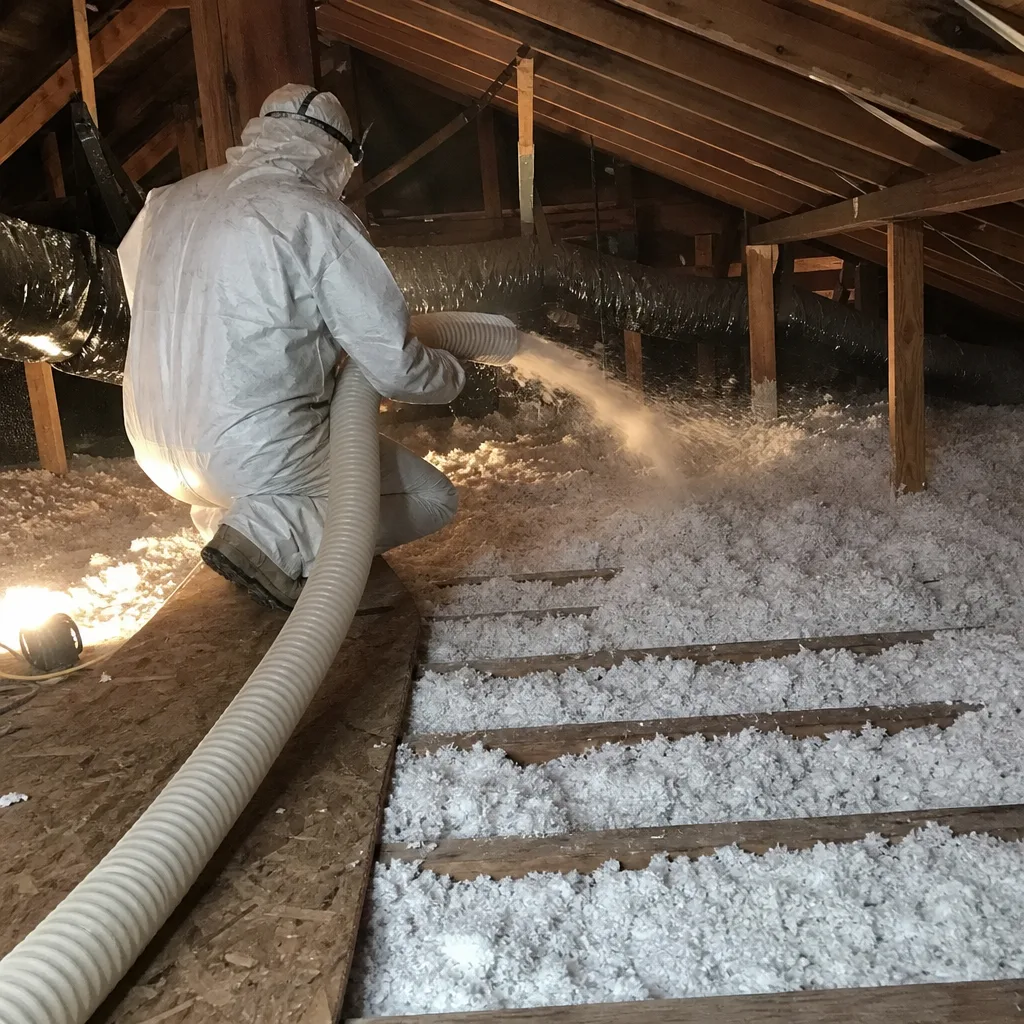
There’s a short list an owner can safely check: verify that attic access panels close fully against their weatherstrip, confirm bath fan ducts haven’t disconnected at the roof jack, and look for obvious gaps around chimney chases or plumbing vents. What you find, photograph - it helps us scope the job if you decide to call.
Where DIY goes wrong is the actual foam application. Icynene open-cell requires specific substrate temperature (minimum 40°F for the LD-C-50 we see in Palo Alto attics) and precise mix ratios that two-component kits rarely hit. More critically, attic air sealing changes the pressure balance of your entire house. Depressurize a home with a gas water heater in the garage or a furnace in the attic, and you can backdraft combustion appliances - that’s how carbon monoxide problems start. Wes Okafor does a combustion-safety check on any gas appliance in the attic space before the job closes, because the seal is only “done” when the house is still breathing safely.
Seal the leaks first. The insulation has nowhere to work if the air is moving around it. Call (650) 352-3577 and we’ll read your situation with you - estimates are free, and we publish the blower-door result so you know what you paid for.
FAQs
Open-cell Icynene foam itself is rated for the life of the building, but the seal against wood framing typically shows first failure at 8-14 years in our dry-summer climate. Thermal cycling between 55°F winter attic nights and 140°F summer roof deck peaks causes the acrylic sealant bead at the foam-to-wood interface to check and pull back. We warranty our seam work for 5 years, and the 365-Day Done Right Promise covers any callback within the first year. Call (650) 352-3577 for an exact quote on your attic - estimates are free.
Localized failure can be repaired if the surrounding foam is still well-adhered and the substrate is dry. We cut back to sound material, install backer rod in gaps over 1/4 inch, and bridge with matching foam or compatible sealant. Widespread degradation - common in attics where roof leaks have saturated the foam - requires full removal and reapplication. We scope this with moisture meters and photo documentation before quoting. Call (650) 352-3577 for a free second opinion on any written estimate you’ve already received.
A typical single-family attic in Palo Alto runs one to two days: half a day for prep, masking, and pre-seal blower-door testing; a full day for foam application and cure; and a final half-day for inspection, touch-up, and post-seal verification. We never rush the cure - walking on uncured LD-C-50 destroys the cell structure and the R-value with it. Your written scope includes the day-by-day schedule before anyone lifts a tool.
We carry Icynene-compatible open-cell foam, closed-cell H2Foam Lite, acrylic sealants, backer rod in four diameters, and intumescent fire caulk for penetration assemblies on every truck. For full-foam jobs requiring more than 200 board feet, we pull from San Jose distribution with 24-hour lead time. Most spot repairs and standard attic seals in Palo Alto start within 48 hours of your call. Call (650) 352-3577 to check current truck stock against your specific model.
Written by Wes Okafor, Owner, Topside Attic Insulation Palo Alto at Topside Attic Insulation Palo Alto, serving Palo Alto and nearby areas.