
GreenFiber Radiant Barrier Installation: The Palo Alto Owner’s Guide
GreenFiber radiant barrier installation in Palo Alto typically runs $2,800-$4,600 for a 1,200-2,000 square foot attic, including air sealing, material, and labor, with most jobs completed in a single day. We stock GreenFiber-compatible radiant barrier rolls and fastening systems on our trucks and can usually schedule within 48 hours. Most Palo Alto homeowners discover their existing radiant barrier is failing when summer cooling bills spike 20-40% above prior years, or when they notice hot spots in second-floor rooms that weren’t there before - especially in older ranch homes near Midtown where the original barrier was stapled directly to rafters without proper air gaps.
Which GreenFiber Models This Applies To
GreenFiber produces loose-fill cellulose insulation rather than a standalone radiant barrier product line, so “GreenFiber radiant barrier installation” refers to the integrated system: their cellulose blown over or adjacent to a radiant barrier substrate, typically in attics where both thermal resistance and radiant heat rejection are targeted. The compatibility question is whether your existing barrier is the original foil-faced kraft paper common in 1980s-2000s Palo Alto builds, or the newer perforated radiant barrier foil designed to work with cellulose without trapping moisture.
Check your attic for labels: GreenFiber cellulose bags will show a lot number and R-value stamp (typically R-30 to R-60 for attic applications). The radiant barrier itself, if original to the home, may be unlabeled - look for a shiny, reflective surface on one side of the substrate. We carry both the OEM-compatible perforated foil (allows moisture passage, required when blowing cellulose directly against it) and the non-perforated version for cathedral ceiling applications where a proper air gap is maintained. The wrong pairing - non-perforated foil with dense cellulose contact - creates a vapor trap that rots sheathing in Palo Alto’s marine-influenced climate, where winter humidity swings are sharper than inland Bay Area cities.
Topside Attic Insulation Palo Alto is an independent service provider, not affiliated with GreenFiber. We also stock Reflectix radiant barrier products for homeowners who prefer a rolled reflective insulation alternative.
Signs Your GreenFiber Radiant Barrier Installation Is Failing
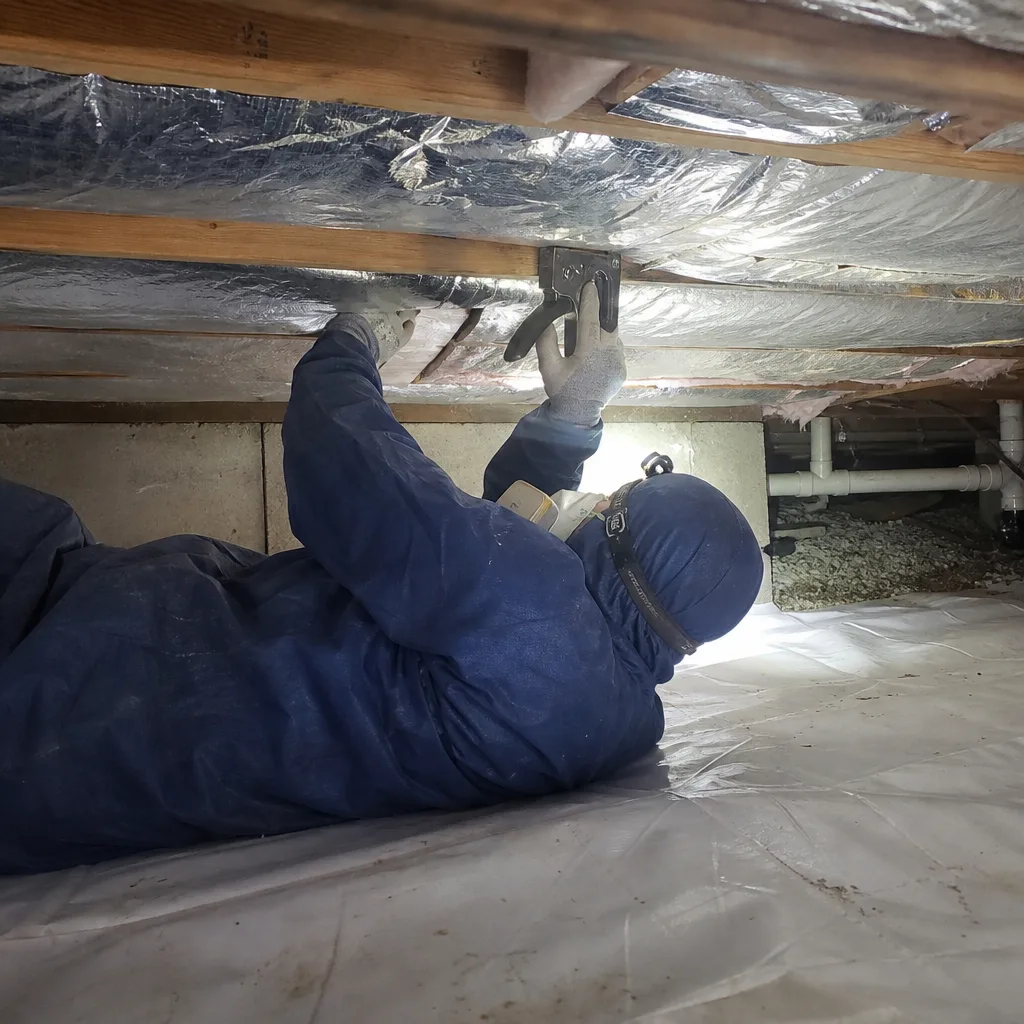
- Hot second-floor ceilings in July and August. The radiant barrier’s reflective surface oxidizes over time, especially in attics with poor ventilation. Palo Alto’s combination of strong summer sun and coastal fog cycles creates thermal shock that degrades the aluminum coating faster than drier inland climates. When reflectivity drops below 50%, radiant heat transfer into living spaces increases measurably.
- Cellulose settling or compaction in odd patterns. If your GreenFiber cellulose has developed valleys or bare spots, the radiant barrier substrate may have detached from rafters, creating gaps where insulation falls through. This is common in homes near Old Palo Alto where original fasteners were roofing nails rather than the specialized barrier staples used today.
- Water staining on ceiling drywall below the attic. A failed or improperly installed barrier can trap moisture against the roof deck. In Palo Alto, where winter rains arrive after dry summers, this seasonal wet-dry cycling accelerates mold growth on the barrier’s paper backing.
- Dust accumulation on the reflective surface. Even a thin layer of attic dust reduces radiant barrier effectiveness by 30-50%. Homes near Page Mill Road or the Foothills Expressway corridor see faster dust loading due to proximity to construction and open space wind patterns.
- Visible tears, gaps, or sagging greater than 2 inches between fasteners. The mechanical failure point for most radiant barriers in Palo Alto attics is fastener pull-through, caused by thermal expansion cycling. Once sagging exceeds 2 inches, the required air gap is compromised and convective heat transfer takes over.
Replacement Cost & What’s Included
| Component | Price Range (Palo Alto) |
|---|---|
| Radiant barrier material (perforated foil, 500-1,000 sq ft) | $680-$1,200 |
| Air sealing (top plates, penetrations, can lights) | $890-$1,400 |
| Cellulose touch-up or replacement (if compromised) | $740-$1,250 |
| Labor and installation | $490-$750 |
| Typical total installed | $2,800-$4,600 |
What drives the range: attic accessibility (hatch size, whether we need to rebuild the access panel), existing insulation condition, and whether combustion safety testing is required for gas appliances in the space. Every job starts with a written price - no work begins without it - and closes with a Documented Photo Record showing before-and-after conditions. On jobs where air sealing is scoped, we provide blower-door readings so you can verify the envelope improvement in CFM50, the pressurization number that tells you exactly how much less air your home is losing. The 365-Day Done Right Promise applies to all completed work.
DIY or Call Us?
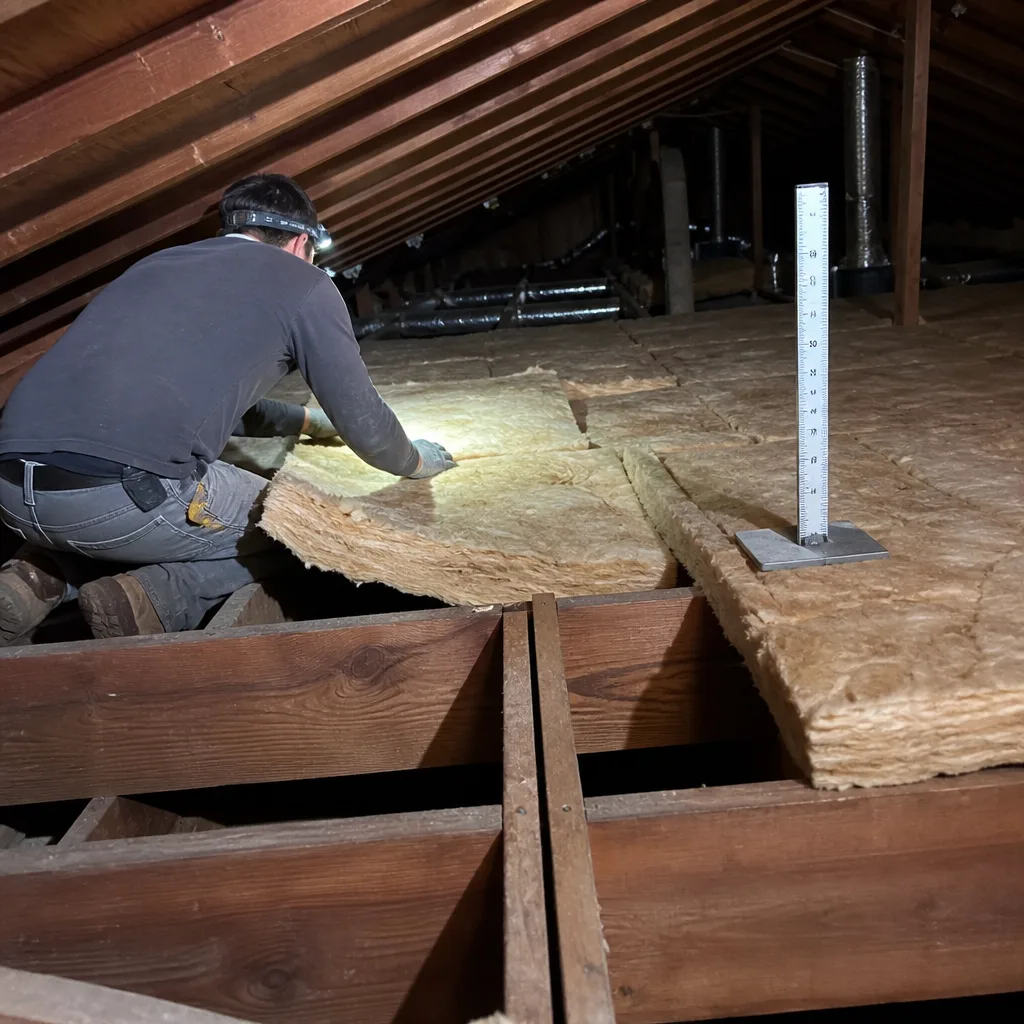
There’s one thing a homeowner can safely check: whether the radiant barrier’s reflective surface is still shiny or has dulled to matte gray. A flashlight and a camera phone are enough. But installation or replacement is not a practical DIY project in most Palo Alto attics. The work involves working on steep-pitch rafters, handling perforated foil without creasing (which creates permanent performance loss), and - critically - ensuring the air sealing is done before any new barrier goes up. Seal the leaks first. The insulation has nowhere to work if the air is moving around it.
The bigger risk is combustion safety. Any attic with a gas furnace or water heater requires a depressurization test after air sealing is complete. Depressurizing a house without verifying flue draft first is how carbon monoxide problems start. Wes Okafor does a combustion-safety check on every gas appliance in the attic space before the job closes. For that reason alone, most Palo Alto homeowners call us at (650) 352-3577 rather than attempting this themselves.
FAQs
A properly installed perforated radiant barrier in a ventilated Palo Alto attic lasts 15-25 years, though dust accumulation typically reduces effectiveness after 10-12 years regardless of material condition. Call (650) 352-3577 for an attic inspection - estimates are free.
Small tears or detached sections can be re-fastened if the reflective surface is still intact, but oxidation damage or widespread sagging requires full replacement to restore performance. We evaluate this during our initial inspection and document our findings with photos. Call (650) 352-3577 for a written scope.
Most GreenFiber radiant barrier replacements in Palo Alto are completed in 4-6 hours for a standard attic, assuming air sealing is scoped and the access panel doesn’t need rebuilding. Larger homes in the Foothills area or those requiring extensive top-plate sealing may extend to a full day. Call (650) 352-3577 to schedule.
We carry perforated radiant barrier foil, compatible fastening systems, and GreenFiber cellulose on every truck serving Palo Alto, so most jobs don’t require a material order delay. If your attic requires a non-standard width or Reflectix alternative, we can source it within 24 hours. Call (650) 352-3577 to confirm availability for your specific configuration.
Written by Wes Okafor, Owner, Topside Attic Insulation Palo Alto at Topside Attic Insulation Palo Alto, serving Palo Alto and nearby areas.