
Demilec Attic Insulation: The Palo Alto Owner’s Guide
Demilec attic insulation replacement in Palo Alto typically runs $3.80 to $5.40 per square foot installed for open-cell spray foam, and $5.20 to $7.80 for closed-cell, with most single-family attic jobs landing between $4,200 and $8,600 depending on thickness and air-sealing scope. We stock Demilec-compatible formulations on our trucks and can usually start the same day you call. Most Palo Alto owners discover their Demilec insulation has failed when they notice the second floor won’t hold temperature, energy bills spike 30% or more year-over-year, or a home energy audit reveals the foam has pulled away from roof decks - a separation gap that lets conditioned air leak straight through.
Which Demilec Models This Applies To
Demilec’s residential attic line breaks into two families: the Heatlok series (closed-cell, higher R-value per inch, 2.0 lb density) and the Sealection series (open-cell, vapor-permeable, 0.5 lb density). The product label, usually found on a tag stapled to a rafter or on the original invoice, will show either Heatlok HFO Pro, Heatlok XT, Sealection 500, or Agribalance - Demilec’s soy-based open-cell variant that saw heavy use in Palo Alto green builds between 2010 and 2018.
Here’s the compatibility gotcha: Heatlok XT and Heatlok HFO Pro cannot be layered over each other. The blowing agents and surface chemistry differ enough that new foam won’t bond properly to old, which means a partial failure in a Heatlok attic often requires full removal rather than spot repair. Sealection 500, on the other hand, can be patched with matching open-cell if the substrate is clean and the original pass was fully cured - typically 24 hours at 70°F, longer in Palo Alto’s cooler attic winters.
We carry both OEM Demilec formulations and equivalent-density products from Icynene and Johns Manville that match the thermal performance without locking you into a single supplier. For historic homes in Professorville or the Eichlers near Greenmeadow, where roof clearance is tight and every inch of headroom matters, closed-cell Heatlok at 5.5 per inch often makes more sense than open-cell at 3.6 per inch, even at the higher material cost.
Signs Your Demilec Attic Insulation Is Failing
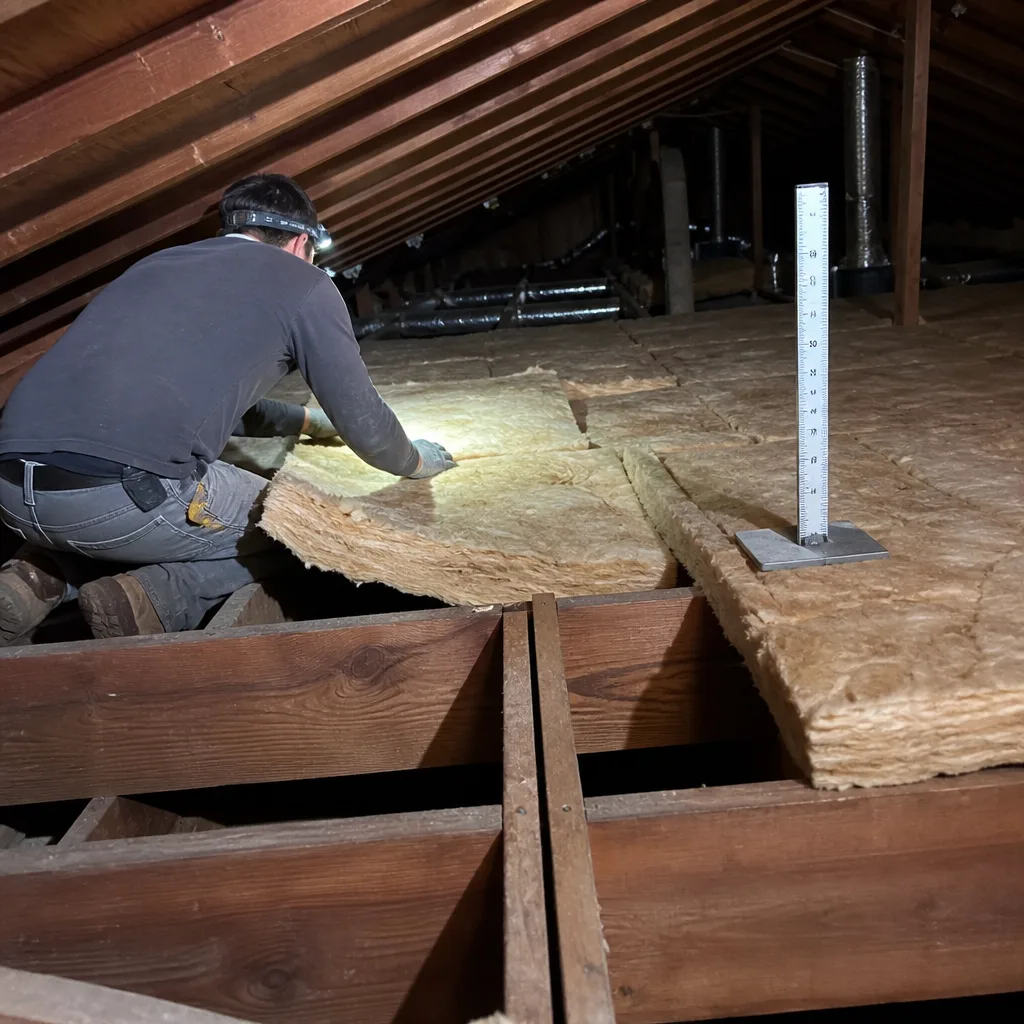
- Temperature stratification between floors. The upstairs runs 8-12°F warmer in summer or colder in winter than the thermostat setting. This usually means the foam has separated from the roof deck at the ridge or pulled back from top plates, creating a thermal bypass that lets attic air circulate behind the insulation.
- Spiking PG&E bills with no rate change. When a Demilec open-cell job degrades, the effective R-value can drop 40% before any visible symptom appears. We see this most in Palo Alto homes built 2012-2016 where Sealection 500 was applied too thin (under 5 inches) for the roof pitch.
- Visible yellowing, crumbling, or powdery residue on foam surfaces. Closed-cell Heatlok exposed to sustained attic heat above 180°F - common under dark shingles in south Palo Alto lots without tree cover - can undergo thermal oxidative degradation. The surface gets chalky and the cells collapse.
- Musty odor or mold spotting on attic sheathing. Open-cell foam is vapor-permeable by design, but if the original installer skipped the required vapor retarder coat in a cooling-dominant climate, Palo Alto’s marine-layer humidity can condense on the underside of roof decking during shoulder seasons.
- Ice damming or persistent icicles in winter. Even in Palo Alto’s mild climate, rare cold snaps can form ice dams if air leakage around chimney chases or duct boots bypasses the insulation envelope. The foam itself may be intact; the failure is at the detail work, which Demilec’s warranty doesn’t cover separately from the foam application.
Replacement Cost & What’s Included
Most full Demilec attic replacements in Palo Alto fall between $4,200 and $8,600 for open-cell and $5,800 to $11,400 for closed-cell, with the spread driven by three factors: square footage of roof deck, required thickness to hit target R-value, and whether we need to remove failed foam first. Removal adds $1.20 to $2.10 per square foot - mechanical scraping for open-cell, chemical release agent plus scraping for closed-cell - and is non-negotiable when the old foam is delaminated or contaminated.
Our price includes air sealing of all top plates, can lights, and penetrations before the new foam goes in; the blower-door test before and after so you see the CFM50 change; and the Documented Photo Record delivered same day. We don’t start until you have a written scope, a written price, and a written warranty - Haven Standard Clause 1. The 365-Day Done Right Promise covers both materials and labor. No “call for quote” runaround. The price we write is the price you pay.
DIY or Call Us?
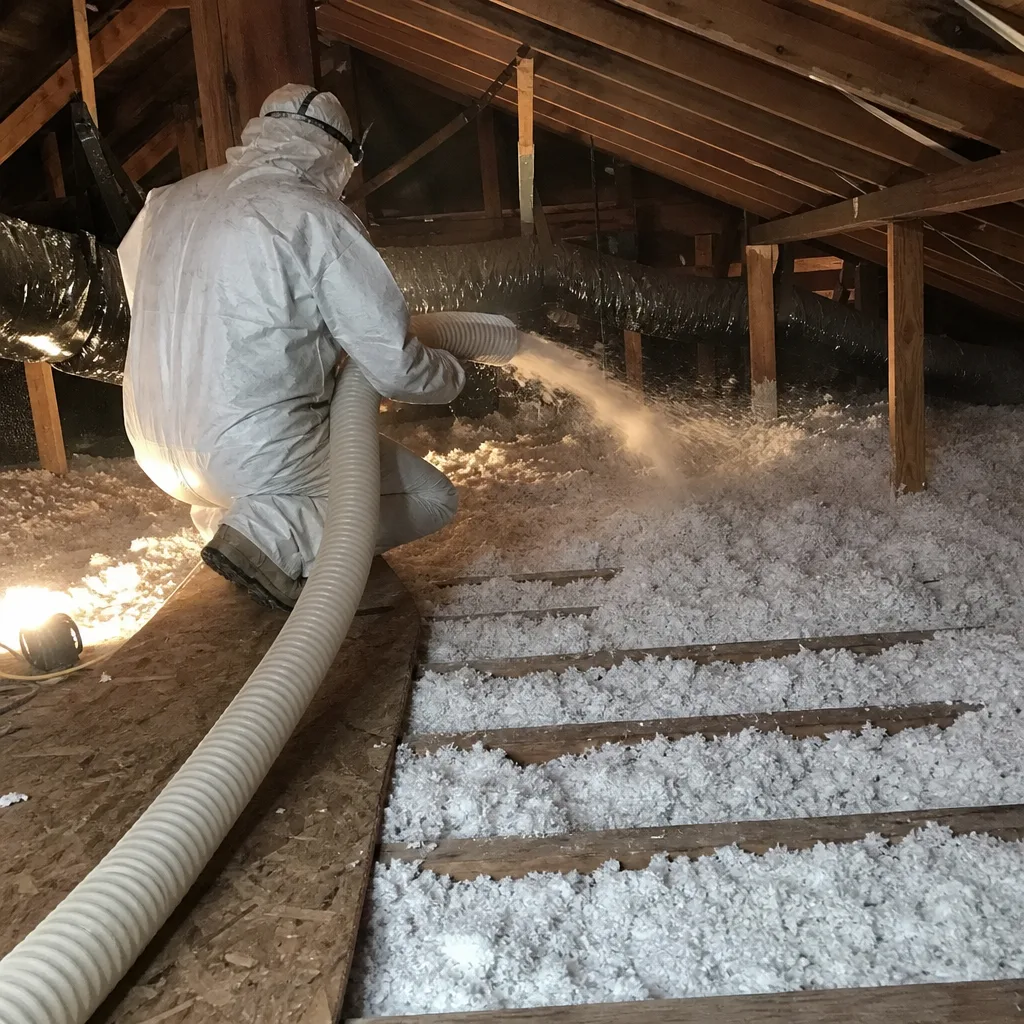
There’s a short, honest list of what a homeowner can safely check: read the product label for series and install date, photograph any visible gaps or discoloration from the attic hatch, and verify that bathroom exhaust fans actually vent outside (not into the attic - a common pre-existing condition that kills foam performance). That’s it.
Everything else belongs to a trained crew. Spray foam requires respirators with organic vapor cartridges, full skin coverage, and controlled ventilation during cure - the isocyanate exposure risk is real and cumulative. More critically, foam application changes the attic’s vapor profile; get it wrong and you trap moisture against structural members. Wes Okafor won’t let his crew start a Demilec job without first running a combustion-safety check on any gas appliance in the attic space, because depressurizing a house without verifying flue draft first is how carbon monoxide problems start. Seal the leaks first. The insulation has nowhere to work if the air is moving around it. If you’re seeing symptoms, call (650) 352-3577 - we’ll read your situation with you, no charge.
FAQs
Properly applied Demilec spray foam should perform for 25 to 30 years, but we’ve found failures at 8 to 12 years when the original skip was too thin, the substrate wasn’t properly cleaned, or the attic exceeded 180°F regularly under dark roofing. Palo Alto’s marine layer helps - moderate humidity and no freeze-thaw cycling - but south-facing roofs without shade still cook the foam. Call (650) 352-3577 and we’ll assess whether yours is on track or already degraded.
Spot repair is possible only with open-cell Sealection or Agribalance, and only when the original foam is fully cured, clean, and still bonded to the substrate. Closed-cell Heatlok requires full removal if any section fails, because new Heatlok won’t adhere to old. We give free second opinions on any written estimate that claims otherwise. Bring us the quote; we’ll read it with you.
Most residential jobs in Palo Alto finish in one to two days: half a day for prep and air sealing, half a day for foam application and cure monitoring, plus a final walkthrough with blower-door numbers if scoped. Larger homes in Old Palo Alto or multi-zone attics with dormers may run three days. We stock Demilec-compatible formulations on our trucks, so scheduling depends on your availability, not material lead time.
We carry both OEM Demilec and equivalent-density formulations from Icynene and Johns Manville on every truck, so we’re not waiting on a distributor run. Topside Attic Insulation Palo Alto is an independent service provider, not affiliated with Demilec - we source from multiple manufacturers so you’re never locked into a single product line. Same-day starts are normal for Palo Alto calls received before noon.
Written by Wes Okafor, Owner, Topside Attic Insulation Palo Alto at Topside Attic Insulation Palo Alto, serving Palo Alto and nearby areas.