
CertainTeed Radiant Barrier Installation: The Palo Alto Owner’s Guide
Most CertainTeed radiant barrier installations in Palo Alto run between $2,800 and $4,600 for a typical 1,800-2,400 square foot attic, and we can usually scope and start within 48 hours. The barrier itself, a reflective foil-faced sheet or spray-applied coating designed to block radiant heat transfer from a hot roof deck, fails gradually rather than catastrophically. Owners notice it first in July and August, when second-floor rooms that used to stay tolerable suddenly won’t, or when their HVAC runtime data from a smart thermostat shows a spike they can’t explain.
We stock CertainTeed-compatible radiant barrier materials on our trucks, including the CertainTeed SOLARIS line and retrofit-grade foil laminates that match the emissivity specs (0.03 to 0.05) of original factory installs. We’re an independent service provider, not affiliated with CertainTeed, and we also carry Reflectix equivalents when the application calls for a different fastening method or a tighter budget.
Which CertainTeed Models This Applies To
CertainTeed sells radiant barrier as an add-on system rather than a standalone product line, so identification means checking what was originally installed and when. The SOLARIS Gold and SOLARIS Platinum reflective roof deck barriers were common in new construction across Santa Clara and San Mateo counties from roughly 2012 to 2019, often paired with CertainTeed’s fiberglass batt or blown-in insulation systems. Look for a foil-faced kraft paper or a thin aluminum laminate stapled to the underside of your roof rafters, sometimes stamped with a CertainTeed logo and an R-value equivalent claim (typically R-1 to R-3 for the reflective surface alone, though the real performance comes from emissivity, not R-value).
The compatibility gotcha in Palo Alto’s older ranch stock, especially around Midtown and the areas north of Oregon Expressway, is rafter spacing. Pre-1980 homes often have 24-inch on-center rafters, and CertainTeed’s standard 48-inch-wide rolls leave an unsupported sag if not properly tensioned. We also see homeowners who bought a house with a “radiant barrier roof” - meaning the OSB sheathing itself has a reflective coating - and assume they need a separate interior barrier. They don’t. The two systems fight each other and can trap moisture. We check this on every estimate.
OEM CertainTeed material runs about 15-20% more than quality aftermarket equivalents from Reflectix or Fi-Foil, but the emissivity rating and fire-smoke development index (Class A/Class 1, required by California Title 24) are what matter. We source both and will show you the spec sheet.
Signs Your CertainTeed Radiant Barrier Installation Is Failing
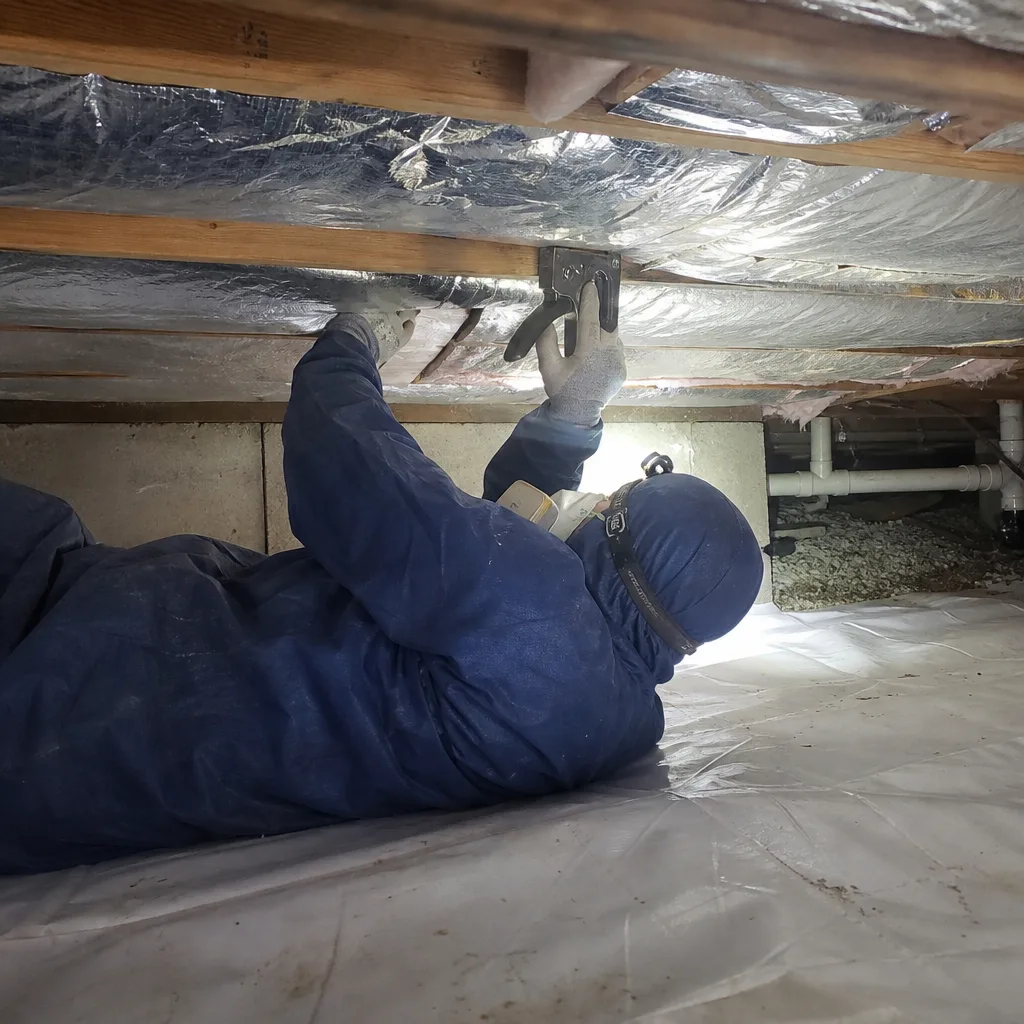
- Second-floor rooms heat up faster than they used to, especially after 2 p.m. The barrier’s reflective surface oxidizes over time, particularly in attics with poor ventilation where summer peak temperatures exceed 140°F. Palo Alto’s inland microclimate, with its sharp afternoon temperature swings from the bay influence, accelerates this oxidation compared to fog-locked coastal zones.
- Dust accumulation on the foil surface that won’t wipe clean. Once airborne attic dust embeds in the oxidized layer, the emissivity degrades from 0.03 toward 0.20 or higher, and the barrier becomes a mild conductor rather than a reflector. This is almost always the failure mode we find in homes where the attic floor was never properly sealed first.
- Water stains or warping on the barrier material itself. CertainTeed’s foil laminates can act as a condensing surface if attic humidity spikes, especially in winter when warm, moist interior air leaks through ceiling penetrations and hits the cold foil. The barrier isn’t the root problem; the unsealed air leak is. We find this combination constantly in Palo Alto’s Eichler and Eichler-influenced homes with their original recessed can lights.
- Visible tearing, sagging, or detachment from rafter staples. Thermal cycling weakens the kraft-paper backing over 7-10 years, and gravity does the rest. A sagging barrier creates an air gap that actually helps performance in some configurations, but a torn one channels convective airflow and works against you.
- Your HVAC contractor recommends upsizing your air conditioner. Before you spend $8,000-$12,000 on new tonnage, check whether the attic is the real load. A failed radiant barrier can add the equivalent of half a ton to your cooling load in a 2,000-square-foot home. We’ve measured it.
Replacement Cost & What’s Included
| Component | Typical Range (Palo Alto) |
|---|---|
| Material: CertainTeed SOLARIS or equivalent foil barrier | $1.20-$1.80/sq ft installed |
| Attic air sealing (prerequisite - see below) | $800-$1,400 |
| Blower-door test (before and after) | $350-$450 |
| Total project, typical 2,000 sq ft attic | $2,800-$4,600 |
The wide range comes down to three factors: how much air sealing the attic floor needs before the barrier goes in, whether we can walk the attic or need rolling scaffolding for a steep pitch, and whether we’re replacing an existing barrier or installing fresh in an attic that never had one. We don’t blow insulation over an unsealed attic floor, and we don’t install radiant barrier over unsealed top plates, can lights, or plumbing penetrations. Seal the leaks first. The insulation has nowhere to work if the air is moving around it.
Every job closes with a written scope, a Documented Photo Record of the air-sealing locations and barrier installation, and before-and-after blower-door numbers if a test was scoped. Our 365-Day Done Right Promise applies. Written Price Before Any Work Starts, always, per Haven Standard Clause 1.
DIY or Call Us?
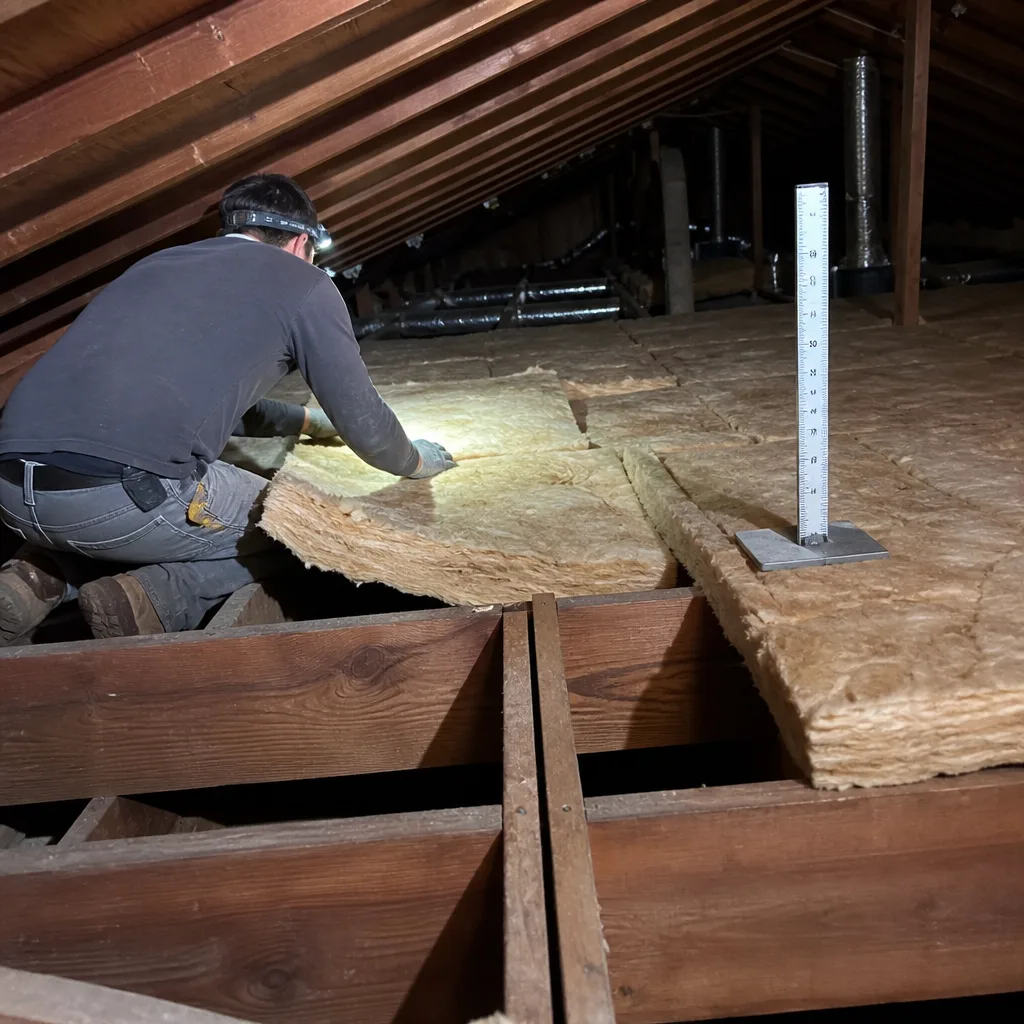
Here’s what you can safely check yourself: confirm whether you actually have a radiant barrier (foil on rafters, not just insulation), look for obvious sagging or tearing from the attic hatch with a flashlight, and note any water staining. If you have a smart thermostat, pull your hourly runtime data for last August versus this August. That’s diagnostic gold.
Here’s where DIY goes wrong. Working on a roof deck in a Palo Alto attic in July is genuinely dangerous - heat stress, not just falls. More critically, installing a radiant barrier without first sealing the attic floor often traps moisture, creates condensing surfaces, and can void your roof sheathing warranty if the barrier is improperly vented. CertainTeed’s installation instructions specify a minimum 3/4-inch vented air gap above the barrier; compressing it against the sheathing with additional insulation is a common owner mistake that rots plywood. We see it in the field.
We’re not going to tell you this is rocket science. It isn’t. But the sequence matters, and the safety matters, and the documentation matters if you ever sell the house and the buyer’s inspector asks questions. Call (650) 352-3577 for a free estimate and a written price before any work starts.
FAQs
Expect 10-15 years for foil laminates in a ventilated attic, shorter if the attic runs hot and dusty because the floor was never sealed. The SOLARIS line carries a limited lifetime warranty against manufacturing defect, but that doesn’t cover oxidation from attic conditions. We inspect barrier condition during every energy audit and will show you photos of what we find. Call (650) 352-3577 to schedule - estimates are free.
Spot repair is possible for minor tearing in accessible areas, but it’s usually a false economy. Patched sections create seams that trap dust and break the continuous reflective plane, and matching the original emissivity spec with patch material is difficult. In 9,000+ homes since 2016, we’ve done maybe a dozen spot repairs that we felt good about. Full replacement with current material is the honest recommendation most of the time. Call (650) 352-3577 and we’ll show you what we see.
Most residential radiant barrier replacements in Palo Alto are a one-day job for a two-person crew, assuming the attic floor air sealing was done previously or is scoped separately. If we need to seal first - which we usually do - add a half day. We don’t rush the blower-door test; it’s the proof the envelope actually changed. Call (650) 352-3577 to check availability.
We stock CertainTeed-compatible foil barrier and Reflectix equivalents on our trucks, in widths that match both 16-inch and 24-inch rafter spacing. For SOLARIS Platinum or specialty spray-applied coatings, we order to spec with a 3-5 day lead time. We’ll tell you exactly what we have and what we need to order when we write your price. No surprises. Call (650) 352-3577.
Written by Wes Okafor, Owner, Topside Attic Insulation Palo Alto at Topside Attic Insulation Palo Alto, serving Palo Alto and nearby areas.