
CertainTeed Crawl Space Encapsulation: The Palo Alto Owner’s Guide
Most CertainTeed crawl space encapsulation systems we replace in Palo Alto run between $3,800 and $7,200 installed, depending on crawl square footage and whether the existing vapor barrier is salvageable. We stock CertainTeed-compatible 10-mil and 16-mil reinforced polyethylene barriers, seam tape, and mechanical fasteners on our trucks, and we can usually inspect and start the job same day you call. Homeowners typically discover a problem when they notice a musty smell rising through the floor, find condensation beading on ductwork, or spot white mold blooming on the joist bays - all signs that the barrier has torn at the piers or the tape has failed at the seams.
Which CertainTeed Models This Applies To
CertainTeed doesn’t sell crawl space encapsulation as a named residential product line the way they do insulation batts. What we encounter in Palo Alto homes is CertainTeed foundation drainage matting (the dimpled high-density polyethylene layer that goes against the wall) paired with independent vapor barrier installations, or CertainTeed rigid foam board applied to crawl walls with a separate polyethylene ground cover. To identify what you have, look for the black-and-yellow CertainTeed label on any foam board, or check whether your ground barrier has a woven reinforcement grid visible when held to light - that’s the tell for 16-mil reinforced versus the cheaper 6-mil builder-grade sheet that tears within a few seasons.
The compatibility gotcha in this market: CertainTeed’s drainage matting is 0.25-inch dimple height, and some retrofit installers in older Midtown Palo Alto ranches have paired it with 20-mil barriers that are too stiff to drape properly over the footing. The barrier ends up bridging instead of conforming, and water pools behind it. We stock both OEM-compatible CertainTeed drainage components and quality aftermarket equivalents from Stego and Viper, and we’ll match what’s appropriate to your foundation type rather than forcing a brand fit that doesn’t work with your wall condition.
Signs Your CertainTeed Crawl Space Encapsulation Is Failing
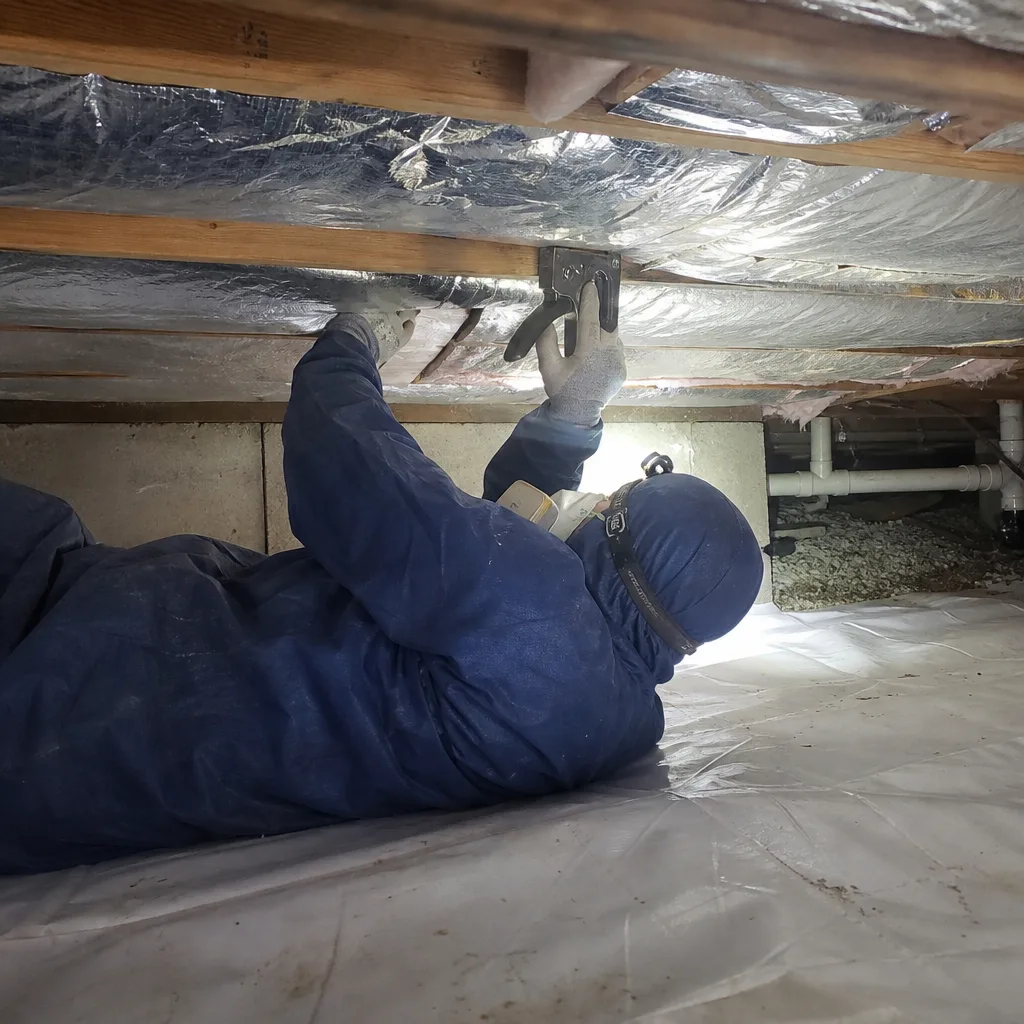
- Musty odors rising through floor registers. When the polyethylene ground barrier tears at pier footings or the seam tape degrades, soil moisture evaporates directly into the crawl air. That humid air gets drawn upward by stack effect - the buoyancy of warm air rising and pulling replacement air in at the base of the house - and carries the smell of damp earth into your living space.
- Condensation on ductwork or copper pipes. A properly sealed encapsulation keeps crawl relative humidity below 60%. Once the barrier fails, summer dew points in Palo Alto’s crawl spaces can hit 70% or higher, and cold ductwork sweats. The water drips onto insulation, compressing it and dropping its R-value.
- White or gray mold on joists or subfloor. Mold needs 60% relative humidity and organic material. Failed vapor barriers deliver both. In Palo Alto’s older homes near Professorville, we’ve seen joist mold start within 18 months of a poorly taped installation because the original crew used standard duct tape instead of butyl-backed encapsulation tape.
- Sagging or detached barrier at the perimeter walls. This usually means the mechanical fasteners have pulled out of the sill plate or the termination bar was installed without proper masonry anchors in block walls. The barrier flaps, creating a channel for groundwater to run behind it rather than staying on top.
- Increased energy bills with no other explanation. Wet crawl air is harder to condition. Your HVAC works longer to overcome the latent load - the moisture in the air that must be removed before temperature drops. We’ve measured blower-door changes after encapsulation repairs that dropped equivalent leakage area by 15% just from sealing the crawl access and rim joist properly.
Replacement Cost & What’s Included
| Component | Typical Range (Palo Alto) |
|---|---|
| 10-mil reinforced ground barrier (per sq ft) | $2.80 - $4.20 |
| 16-mil reinforced ground barrier (per sq ft) | $3.50 - $5.10 |
| Foundation wall drainage matting | $1.90 - $3.40 per sq ft |
| Rim joist and sill plate air sealing | $450 - $890 (typical crawl) |
| Dehumidifier installation (if needed) | $1,200 - $2,400 |
| Full encapsulation, typical 1,200 sq ft crawl | $3,800 - $7,200 |
What drives the range: crawl height (less than 18 inches requires different equipment), whether we need to remove and dispose of failed existing material, and how much of the rim joist is accessible without disturbing utilities. Every job gets a written price before any work starts - Haven Standard Clause 1 - and includes a Documented Photo Record of every seam, every anchor point, and the final barrier layout. The 365-Day Done Right Promise covers installation defects; material warranties run 10 to 25 years depending on mil thickness and manufacturer.
DIY or Call Us?
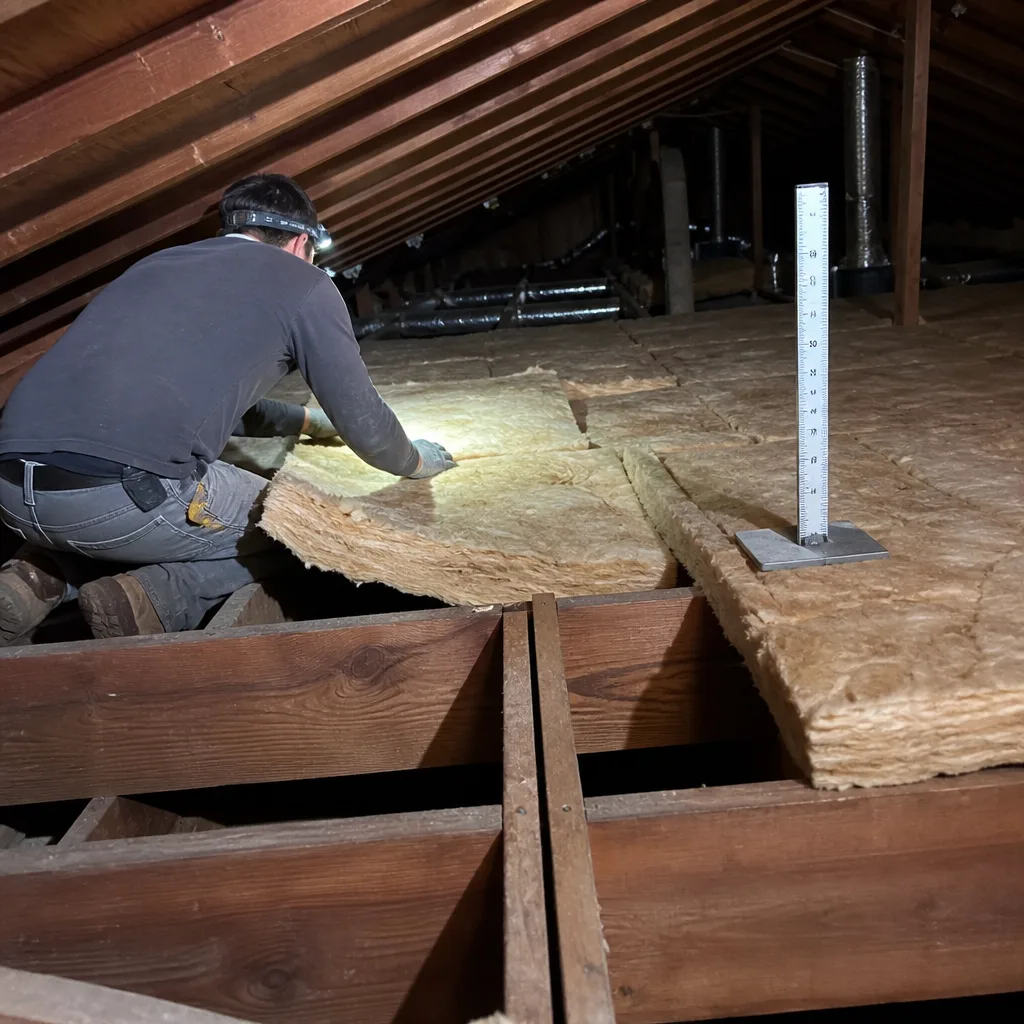
There’s no high-tension danger in crawl space encapsulation the way there is with garage door springs, but there are ways DIY goes wrong that are expensive to undo. You can safely check your crawl humidity with a $15 sensor and photograph any torn barrier sections for us to review. Where owners get into trouble: using hardware-store 6-mil plastic that UV-degrades in months, taping seams with standard duct tape that turns to goo, or sealing a crawl without addressing the gutter downspout that’s dumping water against the foundation. We also find homeowners in Palo Alto’s tighter new builds encapsulating without testing combustion appliance backdraft - seal the crawl and you change the pressure plane, which can pull flue gases down a water heater draft hood. Wes Okafor does a combustion-safety check on any gas appliance before we close a job, because depressurizing a house without verifying the flue draft first is how carbon monoxide problems start. Seal the leaks first. The insulation has nowhere to work if the air is moving around it. Call (650) 352-3577 and we’ll bring the right material, the right fasteners, and the right sequence.
FAQs
A properly installed 16-mil reinforced barrier with butyl seam tape typically lasts 15 to 20 years in Palo Alto’s climate, though the coastal fog zone in the foothills can accelerate tape adhesive degradation compared to drier valley floors. Call (650) 352-3577 if you’re past year 12 and want us to inspect seam integrity - estimates are free.
Small punctures and isolated tears up to about 6 inches can be patched with compatible tape and a scrap overlay, but widespread seam failure or UV-brittled material means full replacement - patches on degraded substrate peel within a season. We assess this on every inspection and will show you exactly what’s salvageable. Call (650) 352-3577 for a written scope.
Most residential crawls in Palo Alto take one to two days: half a day for removal and surface prep, half to full day for installation and sealing, plus dehumidifier commissioning if included. We schedule so you’re not without HVAC access overnight. Call (650) 352-3577 to check same-week availability.
We stock 10-mil and 16-mil reinforced polyethylene barriers, termination bars, butyl tape, and drainage matting on our trucks - no supplier wait for standard repairs. CertainTeed-specific rigid foam board for wall applications orders in 48 hours if your job requires it; we also stock compatible Owens Corning and Johns Manville foam if timing matters more than brand matching. Topside Attic Insulation Palo Alto is an independent service provider, not affiliated with CertainTeed. Call (650) 352-3577 to confirm what’s on the truck today.
Written by Wes Okafor, Owner, Topside Attic Insulation Palo Alto at Topside Attic Insulation Palo Alto, serving Palo Alto and nearby areas.