
CertainTeed Attic Insulation: The Palo Alto Owner’s Guide
We stock and install CertainTeed-compatible blown-in fiberglass, batt, and spray foam attic insulation systems in Palo Alto, with most residential retrofits running between $2,800 and $6,400 depending on attic square footage, existing R-value, and whether air sealing is required first. Same-day installation is available for standard blown-in jobs when we scope the attic by 10 a.m., and we carry CertainTeed InsulSafe SP, Optima, and TrueComfort batt products on our trucks. Most Palo Alto owners discover their insulation is failing through a sharp winter gas bill spike, a hot second floor in July despite running the AC continuously, or a home inspector’s note that the attic R-value sits below the current Title 24 requirement of R-38 for our climate zone.
Which CertainTeed Models This Applies To
CertainTeed’s attic insulation line breaks into three families, and matching the right product to your existing layer matters for both thermal performance and how the material handles our dry, warm-summer Palo Alto climate. InsulSafe SP is the blown-in fiberglass system you’ll see in most peninsula attics installed between 2010 and 2020, recognizable by the white or brown paper bags with the SP designation and a nominal density of 0.5 to 0.6 pounds per cubic foot. TrueComfort is the unfaced batt line, commonly found in original construction from the 1970s through 1990s in Palo Alto’s Midtown and Old Palo Alto neighborhoods, and it comes in standard widths of 15 or 23 inches to match 16- or 24-inch on-center framing. Optima is the higher-density blown-in system, less common in retrofits but specified in some of the tighter new builds near the Stanford campus where builders were chasing aggressive HERS scores.
The compatibility gotcha we see most often: an owner adds new blown-in over old TrueComfort batts without checking whether the existing batts are compressed, moisture-stained, or rodent-compromised. Compressed batts lose their labeled R-value, and blowing over them traps whatever condition exists underneath. We also see InsulSafe SP bags stored in garages through a Palo Alto summer before installation; the heat doesn’t ruin the glass fibers, but it can degrade the anti-static coating that helps the material fluff properly in the hopper. For OEM versus aftermarket, CertainTeed’s glass formulation runs slightly finer than commodity blown-in, which gives better cavity fill in irregular joist bays common in the ranch homes off Middlefield Road. We stock CertainTeed OEM for matching existing systems and use equivalent-density Johns Manville or Knauf when the attic is being fully cleared and restarted.
Signs Your CertainTeed Attic Insulation Is Failing
- Uneven temperature zones between rooms. When InsulSafe SP settles or TrueComfort batts shift out of place, typically near attic hatches or after wiring work, you get cold spots in winter and heat pockets in summer. The conditioned air escapes faster than your HVAC can balance it.
- Ice dam formation at the eaves during rare freeze events. Even in Palo Alto’s mild winters, poor attic insulation lets roof deck heat escape unevenly, melting snow that refreezes at the colder overhang. We’ve seen this on homes near Foothill Expressway where R-value had dropped below R-19 from compression alone.
- Dust accumulation around ceiling registers and can lights. This signals that your attic is depressurizing the living space, pulling attic air through gaps the insulation was supposed to cover but isn’t sealing. The insulation is still there, but it’s not in contact with the air barrier.
- Moisture staining on the ceiling drywall below the attic. CertainTeed fiberglass doesn’t rot, but it can hold moisture against the drywall if vapor drive from the living space hits a cold attic floor in winter. This is almost always an air-sealing failure that the insulation can’t fix by itself.
- Energy bills rising 15% or more year-over-year with no rate change. We compare Pacific Gas and Electric bills seasonally for Palo Alto clients, and when usage spikes without a rate tier shift, settled or displaced insulation is usually the culprit. The blower-door number tells the rest of the story.
Replacement Cost & What’s Included
Most complete attic insulation replacements in Palo Alto run $2,800 to $6,400 for homes between 1,200 and 3,500 square feet of conditioned space, with the lower end covering blown-in fiberglass over a clean, accessible attic and the upper end including full removal of degraded material, top-plate and penetration air sealing, and new InsulSafe SP to R-49. Partial top-ups, where existing insulation is viable and we add 3 to 6 inches to reach code, typically fall between $1,600 and $2,800. What drives the range: attic square footage, whether the existing material tests positive for asbestos or rodent contamination requiring full removal, accessibility (steep pitches and tight scuttles add labor), and whether we scope a blower-door test to document the before-and-after air leakage rate.
Every job under Haven Standard Clause 1 starts with a written price, a written scope, and a written warranty before anyone enters the attic. The installed price includes material, labor, protective floor covering, and a Documented Photo Record of all work areas. On applicable jobs, we provide before-and-after blower-door readings so you can verify the air-sealing result in CFM50, the single number that shows how much conditioned air your envelope was losing. The 365-Day Done Right Promise covers all completed work.
DIY or Call Us?
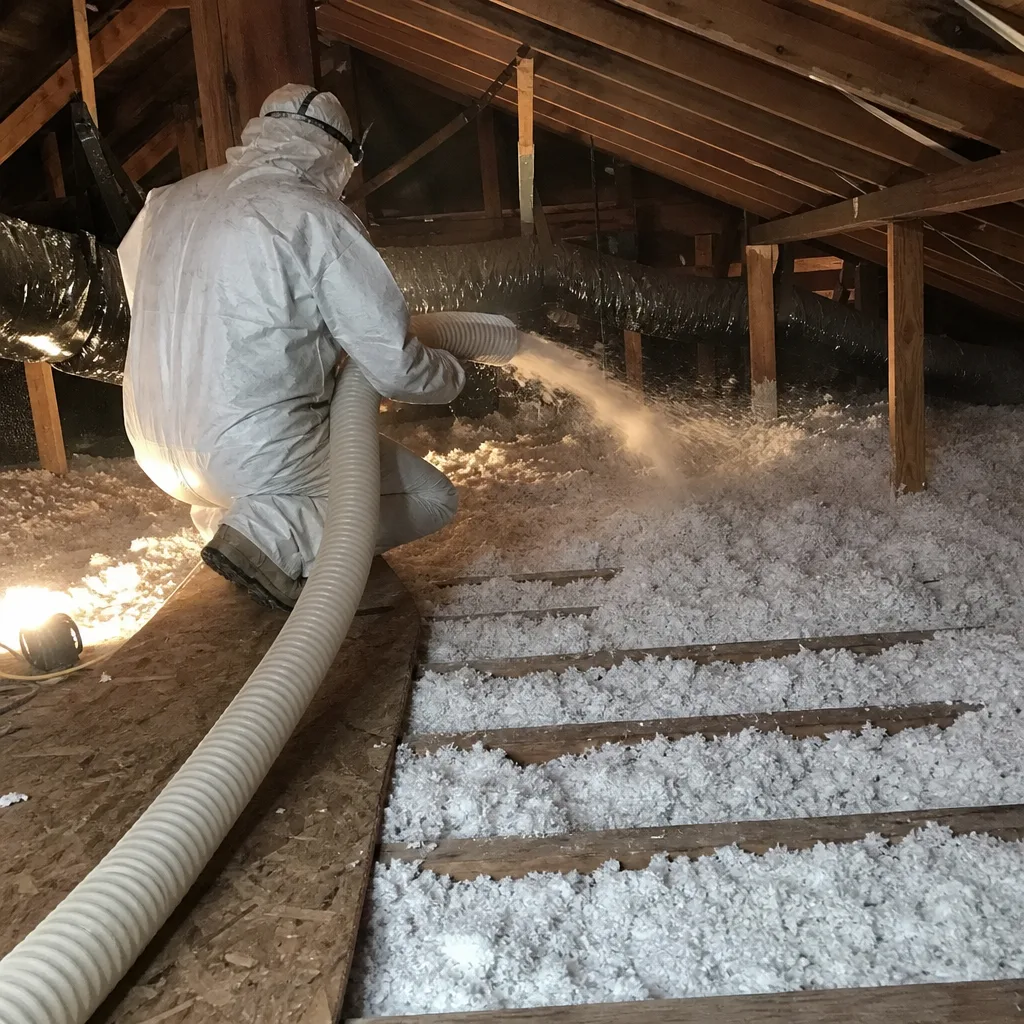
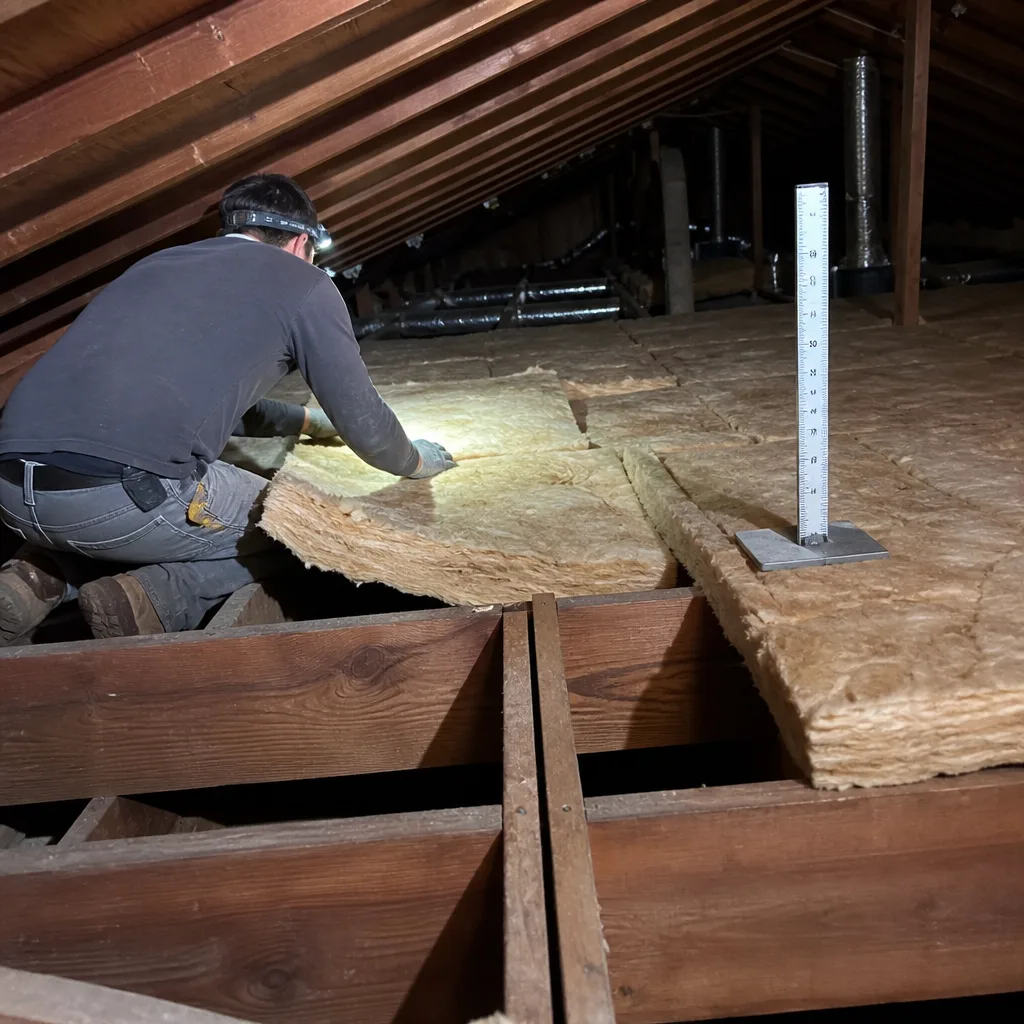
There is no high-tension danger in handling fiberglass insulation, but there are real ways DIY goes wrong that cost more to fix than doing it right the first time. An owner can safely check the attic hatch for light leaks, measure existing insulation depth with a ruler against the joist tops, and photograph any discolored or compressed areas for reference. Where DIY fails: walking the ceiling drywall and punching through, disturbing old material without testing for asbestos first (required in Palo Alto for pre-1990 homes), and blowing new insulation over unsealed top plates and can-light housings that turn the attic into a pressurized plenum forcing conditioned air out. We also see homeowners install vapor barriers on the wrong side of the assembly for our climate, trapping moisture inward.
Seal the leaks first. The insulation has nowhere to work if the air is moving around it. If you want a second opinion on a written estimate you’ve already received, bring it to us. We’ll read it with you. Call (650) 352-3577.
FAQs
Properly installed CertainTeed fiberglass insulation lasts 80 to 100 years in our dry climate, though its effective R-value degrades if it compresses, gets wet, or is installed over unsealed air leaks. The material itself doesn’t break down, but performance depends on installation quality and whether the attic stays dry. Call (650) 352-3577 for a free assessment of your existing layer’s condition.
Localized damage from wiring work or minor rodent activity can sometimes be spot-corrected with new material matched to the existing density, but widespread compression, moisture staining, or settling below the joist tops usually warrants full removal and restart. We don’t blow new insulation over compromised old material; it hides problems and voids most manufacturer performance claims. For a written scope and price on either approach, call (650) 352-3577.
Most residential jobs in Palo Alto finish in one day for standard blown-in retrofits, or two days when full removal, air sealing, and blower-door verification are scoped. Crews arrive at 8 a.m., protect floors and furnishings, and leave a Documented Photo Record with the homeowner before departing. Same-day starts are available when we complete the attic assessment by 10 a.m.
We carry InsulSafe SP, TrueComfort batts, and Optima blown-in on our trucks for standard Palo Alto jobs, with same-day installation available for assessments completed by mid-morning. Specialty thicknesses or large commercial quantities may require a 24- to 48-hour pull from our San Jose supplier. We’re an independent service provider, not affiliated with CertainTeed, and we also stock compatible materials from Owens Corning, Johns Manville, Knauf, and others.
Written by Wes Okafor, Owner, Topside Attic Insulation Palo Alto at Topside Attic Insulation Palo Alto, serving Palo Alto and nearby areas.