

Fast, Reliable Blown-In Insulation Across Mountain View
Blown-in insulation in Mountain View typically runs $2.80-$5.40 per square foot depending on material and depth, with most attic jobs completed in a single day. Our crews dispatch from the San Francisco Bay Area office and carry both cellulose and fiberglass machines, so we don’t waste a trip if your home needs one or the other. Call (650) 352-3577 for a written price before any work starts.
We’ve worked the mid-century ranches of Rex Manor, the flat-roofed tracts in Willowgate, and the garage conversions popping up across Blossom Valley. Mountain View’s housing stock has specific thermal weaknesses that generic insulation crews miss: slab-on-grade construction with minimal wall insulation, flat ceiling planes that make attic air-sealing difficult, and an increasing number of ADU conversions where blown-in alone won’t meet code. We know the difference because we’ve documented the failures.
Why Topside Attic Insulation Palo Alto Is Mountain View’s Preferred Blown-In Insulation Company
Our Blown-In Insulation team has sealed and insulated homes in Mountain View since we opened under The Haven Standard in 2016. We’ve completed jobs on Stierlin Road, near the San Antonio Center, and throughout the Sylvan Park neighborhood. That local repetition means we recognize the construction patterns before we pull into the driveway.
Mountain View homeowners leave reviews that mention the same details: the written price that matched the final invoice, the blower-door number they could show their architect, the photo record they forwarded to their property manager. We don’t ask anyone to trust us on feeling. We document everything.
Response time to Mountain View is same-day or next-day for standard calls, and our 24/7 line is answered by a live person, not a callback queue. If you’re mid-permit on a garage ADU conversion and the inspector flagged insulation, we can often read your plans and give a written scope within 24 hours.
Our Blown-In Insulation Services in Mountain View
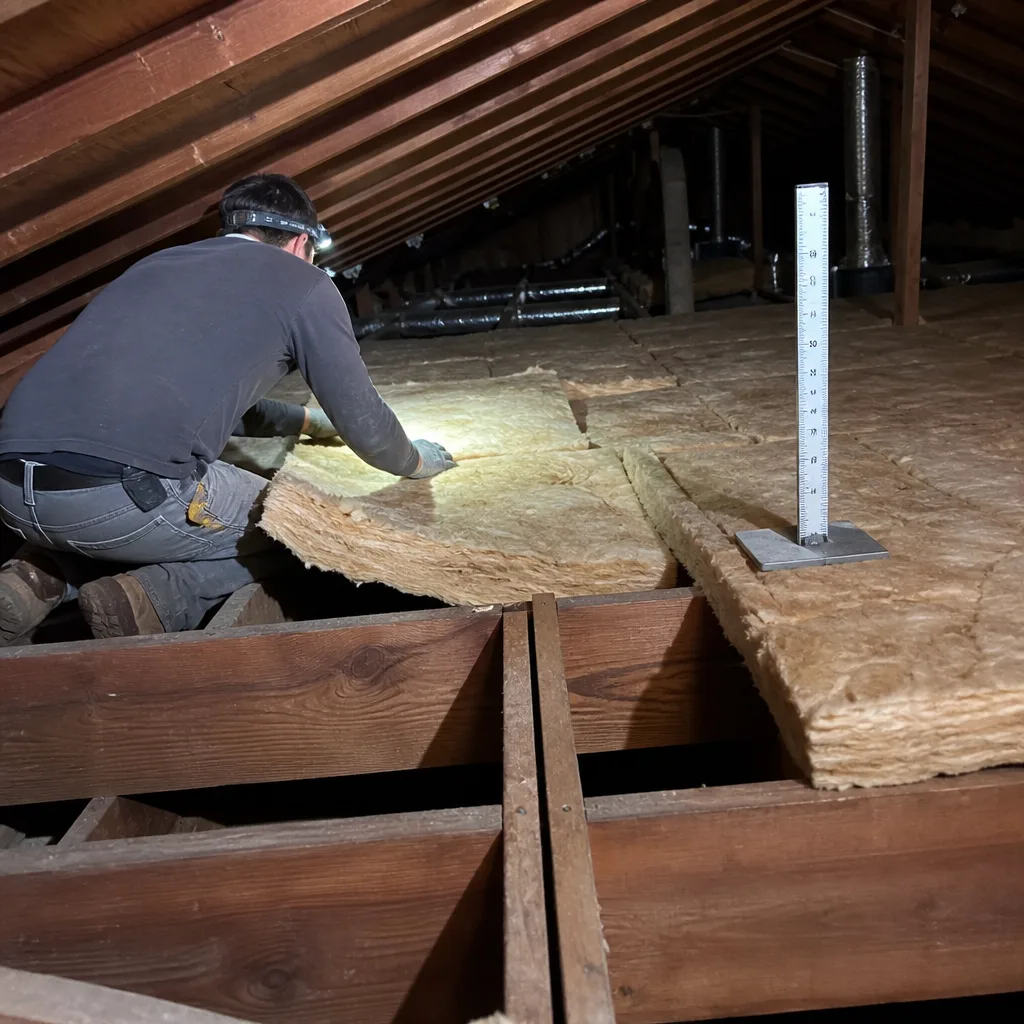
Blown-In Cellulose
We dense-pack GreenFiber cellulose into Mountain View’s 2×4 and 2×6 wall cavities at 3.5-4.0 pounds per cubic foot, a density that eliminates settling and provides both thermal resistance and sound attenuation. Cellulose performs well in the marine-layer climate because it manages moisture vapor better than fiberglass when attic temperatures swing 40°F between morning fog and afternoon sun. For garage ADU conversions in Rex Manor and Willowgate, we frequently pair blown cellulose in the ceiling and framed walls with closed-cell spray foam on any shared CMU party walls. The cellulose hits the R-13 or R-19 targets in the wood frame; the foam handles the masonry.
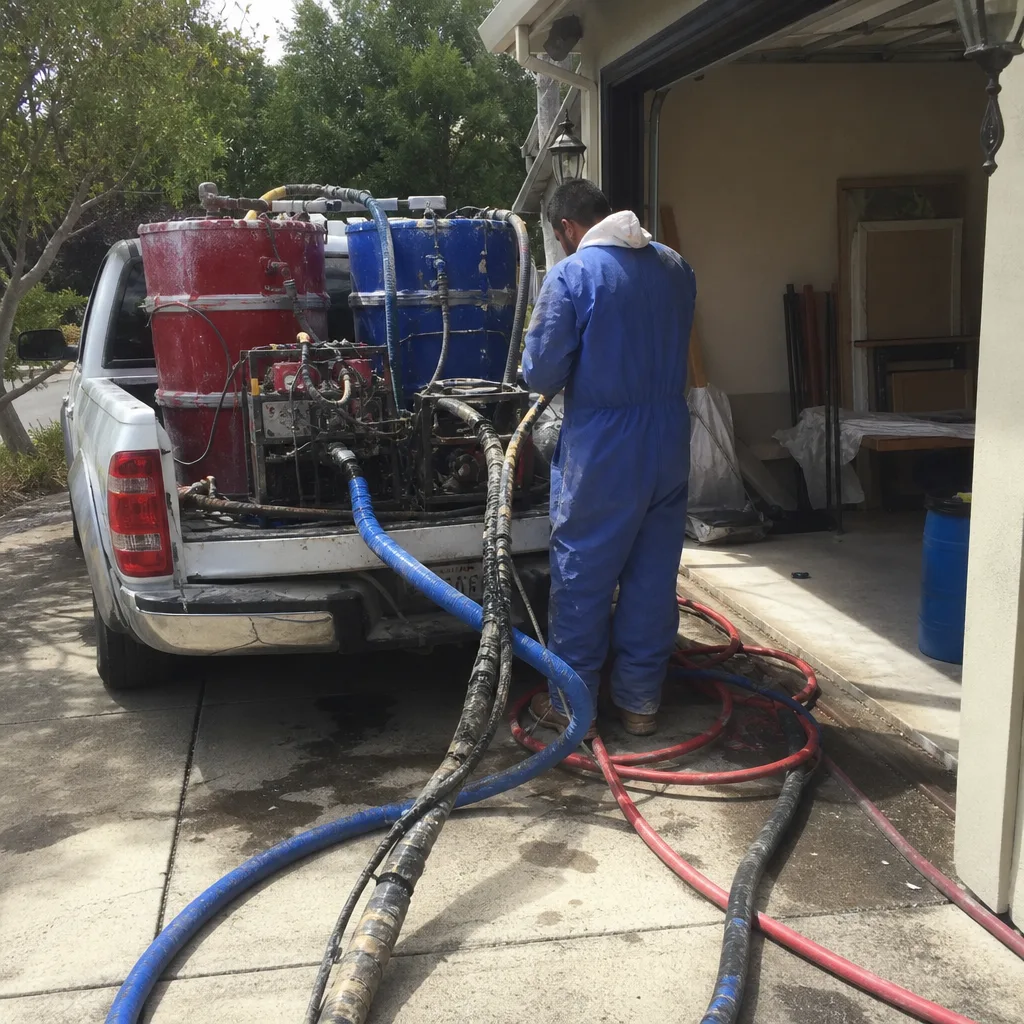
Blown-In Fiberglass
We install Owens Corning blown fiberglass to depths of 14-22 inches in Mountain View attics, achieving R-38 to R-49 depending on whether we’re matching existing Title 24 requirements or exceeding them for a net-zero retrofit. Fiberglass doesn’t absorb moisture the way cellulose can, which matters in crawl spaces near Shoreline where ground vapor is persistent. We use it for top-ups over existing batts when the original insulation is dry and structurally intact but compressed below current code. Every blown fiberglass job includes air sealing of top plates, can lights, and chimney chases before the blower truck arrives. We don’t blow over leaks.
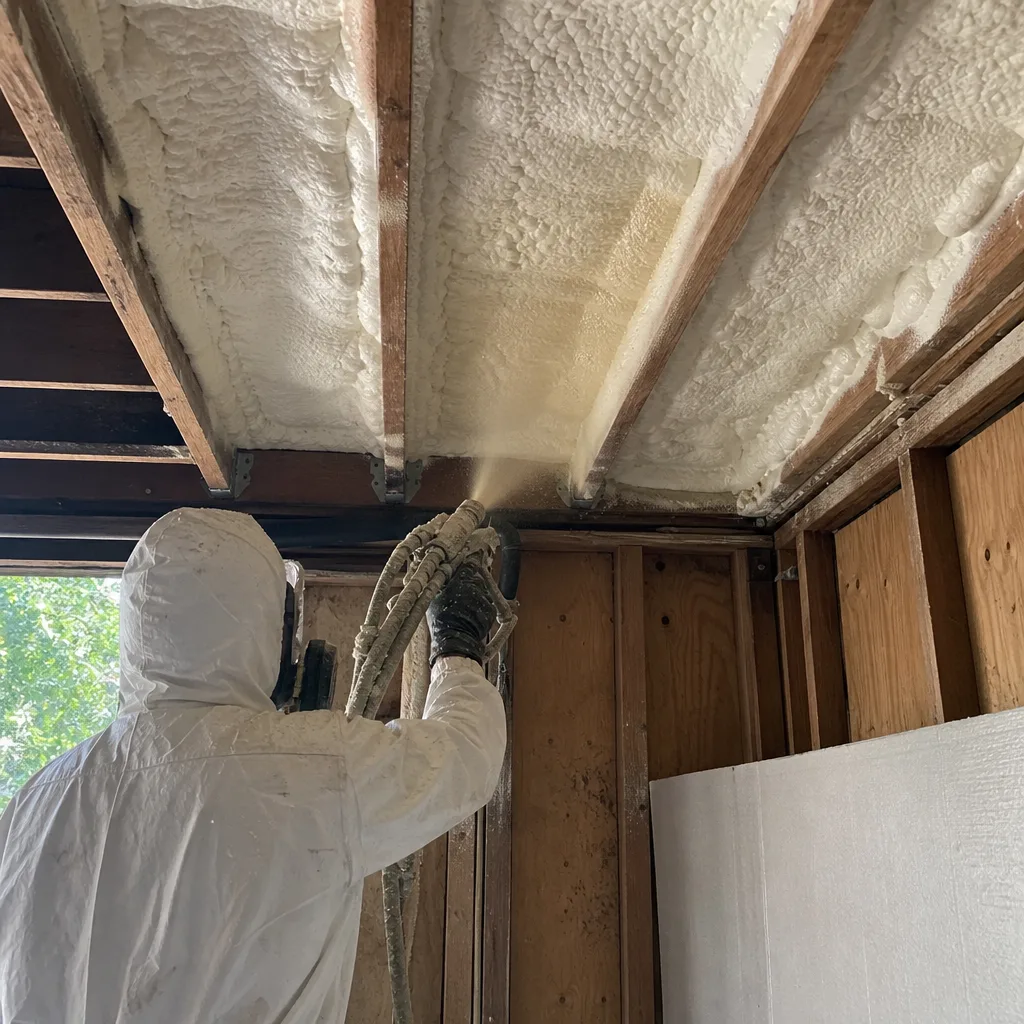
Dense-Pack Wall Insulation
Dense-pack is the critical service for Mountain View’s ADU market. California’s Title 24 Part 6 requires minimum R-values in conditioned space walls that 1950s ranch construction never approached. We remove a strip of exterior siding or interior drywall, drill access holes at stud bays, and pack GreenFiber cellulose at density sufficient to prevent settling and air movement within the cavity. In a recent job on a 1962 ranch near Sylvan Park, we dense-packed the garage-to-ADU conversion walls and dropped the heating load enough that the owner downsized the mini-split by half a ton. The permit passed on first inspection.
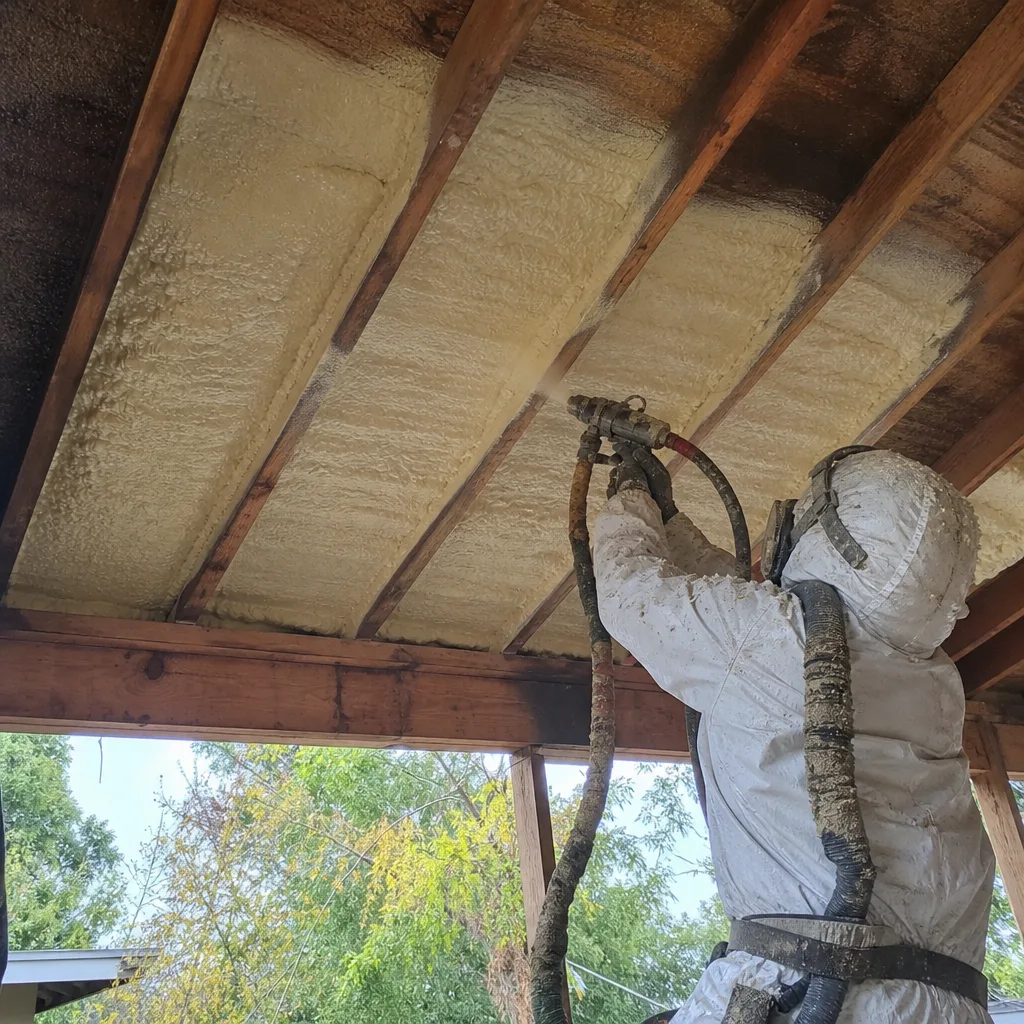
Blown-In Top-Up
Mountain View’s original loose-fill insulation, installed in the 1970s and 1980s, has settled and degraded under decades of marine-layer cycling. We measure existing depth with a ruled probe, calculate the gap to current R-value, and blow matching material to fill it. A typical top-up in a 1,200-square-foot Mountain View attic runs $1,800-$2,800 and takes four hours. We photograph the before depth, the exposed deck, and the finished depth. You get the photos and a written certification of R-value achieved.
What happens when you call
- 1
A real person answersNo phone trees - you reach a local pro.
- 2
You get an upfront price rangeHonest numbers before anyone is dispatched.
- 3
A background-checked tech heads outLicensed & insured, dispatched right away.
- 4
You approve before work beginsNothing starts until you say go.
Trusted Brands We Service in Mountain View
We stock GreenFiber cellulose, Owens Corning fiberglass, and Johns Manville mineral wool on our Mountain View route trucks, with Knauf products available on 48-hour order for specific acoustic or fire-rated assemblies. No proprietary lock-in means we specify material based on your home’s condition, not our supplier contract. If your architect calls for a specific brand to match an existing assembly or satisfy a lender’s green-building checklist, we can source it and document the batch numbers.
Common Blown-In Insulation Problems We See in Mountain View Homes
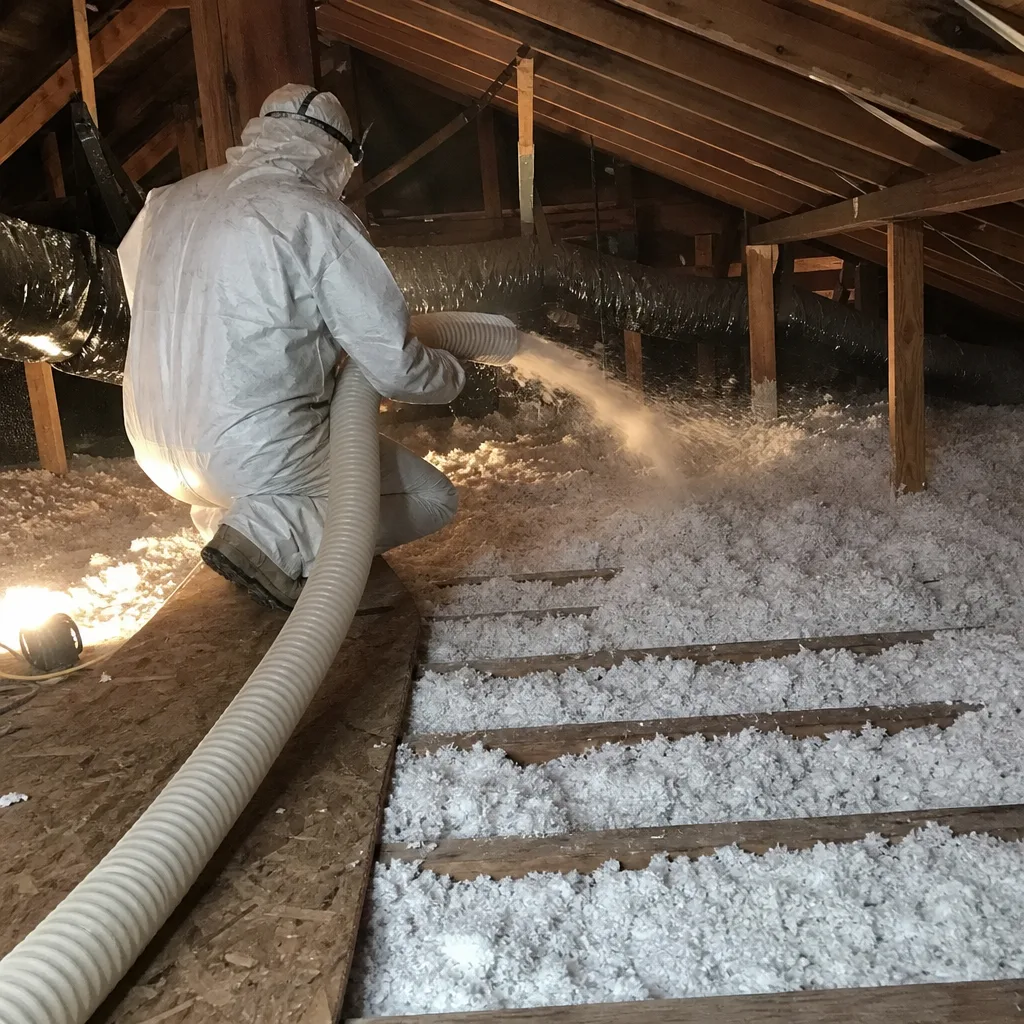
- Settled loose-fill in slab-on-grade ranch attics. The daily temperature swing from marine layer to afternoon sun causes repeated expansion and contraction that breaks down original cellulose or fiberglass faster than in drier inland cities. We probe attics in Rex Manor and Blossom Valley that read R-11 on paper but measure R-6 in practice.
- Uninsulated CMU party walls in garage ADU conversions. Blown-in insulation cannot adhere to or fill concrete block cavities to any meaningful R-value. The thermal bridge runs the full height of the wall, and we’ve measured surface temperature differentials of 15°F or more. Closed-cell spray foam is the only practical solution.
- Damp cellulose in bay-side crawl spaces. Near Shoreline, persistent ground moisture wicks into blown-in products installed without proper vapor barrier or capillary break. We remove the failed material, install polyethylene ground cover, and replace with moisture-tolerant assemblies.
- Air leaks blown over instead of sealed first. We find attics where a previous contractor added insulation depth without touching the can lights, top plates, or chimney chase. The blower-door numbers barely move. We strip back, seal, and reinstall.
Pricing for Blown-In Insulation in Mountain View, CA
| Service | Typical Range | Notes |
|---|---|---|
| Blown-in cellulose attic (R-38 to R-49) | $2.80-$4.20/sq ft | Includes air sealing of accessible leaks |
| Blown-in fiberglass attic top-up | $1.80-$2.80/sq ft | Assumes dry, intact existing insulation |
| Dense-pack wall insulation (2×4 or 2×6) | $3.50-$5.40/sq ft of wall | Includes patch and texture of access holes |
| Garage ADU conversion (full envelope) | $4,200-$8,500 | Varies with CMU party wall foam requirements |
| Crawl space remediation and re-insulation | $2,800-$5,200 | Shoreline-area vapor management included |
These are the ranges we write into our scopes for Mountain View homes of typical size and access. A 1,400-square-foot ranch with good attic access and no hazardous material falls toward the lower end. A garage ADU with shared CMU walls, flat roof air-sealing complexity, and Title 24 documentation requirements falls toward the higher end. We don’t give verbal estimates. Every written price includes the scope, the warranty, and the photo record you’ll receive. Call (650) 352-3577 for a free estimate with no obligation to proceed.
We Also Serve Cities Near Mountain View
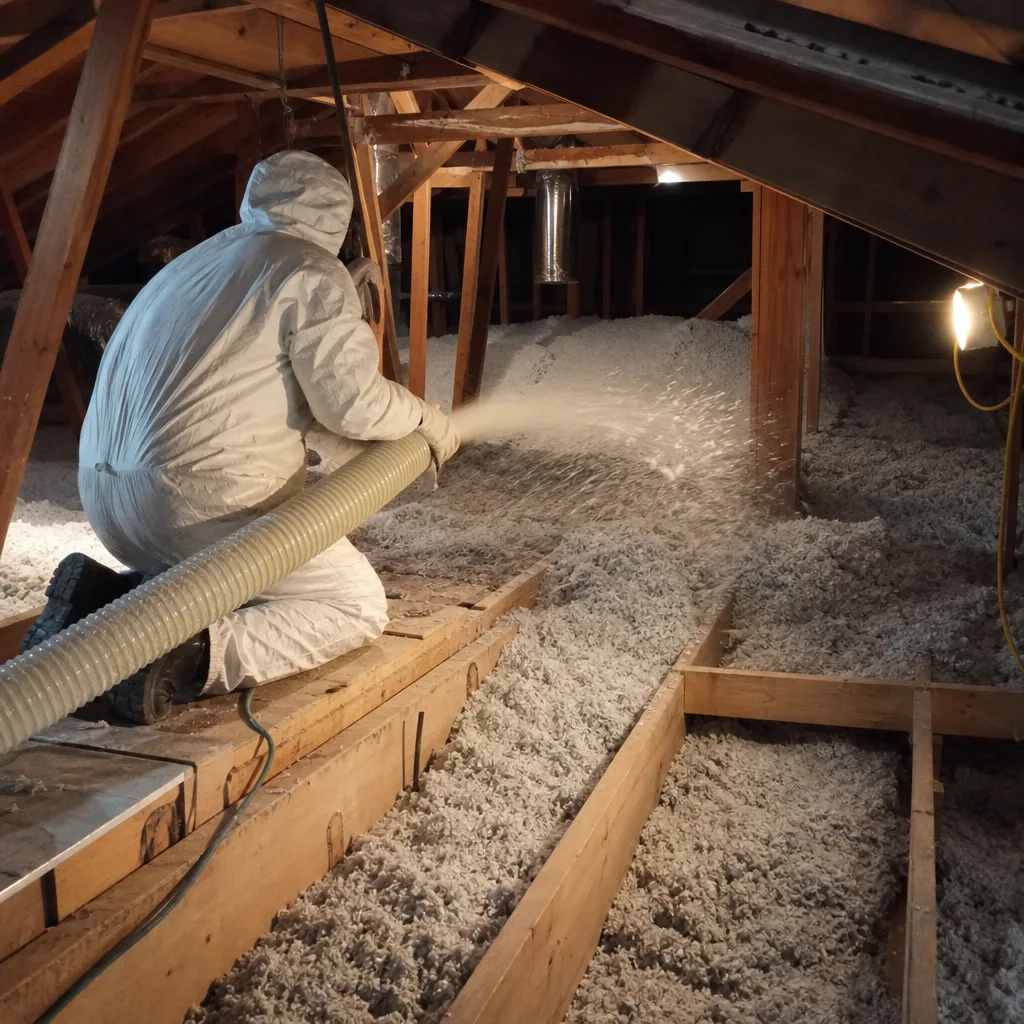
Our crews work Blown-In Insulation in Mountain View and the surrounding corridor: Los Altos to the west, Sunnyvale to the east, Stanford to the north, and Cupertino to the south. Each city has distinct permitting offices, inspection protocols, and housing stock patterns. We know which ones require blower-door documentation and which accept visual inspection. That local permit literacy saves time on ADU and whole-home retrofit jobs.
Serving Mountain View, CA - Our Local Coverage Area
We’re based in the Mountain View area and know this community well. Use the map below to see our service coverage - if you’re nearby, we can almost certainly help.
FAQs - Blown-In Insulation in Mountain View
No. Blown-in cellulose or fiberglass cannot achieve meaningful R-value in concrete masonry unit cavities; the material won’t adhere, won’t fill consistently, and creates a severe thermal bridge. We use closed-cell spray foam on CMU party walls, typically 2-3 inches to achieve R-13 to R-19, then dense-pack the framed portions with cellulose. Call (650) 352-3577 and we’ll read your plans to confirm the assembly.
The daily swing from 50°F foggy mornings to 85°F afternoons causes thermal cycling that degrades loose-fill faster than in drier inland climates. Original cellulose loses loft; fiberglass batts separate at seams. We see 30-50% performance loss in 20-year-old attics. Our solution is air-sealing first, then installing material at density sufficient to resist settling, with documentation of the before-and-after blower-door result.
Yes. We regularly insulate detached structures in the larger-lot areas near the foothills and in backyard workshop conversions throughout the city. These jobs require the same Title 24 compliance as attached ADUs if they’re conditioned. We bring the dense-pack machine to the site and can handle structures up to 1,200 square feet in a single day, including air sealing and blower-door verification.
We typically dense-pack GreenFiber cellulose in the 2×4 walls and flat ceiling, blow Owens Corning fiberglass to R-49 in the main house attic if it’s being topped, and apply closed-cell spray foam to any shared CMU or concrete party walls. The specific assembly depends on your Title 24 compliance path and whether the inspector requires a HERS rater. We document the R-values and materials in the written scope before work starts.
We install 6-mil polyethylene ground cover sealed at seams and piers, then use moisture-tolerant insulation assemblies: either closed-cell spray foam on the rim joist and subfloor, or fiberglass batts with proper vapor retarder orientation if the crawl has adequate ventilation. Blown-in cellulose is not recommended in these conditions without prior moisture remediation. We photograph the ground cover installation and include it in your Documented Photo Record. Call (650) 352-3577 for a crawl space assessment.
Written by Wes Okafor, Owner at Topside Attic Insulation Palo Alto, serving Mountain View since 2016 under The Haven Standard.