
Icynene Vapor Barrier Installation: The Palo Alto Owner’s Guide
Icynene vapor barrier installation in Palo Alto typically runs between $2,800 and $5,400 for a full crawl space or attic application, depending on square footage and whether the substrate needs prep work. We stock Icynene-compatible vapor barrier membranes in 6-mil, 10-mil, and 15-mil thicknesses on our Palo Alto trucks, and most residential jobs can start same-day or next-day once the written scope is signed. Most owners discover the problem during a home inspection, a musty smell in the crawl space, or when their energy audit flags elevated humidity readings that the existing barrier isn’t stopping.
Which Icynene Models This Applies To
Icynene doesn’t manufacture a standalone “vapor barrier” under its own part numbering system. What Palo Alto homeowners are usually matching is a vapor barrier membrane installed in conjunction with Icynene open-cell or closed-cell spray foam. The critical compatibility question is foam type: open-cell Icynene (LD-C-50, MD-R-200 series) is vapor-permeable, so a separate Class I or Class II vapor barrier is required on the warm-in-winter side of the assembly. Closed-cell Icynene (LD-C-2000) acts as its own vapor retarder at thicknesses above 1.5 inches, and adding a separate barrier here creates a moisture trap.
To identify what you have, check your original installation paperwork for the Icynene product series. If the foam is open-cell and your crawl space or attic floor shows condensation on the underside of the foam in Palo Alto’s winter months, you likely need the barrier that was omitted or improperly placed. We also stock Reflectix vapor barrier products for hybrid assemblies where radiant rejection is part of the design. Topside Attic Insulation Palo Alto is an independent service provider, not affiliated with Icynene.
Signs Your Icynene Vapor Barrier Installation Is Failing
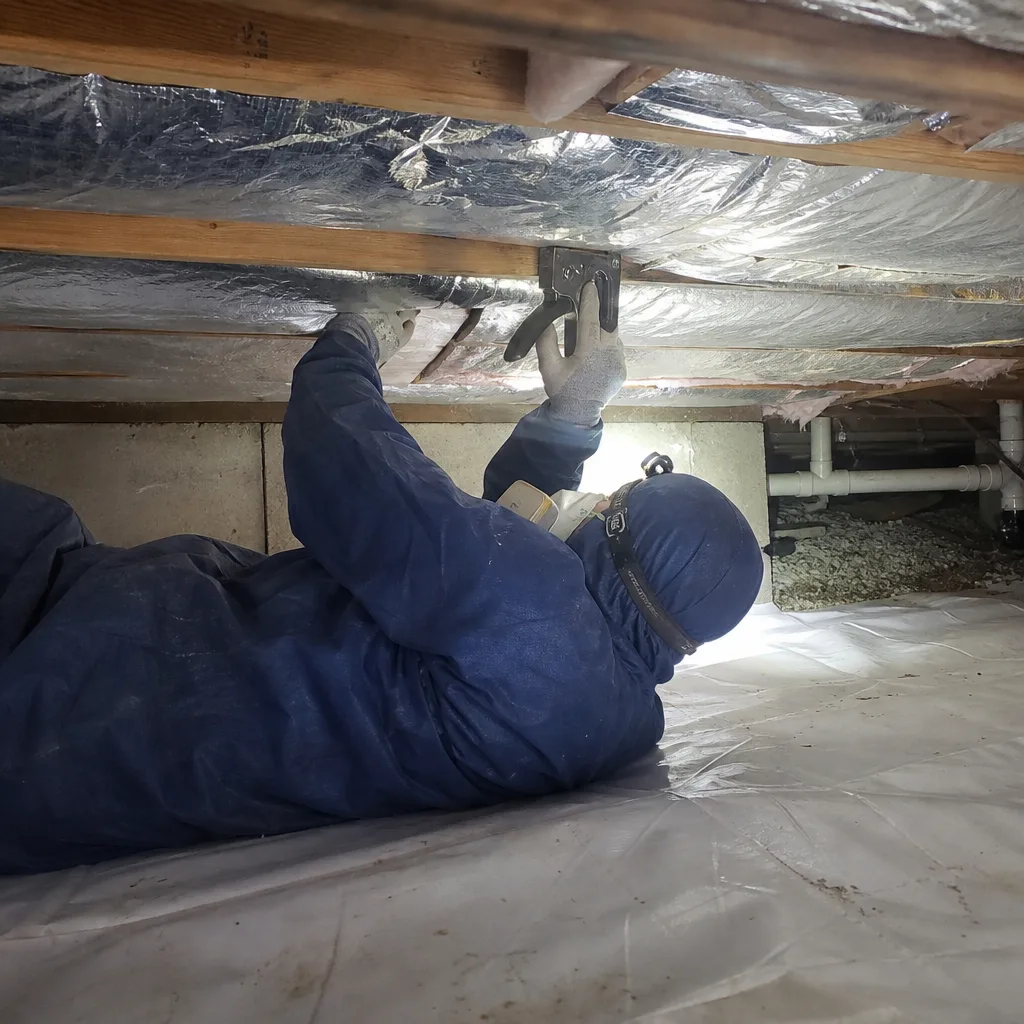
- Condensation forming on ductwork or framing in the crawl space. This happens when the vapor barrier has tears, gaps at seams, or was never sealed to the foundation walls. Warm, moist exterior air hits the cooler surfaces and deposits water.
- Musty odor that returns within weeks of cleaning. The barrier isn’t blocking soil moisture vapor from entering the crawl space. In Palo Alto’s clay-heavy soils near the foothills, this can push relative humidity above 70% even in dry summer months.
- Wood rot at sill plates or rim joists. Chronic moisture accumulation above 20% wood moisture content degrades the structural members. We see this most in Midtown Palo Alto ranch homes with original dirt-floored crawls.
- Increased energy bills with no equipment change. A failed vapor barrier forces your HVAC to dehumidify air that shouldn’t be wet. The blower-door number may look acceptable, but the latent load is spiking your cooling costs.
- Visible mold on the barrier surface or adjacent framing. Mold needs 60%+ relative humidity to colonize. If it’s growing, the barrier isn’t controlling moisture transmission, or it’s trapping moisture against the assembly because it was installed on the wrong side of the foam.
Replacement Cost & What’s Included
| Scope | Price Range in Palo Alto |
|---|---|
| Crawl space vapor barrier only (6-mil, no prep) | $2,800 - $3,600 |
| Crawl space with substrate grading and debris removal | $3,400 - $4,500 |
| Attic floor vapor barrier with air sealing | $3,200 - $4,800 |
| Full encapsulation with 15-mil reinforced membrane, sealed piers, dehumidifier prep | $4,200 - $5,400 |
What drives the range: square footage, access difficulty (some Palo Alto crawl spaces have 18-inch clearance), whether we need to remove degraded existing material, and if the job includes companion air sealing. Every quote is a Written Price Before Any Work Starts, flat and itemized. The 365-Day Done Right Promise covers installation defects. Materials come from our Icynene, Demilec, and GreenFiber supply chain with no proprietary lock-in.
DIY or Call Us?
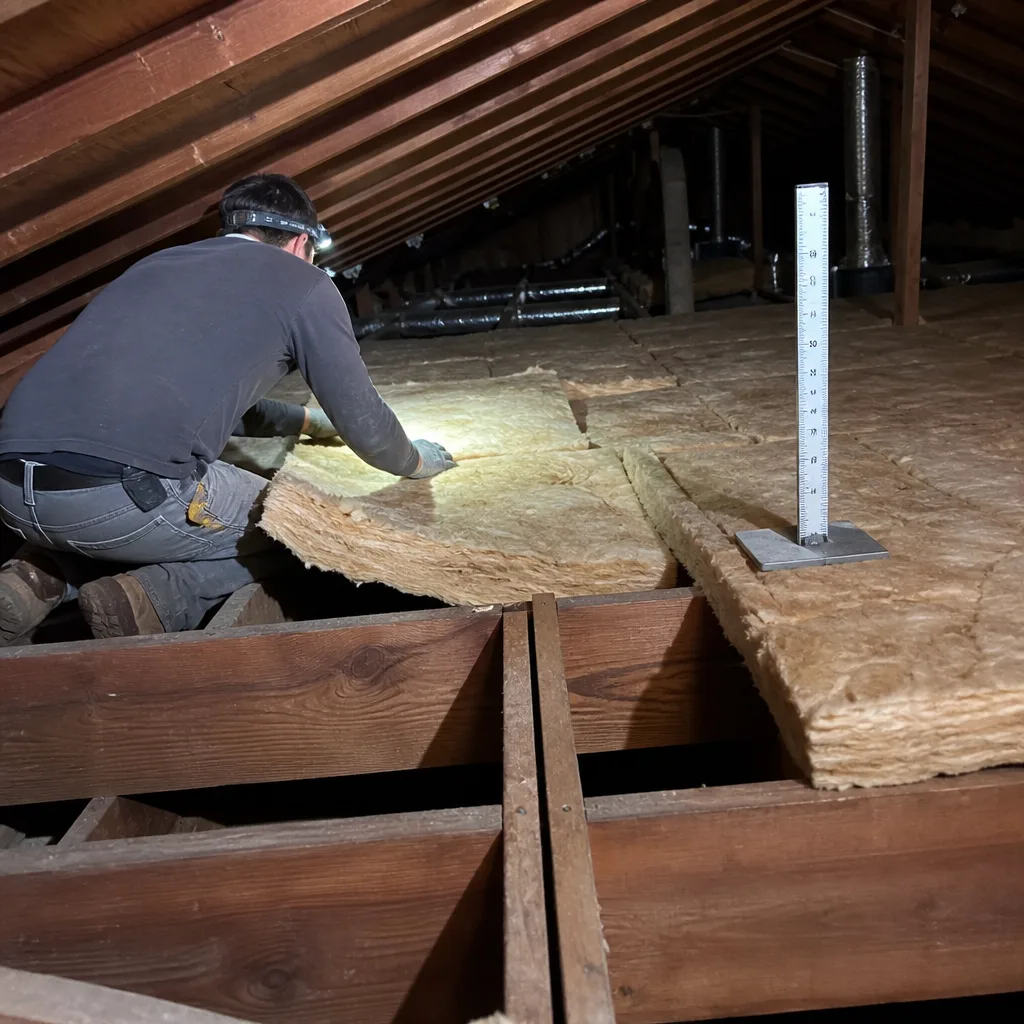
What you can safely check: look for the Icynene product label on your foam, photograph any visible barrier damage, and note whether your crawl space has standing water or just damp soil. What goes wrong with DIY: vapor barrier placement relative to the insulation layer is assembly-specific, and getting it backward traps moisture. Seaming the membrane to foundation walls and piers requires mechanical fastening and proper overlap, or the barrier billows and tears. In Palo Alto’s seismic zone, we also anchor to withstand minor ground movement. If your assembly includes gas appliances in the crawl or attic, we run a combustion-safety check before and after any envelope work, because depressurizing a house without verifying flue draft is how carbon monoxide problems start. Seal the leaks first. The insulation has nowhere to work if the air is moving around it. For a written scope and same-day scheduling, call (650) 352-3577.
FAQs
A properly installed 10-mil or 15-mil reinforced barrier typically lasts 15 to 20 years in Palo Alto, though the 6-mil economy grade often degrades in 8 to 12 years due to UV exposure if any light penetrates the crawl space, and from abrasion where it contacts sharp substrate. Call (650) 352-3577 and we’ll assess your current barrier’s condition with photos included.
Small punctures or seam separations under 6 inches can be patched with compatible tape and membrane, but widespread degradation, delamination, or incorrect original placement means full replacement. We don’t patch over a barrier that was installed on the wrong side of the assembly, because the underlying moisture problem continues. Call (650) 352-3577 for an honest assessment, estimates are free.
Most residential crawl spaces in Palo Alto take one to two days: half a day for prep and air sealing, half a day for membrane layout and sealing. Full encapsulations with pier wrapping may run into a third day. We provide a written schedule with the written price before anyone starts.
Yes. We carry 6-mil, 10-mil, and 15-mil reinforced polyethylene membranes, seam tape, mechanical fasteners, and termination bars on every Palo Alto truck. For same-day starts, the written scope must be signed and the crawl space or attic must be accessible and free of standing water.
Written by Wes Okafor, Owner, Topside Attic Insulation Palo Alto at Topside Attic Insulation Palo Alto, serving Palo Alto and nearby areas.