
Rockwool Blown-In Insulation in Palo Alto: What to Know First
We provide independent Rockwool blown-in insulation service in Palo Alto, typically completing attic top-ups and dense-pack wall jobs in one day with a written price locked before any work starts. Most Rockwool blown-in jobs in Palo Alto run between $2,800 and $5,400 depending on attic square footage, existing insulation depth, and whether the attic floor has been air-sealed. We are not affiliated with or authorized by Rockwool - we are an independent service provider who stocks and installs Rockwool materials alongside Owens Corning, Johns Manville, and other lines.
This page is for homeowners who already have Rockwool in their walls or attic and need more blown in, or who are comparing Rockwool blown-in against fiberglass or cellulose for a Palo Alto retrofit. If you are researching contractors who publish blower-door numbers and put the price in writing first, we are likely a fit. Call (650) 352-3577 - a live person answers, 24/7.
How Rockwool Products Fail - and How We Fix Them
- Rockwool Comfortbatt settled below top plate in wall cavities. The batts compress over years in Palo Alto’s clay-heavy soil zones where seasonal moisture swings cause framing movement, leaving a 3-6 inch gap at the top of the stud bay that blown-in is meant to fill. We dense-pack Rockwool Comfortfill or equivalent blown-in material to restore the continuous thermal barrier, then verify with thermal imaging.
- Rockwool AFB (Acoustical Fire Batt) in multi-family partition walls absorbs roof leaks and gains weight. AFB is not designed for prolonged moisture exposure; when a Palo Alto Eichler or flat-roof ranch develops a slow leak, the batt becomes a mold vector. We remove the damaged AFB, dry the cavity with directed airflow, then blow in fresh Rockwool or switch to a hydrophobic alternative if the leak source cannot be fully eliminated.
- Rockwool Safe ‘n’ Sound in interior walls was never meant for exterior envelope duty. Homeowners sometimes find this line in above-garage rooms or bump-outs where a previous owner used what was on the truck. Safe ‘n’ Sound has no water-repellent treatment; in Palo Alto’s winter-driven rain patterns, it underperforms. We extract it and blow in Rockwool Comfortfill or dense-pack cellulose with borate treatment for exterior-facing cavities.
- Rockwool granulated loose-fill in attics migrates toward the hatch and away from eaves. The material is heavier than cellulose; over years of foot traffic and HVAC vibration, it drifts. We redistribute with a vacuum-and-blow process, install baffling at the eaves to prevent wind washing, and top up to the R-38 or R-49 target for Palo Alto’s climate zone.
- Rockwool cavityrock in commercial-style framed floors loses contact with subfloor above. The friction-fit fails when joists shrink and swell. We stabilize with netting or adhesive-applied blown-in, then run a blower-door test to confirm the air barrier continuity - because insulation that does not touch both sides of the cavity is just expensive filter media.
Our Rockwool Blown-In Insulation Process
- 1
Call and scope. You describe the space - attic, wall, or floor - and we schedule a site visit. We bring a written price framework, not a blank pad.
- 2
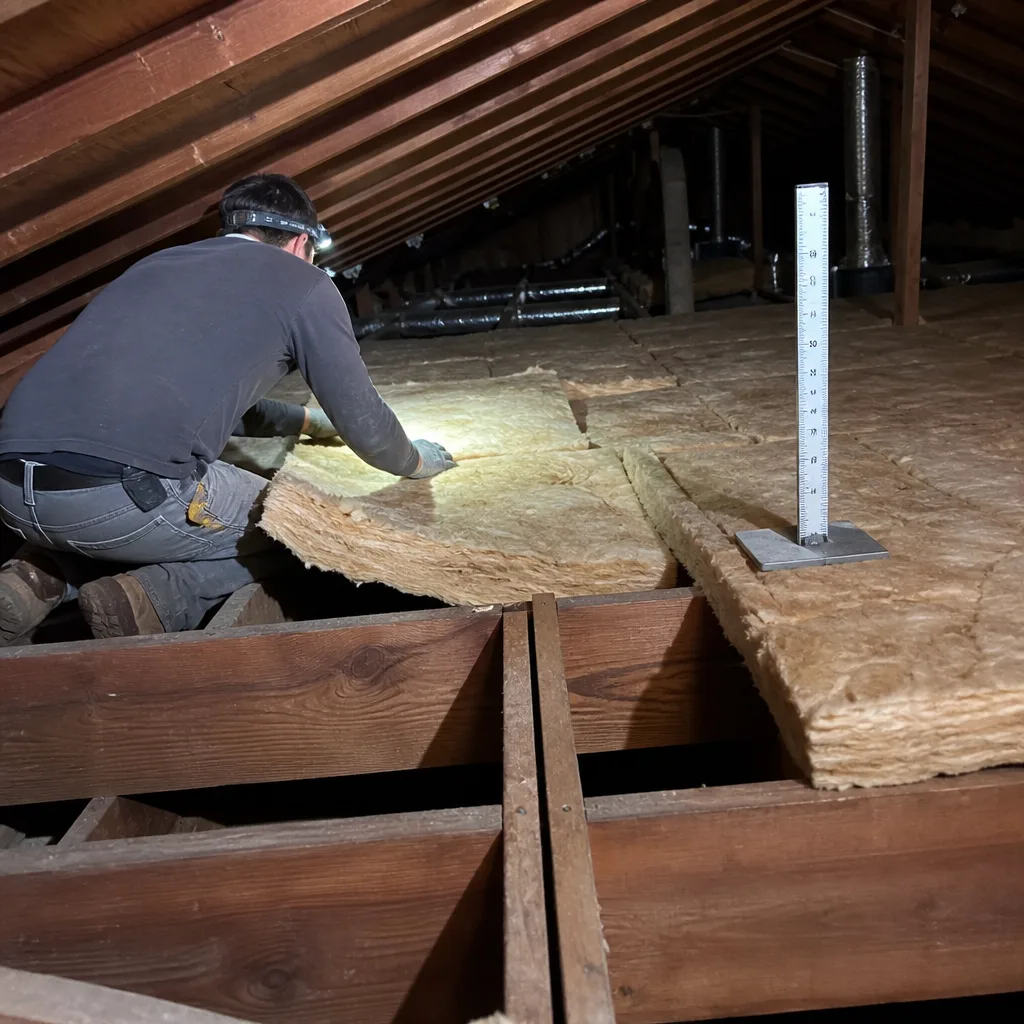
Diagnostics and air sealing first. We blower-door test if the job scope includes it, locate top plates, can lights, and penetrations, and seal with foam or gasket before any insulation goes in. Seal the leaks first. The insulation has nowhere to work if the air is moving around it.
- 3
Material selection. Rockwool Comfortfill, Granulated Rockwool, or a multi-brand alternative depending on cavity depth, moisture history, and your preference. We do not push proprietary product lock-in.
- 4
Installation and documentation. Blown-in to specified density, with photos of access points, baffle installation, and finished depth. We note the R-value achieved and the locations treated.
- 5
Verification and closeout. Blower-door retest if scoped, combustion-safety check on any gas appliance in the attic space - because depressurizing a house without verifying flue draft is how carbon monoxide problems start - and a written report with pre- and post-installation data delivered before we leave.
- 6
Cleanup and warranty. Documented Photo Record included, 365-Day Done Right Promise in effect, written scope and warranty in your hand.
What Rockwool Blown-In Insulation Costs in Palo Alto
| Job Type | Typical Range | What Moves the Price |
|---|---|---|
| Attic top-up (Rockwool over existing) | $2,800 - $4,200 | Square footage, access difficulty, whether air sealing is included |
| Attic full replacement with Rockwool blown-in | $4,000 - $6,800 | Removal of old material, decontamination, baffle installation |
| Dense-pack wall insulation (Rockwool) | $3,200 - $5,400 | Number of cavities, exterior access vs. interior, plaster or drywall repair |
| Floor cavity (crawl or above-garage) | $2,400 - $4,600 | Netting or adhesive application, vapor barrier condition |
These are real Palo Alto numbers for homes from the ranch neighborhoods near Midtown to newer builds where the blower-door number still surprises owners who assumed tight construction. The price is written before any work starts - no exceptions. Call (650) 352-3577 for an exact quote; estimates are free.
Why Palo Alto Homeowners Call Topside Attic Insulation Palo Alto for Rockwool Work
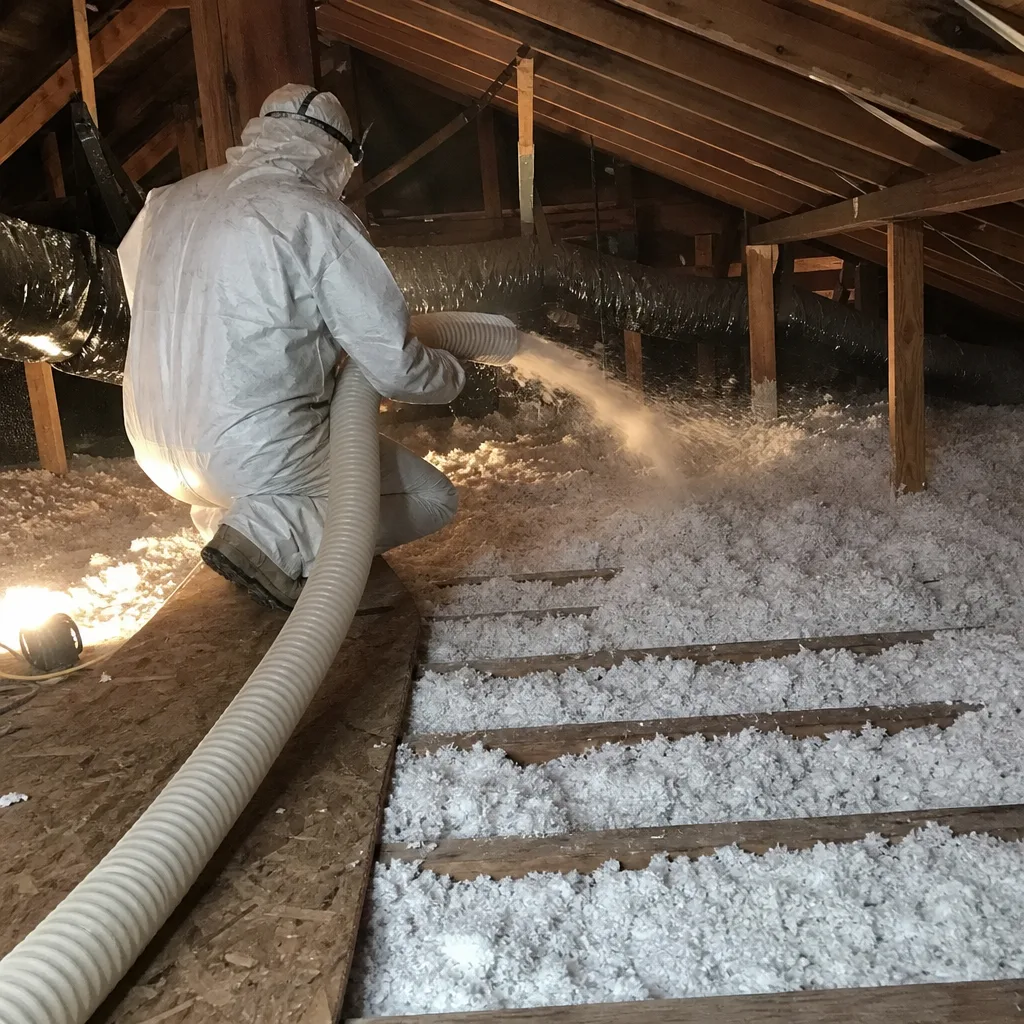
We have run Rockwool jobs in Palo Alto long enough to know which batches from the 2015-2019 period settled faster than spec, and which contractor-installed Comfortbatt jobs in the Greenmeadow and Duveneck areas left the eaves bare. Wes Okafor keeps a running list of every attic access panel his crew has had to rebuild, and the list is now longer than his arm.
Our technicians are background-checked and uniformed; calls are answered by a live person, 24/7. We also stock and install Reflectix and other brands, so if Rockwool is not the right material for your cavity condition, we will say so and offer the alternative. Every job closes with a Documented Photo Record and, on scoped work, before-and-after blower-door numbers you can verify yourself.
FAQs
Rockwool’s product warranty covers material defects regardless of who installs it, but installation errors - such as insufficient density or moisture intrusion from unsealed penetrations - are not covered. We document density and conditions with photos so any future claim has supporting evidence. Call (650) 352-3577 if you need help navigating a warranty question.
Most Rockwool blown-in jobs are scheduled within 3-5 business days, with same-day service available for attic emergencies like insulation displacement from a roof leak. We stock Rockwool Comfortfill and granulated loose-fill locally, so material lead time is rarely the delay. Call (650) 352-3577 to check this week’s availability.
Top-up blown-in is usually 30-40% less than full removal and replacement, but only if the existing batts are dry, uncontaminated, and still attached to the cavity walls. Wet or mold-affected batts must come out; blowing over them traps moisture and voids any future warranty claim. We assess during the free estimate and give you both numbers.
We can approximate it, but exact matching is less important than achieving the target R-value and preventing settling. Rockwool Comfortfill at 3.5 lbs per cubic foot in a 2×6 wall hits R-23; we document the density we achieve and the installed R-value in your written report. If your existing insulation is below that standard, we note the discrepancy and recommend accordingly.
For blown-in insulation, the material itself is the “part,” and we use Rockwool-manufactured Comfortfill or granulated loose-fill when Rockwool is specified. For supporting components - netting, fasteners, baffles - we use quality aftermarket products that meet or exceed manufacturer specs. We do not claim exclusive or preferred status with Rockwool or any brand.
Written by Wes Okafor, Owner, Topside Attic Insulation Palo Alto at Topside Attic Insulation Palo Alto, serving Palo Alto and nearby areas.