
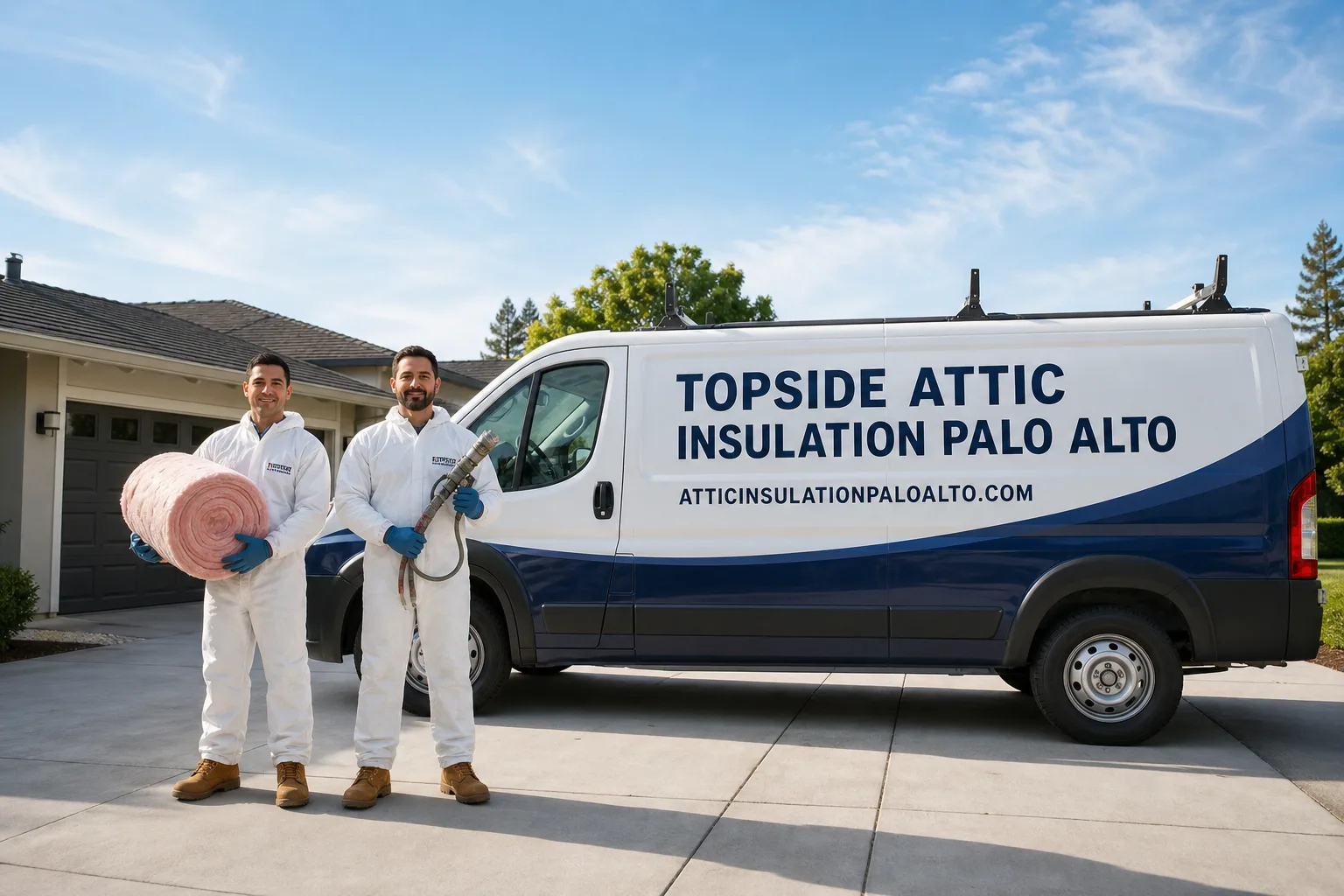
Fast, Reliable Blown-In Insulation Across Campbell
Most blown-in insulation jobs in Campbell run $1,800-$4,200 for attics and $2,400-$5,800 for dense-pack wall fills, with same-week scheduling available once we complete your written scope. We serve Campbell from our San Francisco Bay Area dispatch office, and crews are routinely in the 95008, 95009, and 95011 ZIP codes within 24-48 hours of your call. Whether you’re in the older ranch blocks near downtown, the post-war subdivisions east toward San Jose, or the townhome clusters off Winchester Boulevard, we bring the blower door, the written price, and the documented photo record to every job.
Call (650) 352-3577 to get your written estimate. A live person answers 24/7.
Why Topside Attic Insulation Palo Alto Is Campbell’s Preferred Blown-In Insulation Company
We’ve sealed and insulated more than 9,000 homes since 2016, and Campbell’s post-war housing stock is among the most predictable we encounter - which means we know what to look for before we open the attic hatch. Our Campbell customers leave reviews that specifically mention the before-and-after blower-door numbers we publish on every applicable job: a pressurization reading that shows, in one figure, how much conditioned air your home was losing before and after our crew finished.
Response time to Campbell averages next-day for standard appointments, with emergency scheduling available when attic temperatures or failed insulation creates immediate comfort or safety issues. Our technicians are background-checked, uniformed, and arrive with a written scope and written warranty already prepared - Haven Standard Clause 1, no exceptions.
We know the local building patterns: the 1,100-square-foot slab-on-grade ranches near the Pruneyard, the alley-loaded townhomes off Hamilton Avenue, the expanded Eichler-influenced tract homes in the 95008 ZIP. That familiarity means we don’t waste your time discovering what we should already know about your home’s envelope.
Our Blown-In Insulation Services in Campbell
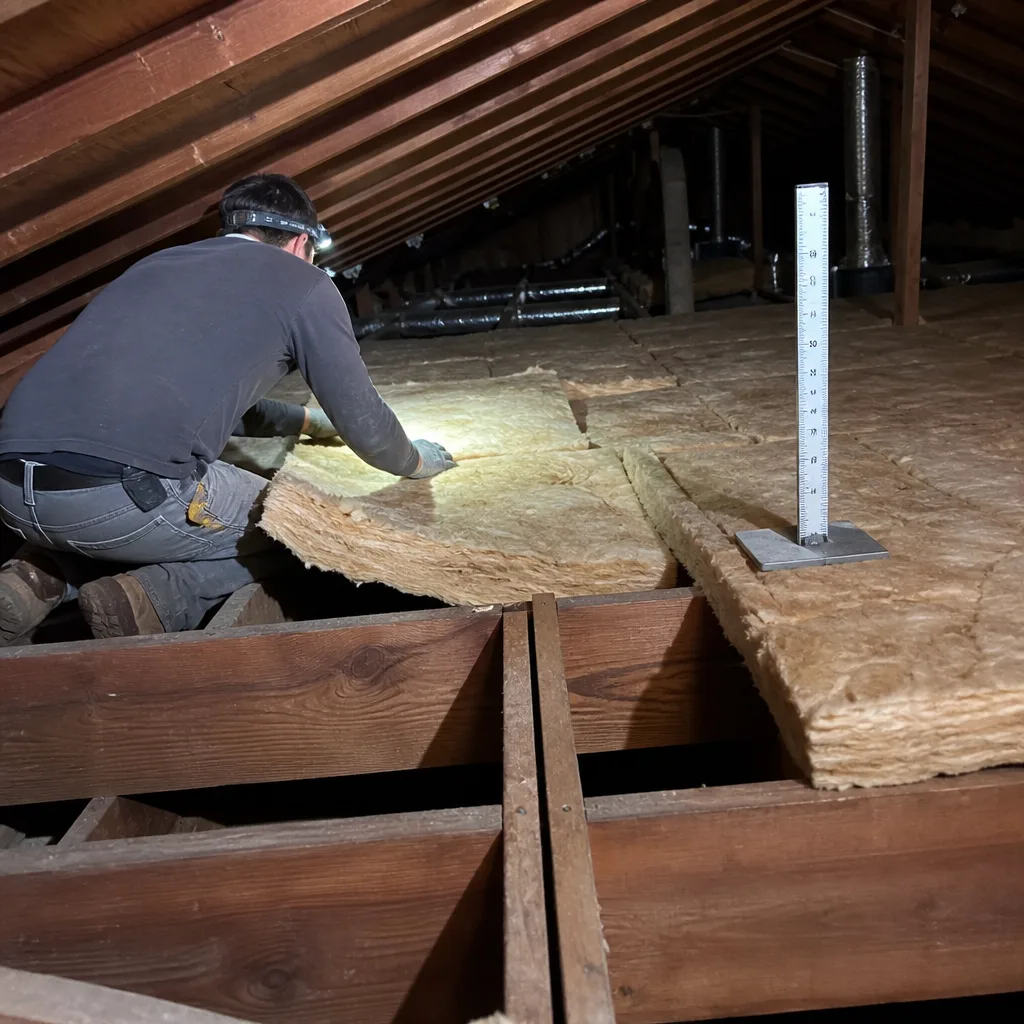
Blown-In Cellulose
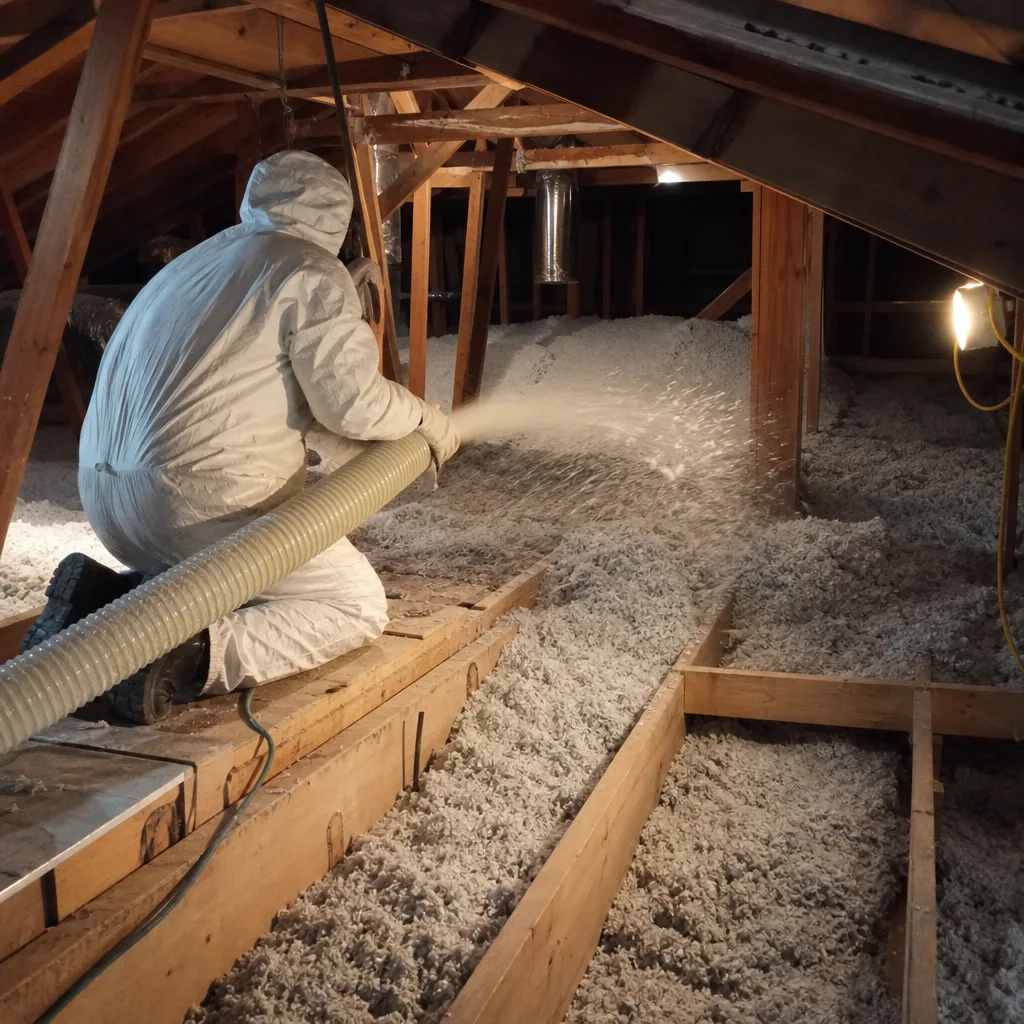
We blow GreenFiber cellulose in Campbell attics at a settled depth that meets or exceeds current Title 24 minimums - typically R-38 to R-49 for attic floors in this climate zone. Cellulose performs well in Campbell’s inland heat because it handles the 90-95°F summer afternoon loads better than settled fiberglass, and its density reduces air movement through the attic plane. On a low-clearance ranch block off East Campbell Avenue near the San Jose border, our crew found original batts buried under dropped pest-control debris and routed romex, with the thermal bypass reading obvious on our IR scan. We pulled the displaced batts, air-sealed the top plates and can lights, then blew GreenFiber cellulose to a level, even depth across the shallow joist bays. The homeowner’s upstairs bedroom finally held a stable temperature through an August afternoon instead of cycling the AC nonstop.
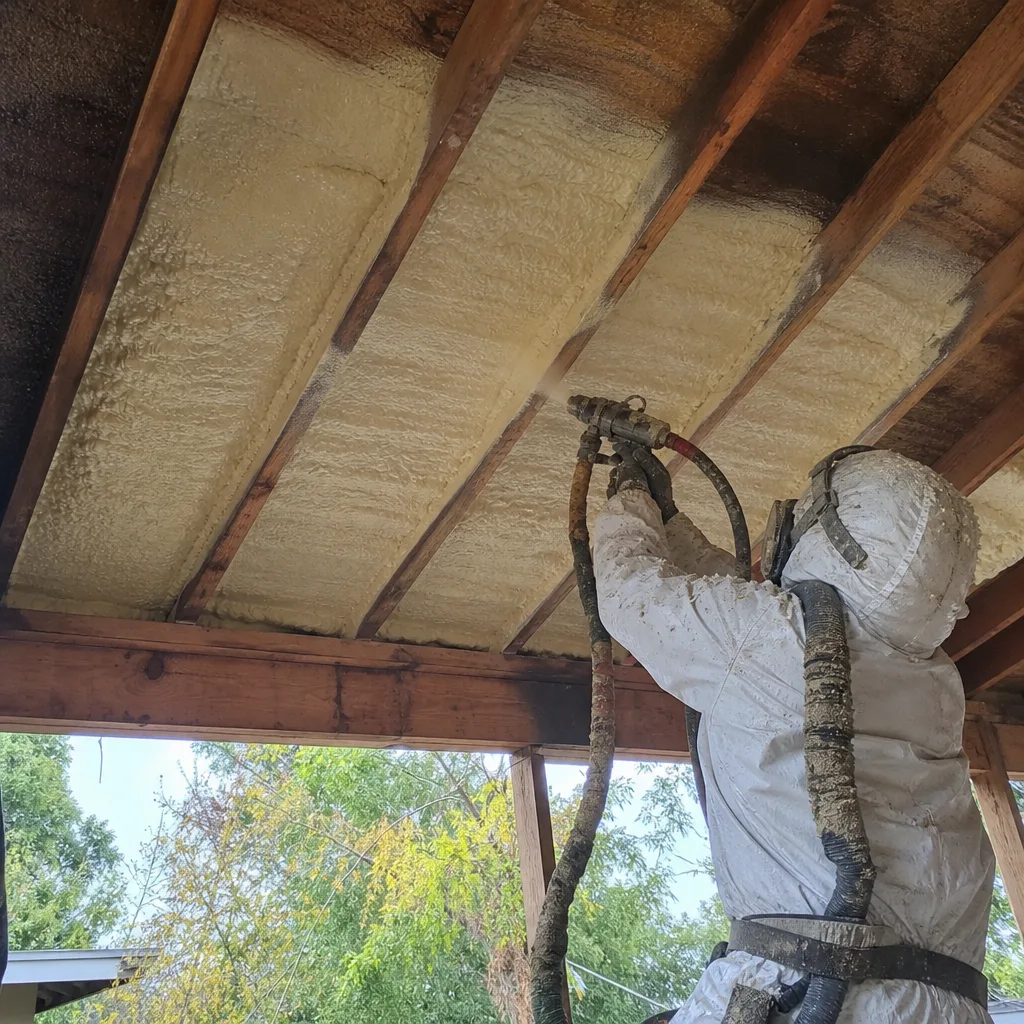
Blown-In Fiberglass
For Campbell homes with moisture management concerns or specific material preferences, we blow Owens Corning and Johns Manville fiberglass to specified depths with documented coverage charts. Fiberglass works well in vented attics where baffles are properly installed - a critical check we perform first, since Campbell’s summer attic temps can push well above ambient and blocked soffit vents create heat buildup that degrades new material fast. We never blow over unsealed penetrations.
Dense-Pack Wall Insulation
Campbell’s 1952-1975 tract homes were built with uninsulated 2×4 stud cavities - legal at the time, now far below code. Our dense-pack wall fills, using Knauf or Owens Corning material blown at 3.5-4.0 lbs per cubic foot, fill those cavities without removing interior drywall. We drill discrete access holes, fill to refusal pressure, then patch and match texture. For homes near Westmont High School or along Bascom Avenue, this is often the only practical way to address wall performance without a full gut renovation. The work comes with before-and-after photos and a written density log.
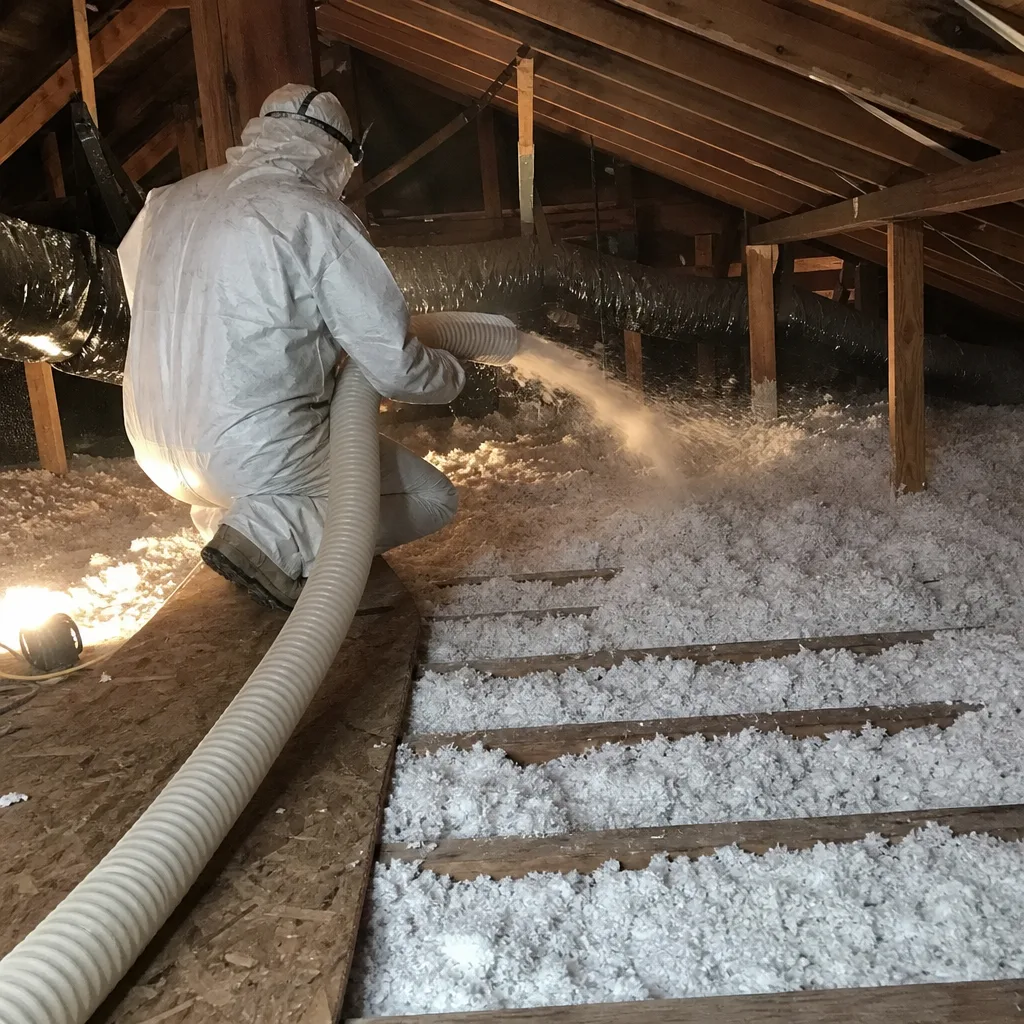
Blown-In Top-Up
Here’s where Campbell’s specific housing history matters most. Because Campbell’s tract homes went up roughly 1952-1975 on former orchard lots, most attics here hold original fiberglass batts that have been shoved aside by decades of pest-control and rewire work - so a blown-in top-up has to be preceded by re-leveling and air-sealing, not just poured over the top. Campbell also runs markedly hotter than coastal neighbors in summer, so these settled-batt attics underperform more acutely here than they would a few miles west. Our top-up protocol includes IR scanning to locate displaced batts, manual re-leveling or removal of compromised material, air sealing of all top plates and penetrations, then blown material to a uniform, measurable depth. We document the entire sequence with photos you receive before we leave.
What happens when you call
- 1
A real person answersNo phone trees - you reach a local pro.
- 2
You get an upfront price rangeHonest numbers before anyone is dispatched.
- 3
A background-checked tech heads outLicensed & insured, dispatched right away.
- 4
You approve before work beginsNothing starts until you say go.
Trusted Brands We Service in Campbell
We source blown-in materials from Owens Corning, Johns Manville, Knauf, and Rockwool - no proprietary lock-in, no house brand pushed over better-performing alternatives. For Campbell jobs, we stock cellulose and fiberglass locally to avoid supply delays, and our crews carry multiple material types on the truck so the final selection can be confirmed on-site after attic inspection. If your home has specific compatibility needs - metal chimney clearances, recessed can light ratings, or existing vapor barrier conditions - we match the material to the assembly, not the other way around. Every bag lot is documented in your job record with manufacturer spec sheets attached.
Common Blown-In Insulation Problems We See in Campbell Homes
- Blown-in cellulose poured over compressed, pushed-aside batts. The new material bridges over gaps instead of sealing the bypasses below, so the attic still leaks air at the top plates and can lights. We see this constantly in Campbell’s older ranch-home blocks where decades of pest-control and electrical work have displaced original insulation. The fix is never more material on top - it’s pulling the compromised layer, sealing the envelope, then blowing to a level depth.
- Low-clearance slab-on-grade ranch attics and alley-loaded townhomes with no safe working room. Crews that don’t set up proper fall protection and hose routing cut corners and blow to uneven depths near the eaves. Campbell’s tight attic clearances - common in the 1,000-1,300 square-foot ranches near downtown - demand specific equipment: low-profile scaffolding, remote hose reels, and technicians trained to work in confined spaces without compressing existing material.
- Summer attic temps in Campbell’s inland Santa Clara Valley location push 90-95°F ambient, and without a baffle/vent check first, blown insulation drifts into and blocks the soffit vents. Choked attic ventilation bakes the new material and can void manufacturer warranties. We verify baffle integrity and soffit clearance before any material enters the attic, and we photograph every vent bay for your record.
- Wall cavities in pre-1978 Campbell homes left uninsulated because contractors assumed blown-in wall fill would require interior demolition. Dense-pack methods solve this, but only if the crew understands Campbell’s specific framing patterns: 2×4 studs at 16 inches on center, occasional fire blocks in older ranches, and the stucco or wood siding exteriors that determine drill pattern and patch strategy.
Pricing for Blown-In Insulation in Campbell, CA
A typical blown-in attic job in Campbell runs $1,800-$4,200, depending on attic square footage, current insulation condition, and the extent of air sealing required beforehand. Dense-pack wall insulation in a 1,200-square-foot Campbell ranch typically falls between $2,400-$5,800, with complexity driven by exterior finish type (stucco drilling costs more than wood siding) and fire-block density. Blown-in top-ups start around $1,200 when the existing layer is level and intact, but most Campbell homes in the 95008 and 95011 ZIP codes need $1,600-$2,800 of prep work - batt removal, debris cleaning, air sealing - before new material goes in.
PG&E rates in this territory are among the highest in the country, so even modest envelope improvements show returns faster than in lower-rate regions. We provide a written price before any work starts, always, and we offer a Free Second Opinion on any competing written estimate you bring us. Your written scope includes line-item material costs, labor, air-sealing details, and the documented photo record - no aggregate lump sums, no open-ended allowances.
Call (650) 352-3577 for your exact written price. Estimates are free.
We Also Serve Cities Near Campbell
Our crews work throughout the Santa Clara Valley, including Campbell and the surrounding communities of Saratoga, Santa Clara, Cupertino, and Sunnyvale. Dispatch and scheduling are coordinated from our San Francisco Bay Area office, with local routing that keeps travel time minimal and appointment windows reliable. If you’re on the border between Campbell and one of these neighboring cities, we’ll confirm your service area when you call and lock in your written price before anyone departs for the job.
Serving Campbell, CA - Our Local Coverage Area
We’re based in the Campbell area and know this community well. Use the map below to see our service coverage - if you’re nearby, we can almost certainly help.
FAQs - Blown-In Insulation in Campbell
Yes - we access shallow ranch attics through the existing hatch or gable vent, no interior demolition required. Our low-clearance equipment and remote hose systems let us work in Campbell’s typical 4-5 foot attic heights without compressing existing material or cutting ceiling drywall. Call (650) 352-3577 to schedule an attic inspection and written price.
The new insulation was likely blown over displaced original batts and unsealed air leaks, so thermal bypasses at the top plates and can lights still pump conditioned air into the attic. In Campbell’s 90-95°F summer afternoons, those bypasses matter more than they would in cooler coastal climates. We fix this by pulling compromised material, air sealing with blower-door guidance, then blowing to a uniform depth with verified coverage. Call (650) 352-3577 - we’ll read your situation with you, even if another contractor did the original work.
Absolutely - slab-on-grade construction means all your thermal envelope weakness concentrates in the attic and walls, with no basement or crawlspace to buffer losses. Campbell’s inland heat and near-freezing winter nights create genuine loads on these homes, and PG&E’s rates make the payback unusually strong. Our Blown-In Insulation team treats slab-on-grade ranches as a core specialty, with protocols written specifically for the 1,100-1,400 square-foot plans common in Campbell’s post-war subdivisions.
It will if the batts are displaced, compressed, or contaminated - which they usually are in Campbell’s 1952-1975 housing stock. The cellulose bridges over gaps, creating a false sense of coverage while air leaks continue unabated. Our protocol requires inspection and re-leveling or removal first, then air sealing, then the new blow. We document the condition of your existing layer with photos before recommending any approach.
Campbell’s inland Santa Clara Valley location means summer afternoons 15-20°F hotter than coastal Bay Area cities, so attic insulation here works harder and attic ventilation matters more. The same R-value performs differently when attic ambient pushes 140°F versus 110°F, and material selection - cellulose’s density versus fiberglass’s loft - becomes a real performance variable. We factor Campbell’s specific cooling load into every written scope, not just generic climate-zone tables. Call (650) 352-3577 for a Campbell-specific assessment.
Written by Wes Okafor, Owner at Envelope Insulation Co., serving Campbell since 2016 under The Haven Standard.